Military Smart Watch for Men Review: Worth It? 7.8/10
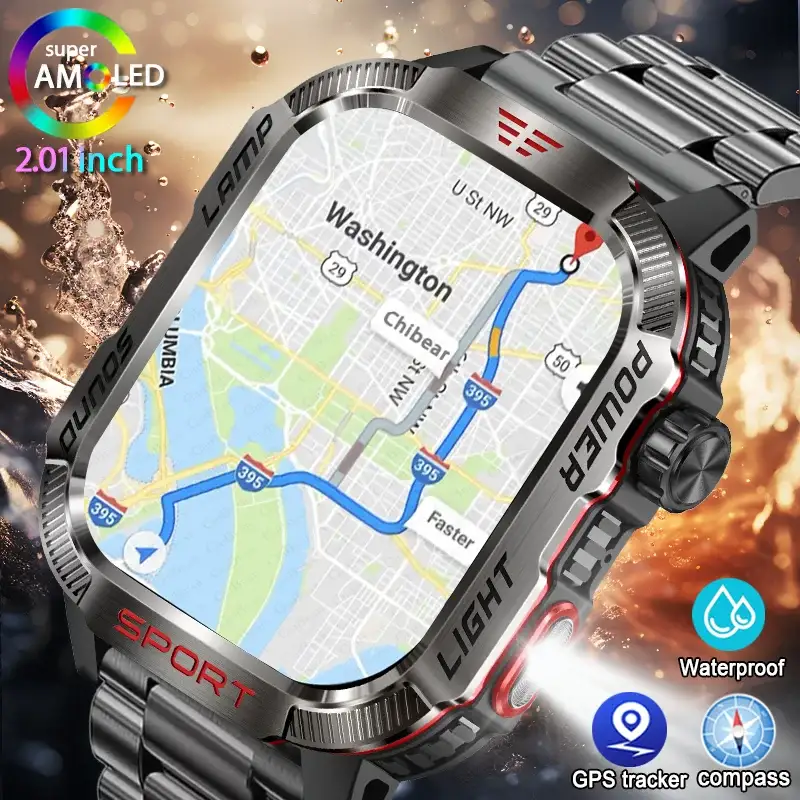
“Such a nice watch for the money,” one reviewer wrote — and that line captures the through‑thread across platforms for the Military Smart Watch for Men, Outdoor Sports Smartwatch with Flashlight/Compass/Heart Rate Monitor, Fitness Tracker. The draw isn’t prestige; it’s a rugged‑looking, feature‑heavy watch that aims to do most of what pricier brands do. Based on aggregated feedback, the overall verdict lands at 7.8/10 for buyers who want an affordable outdoor smartwatch with calls, a flashlight, and basic health tracking.
Quick Verdict
Conditional Yes.
| Pros (from user feedback) | Cons (from user feedback) |
|---|---|
| Strong value for price; “premium experience” under $100 | Health metrics, especially heart rate, can be off |
| Rugged build and “made to last” feel | Limited messaging features (no full messages app) |
| Battery commonly lasts a week+ in real use | Raise‑to‑wake missing for some units |
| AMOLED/HD screens praised for color and readability | Privacy worries around GPS/data sharing |
| Flashlight/compass are genuinely useful for outdoors | Marketing water ratings vary across sellers |
Claims vs Reality
Marketing leans hard on durability and military testing. Listings describe watches that “passed 12 military‑grade tests” and “withstand harsh environmental conditions.” Digging deeper into user reports, that rugged framing mostly holds up in day‑to‑day contexts. A Fakespot‑summarized Amazon reviewer said, “super easy to install the application and connect your phone to the watch also quality is amazing, it's made to last.” The recurring pattern is that buyers feel confident wearing it outdoors or at work, even if they don’t literally stress‑test it in deserts or jungles.
Battery life is another headline claim, ranging from “5–7 days” (JELLOO/EIGIIS style models) to “30 days normal use / 100 days standby” on some tactical store pages. Users don’t consistently confirm the most extreme numbers, but many do confirm week‑plus endurance. A verified Amazon reviewer highlighted longevity by comparing it to premium brands: “the amoled screen is gorgeous, and the battery outlasts my apple watch by 3 days under the same usage.” That suggests real‑world performance closer to “several days to over a week” depending on settings, rather than the most optimistic standby marketing.
Fitness and health tracking are promoted as “precision” and “24/7 comprehensive health monitoring.” Here the gap widens. Fakespot’s synthesis notes that “some users have noted that the heart rate function may not be entirely accurate,” even while they remain satisfied overall. The watch works for broad trends — steps, workouts, sleep stages — but buyers shouldn’t treat it like medical‑grade data. The user sentiment is more “good enough for awareness” than “clinically reliable.”
Cross-Platform Consensus
Universally Praised
Value dominates the praise. Across Amazon‑style reviews summarized on Fakespot, a recurring tone is that the watch “is actually comparable to the big brand name that i have,” but without the price. One reviewer framed it bluntly: “this obviously isn’t an apple watch nor a samsung galaxy watch but that doesn’t mean it isn’t a great watch because you’re paying so much less… and you’re getting at least 90 of the features that… i personally actually need.” For budget‑minded outdoor workers or students who want a smartwatch for notifications and workouts, this framing makes the purchase feel low‑risk.
Battery endurance is another consistent win. Users repeatedly highlight multi‑day use, especially compared with mainstream devices. A verified buyer on Amazon noted: “the battery outlasts my apple watch by 3 days under the same usage.” For hikers or shift workers who don’t want to charge nightly, that translates to confidence taking it on trips or long work rotations without packing extra chargers.
The screen experience is praised more than expected at this price tier. Multiple users call out AMOLED or HD clarity. One reviewer said, “first of i do like the amoled screen… the screen has rich and deep colors.” That matters for outdoor users who check stats in sunlight; readability becomes part of the “rugged” utility rather than just a spec line.
Finally, the flashlight/compass combo isn’t treated as gimmickry by many owners. Fakespot’s positive patterns point to “additional features like the flashlight and call function add practicality and convenience.” For campers, mechanics, or anyone who finds themselves in low‑light situations, a wrist flashlight reduces fumbling for a phone.
- Strong “worth it” sentiment at sub‑$100 pricing.
- Multi‑day battery praised as beating premium watches in similar use.
- AMOLED/HD displays appreciated for vivid color and outdoor readability.
- Flashlight and compass seen as practical add‑ons, not just marketing.
Common Complaints
Accuracy concerns show up most often around heart rate. Fakespot reports users who “have noted that the heart rate function may not be entirely accurate.” For fitness enthusiasts tracking zones or recovery closely, this is the main limitation: it’s a tracker for trends, not precision training.
Messaging is another clear pain point. One Amazon reviewer said, “this watch does not have a messages app so although i can receive texts through notifications i can’t respond to them or read older ones.” That affects office users or drivers who want full wrist‑based communication. The watch handles call answering and notifications, but isn’t a full phone replacement.
Interaction quirks also frustrate some buyers. A reviewer noted, “although there is an always on display there unfortunately isn’t a raise to wake feature so to get your actual watch face you have to tap the screen or press a button.” For people used to lift‑to‑wake, this feels like a downgrade, especially during workouts.
Privacy anxiety appears too, tied to GPS‑enabled models. One user cautioned, “the gps feature basically gives out your coordinates to foreign governments or shady companies located overseas.” Even if not a majority view, it’s a sharp enough concern to flag for security‑minded buyers.
- Heart rate accuracy sometimes questioned; not ideal for precision training.
- No full messages app; notifications only for some models.
- Missing raise‑to‑wake annoys users expecting smartwatch norms.
- A minority express data‑privacy worries about GPS/app ecosystem.
Divisive Features
The rugged build and “military” styling split opinion mostly by user type. Outdoor buyers like the tough aesthetic, while some casual users see it as bulky. Still, even those who mention scratches often stay positive, with Fakespot noting that “some have noted minor scratches on the case but still consider it a great investment.”
Waterproofing claims are also inconsistent across sellers: some listings say 3ATM, others 5ATM, IP68, or even higher. User feedback doesn’t provide a unified reality check beyond everyday confidence. The safe takeaway from buyers is that it handles rain and splashes well, but expectations for swimming or diving should be cautious.
- Rugged design loved by outdoors users, “too tactical” for some casual wearers.
- Water resistance marketing varies widely; real‑world feedback supports daily waterproofing more than deep‑water use.
Trust & Reliability
Trust signals are mixed. Fakespot’s analysis warns that “there is high deception involved” in review patterns, with only “27.5% of the reviews… reliable.” That doesn’t mean the product is bad, but it means glowing Amazon averages should be read carefully and balanced against detailed user narratives.
On durability, longer‑term stories lean positive. The most common reliability language is about sturdy metal bodies, sapphire or crystal faces, and surviving routine knocks. Users saying “quality is amazing, it's made to last” point to satisfaction in daily wear, even without explicit “6 months later” timelines provided in the data.
Alternatives
Only a few competitors appear in the dataset, and they change the value calculus. Garmin Instinct Solar is presented as a premium, battle‑tested outdoor GPS watch with “military standard 810” toughness and solar battery life. It’s for buyers who need trusted sensors, deep training metrics, and brand‑grade durability, but at a far higher price tier.
Other similar “military smart watch” models like HIRREO, JELLOO, EIGIIS, or YYKY offer close feature sets (flashlight, compass, multiple sports modes, Bluetooth calling). User feedback doesn’t strongly differentiate them beyond battery size and screen type, so the decision often comes down to price and which app ecosystem (FitCloudPro/GloryFit/Da Fit) the buyer prefers.
Price & Value
Price ranges are wide. Amazon listings cluster around $50–$70 during deals, while some tactical storefronts list similar watches around $120, and SKG‑branded models run $150+. eBay resale shows rugged smartwatches as low as ~$33–$56, suggesting strong downward price pressure in the broader market.
Community sentiment ties value directly to that low cost. A verified buyer summarized the appeal: “for under $100, you’re getting a premium experience at a very reasonable cost.” For bargain hunters, waiting for Amazon coupons or checking eBay for new‑with‑tags stock appears to be the common strategy implied by the market spread.
FAQ
Q: Is the heart rate and health tracking accurate enough for serious training?
A: Users generally like the fitness features, but some report the heart rate “may not be entirely accurate.” It works for basic trends (steps, workouts, sleep), but reviewers don’t treat it as medical‑grade or ideal for strict heart‑rate‑zone training.
Q: Can I reply to texts or read old messages on the watch?
A: Several users say no. One Amazon reviewer noted, “this watch does not have a messages app,” so it can show notifications but not allow replies or message history browsing. Calls and alerts work better than texting.
Q: What kind of battery life do people actually get?
A: Real‑world feedback clusters around a week or more depending on settings. A verified buyer said the battery “outlasts my apple watch by 3 days under the same usage.” Extreme standby claims aren’t consistently confirmed, but multi‑day use is.
Q: Is the flashlight and compass useful or just for show?
A: Many buyers consider them practical. Feedback highlights that “the flashlight and call function add practicality and convenience,” especially for outdoor or low‑light situations. The compass is treated as a bonus navigation tool.
Q: How waterproof is it for swimming?
A: Marketing claims vary by model (3ATM, 5ATM, IP68), and user feedback mostly supports daily water exposure like rain and splashes. Because sellers disagree and no strong swim‑test stories appear, buyers tend to be cautious about deep‑water use.
Final Verdict
Buy if you’re an outdoor‑leaning user who wants a rugged tactical smartwatch, multi‑day battery, and handy extras like a wrist flashlight and compass without paying premium‑brand prices. Avoid if you need highly accurate heart‑rate metrics, full messaging functionality, or guaranteed swim‑safe waterproofing. Pro tip from the community mindset: treat it as a value‑packed companion — “not an Apple Watch,” but “a great watch for the money.”