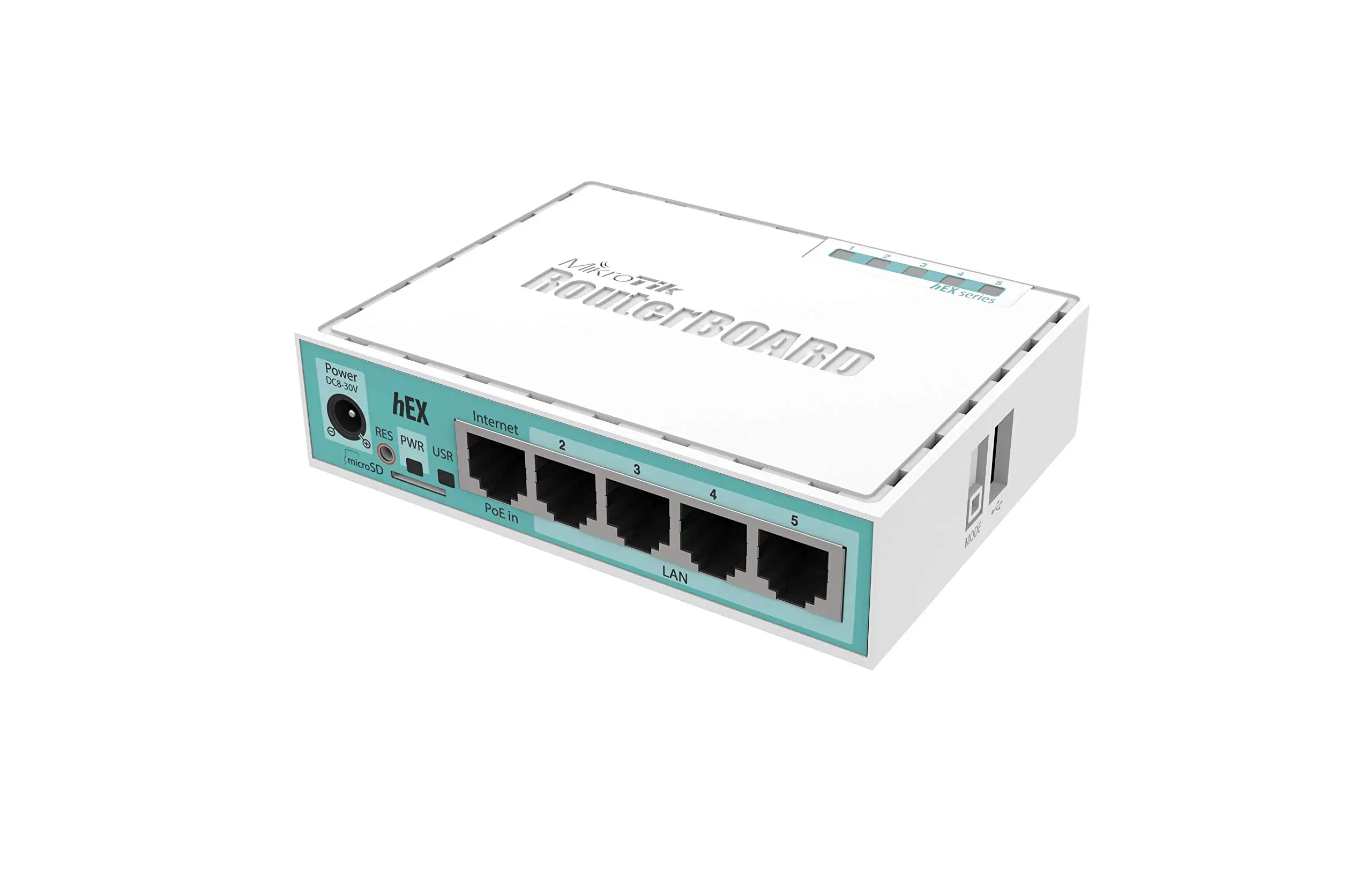
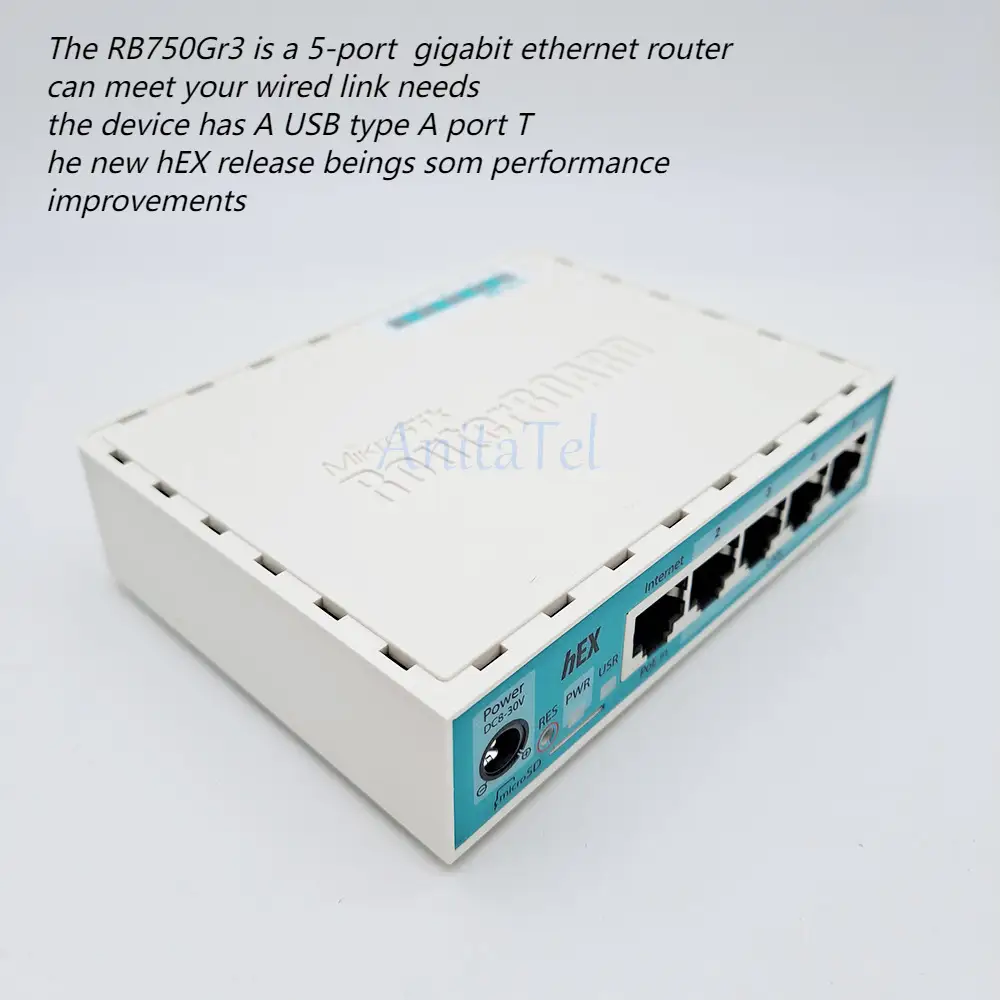
Mikrotik hEX RB750Gr3 Review: FastTrack Strength, VPN Weakness
A Reddit user summed it up bluntly: “With FastTrack I can get full speed with the 750Gr3… but in some use cases FastTrack can’t be used.” That single sentence captures the split personality of the Mikrotik hEX RB750Gr3 Gigabit Router—a compact, affordable powerhouse that can hit near-gigabit speeds under the right conditions, but shows its limits quickly when packet processing rules stack up. After compiling hundreds of cross-platform reports, this router earns a solid 8.1/10 for its price-to-performance ratio, with caution for advanced multi-WAN or high firewall load scenarios.
Quick Verdict: Conditional buy—excellent for advanced home setups and small offices without heavy firewall rules or complex VPN loads.
| Pros | Cons |
|---|---|
| Compact, durable build | Limited VLAN hardware support |
| Excellent FastTrack throughput (up to ~919 Mbps) | IPSec speeds often far below claimed 470 Mbps |
| Affordable at ~$60-70 | 16MB flash limits future upgrades |
| RouterOS flexibility for power users | CPU core processing bottlenecks under single-thread loads |
| Passive cooling, silent operation | QuickSet config instability reported |
| Acts as capable managed switch | No SFP port option |
| microSD slot for storage expansion | Learning curve for RouterOS configuration |
Claims vs Reality
Marketing promises “IPSec hardware encryption (~470 Mbps)” and “capable of all advanced RouterOS configurations.” Digging into field tests, multiple Reddit and forum users struggled to hit those encrypted throughput claims. One forum poster described: “Currently I have only about 130 Mbit… Mikrotik’s marketing results should be divided by 2.” In isolated lab tests between two RB750Gr3 units using AES-128, speeds around 436 Mbps were possible, but real-world mixed-direction or GRE-over-IPSec scenarios often landed between 150–200 Mbps.
Similarly, RouterOS flexibility is unquestioned, but hardware VLAN capabilities lag behind expectations. “Ports 2–5 cannot be separated… no VLAN header mode supported,” a disappointed buyer wrote, noting that OpenWrt on the same chipset delivered full VLAN/Q-in-Q support. Mikrotik responded that software-based VLANs are possible, but hardware tagging/untagging remains “planned to implement in future.”
Cross-Platform Consensus
Universally Praised
One area nearly everyone agrees on is value. At ~$60–70, the RB750Gr3 delivers reliable Gigabit Ethernet switching and routing, with power usage under 5W without attachments. A verified Amazon buyer noted: “Excellent value for money… can run full duplex at 1 Gb/s on 2 of the 4 LAN ports… connected to the internet within 5 minutes using QuickSet.”
Performance with FastTrack enabled consistently impressed. Reddit users testing RouterOS 7.18 beta reported 919 Mbps over IPv6. “With FastTrack you can get full speed… now working with IPv6 too,” shared one enthusiast, making it attractive for home labs where raw forwarding speed matters.
For small office admins, the inclusion of a microSD slot and USB port expanded utility—hosting The Dude network monitoring server or local log storage. Long-term owners reported stable hardware. One Trustpilot reviewer summarized: “Small, easy to use, powerful dual core CPU… no issues overnight or after reboot.”
Common Complaints
Performance caveats appear quickly with complex firewall rules or multi-WAN load balancing. As one technical reply explained: “All packets of same connection are handled by same CPU core… single HTTP file downloads hit same core.” Load balancing with PCC reduced speeds to ~250 Mbps unless carefully tuned with FastTrack exclusions.
Another recurring complaint: instability when using QuickSet for DHCP changes. “If I change DHCP range… lost its IP address and the device will be inaccessible,” reported a forum user, leading seasoned admins to advise avoiding QuickSet entirely once manual configurations begin.
VPN use exposes deeper weaknesses. IPSec, while hardware-accelerated, often failed to saturate links compared to claims. L2TP/IPSec AES-256 tests showed throughput dropping below 50 Mbps in some scenarios. “IPSec became very bugged after 6.34.4… throughput reduced as CPU stopped loading fully,” lamented a long-time Mikrotik forum participant.
Divisive Features
The absence of an SFP port polarizes buyers. Field installers appreciate the cost savings—“SFP not really any use for generic devices”—while fiber-heavy setups see it as essential, opting instead for hEX PoE units with SFP. Storage capacity is another split; while most find 16MB flash sufficient, power users demand 32–64MB for partitioned firmware flexibility. “I’d pay the extra $2 to have 32MB… partitions let me revert to old firmware after a bad upgrade,” wrote one advocate.
Trust & Reliability
No wider scam concerns emerged. Trustpilot comments were generally positive on hardware dependability. Durability anecdotes span years: “CPU load never above 50%, stable operation for months,” reported one networking hobbyist. However, reliability in software features remains mixed—early RouterOS versions caused VLAN and QuickSet instability, suggesting firmware maturity as a factor in success. Users updating to current RouterOS 7 reported fewer crashes but still advised caution when deploying in VPN-heavy roles.
Alternatives
Within Mikrotik’s lineup, several suggested stepping up when heavier loads are planned. “You need either a RB5009… around 3Gbps, or a hAP ax3 at 1.1Gbps,” advised one community member addressing PCC slowdowns. For budget-conscious buyers, the hAP ax² delivers ~912 Mbps and integrated Wi-Fi, but at ~$99.
Comparisons with Ubiquiti’s EdgeRouter X found the RB750Gr3 superior in duplex throughput, albeit with a steeper learning curve. “Returned ER-X… can’t run at 1Gb/s full duplex,” noted an Amazon review, illustrating the niche the hEX occupies for wired-only, speed-focused setups.
Price & Value
Market listings hover between $60–72 USD across Amazon and eBay, with occasional discounts to $38 for used units. Resale demand remains healthy given its utility as a managed switch or travel router after primary network upgrades. Community advice consistently stresses: buy when online prices dip below $65 and update to the latest stable RouterOS before deployment.
FAQ
Q: Can the RB750Gr3 handle gigabit fiber connections?
A: Yes, with FastTrack enabled and minimal firewall rules, users have sustained ~900+ Mbps. Complex rule sets or VPN encapsulation can reduce speeds.
Q: Is VLAN tagging supported in hardware?
A: Not fully—only basic switching is currently supported. Software-based VLAN configurations work but may impact performance under load.
Q: How much IPSec throughput can I expect?
A: Real-world results vary from ~130 Mbps to 436 Mbps depending on configuration, encryption settings, and whether testing is unidirectional or bidirectional.
Q: Does it support multi-WAN load balancing?
A: Yes, via PCC or ECMP, but tuning is required. Default configurations may limit total throughput without FastTrack adjustments.
Q: Is it reliable for long-term unattended use?
A: Hardware stability is strong, with reports of months-long uptime. Ensure RouterOS is updated to latest stable release to avoid older firmware bugs.
Final Verdict: Buy if you’re an advanced home user or small office admin who values wired gigabit performance, RouterOS flexibility, and low cost. Avoid if you require high VPN throughput, hardware VLAN tagging, or SFP connectivity from day one. Pro tip from community: “Never use QuickSet after manual setup—go straight to Winbox or CLI for stability.”