Midland X-TALKER Walkie-Talkie Review: 8/10 Value
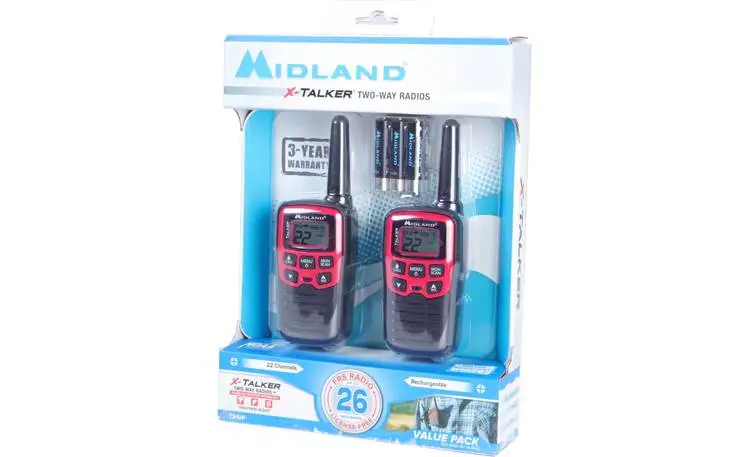
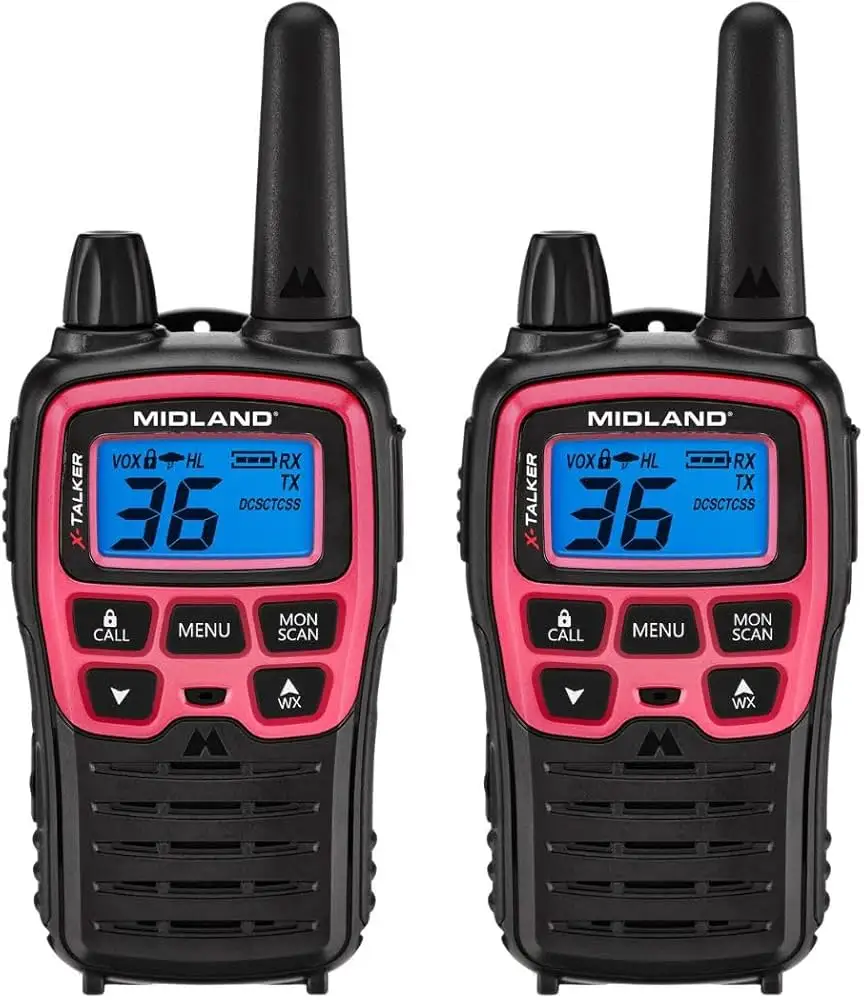
“Battery life sucks… usually last about 4 hours,” one buyer complained — yet another user said their set “lasted 3 days of being on before they needed recharged.” That gap captures the reality of the Midland X-TALKER Walkie-Talkie with NOAA Weather Alert, 2 Pack: liked for clarity and handy weather tools, but dependent on terrain, temperature, and battery expectations. Verdict from the compiled feedback: strong value if you want compact FRS radios for short-to-mid range use, with a realistic score of 8/10.
Quick Verdict
Conditional Yes.
| What users like | Evidence from user feedback | Who benefits |
|---|---|---|
| Clear audio and low static | A verified buyer on Amazon said: “the reception was good and clear and able to understand the other.” Best Buy reviewers highlight “sound quality” as a top pro. | Families, off-road groups, festival crews |
| NOAA weather scan/alerts feel genuinely useful | Reddit user Daniel (Dyrt Ranger) said: “I personally love the weather scan capability… very useful while… kayaking.” Another Amazon reviewer credited NOAA with helping during a tsunami warning. | Campers, boaters, remote-area residents |
| Compact, easy to carry and operate | A verified buyer on Amazon noted: “nice small radios. clear sound.” Best Buy users praised “ease of use.” | Kids, hikers, work crews needing belt-clip radios |
| Real‑world range is decent but far below “up to” claims | Best Buy reviewer wrote that in mountains “actual… range was more like 2-3 miles.” Amazon T31VP users describe about “a mile with clear line of sight.” | Anyone doing car-to-car, campsite, or property comms |
| Batteries are the biggest pain point | A verified buyer on Amazon said: “battery life… lasts a few hours if you’re lucky.” Another noted cold weather shortens life. | Heavy users, ski/hunt groups, work teams |
Claims vs Reality
Midland’s marketing leans hard on “xtreme range” numbers: the T51VP3 is officially rated “up to 28 miles,” and related X‑TALKER models promise 26–38 miles depending on pack. Digging deeper into user reports, that headline range is rarely achieved outside wide‑open line‑of‑sight conditions. A Best Buy reviewer described the reality bluntly: while the product is advertised at 38 miles, in a mountain trip “effective communication range was more like 2-3 miles.” A verified Amazon buyer using T31VPs for RV caravanning echoed the same pattern: range is “about a mile with clear line of sight when in a vehicle… if you are going over a mountain… the distance shrinks greatly.” While officially rated as 28–38 miles depending on model, multiple users report 0.5–3 miles in forests, hills, or cities.
The second big claim is about battery life and included rechargeables. The specs list about 10 hours, and the packs ship with rechargeable batteries. User experience is sharply split. Some people find endurance excellent in light use: a verified buyer on Amazon said their radios “last the entire three days” on a campground weekend, and another wrote “battery life is awesome! lasted 3 days of being on.” But heavy users and cold‑weather users tell a different story. A verified Amazon buyer said: “battery life really only lasts one day… longer in warmer conditions,” and another complained the included packs “usually last about 4 hours with moderate use per charge.” For ski groups, soccer officials, and hunting trips in winter, the rechargeables can be a real weak link.
Midland also positions NOAA weather alerts as a standout safety feature, and here the feedback is far more unified. Dyrt Rangers repeatedly called out weather scan as a practical advantage. Reddit user Daniel said it “locks into the NOAA weather broadcasts to deliver you a forecast,” helping him decide routes while kayaking. A verified Amazon reviewer in Alaska went further, calling NOAA “life saving,” describing how they relied on those stations during a tsunami warning to know when it was safe to return home. For outdoors users, the weather radio isn’t fluff — it’s one of the few features that consistently exceeds expectations.
Cross-Platform Consensus
Universally Praised
A recurring pattern emerged around audio clarity. Across Amazon and Best Buy, users repeatedly mention crisp voice transmission and minimal static. A verified buyer on Amazon said: “the reception was good and clear,” using them for car‑to‑car communication on a road trip. Another Amazon hunting user described them as “much better than radios from a few years ago,” and a Best Buy reviewer compared them favorably to Motorola “talk abouts,” noting they “sound a lot better and clearer… hardly any static.” For families splitting up in a campground or a four‑vehicle convoy on the highway, that clarity means fewer repeated calls and less frustration.
Portability and straightforward setup also get near‑universal approval. Off‑roaders, RV travelers, and grandparents watching kids all frame the small size as a feature, not a compromise. A verified buyer on Amazon said the radios are “nice small radios” and “barely noticeable on your hip,” while another described them as “compact, powerful, and easy to use.” For grandparents or parents letting kids roam at a festival or campground, the light weight makes it realistic for children to keep one on a belt clip without complaining.
NOAA weather alerts are the other clear win, especially among people who spend time where cell coverage is unreliable. Reddit user Jenny (Dyrt Ranger) said the radios were “awesome and worked as good as or better than a CB” for overlanding, then highlighted backcountry use because “cell phones don’t always work.” The Alaska Amazon reviewer credited the NOAA stations with giving their family confidence during an emergency: “thankfully I realized I had 9 NOAA stations… knowing our families were safe.” For solo campers or boaters, the ability to scan and lock onto weather channels shows up in story after story as the feature that justifies choosing Midland over cheaper toy‑like walkies.
Common Complaints
Range realism is the biggest complaint, and it’s usually tied to terrain. Even users who like the radios caution others to ignore the marketing number. A Best Buy reviewer advised to “temper your 38 mile expectations,” saying that kind of distance “will almost never happen in the real world.” A verified Amazon buyer skiing explained they “work well if you are on the same side of the mountain,” but not across valleys. Another verified Amazon buyer in a “hilly, mountainous terrain” said they “do not go as many miles as we expected.” For anyone hiking in canyons or driving in mountain passes, the radios can feel underpowered if you believed the box.
Battery life complaints are nearly as frequent, and the frustration often comes from the included rechargeables rather than the radio itself. A verified Amazon buyer wrote: “battery life: horrible… last a few hours if you’re lucky,” and another said rechargeables “don’t have the great life span.” Cold weather makes it worse; one reviewer noted the battery “seems to run a little short in cold weather.” Work users and sports officials are especially affected because a dead radio mid‑shift is disruptive. One soccer official said the radios are great for sound, but “I had my radio die in the middle of a game… please provide stronger batteries.” Several buyers recommend swapping in higher‑capacity AAA rechargeables or rotating units.
Some smaller usability gripes recur too. A verified Amazon buyer disliked that buttons can get bumped, kicking on scanning or call tones: “my only gripe… buttons that get bumped… it helps to lock the keypad.” Another mentioned charging dock quirks, saying their base “had no working LED indicators,” though it still charged. These aren’t deal‑breakers for most, but they show up enough to be a known annoyance.
Divisive Features
Charging and power options split users. Some appreciate USB or cradle charging, describing it as convenient for travel or emergencies. A Best Buy reviewer called USB charging “unique,” liking that they could charge directly on the radio. But others complain the included split “Y” cable is too short or awkward. A verified Amazon buyer on a 3,300‑mile RV trip wished for “a longer single charging cable,” and another said charging “takes forever” and never shows full. For casual campers, the stock charger is fine; for daily work or multi‑day trips, people often upgrade.
Noise and privacy codes are also divisive depending on use case. Many users like the “38 privacy codes” to avoid chatter; the RV traveler said with codes “we never heard anyone else talking.” But some reviewers note that channel coding can be confusing to set up, and one Best Buy user complained they were “really hard to operate.” The same feature that helps a big overlanding group stay on a clean channel can overwhelm someone who just wants a plug‑and‑play toy.
Trust & Reliability
Scam or fraud concerns don’t appear centered on the radios themselves, but on retail fulfillment. One Best Buy reviewer titled their experience a “nightmare purchase,” alleging false advertising and a missing delivery. That feedback is about the retailer’s shipping and customer service, not device performance, yet it’s a reminder that buying from reputable sellers matters.
Long‑term durability stories, on the other hand, lean positive. A verified Amazon buyer told a hunting anecdote where a T75VP3 was lost outdoors for nine months through a harsh New York winter, then “worked like a charm” once fresh batteries were installed. Another user said their previous set still works years later, though the first charger base eventually failed and they shifted to USB charging. For users needing backup comms for emergencies or property work, these stories suggest the radios themselves are sturdier than the accessories that ship with them.
Alternatives
Only a few competitors are mentioned directly in the feedback. A Best Buy reviewer switched from “Motorola talk abouts” and found the Midlands “sound a lot better and clearer.” For buyers comparing mainstream consumer walkie‑talkies, that positions the X‑TALKER as a step up in audio clarity.
CB radios come up as the other reference point, especially among off‑roaders. Reddit user Jenny said the Midlands “worked as good as or better than a CB” for trail caravans. Another verified Amazon buyer off‑roading called them “way better than installing a CB.” Still, Midland themselves note that for overlanding parties needing more reach, their vehicle‑mounted MicroMobile line is recommended. So the alternative depends on range needs: handheld X‑TALKER for short convoy gaps, CB/MicroMobile for longer, vehicle‑to‑vehicle distances.
Price & Value
Current retail for the T51VP3 two‑pack is around $49.99, and other X‑TALKER two‑packs range roughly $30–$80 depending on channels and stated range. Buyers repeatedly frame them as good value if you accept real‑world limits. A verified buyer on Amazon said they were “worth every penny,” especially for keeping track of kids at camp. The RV traveler said “for the price they worked perfectly,” even if they might choose something stronger next time. Best Buy ratings also list “value” as a high‑scoring feature.
On resale, eBay listings show new T31VP packs selling around the low‑$50s, close to retail, implying steady demand. Community buying tips skew practical: set channels and privacy codes before trips, lock the keypad to avoid accidental scans, and consider higher‑capacity AAA rechargeables if you plan to talk a lot. Heavy users also suggest keeping one unit plugged in or rotating batteries every few hours.
FAQ
Q: How far do these Midland X‑TALKER radios really reach?
A: In open, flat areas users see solid short‑range performance, but not the advertised max. Best Buy and Amazon reviewers commonly report about 0.5–3 miles depending on terrain. Mountains, forests, RVs, and buildings reduce range sharply.
Q: Is the battery life good enough for a weekend trip?
A: It depends on usage and temperature. Some Amazon buyers say a single charge lasted “the entire three days,” while others get only 2–5 hours with frequent talking. Cold weather often shortens life, so heavy users often bring spare AAA rechargeables.
Q: Are NOAA weather alerts actually useful?
A: Yes, and this is one of the most consistently praised features. Dyrt Rangers credit weather scan with helping plan routes, and a remote Alaska buyer described NOAA stations as “life saving” during a tsunami warning. Outdoors users see real safety value.
Q: Are they easy for kids or non‑technical users?
A: Most users find them simple and intuitive, praising quick setup and clear buttons. Still, a minority say changing channels or codes is confusing. Families recommend setting the channel/privacy code for kids ahead of time and using keypad lock.
Q: Do they work with other radios?
A: Users report good compatibility with other FRS/GMRS sets. A verified Amazon buyer said they work “perfectly with my GMRS radios,” and Midland confirms shared frequencies. Just ensure both sides match channel and privacy code.
Final Verdict
Buy if you’re a camper, overlander, festival organizer, or parent who needs compact, license‑free walkie‑talkies with dependable audio and genuinely helpful NOAA weather alerts within a realistic mile‑or‑two radius. Avoid if your main goal is long‑distance mountain‑to‑valley communication or all‑day, high‑traffic use on the stock rechargeables. Pro tip from the community: set your privacy codes in advance, lock the keypad, and bring upgraded AAA batteries if you’ll be talking a lot or using them in the cold.