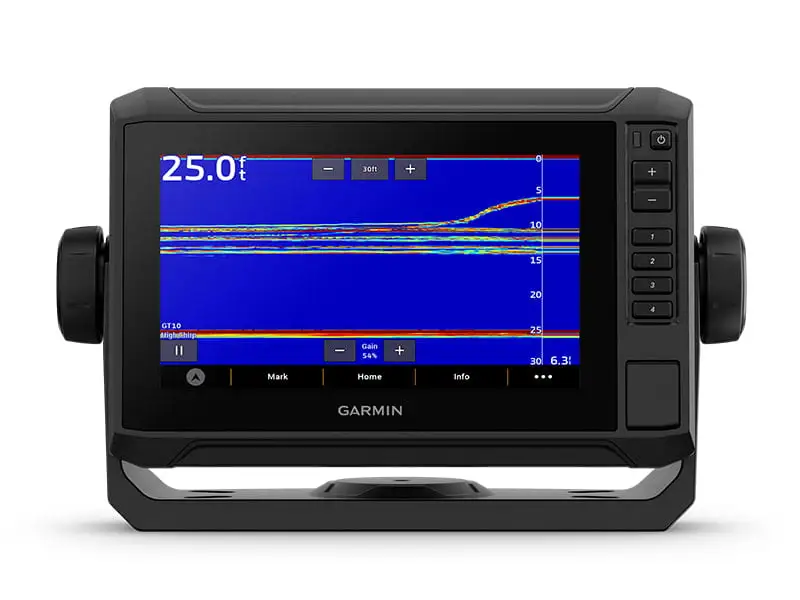
Lowrance Elite FS Review: Strong Value, Not Flawless
A single line from the community captures the mood around Lowrance Elite FS Fishfinder/Chartplotter: “massive upgrade from my helix 7.” Based on the provided user-written sources, the Elite FS earns a 7.9/10—praised for touchscreen usability, mapping and networking, but repeatedly scrutinized for transducer performance-at-speed, wet-touch controls, and long-term software reliability.
Quick Verdict
Conditional — a strong mid-tier choice if you want touchscreen + networking + mapping, and you’re realistic about add-on costs (ActiveTarget) and transducer tradeoffs.
| What buyers liked | Evidence from users | What buyers disliked | Evidence from users |
|---|---|---|---|
| Touchscreen feels intuitive | Channel 6-8 user said: “much more intuitive with touch screen” | Touchscreens can be finicky when wet | Fish Finder Tech reviewer said: “when touchscreens get wet, they can be hard to use” |
| Mapping is strong out of the box | Fish Finder Tech reviewer called it “excellent mapping out of the box” | Some report C-MAP contour mismatches | Channel 6-8 user said: “Navionics turned out to be right and c-map was way off” |
| Networking is a standout | Fish Finder Tech reviewer: “ethernet… wi-fi… bluetooth… nmea 2000… basically everything you could need” | “3-in-1” transducer performance debated | Channel 6-8 user warned: “you give up too much performance at speed”; another countered “mine will pick up fish at cruising speed” |
| Live sonar (with add-on) impresses | Lowrance blog author said it was “a mind blowing experience” | Add-ons and mounts not always included | Fish Finder Tech reviewer: “no in-dash mount included”; Lowrance materials: “transducer sold separately” (ActiveTarget) |
Claims vs Reality
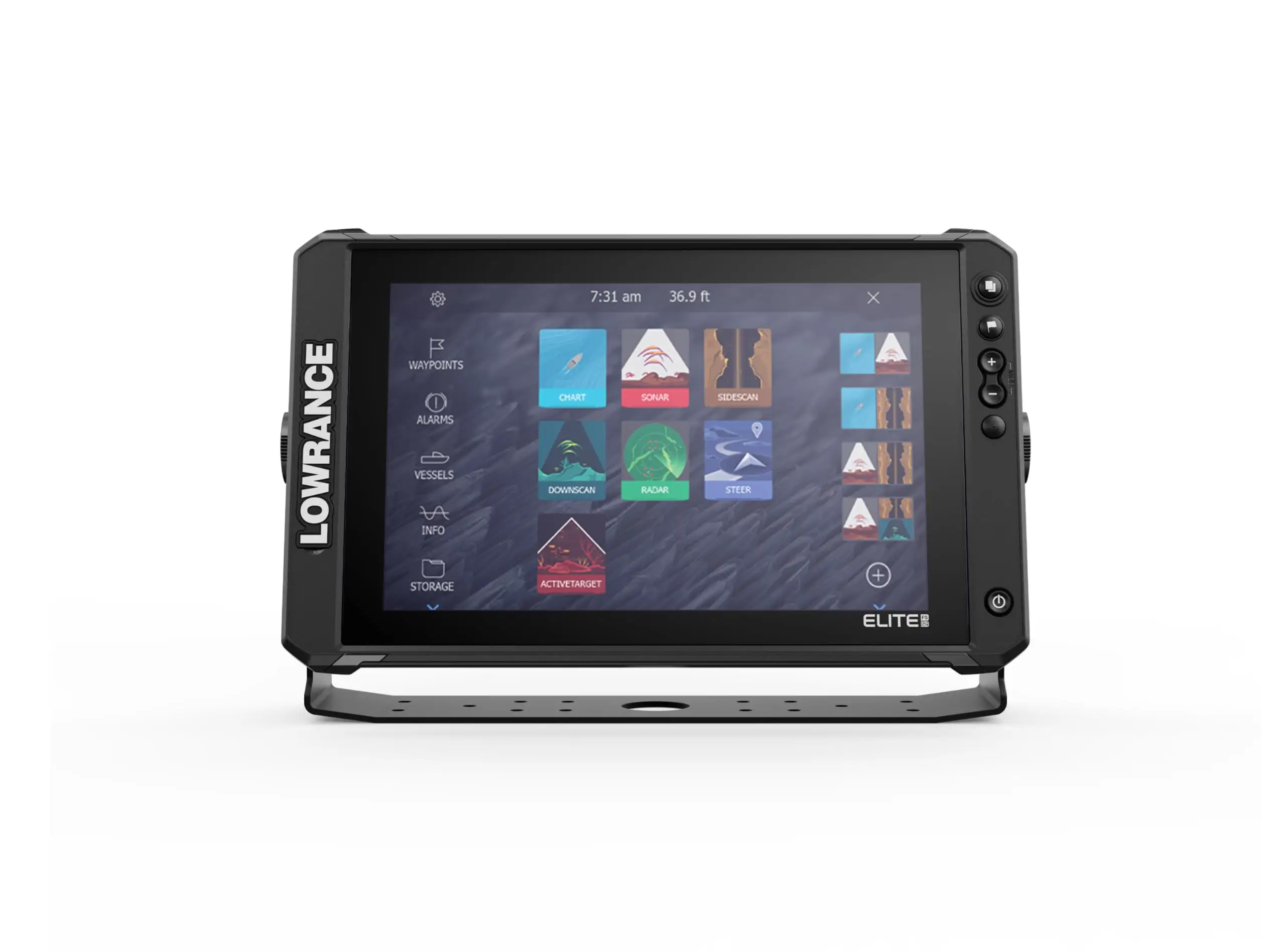
Lowrance’s official messaging positions Lowrance Elite FS Fishfinder/Chartplotter as “easy to use and easy to install,” with a “high resolution IPS multi-touch screen” and “full networking capability” (Lowrance product pages and press release). Digging deeper into user accounts, “easy” often means menu speed and plug-and-play compatibility—but installation decisions (mounting locations, transducer mounting style, and managing cables/power switching) still shape satisfaction.
In Lowrance’s own blog, Sean Bekkers described a straightforward upgrade path from an Elite Ti²: “wiring wise the fs uses all the same plugs and transducer… literally a plug and play scenario,” though he also emphasized practical hurdles like choosing a mounting spot that isn’t “in the firing line of my hatch opening.” That’s a recurring reality gap: the unit itself may be simpler, but boat layout constraints still decide whether “easy install” feels true.
Another marketing centerpiece is real-time sonar. Lowrance highlights ActiveTarget/ActiveTarget 2 as a “watch fish movements” tool. User narratives agree on the “wow” factor—yet the story isn’t complete without the extra hardware and learning curve. Bekkers stressed that modes “require a physical change the transducer orientation” and that mounting on a trolling motor “can be a little restrictive,” pushing him to a separate pole. In other words: the promise is real, but it’s not “install it once, forget it.”
Finally, mapping: Lowrance and Amazon-style listings repeatedly tout preloaded C-MAP Contour+ charts and “1-foot contours.” Many reviewers echo strong out-of-box mapping, but at least one community report flags local inaccuracies. A Channel 6-8 forum user said: “built in c-map contours seem to be pretty good,” then added a sharp caveat after ice-fishing: “pretty big discrepancies… Navionics turned out to be right and c-map was way off.” While the official pitch is broad coverage and detail, real users still cross-check in specific waters.
Cross-Platform Consensus
Universally Praised
Speed, layout, and day-to-day usability emerged as the backbone of positive feedback around Lowrance Elite FS Fishfinder/Chartplotter—especially for anglers upgrading from button-driven units. On Channel 6-8, one owner framed the upgrade as immediate and tactile: “massive upgrade from my helix 7, much more intuitive with touch screen and so many options at the tip of your fingers vs. buttons.” For tournament anglers or anyone juggling sonar + chart views, that “tip of your fingers” shift is the core benefit: faster navigation between screens without digging through nested menus.
Professional-style networking is the other repeated bright spot, particularly for boaters building multi-display systems or integrating accessories. Fish Finder Tech’s FS 7 review called out “fantastic networking,” describing the mix of “ethernet… wi-fi… bluetooth… nmea 2000” as more than enough for a unit this size. For anglers who run multiple screens or want to share waypoints/sonar between stations, the implication is practical: less duplicated setup and easier data sharing across the boat.
Mapping and chart compatibility also land consistently well—at least as a baseline. Fish Finder Tech said the unit “comes with c-map contour+… one of the best out of the box maps we’ve seen,” emphasizing 1-foot contours and broad coverage. For pre-fishing and scouting, that story matters: anglers can run routes, mark structure, and plan drifts with minimal extra purchases. Even the Channel 6-8 owner who later questioned C-MAP accuracy still started from a place of optimism: “built in c-map contours seem to be pretty good.”
Summary (praised most often):
- Touchscreen/menu flow feels like a “massive upgrade” for upgraders (Channel 6-8).
- Networking is repeatedly called out as unusually strong at this tier (Fish Finder Tech).
- Out-of-box mapping is widely described as detailed and useful (Fish Finder Tech).
Common Complaints
The first recurring friction point is touchscreen control in real fishing conditions. Fish Finder Tech’s FS 7 review praised the interface, then immediately flagged the tradeoff: “we do, however, wish there was a joystick as well—when touchscreens get wet, they can be hard to use.” For anglers who fish in rain, run rough water, or handle gear with wet hands, the impact is simple: touchscreen-first navigation can slow down exactly when conditions are worst.
The second complaint cluster centers on transducer strength and “at speed” performance. Fish Finder Tech’s FS 7 review includes the blunt con: “the included transducer is a bit weak compared to similar models from other brands.” Community feedback gets more specific about the use case—trolling versus running. One Channel 6-8 participant warned: “stay away from the 3 in 1 transducer for trolling… you give up too much performance at speed. so you might drive over a school and never see it.” For anglers who rely on scanning while moving, that’s not a minor nit; it changes how confidently you can use the unit for run-and-gun searching.
Finally, installation and system management can bite, especially once you add live sonar modules. In the Lowrance blog, Bekkers described learning the hard way that powering the system from one switch meant “the at transducer keep pinging when out of the water. not the best for the transducer,” leading him to add a dedicated switch. The takeaway: the system can be clean when installed well, but real ownership involves power planning and cable discipline.
Summary (complaints heard repeatedly):
- Wet touch control can be frustrating without a joystick backup (Fish Finder Tech).
- Included “3-in-1” transducer is criticized as weaker by some (Fish Finder Tech; Channel 6-8).
- Live sonar setups can require extra install decisions (Lowrance blog).
Divisive Features
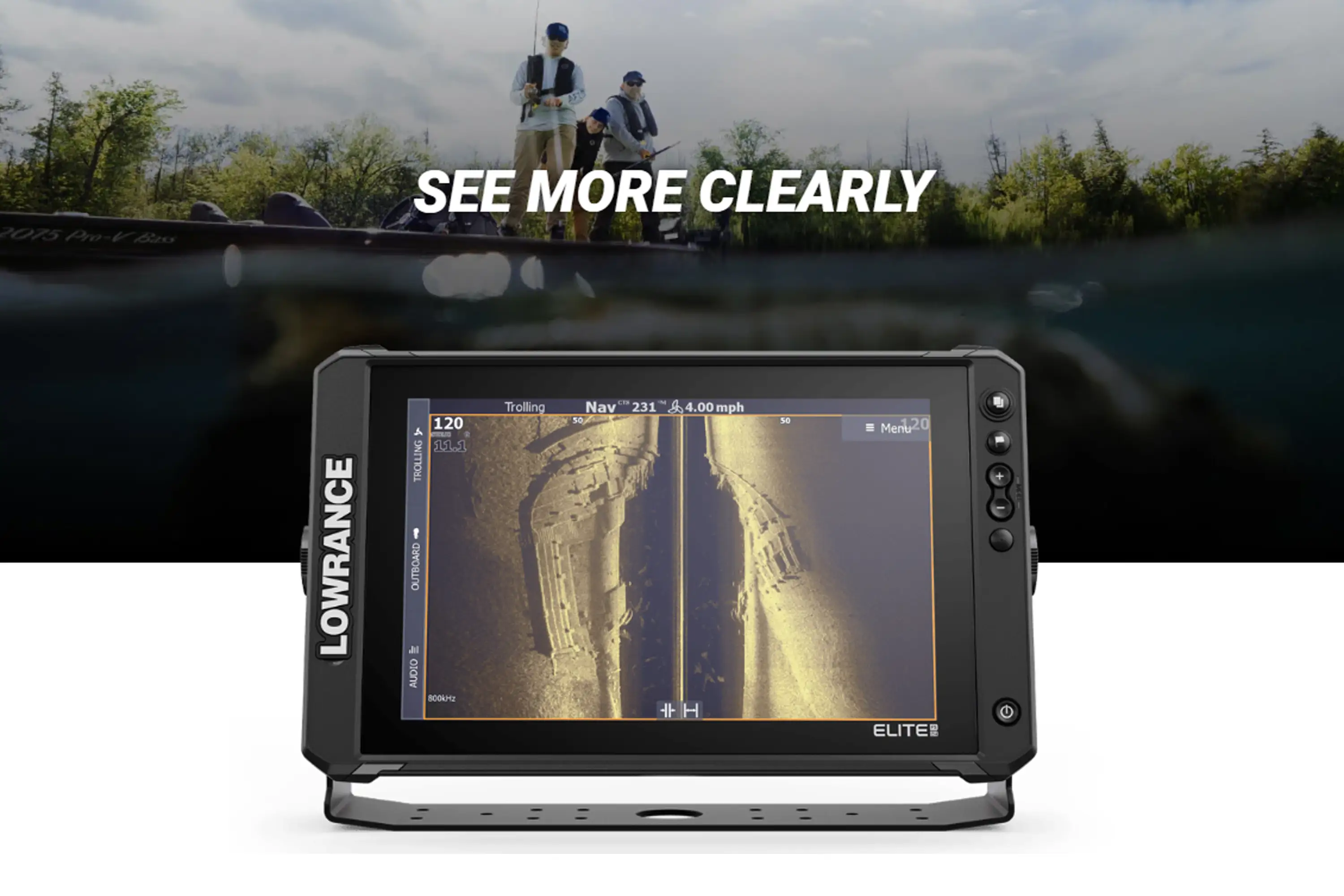
The “3-in-1” transducer debate is the clearest split around Lowrance Elite FS Fishfinder/Chartplotter. One Channel 6-8 voice dismissed side/down features as “neat gimmicks” and warned of lost performance at speed. Another community member pushed back from experience with the Elite Ti predecessor, saying: “i do disagree that you will have issue with the 3 in 1 transducer. mine will pick up fish at cruising speed… i have picked up many schools… put a waypoint on them and then turned around and caught fish.” The same feature set becomes either a liability or a real advantage depending on mounting, setup, waterbody, and expectations.
C-MAP versus Navionics is another soft divide. Fish Finder Tech emphasized broad compatibility—“compatible with all navionics charts”—and a Channel 6-8 owner considered adding a Navionics card. But that same user’s ice-fishing anecdote—“Navionics turned out to be right and c-map was way off”—shows how quickly “good enough maps” becomes “I need a different chart” in specific lakes.
Trust & Reliability
Digging deeper into reliability signals, one of the strongest negative notes appears in the AguaPulse compilation, citing “multiple reports of ‘sonar version 0.0.0’ software crashes post-warranty,” with repair costs described as “up to 60% of the unit price.” That’s not a one-off gripe about features—it’s a long-term ownership fear: a high-dollar electronics failure after warranty.
By contrast, longer-term durability stories in the provided community data are more “confidence by legacy,” where some users extrapolate from predecessor units. A Channel 6-8 participant wrote about the Elite Ti: “this will be my 5th season with it… the sonar quality is amazing,” and another described the Elite Ti7 as “definitely loved it especially linked to a motorguide xi 5.” That doesn’t prove FS durability, but it explains why some buyers trust the lineage and expect similar longevity.
Alternatives
Only competitors mentioned in the provided data are included here. For anglers comparing across brands, Lowrance Elite FS Fishfinder/Chartplotter often gets framed as the value networking pick rather than the absolute imaging king.
Fish Finder Tech explicitly asked how it stacks against the Humminbird Helix line and concluded that while the Elite FS 7 is “feature dense,” its “out of the box transducer and imaging fall short of what the helix 7 can do.” That’s a clear storyline for structure-imaging purists: if you’re buying primarily for imaging fidelity, some reviewers think Helix wins.
On the Garmin side, Anglers.com described the ECHOMAP UHD lineup as option-rich but “pretty pricey,” positioning Elite FS as the “middle of the road” pick. For budget-sensitive buyers who want a modern touchscreen and expandability, that “priced accordingly” framing is why Elite FS keeps appearing as a compromise.
Simrad appears as a near-price neighbor. In Channel 6-8, one user wrote: “love my simrad go9 and only a few $ more,” implying Elite FS isn’t the only route to a big-screen multifunction display at this spend level.
Price & Value
On Amazon, one Elite FS 7 bundle is listed at $899 (GPS City bundle) with “Active Imaging 3-in-1” and preloaded charts, and it shows a 5.0 out of 5 stars rating on that listing page (though only the rating itself is provided, not written reviews). That aligns with the “mid-tier but capable” positioning repeated across reviews.
Resale signals from eBay show a live market with meaningful spread: Elite FS 9 listings range roughly from the mid $700s used to around $999+ new depending on whether a transducer is included and condition/shipping. For budget-focused upgraders, the biggest buying tip implied by listings is to watch “no transducer” deals versus full “3-in-1” bundles—because the included hardware materially affects your real cost.
Community buying logic also emphasizes value versus HDS Live. A Channel 6-8 user described Elite FS as “a great unit loaded with great features at a fraction of the price of an hds live… far more unit then i need.” That’s the core value case: Elite FS is chosen not because it’s the top of the line, but because it hits the “enough features” threshold without the flagship price.
FAQ
Q: Is the Lowrance Elite FS compatible with ActiveTarget live sonar?
A: Yes—multiple sources describe it as “ActiveTarget ready,” but live sonar requires extra hardware. Lowrance materials state the ActiveTarget transducer is “sold separately,” and the Lowrance blog describes the ActiveTarget module/transducer installation and mode changes that “require a physical change” in orientation.
Q: Do the preloaded C-MAP Contour+ charts match real structure accurately?
A: Often, but not always. Fish Finder Tech calls C-MAP Contour+ “one of the best out of the box maps,” while a Channel 6-8 user reported “big discrepancies” on Lake Simcoe where “Navionics turned out to be right and c-map was way off.”
Q: Is the included Active Imaging 3-in-1 transducer good enough at speed?
A: Feedback is split. Fish Finder Tech says the included transducer is “a bit weak compared to similar models,” and a Channel 6-8 user warned you “give up too much performance at speed.” Another Channel 6-8 user disagreed, saying their 3-in-1 setup “will pick up fish at cruising speed.”
Q: Is the touchscreen easy to use on the water?
A: Many users love the interface, but wet conditions can be a drawback. Fish Finder Tech praised the menu layout but said “when touchscreens get wet, they can be hard to use,” wishing for a joystick. A Channel 6-8 upgrader still called it “much more intuitive” than button-based units.
Final Verdict
Buy Lowrance Elite FS Fishfinder/Chartplotter if you’re a bass boat or multi-station angler who values touchscreen speed, strong networking (Ethernet/NMEA 2000), and solid out-of-box mapping—and you’re willing to tune installation and potentially upgrade charts or sonar accessories.
Avoid it if your priority is maximum imaging performance from the included transducer at higher speeds, or if you want physical controls as a primary navigation method in wet weather.
Pro tip from the community: if you’re chasing live sonar, plan the install like a system—Lowrance blog author Sean Bekkers said powering everything together meant the “transducer keep pinging when out of the water,” so he “added a switch… so i can cycle the transducer to off when running in between spots.”