LISEN USB-C Cable Review: Great Charging, Poor Data Speed
A Reddit user summed it up bluntly: “For charging, it’s great. For data, don’t bother.” That pattern threads through feedback for the LISEN USB-C to USB-C Cable (2 Pack, Midnight), earning it a conditional verdict of 7.5/10 — strong on high‑wattage power delivery, but compromised if file transfer speed is your priority.
Quick Verdict: Conditional
| Pros | Cons |
|---|---|
| Reliable high-wattage charging (tested up to 240W on some devices) | USB 2.0 data transfer speed only (480Mbps) |
| Durable braided or bio-based exterior resists tangling | Some reports of stiff material making cable management awkward |
| Right-angle "L" design improves comfort during use | Questions about marketing claims vs. actual supported wattages |
| Eco-friendly materials (recyclable cotton yarn) | Accusations of inflated specs and paid reviews on certain platforms |
| Competitive pricing with frequent deals | Not suitable for video output or Thunderbolt-level tasks |
| Compatible with wide range of USB-C devices | Inconsistent quality control cited by skeptical buyers |
Claims vs Reality
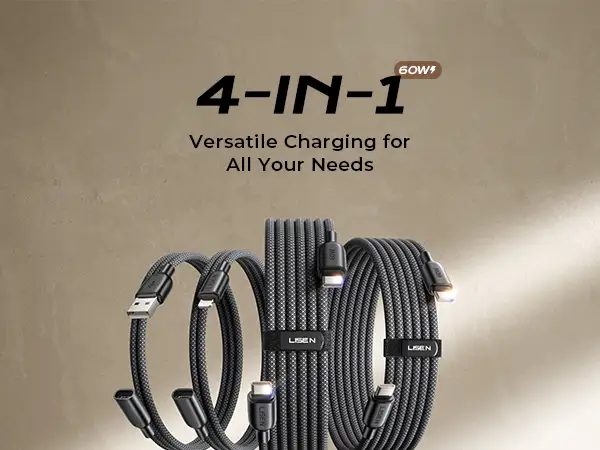
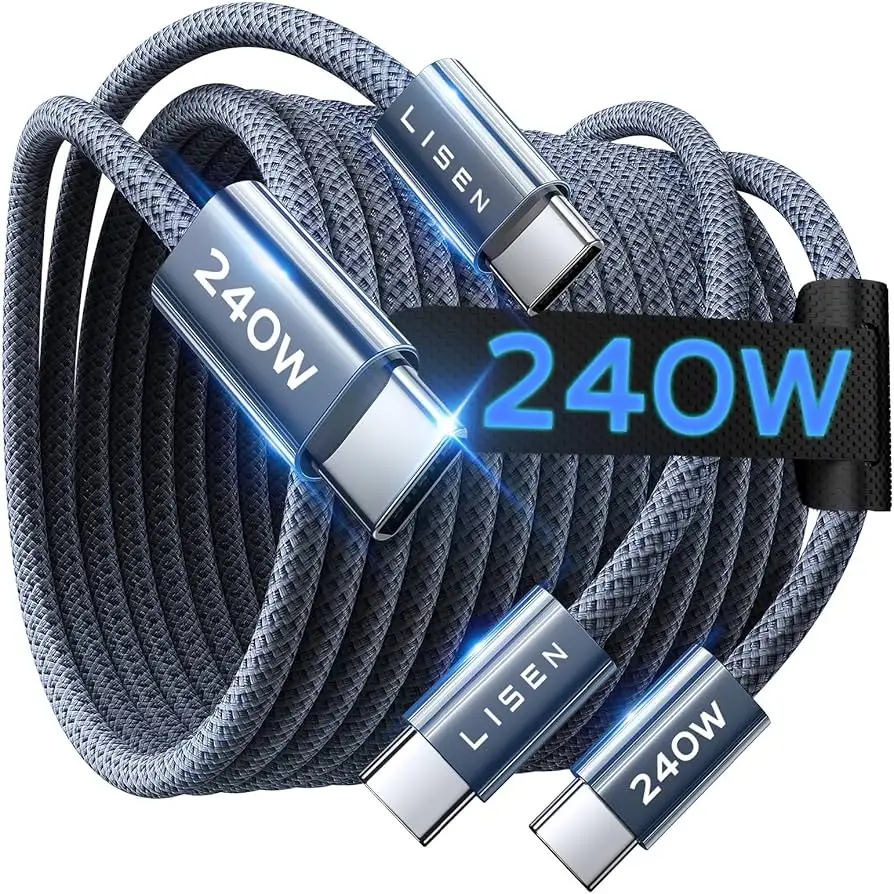
LISEN markets this cable with “240W fast charging” and PD3.1 E‑mark chip safety. The 60W variant boasts “turbo fast charging” and eco‑friendly construction. However, digging deeper into reports shows nuanced performance.
On charging speed, several owners confirm the wattage capabilities. A Slickdeals buyer noted: “My phone supports 200W — this works fine.” This aligns with the brand’s claim, particularly for the 240W model. However, others question if marketing overshoots: “240w cable…lol. I would be surprised this would even pull 100w. Wouldn’t trust this POS on my devices.”
Data transfer claims are where reality diverges sharply. Spec sheets list 480Mbps — essentially USB 2.0. Multiple Reddit and Trustpilot comments caution that this is “really designed for power delivery, not data transfers.” A community member broke it down: “480 mega bits per second…wouldn’t buy it for data transfer but for a charge cable, maybe.”
Cross-Platform Consensus
Universally Praised
High‑wattage charging stands as the cable’s core strength. Gamers mention the right-angle design as a comfort boost during extended sessions. One Reddit user relayed: “Makes it more comfortable to play games, watch videos, or use apps while charging.” For heavy device users like MacBook Pro owners, the PD3.1 chip’s “auto cut-off” when fully charged is attractive — it’s designed to protect battery health over time.
Eco‑friendly construction also earns goodwill. A verified buyer on Amazon highlighted the “braided from 48 strands of recyclable cotton yarn” as a rare sustainability focus in charging accessories. This gives environmentally conscious buyers an added reason to choose LISEN over cheaper, non‑eco counterparts.
Common Complaints
The slow data transfer limitation is a recurring sore spot, especially among those expecting multi‑gigabit speeds for video or large file work. A Slickdeals participant stated plainly: “For charging, yes. For data, garbage cable. Avoid.” This makes it ill‑suited for content creators or professionals moving heavy datasets.
Durability is generally praised, yet a few users noted an overly stiff cable body. From Amazon’s reviews: “The material used is so stiff it makes it messy to try and organize.” This stiffness is a double‑edged sword — it protects the conductors but can be awkward in compact or mobile setups.
Divisive Features
The right-angle design draws contrasting opinions. Some love the ergonomic benefit: “Easier in tight corners, keeps strain off the port.” Others find it makes the cable harder to coil neatly for storage. Also divisive is the brand reputation; several forum users accused LISEN of “shilling” and using “paid Vine voice reviews,” while others praised its frequent discount deals as meaning you can “grab high‑power cables for half the price of Anker.”
Trust & Reliability
Community skepticism creeps in whenever a brand’s marketing feels aggressive. On Slickdeals, one user alleged “Lisen has been posted at least 24 times in the last month…almost all by staff. This isn’t a deal, it’s an ad.” Such comments can erode trust, especially when combined with product swaps on Amazon listings (users noting mismatches between product images and shipped items).
Yet, durability over months fares better. One Reddit comment referenced LISEN’s lab‑tested “40,000 bends,” saying they “haven’t had an issue even after months of plugging/unplugging daily.” This suggests that if you get a genuine product, build quality is sound enough for heavy, long‑term use in charging scenarios.
Alternatives
The only competitor mentioned by users is Anker. Stronger trust in Anker stems from consistent spec accuracy and quality control. As one commenter put it: “I only buy Anker and Cable Matters cables now.” However, Anker’s high‑wattage cables can cost significantly more, making LISEN appealing for those who prioritize savings over premium data speeds.
Price & Value
Pricing fluctuates widely, with frequent promotions dropping two‑packs to $6.50–$7 from $16–$19 MSRP. Slickdeals threads often link specific codes or coupon stacks, though some codes fail at checkout. At resale or auction (as seen on eBay and BidFTA), the cables fetch between $7–$16 depending on model and wattage rating.
Community buying tips focus on purpose: “Don’t overpay for specs you won’t use — if you just need charging, grab it on sale. If you need fast data/video, skip entirely.” That aligns with the cable’s mixed reputation — high‑power charging for less money, but nothing else premium.
FAQ
Q: Does the LISEN USB-C to USB-C Cable support video output?
A: No. Multiple listings and user reports confirm it is USB 2.0 for data, with no video transmission support.
Q: What devices are best suited for this cable?
A: Any USB-C device requiring high-wattage charging, such as MacBook Pro, Galaxy S series, or USB-C iPads. It’s not suited for data-intensive tasks.
Q: Is the right-angle design practical for daily use?
A: For gaming or tight spaces, yes — it reduces port stress. For those who coil and store cables often, stiffness may be inconvenient.
Q: Are the advertised wattages accurate?
A: Many users confirm high-wattage charging works, but some doubt max ratings. Test results vary by charger and device.
Q: How durable is the cable in real use?
A: Reports suggest it withstands months of daily use without fraying, aided by braided or bio-based outer materials.
Final Verdict: Buy if you primarily need an affordable, high‑power charging cable for phones, tablets, or laptops and can live without fast data transfer. Avoid if your workflow involves large file movement or video over USB-C. Pro tip from community: “Wait for sales — these pop up under $7 often — and match the cable rating to your charger and device.”





