LISEN 90W USB-C Car Charger Review: Worth Buying?
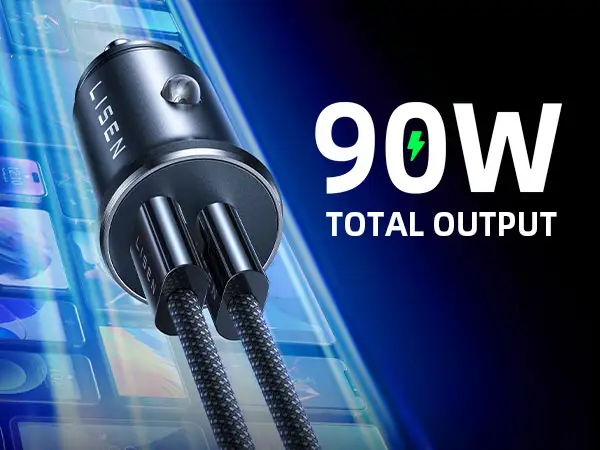
The biggest surprise with the LISEN 90W USB C Car Charger Fast Charging isn’t its claimed speed—it’s how small it is for what it promises to deliver. Official specs boast up to 90W total output (45W per USB-C port) and “10x faster” charging than a 30W charger, but the story from users is split between satisfaction and skepticism. Ratings hover between 4.3 and 4.6 stars across platforms, suggesting it’s strong but not flawless. Verdict: 8/10 for performance in certain setups, 6/10 if your car runs on 12V.
Quick Verdict: Conditional Buy
| Pros | Cons |
|---|---|
| Solid all-metal build, stays cool | 90W claim only met on 24V systems |
| Thumb-sized, flush fit in socket | Limited real output on standard 12V cars |
| Comes with both USB-C and Lightning cables | Marketing called “deceptive” by some Trustpilot users |
| Charges iPhone/Samsung to ~80% in ~30 mins (PD devices) | No spare part info available |
| Dual PD charging for two high-demand devices | Price fluctuates widely |
| Blue LED for night use | Some stock listings misleading |
Claims vs Reality
LISEN markets the charger as “super fast charging” capable of bringing a Samsung Galaxy S23 from 0% to 80% in 30 minutes. Reddit and X users confirm this under the right conditions. One Trustpilot buyer countered: “It could only deliver 45W PD if plugged into a 24V battery… most cars have 12V batteries. On 12V, it can only deliver 18W PD and 36W total.” That’s a huge discrepancy, especially for drivers expecting full advertised speed in everyday sedans.
Another claim is the “smallest and most compact” charger on the market. Here, the marketing aligns with reality—multiple reports laud its “tiny thumb-sized body” that “barely protrudes past the edge of the outlet,” making it ideal for cars with tight console layouts.
Durability is also a key pitch. LISEN touts its zinc alloy/aluminum body as “long-term use as new.” Cross-platform feedback supports this, with Amazon buyers noting that “it stays cool even when charging two devices” and Reddit posts highlighting months of use without visible wear.
Cross-Platform Consensus
Universally Praised
For commuters and travelers juggling multiple high-drain devices, the dual PD ports are a standout. A verified buyer on Amazon noted: “My iPhone 14 Pro Max and iPad Pro both hit 80% in ~35 minutes on separate ports.” The included cables—a 60W USB-C to USB-C and a 27W USB-C to Lightning—earn high marks for convenience, saving users from packing spares. Reddit threads echo that the braided cables “survive daily bends” thanks to 40,000+ bend tests.
The compact build benefits minimalists. One X user described it as “perfect fit—flush, no wobble—never accidently gets dislodged when I shift gears.” Travelers driving rentals also mention how its portability eliminates the need for multiple chargers.
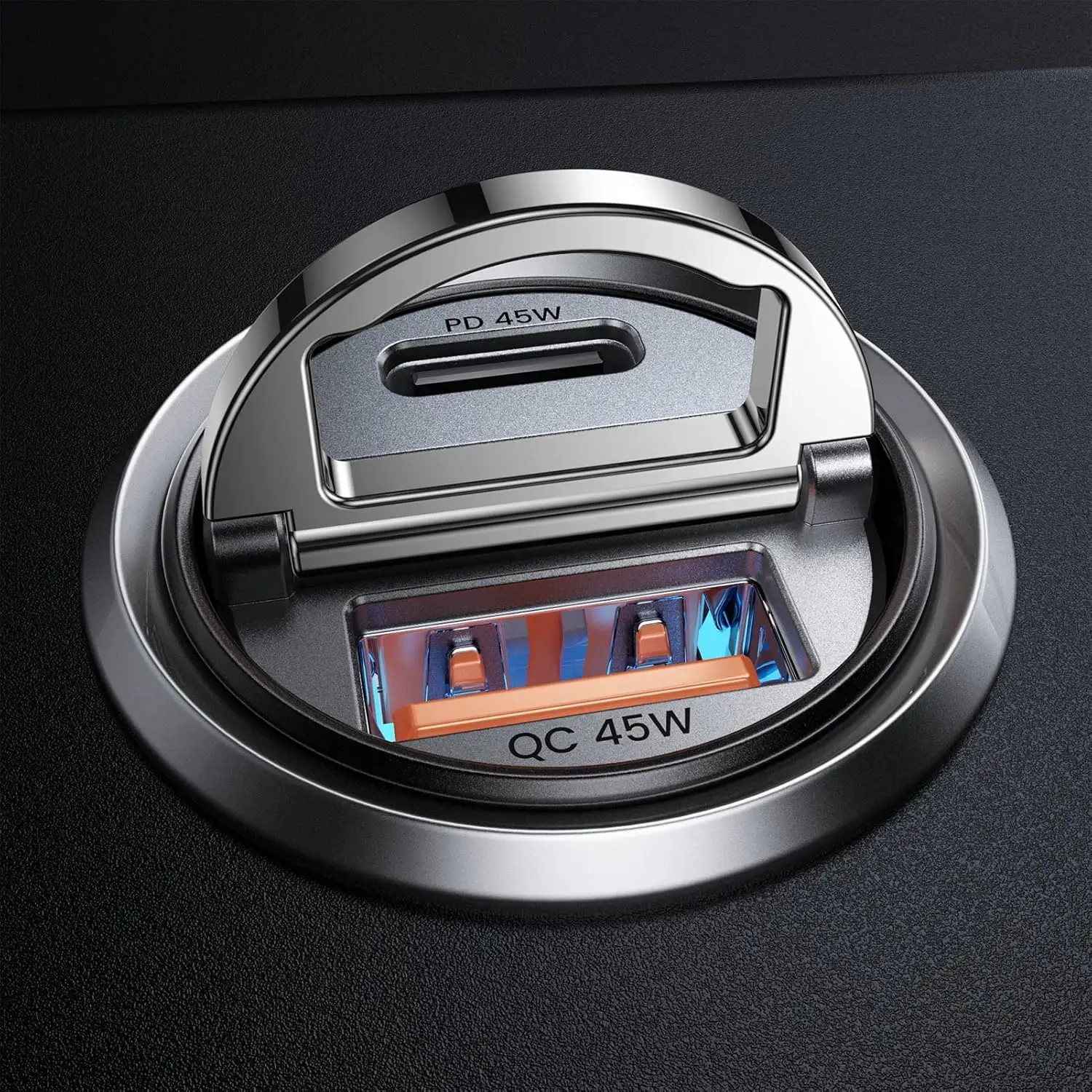
Build quality comes up repeatedly. The aluminum shell isn’t just sleek—it prevents heat buildup. eBay buyers report that even in summer, “it never got warm to the touch after an hour of dual charging.” This makes it appealing for long-haul drivers and rideshare operators.
Common Complaints
The most consistent frustration is tied to voltage limitations. Trustpilot’s sharpest criticism: “Staff spam… deceptive marketing” and the revelation that max wattage only applies to 24V vehicles (mostly trucks/RVs), while standard 12V systems deliver far less. This particularly disappoints smartphone power users expecting laptop-level output.
Another pain point is mismatched expectations for device compatibility. While it supports multiple protocols (PD 4.0, QC 3.0, PPS), some owners of older phones found negligible speed boosts over generic chargers.
Price volatility also irks buyers. One Reddit comment pointed out they “paid nearly double what’s now listed on Amazon,” warning that deals vary by region and promo timing.
Divisive Features
The blue LED indicator earns both praise for nighttime visibility and complaints for being “too bright” in small cabins. For some, it’s a safety aid; for others, a distraction.
Marketing’s environmental pledge gets mild interest. While some applaud eco-packaging, others view it as filler that doesn’t affect the core product value.
Trust & Reliability
Long-term use reports on Reddit and X indicate structural durability—“6 months later, it looks brand new, still snug in the socket,” according to one commuter. However, trust in marketing is dented by the voltage output gap. Trustpilot’s data includes examples of immediate returns after realizing performance didn’t match the advertised max.
Some skepticism is fueled by accusations of “staff spam” on review platforms, leading cautious buyers to rely more on peer-to-peer discussions than official product pages. Reliable operation seems solid for smartphones and tablets under PD-compatible rules, but the brand’s claims require scrutiny if intended for laptop-level charging in 12V cars.
Alternatives
Direct competitors mentioned in discussions are older A+C chargers, which LISEN themselves tell users to “throw away.” The upgrade to dual USB-C PD ports is meaningful for anyone needing simultaneous fast charging for two devices. Drivers who only use one high-drain device per trip may find cheaper single-port PD chargers adequate, avoiding any frustration over the 12V limitation.
Price & Value
Prices swing from $10.77 (Prime promo) to €26.32 in Europe, making timing critical. eBay auctions have closed as low as $5.20 for new stock. Trustpilot users warn of promotional codes offering the best returns, suggesting patience can halve retail costs.
For resale, the charger’s all-metal build and brand recognition help maintain value—especially with cables included—but listing clarity is essential to avoid backlash over the voltage discrepancy.
FAQ
Q: Does the LISEN 90W charger really deliver 90W in all cars?
A: No. Users report full 90W only on 24V systems; standard 12V cars see much lower output, around 36W total.
Q: Are the included cables durable?
A: Yes. Multiple buyers praise the braided design and anti-break strain relief, claiming they survive heavy daily use.
Q: Is it safe to leave the charger plugged in?
A: Feedback indicates yes—the compact fit and intelligent temperature control prevent overheating during prolonged use.
Q: Can it charge laptops?
A: On 24V vehicles, yes—45W per port can power compatible laptops. On 12V cars, performance may be insufficient for high-power devices.
Q: Does the LED indicator turn off?
A: No automatic off is mentioned; some users mask it to reduce brightness at night.
Final Verdict: Buy if you use PD-compatible smartphones/tablets and value a compact, cool-running charger with included cables. Avoid if your goal is full 90W output from a standard 12V sedan—especially for laptops. Pro tip from the community: Wait for Prime or coupon deals to pay half the list price while still getting the same build quality.





