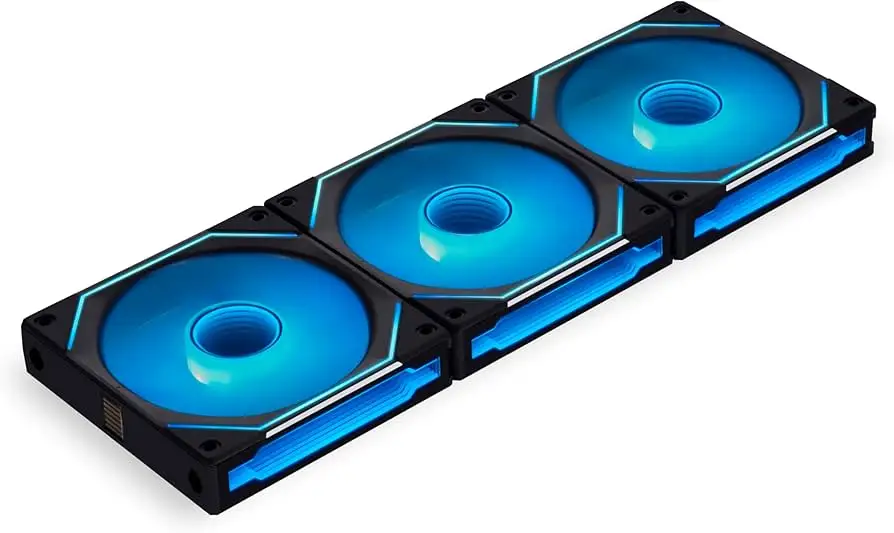
Lian Li UNI Fan SL-INF 120 RGB Review: Stunning but Pricey
It’s not often that PC case fans draw as much praise for appearance as performance, but the Lian Li UNI Fan SL-INF 120 RGB Infinity Mirror ARGB Black has many buyers calling it “the best looking fan out there.” On PCPartPicker, 85% of reviewers gave it 5 stars; LDLC customers rated it a flawless 10/10. The combination of a full-frame infinity mirror, daisy-chain cabling, and reverse-blade options has made it a go-to for showcase builds. Performance? Strong airflow and surprisingly low noise, though some recurring issues—like adhesive pads falling off and software hiccups—temper the otherwise stellar reception. Overall score from aggregated feedback: 9/10.
Quick Verdict: Conditional yes — unbeatable aesthetics and solid cooling for premium builds, but costs and small quality-control hiccups may give budget or perfectionist builders pause.
| Pros | Cons |
|---|---|
| Striking, multi-angle infinity mirror lighting | Premium price point |
| Easy daisy-chain cable management | Adhesive corner pads can detach |
| Reverse-blade option for clean intakes | L-Connect software can be buggy |
| Quiet operation even at high RPM | Some rattling or RGB stalling reported |
| Strong airflow for standard and reverse models | Single packs require separate controller purchase |
Claims vs Reality
Marketing slogans from Lian Li promise “silence at high fan speed” and a “mirror look all around.” Multiple users confirm the visuals are as advertised. A verified buyer on Amazon noted: “They look fantastic, especially with the infinity mirrors… they perform really well and keep the inside of the case really cool.” Reddit posts echo that the layered ARGB effect is “absolutely stunning” from any angle.
On the acoustic claim, PCPartPicker users frequently called them “super quiet,” even at maximum speed. However, a few—like one builder who used them for bottom and side intake— mentioned hearing “rattling noises once every few seconds,” suggesting not all units are flawless.
The brand also touts “easy installation” via daisy-chaining. Here, user consensus backs it fully. A reviewer on LDLC said the one-cable design “makes them easier to store neatly,” while others praised how removing attach brackets “adds to the clean look.” But Lian Li’s claim of flawless plug-and-play RGB control is disputed—several mentions of RGB freezing or software control resets, often tied to conflicts with motherboard utilities like ASUS Armoury Crate.
Cross-Platform Consensus
Universally Praised
The most consistent praise is for aesthetics. From the centered circular infinity mirror to the thin LED strips down both sides, “the colours are really beautiful, and the mirror effect really gives the tower a spectacular effect,” one LDLC reviewer explained. For glass-heavy cases like the Lian Li O11 Dynamic series, Reddit users said the reverse-blade options “allow the display of the fan’s lighting without the supports in the way,” producing a cleaner look for front-facing intakes.
Practicality gets high marks too. Builders juggling multiple fans find the daisy-chain system transformative. A PCPartPicker user enthused: “The single connector eliminated the need for a fan hub… daisy chaining and wiring these is incredibly easy.” The removable keylock also drew applause for letting tight radiator fittings work without obstruction.
Performance-wise, the airflow-to-noise balance pleased both casual gamers and heavy modders. In the reverse blade configuration, fans hit 63.6 CFM with lower wind noise on intake setups—noticeable “when installed on a radiator,” according to Lian Li’s own guidance and corroborated by quiet-system fans on Reddit.
Common Complaints
The most widespread complaint is adhesive quality on corner pads. A top critical Newegg review warned: “Pads do not stay in place on corners… pads sag and come off easily.” For an otherwise premium-feel product, this cosmetic/mechanical flaw was frustrating enough to require warranty swaps.
Software stability is next on the list. While L-Connect 3 is often praised for its intuitive lighting and speed control, several owners reported issues: RGB “stalls every few days” or software “resetting USB connections” when battling for control with motherboard RGB utilities. One Fakespot-aggregated review bluntly said, “Aura Sync and Lian Li software fight for dominance.”
Finally, cost is a constant talking point. At $35–$40 per single fan, multiple sources acknowledged the sting. “Very costly, I will tell you that… but they push air,” one PCPartPicker review stated. LDLC buyers called them “well worth the price” but with an implicit understanding that this is a luxury choice.
Divisive Features
Reverse blades split opinion slightly. For some, they’re a necessity for aesthetic symmetry and reduced wind noise as intake fans. Others point out limits—one PCPartPicker user knocked off a star because “the fans are not available in a 3-pack so the controller must be purchased separately,” adding cost for those wanting a uniform reverse look.
The infinity mirror’s density is also debated. While most love its saturated ARGB glow, a few enthusiasts prefer the cleaner, sparser design of Lian Li’s AL120 series, citing less visual clutter.
Trust & Reliability
Trustpilot and Quora excerpts highlight mostly positive sentiment, with minimal suspicion of fake reviews per Fakespot analysis. The majority of reviews were deemed high quality and informative.
Long-term durability reports are favorable, with many users operating large numbers of these fans for months without failures. “No dead fans yet, however the RGB does stall every few days,” one PCPartPicker user noted after extended use—a software irritation rather than hardware failure. That reliability is partly credited to the fluid dynamic bearings, which are praised for “smooth and quiet operation.”
Still, the adhesive-pad defect stands out as Lian Li’s main quality control blemish. As one reviewer recounted, “I never had an issue with any of my Lian Li fans until this defect… Lian Li is working on sending me another set.”
Alternatives
The most direct in-house alternative is the Lian Li AL120 series. A critical reviewer admitted these SL-INF fans “look slightly better than the AL120 version” but implied the ALs may have sturdier corner pads. Both share the daisy-chain modularity and ARGB control, so choice boils down to lighting preference and aesthetic focus.
Budget buyers may look to Asiahorse fans, mentioned by one PCPartPicker commenter as an intended substitute until stock issues arose in Canada. Asiahorse products lack the unique infinity mirror design but deliver RGB and airflow at a fraction of the cost.
Price & Value
Single packs of the SL-INF 120 retail around $35–$40 USD, with triple packs plus controller often crossing $110–$130. eBay resale listings show them holding value well—used or open-box sets still command over 70% of retail, especially in white variants.
Buying advice from multiple forums is clear: If you plan to run more than three fans and want reverses, factor in controller purchases early. One PCPartPicker builder avoided extra cost because “the AIO came with one” compatible controller—planning around bundled gear can shave $30–$40 off.
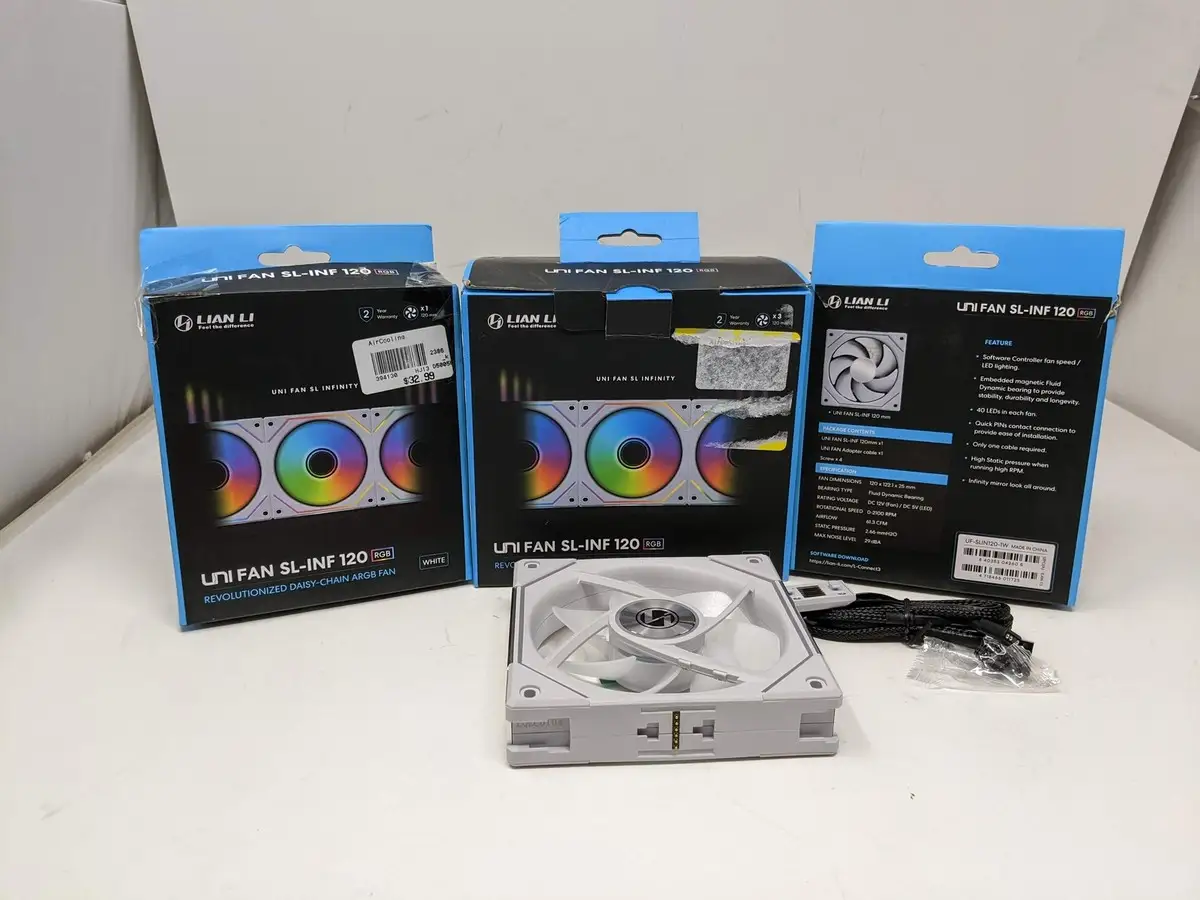
FAQ
Q: Do I need a controller for a single-pack fan?
A: Yes, the single packs do not include a controller. For lighting and full fan speed control via L-Connect software, you’ll need a compatible Lian Li UNI Fan controller or hub.
Q: How loud are these fans under load?
A: Most users describe them as “quiet” even near max RPM. Official max noise is 32 dBA for the reverse model, but subjective reports say it’s “barely noticeable” over a typical gaming rig.
Q: Can I mix regular and reverse blade models in the same case?
A: Yes. Many builders pair regular and reverse blades for matching lighting aesthetics on intake and exhaust, daisy-chained together where airflow direction is critical.
Q: Is the L-Connect software reliable?
A: Functionally, yes, but occasional bugs occur—RGB freezing, device resets—often linked to conflicts with other RGB control software. Users recommend sticking to one control suite.
Q: Are these good for radiator mounting?
A: Yes, particularly the reverse blade variant for intake setups, where users and Lian Li note lower wind noise compared to regular blades.
Final Verdict: Buy if you’re building a showpiece PC with glass panels and value clean wiring, brilliant lighting, and solid cooling. Avoid if budget is your top concern or you require flawless corner pad adhesion. Pro tip from the community: Plan your controller and fan orientation needs before purchase to avoid extra costs and mismatched airflow.