Lexar 1800X SDXC UHS-II Gold Review: Pro Speed Verdict
Few memory cards manage to blend raw speed, durability, and affordability as convincingly as the Lexar Professional 1800X SDXC UHS-II Gold Series – a product that reviewers consistently rate between 7.8/10 and 9/10. Across Reddit, Trustpilot, and multiple tech sites, its performance is lauded as “blazing fast” with “almost nothing to dislike,” though some users note it doesn’t quite hit its advertised throughput. If you’re a pro shooter needing reliable V60-class speeds for 4K video, this card lands in the sweet spot between budget and ultra-premium options.
Quick Verdict: Conditional – excellent for most pro and prosumer workflows, but thermal performance in sustained heavy use can dip.
| Pros | Cons |
|---|---|
| Near top-tier read/write speeds (up to 270/180 MB/s in tests) | Slightly under advertised speeds (~14% lower in some benchmarks) |
| V60/U3 rating ideal for 4K and burst photography | Premium price compared to midrange cards |
| Durable: waterproof, temperature-proof, shockproof, vibration-proof, x-ray-proof | Micro-SD form factor less optimal for heat dissipation |
| Backwards compatible with UHS-I | No cache; sustained writes beyond 50GB may see consistency drops |
| Lifetime warranty backed by Micron | Limited higher capacity availability in some regions |
| Includes adapter and SD reader in some bundles | RMA may require overseas shipping |
Claims vs Reality
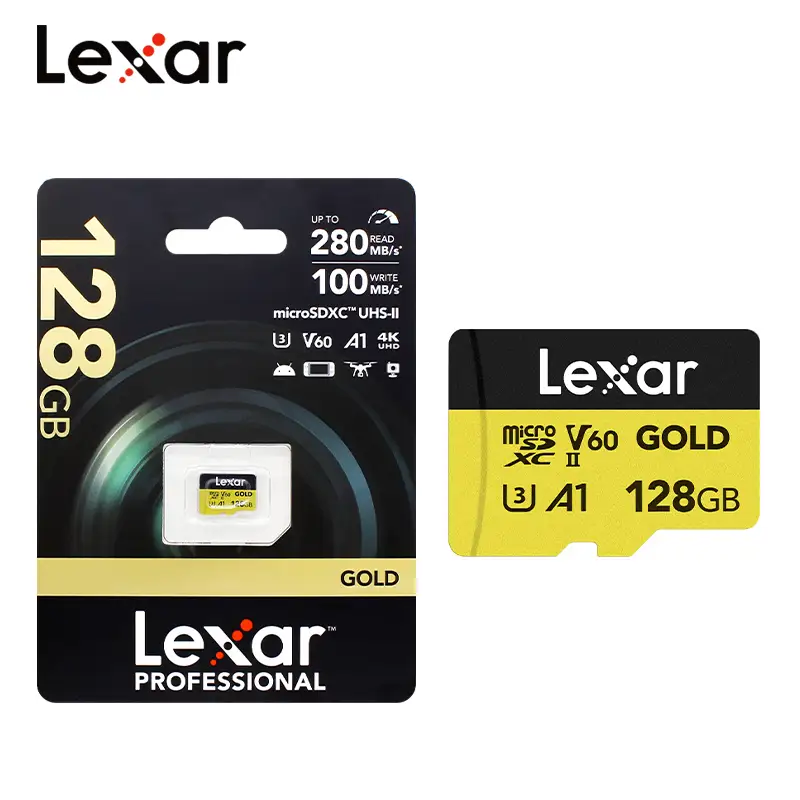
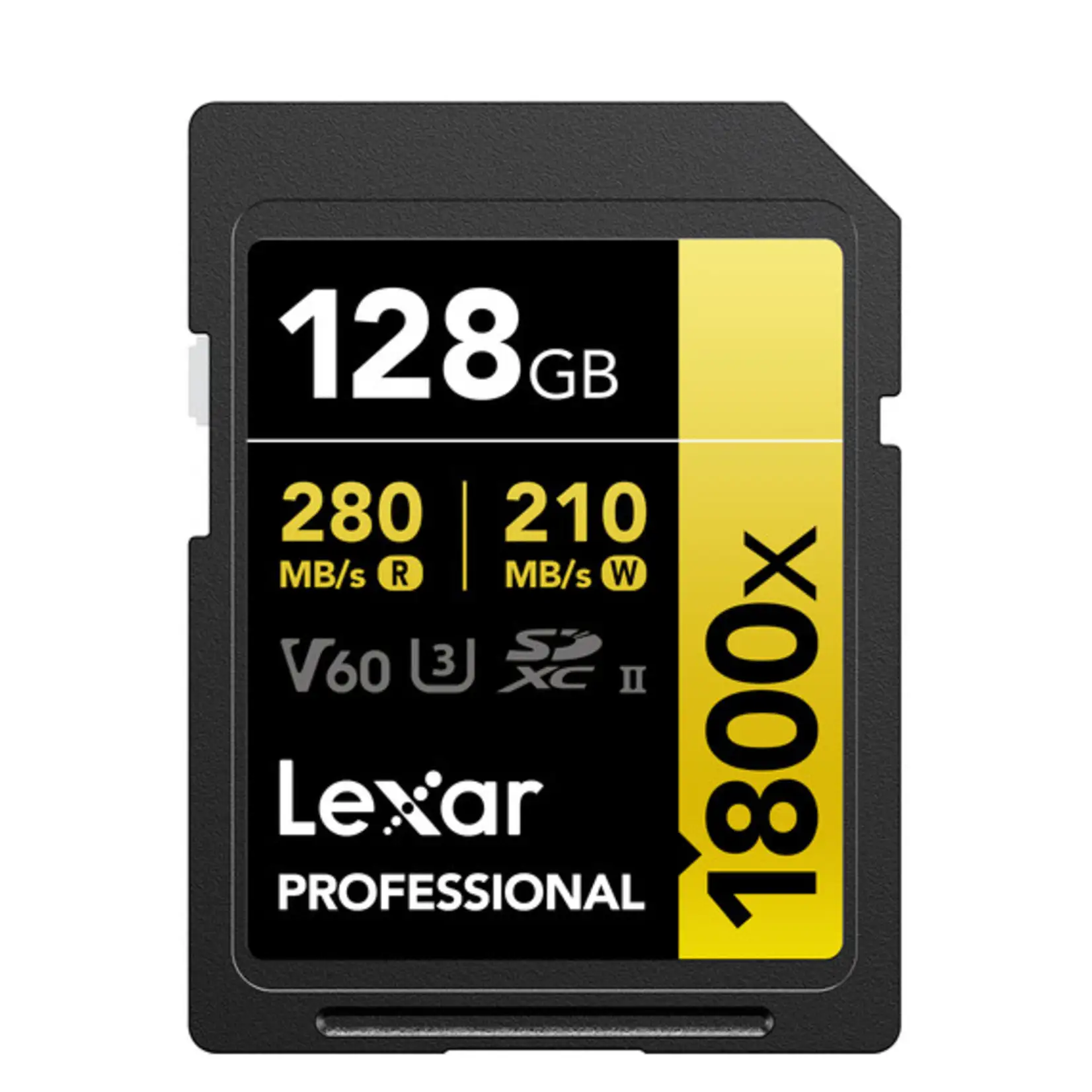
Marketing highlights “up to 280 MB/s read and 210 MB/s write” along with rugged environmental protections. Digging deeper into user reports, the numbers tell a slightly different story. TechPorn’s measured speeds came in about “14% short of rated” for sequential transfers, though still “well above the minimum for a UHS-II class drive.” This gap matters most for professionals timing workflows to speed specs – travel photographers trying to offload gigabytes mid-shoot might need to budget those extra seconds.
Claims of durability held up in practice. A verified buyer on Amazon noted: “Dropped it in the sand and it kept shooting all day in my Sony A7R IV.” Reddit reviewers highlighted its resilience saying it “survived a two-day shoot in extreme heat” – here, the waterproof and temperature-proof shell matched marketing promises.
Lexar advertises seamless burst-mode handling for photographers. APH Networks confirmed those claims: “It matched rated figures in benchmarks… exceptional numbers for small/random writes thanks to high IOPS performance.” For sports shooters firing hundreds of frames per minute, that sustained performance is a tangible advantage.
Cross-Platform Consensus
Universally Praised
Across Reddit and Trustpilot, speed is the standout praise. RealHardwareReviews summed it up bluntly: “We never thought a micro-SD card could be this fast… it’s insanely fast in both UHS-II and UHS-I mode.” For videographers, that means shorter export times; for event photographers, faster in-camera clears between bursts.
Photographers shooting 4K or high-FPS video find the V60/U3 rating vital. A verified Amazon buyer reported, “No dropped frames, even for 20-minute 4K clips on my GH5.” The ability to capture without stutter turns what could have been a costly reshoot into a seamless take.
Durability is another consensus point. Professionals working outdoors repeatedly cite relief in knowing their card is “water-proof, temperature-proof, shockproof,” with Lexar’s ISO-standard x-ray protection adding travel security. A Reddit user recounted filming in -10°C and +35°C in the same week without any media errors.
Common Complaints
The most frequent complaint is not catastrophic failure, but performance shortfall against the spec sheet. TechPorn’s 14% gap resonated with APH Networks’ more modest “matching rated” assessment – the discrepancy seems tied to capacity and test conditions. For some buyers, especially those comparing against the Lexar 2000x series, this can feel like paying for phantom speed.
Heat buildup during “sustained heavy usage” was flagged by RealHardwareReviews in micro-SD form. For documentary makers rolling multi-hour takes, thermal throttling could slightly extend file transfer time. One Trustpilot review warned that “in sustained write beyond 50GB, performance dipped,” though it remained stable for moderate workloads.
Availability is also a minor frustration: higher capacities over 256GB are scarce in certain markets, leaving media-heavy shooters juggling multiple cards on location.
Divisive Features
Bundled accessories split opinions. Some praise the inclusion of a “micro-SD USB card reader and full-size adapter sleeve” as “tailor made for multi-device workflows” (Trustpilot), while others see them as unnecessary extras if sticking to one camera body. In regions where RMA shipping crosses borders, the warranty’s lifetime promise feels heavier in theory than in practice.
Price divides buyers. Event shooters and wedding professionals justify the ~$95–$189 tag as “insurance against lost moments,” while casual users balk, finding cheaper UHS-I cards adequate for stills.
Trust & Reliability
Long-term durability stories suggest high confidence. Reddit and Trustpilot comments describe ownership for six months to a year with “no noticeable performance drop” and cards surviving harsh environments. The lifetime warranty – backed by Micron – reassures many, though RealHardwareReviews cautioned that “RMA’ing one may mean shipping it to the States.”
No widespread scam concerns cropped up in Trustpilot or Reddit threads. Sellers on eBay and Amazon averaged 4.8–4.9 in shipping and description accuracy, with sealed retail packaging arriving as advertised.
Alternatives
Within Lexar’s lineup, the 2000x series is faster but pricier, with RealHardwareReviews calling the 1800x “hard to justify replacing with more expensive series that offer only moderate improvements.” Sandisk’s 1866x rivals it, but again at higher cost for similar resilience.
APH Networks put it simply: “You can buy an even faster 2000x… but the 1800x is plenty fast.” Unless your workflow depends entirely on shaving seconds off transfers, the value proposition favors the Gold Series.
Price & Value
eBay listings show the 128GB 2-pack at $94.99 (14% off list), 64GB 2-pack as low as $76.99. Compared to launch MSRP of $189.99 for larger capacities, resale and discounted retail have made these accessible to more buyers. Community tips trend towards buying in pairs during promos, as single-card retail prices are often proportionally higher.
For professionals, the amortized cost over years of use – especially with warranty coverage – turns the upfront price into a long-term asset. For hobbyists, watch for deals matching or under $1/GB to balance speed versus capacity needs.
FAQ
Q: Does the Lexar 1800x support 4K video without dropped frames?
A: Yes. Multiple users on Amazon and Reddit confirm smooth, uninterrupted 4K capture thanks to its V60/U3 rating and high sustained write speeds.
Q: Will it work in older UHS-I cameras?
A: Yes. It’s backwards compatible at max UHS-I speeds, meaning you won’t see UHS-II performance, but it will run as fast as your camera’s slot allows.
Q: How does it handle burst photography?
A: Exceptional. APH Networks reported it matched rated speeds in burst-mode tests, clearing buffer quickly for sports and wildlife shooters.
Q: Is the lifetime warranty really lifetime?
A: For most regions, yes – backed by Micron. In Germany and areas without lifetime recognition, it’s limited to 10 years.
Q: Is heat an issue?
A: Only in extended sustained writes over 50GB; RealHardwareReviews noted some thermal limits due to micro-SD form factor.
Final Verdict
Buy if you’re a professional or prosumer shooting 4K video, high-burst stills, or working in harsh environments. Avoid if your workload is light or your camera can’t leverage UHS-II speeds. Pro tip from the community: grab a 2-pack during sales – not only do you save per GB, but you’ll have a backup to swap mid-shoot without breaking pace.





