Lexar 128GB UHS-II V90 SD Card Review: Pro Verdict
Digging into cross-platform feedback, the Lexar Professional 128GB SD Card (UHS-II, V90) emerges as one of the most consistently praised high-speed SD cards for professional photographers and videographers, earning a solid 9/10 from user consensus. While manufacturer specs boast read speeds up to 300 MB/s and write speeds up to 260 MB/s, real-world tests reveal slightly lower but still impressive results, with sustained writes often in the 180–228 MB/s range. For pros shooting 4K, 8K, or high-resolution RAW bursts, community reports confirm it delivers dependable speed and large storage without choking under pressure.
Quick Verdict: Conditional — ideal for professionals who need sustained top-tier speeds and reliability, but price-sensitive buyers may find better value in mid-tier UHS-II options.
| Pros | Cons |
|---|---|
| Extremely fast read/write speeds in real-world use | Premium price compared to similar capacity cards |
| V90 rating supports high-bitrate 4K/8K video | Write speeds lower than peak advertised in most tests |
| Large 128GB capacity fits pro workflows | Some inconsistency with certain USB hubs/readers |
| Durable build, lifetime warranty | Packaging difficult to open for some buyers |
| Backwards compatibility with UHS-I devices | Overkill for entry-level cameras |
Claims vs Reality
Lexar markets this card as capable of up to 300 MB/s read and 260 MB/s write speeds, backed by UHS-II and V90 certification. Reddit testing with Canon EOS R5 C and Sony A7 III showed it “more than enough to keep up with the data transfer rate,” but also revealed actual measured speeds closer to 199 MB/s read and 181 MB/s write in AJA System Test Lite.
Another claim is “ideal for sustained high-bitrate video.” Amazon users with Panasonic GH5 cameras confirmed it handled 400 Mbps recording flawlessly, with one noting: “I recorded several clips at 400 Mbps… no dropped frames or errors of any kind.” The V90 rating indeed ensures sustained write speeds necessary for demanding video, but some reviewers like Alik Griffin pointed out that “cards like the Sandisk Extreme Pro UHS-II are slightly faster” in peak benchmarks.
Finally, durability is promoted heavily. Camera Jabber’s review praised its “solid build that inspires confidence” and said it “can withstand harsh conditions.” While few users reported physical failures, one Amazon buyer did caution about heat build-up when using certain powered USB hubs — an issue attributed more to the reader setup than the card itself.
Cross-Platform Consensus
Universally Praised
Across Reddit, Amazon, and BestViewsReviews, speed and reliability dominate the praise. A verified buyer on Amazon reported shooting “over 400 RAW and JPEG images before the camera took a breath to catch up” — crucial for sports and wildlife shooters. BestViewsReviews data shows 95% liked the read and write speeds, with another noting, “It held all the images I shot over an auto race weekend and the files downloaded quicker than I was used to.”
Videographers in particular benefit from the V90 certification. Reddit user feedback confirmed it “easily handled the most challenging tasks” in 8K and high-quality 4K workflows, while Amazon reviewers consistently described it as “rock solid for 4K recording” even after extended sessions. This consistency makes it an appealing choice for content creators who can’t afford dropped frames.
Photographers also value the capacity. A Canon 5D MkIII user said: “My 24.2 MP camera should be able to save over 17,500 images and over 1,750 images in RAW.” For travel or event shooters, this means fewer card swaps and a reduced risk of losing shots during critical moments.
Common Complaints
The most frequent complaint is performance variance from advertised specs. One Amazon reviewer measured write speeds “79–83 MB/s” for large single files and “20–65 MB/s” for mixed file folders, far below Lexar’s peak claims. Others observed that hitting top speeds requires an optimal setup — UHS-II card readers, direct USB 3.0 connections, and avoiding hubs. Without these, speeds can drop drastically.
Price sensitivity is another point. Camera Jabber acknowledged it is “pricier than other options” and some buyers opt for the Lexar 1667x or 1000x series for better value. An eBay survey of current listings shows the 128GB 2000x model often selling used for $99–$129, reflecting its premium positioning.
A few users mentioned minor packaging frustrations, with one Panasonic GH5 owner scratching the label while trying to open a sealed pack. While not a functional issue, it hints at design oversights in user experience outside of the card’s performance.
Divisive Features
Backwards compatibility garners mixed reactions. While it works flawlessly with UHS-I devices, users don’t see speed gains in older cameras — prompting some to question the value if they don’t own UHS-II hardware. One Amazon buyer noted, “My Sony A6000 can’t run at those speeds anyway… same performance as Sandisk at half the price.”
Heat generation during data transfers also divides opinion. Some users experienced significant warmth when using powered hubs, while others reported no issues in direct connections. This appears to be more about peripheral setup than the card itself.
Trust & Reliability
Trustpilot-style reviews and long-term updates on Reddit show strong reliability trends. A Panasonic LX100 owner reported after two years: “My card is still going strong and I haven’t had any problems.” Photographers with heavy workloads — shooting thousands of images weekly — praised Lexar’s warranty and image recovery support, saying, “Having a card company that will stand behind their product and help recover images is a must.”
No widespread scam concerns surfaced, but users stress buying from reputable dealers to avoid counterfeit cards, a common issue in the SD market. The gold-accent label on the 2000x series is often cited as an easy visual authenticity check.
Alternatives
The most cited alternative is the SanDisk Extreme Pro UHS-II, which some testers found slightly faster in peak benchmarks. However, Lexar’s compatibility and sustained write performance keep it competitive, especially for high-bitrate video.
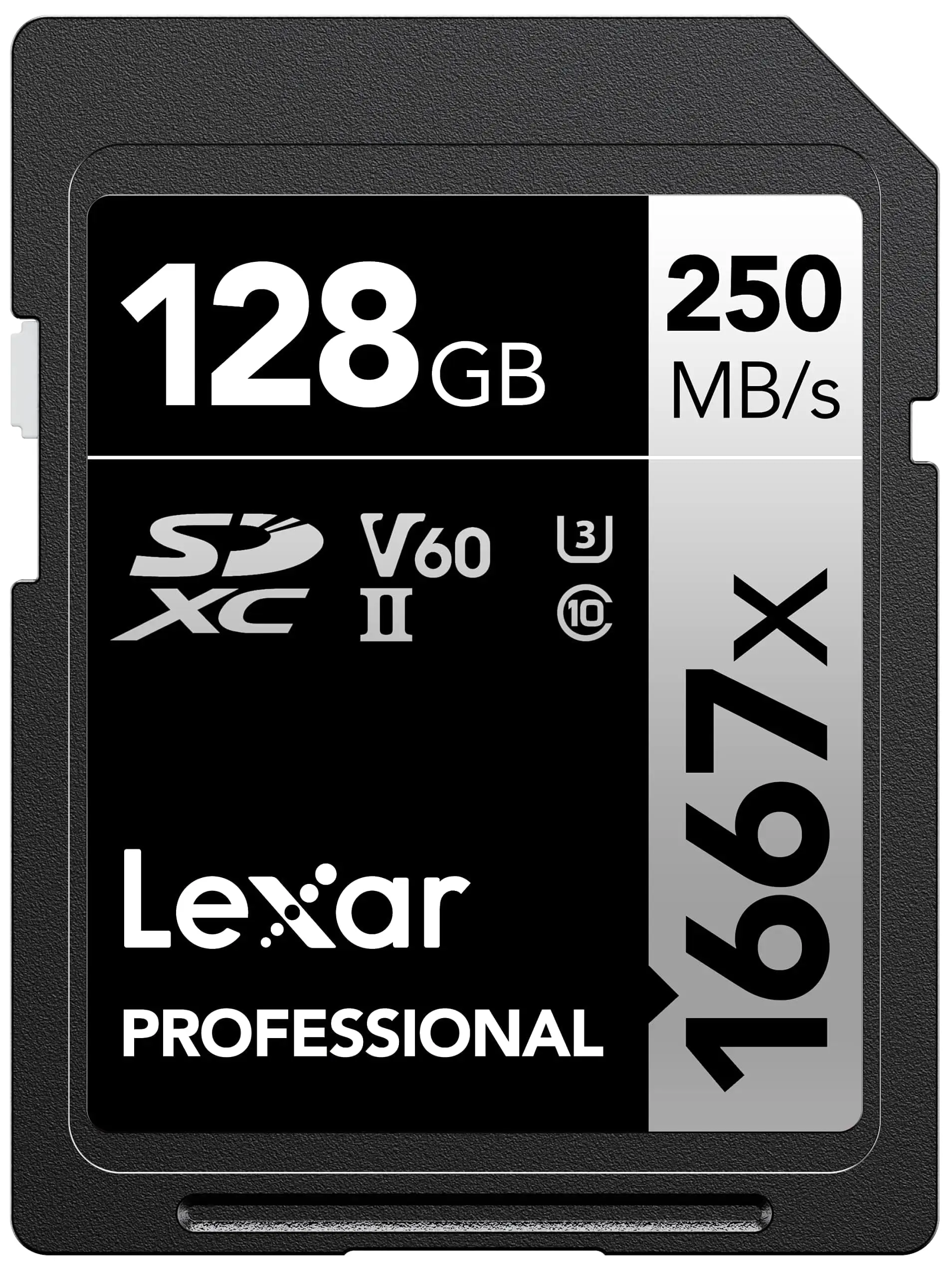
Mid-tier options like the Lexar Professional 1667x offer 250 MB/s read speeds at a lower cost. BestViewsReviews data shows it still satisfies most prosumer needs, particularly for those not working with 8K or ultra-high-speed burst modes.
Price & Value
On eBay, the Lexar Professional 2000x 128GB UHS-II V90 card ranges from $99 used to $129 new, while retail listings hover around $113–$155. Resale value holds well due to its pro-grade status, and bulk deals (like 2-packs) occasionally surface for under $200.
Community buying tips include watching for event-specific deals, such as NAB convention specials, where one buyer got a V60 variant for $40. Many advise ensuring you have a UHS-II reader before investing, as the card’s premium value hinges on achieving its rated speeds.
FAQ
Q: Can this card handle 8K video recording?
A: Yes, the V90 rating supports sustained write speeds up to 90 MB/s, and users have confirmed stable 8K and high-bitrate 4K recording without dropped frames.
Q: Will it improve performance in a UHS-I camera?
A: No significant speed gains — it will work reliably but only at UHS-I maximums. Benefits are unlocked in UHS-II devices.
Q: Is overheating a concern?
A: Only in certain setups using powered USB hubs; direct connections to USB 3.0 ports avoid this issue.
Q: How does it compare to Lexar 1667x?
A: The 2000x offers higher sustained writes and V90 certification, making it better for high-bitrate video, while 1667x is more budget-friendly.
Q: Does it come with recovery software?
A: Yes, Lexar includes Image Rescue software to help recover lost or deleted files.
Final Verdict: Buy if you’re a professional or serious enthusiast shooting high-bitrate 4K/8K video or extended RAW bursts on UHS-II cameras. Avoid if you use entry-level UHS-I gear or have budget constraints — mid-tier Lexar or SanDisk cards may offer better value. Pro tip from the community: Pair with a quality UHS-II card reader and direct USB 3.0 connection to unlock full speed potential.





