Lenovo ThinkPad E14 Gen 6 Review: Durable Yet Flawed
The most surprising takeaway from user feedback is how Lenovo ThinkPad E14 Gen 6 Business Laptop w/DKZ USB Port Expander punches above its budget label when it comes to upgrade potential, while falling short in expected performance for its newer CPU generation. From NotebookCheck's lab testing to Reddit buyers’ unfiltered impressions, the story emerges clearly: this is the affordable ThinkPad with the right bones, but buyers must accept compromises in display quality and certain connectivity options. Overall rating from aggregated sentiment: 8.2/10.
Quick Verdict: Conditional buy for business users who value durability and upgradability over color-accurate displays.
| Pros | Cons |
|---|---|
| Excellent upgradeability (2x RAM slots, dual SSD bays) | Screen options limited, with poor color gamut on WUXGA panel |
| Sturdy build with aluminum lid | No Thunderbolt (AMD) / Limited TB4 support (Intel) |
| Reliable, comfortable keyboard | Speaker quality average |
| Affordable entry into ThinkPad range | No OLED, HDR, or P3 color support |
| Good integrated GPU performance (AMD 680M variant) | CPU performance underwhelms vs. newer generations |
Claims vs Reality
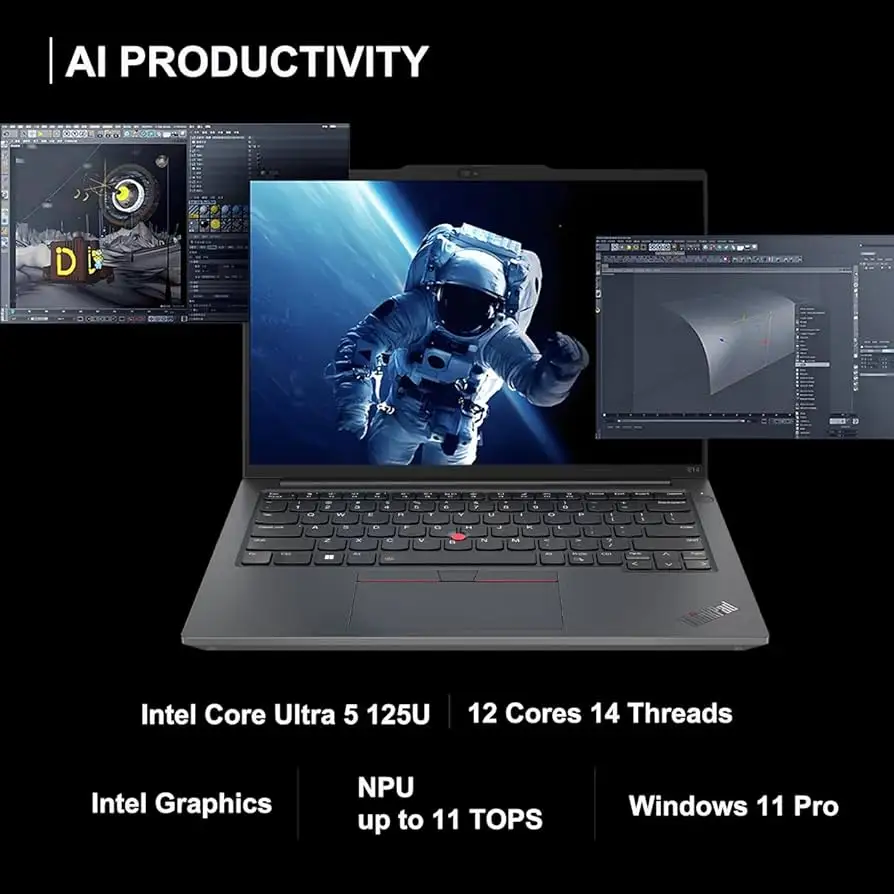
Lenovo markets the E14 Gen 6 as “modern design & performance” with “AI-assisted productivity” and “stunning display options.” In practice, display quality is where marketing overreach shows. While the specs tout TÜV EyeSafe certification and Dolby Atmos audio, NotebookCheck found the standard WUXGA 45% NTSC panel covering just 56.7% sRGB, calling it “a cheap screen with bad color gamut coverage,” unsuitable for photo editing. Reddit user feedback echoed this, with one AMD buyer conceding that “speakers… are average, they lack a bit of bass” and expressing disbelief that “USA market only has 45% ntsc display… god damnnn it.”
On performance, Lenovo stresses Intel Core Ultra and AMD Ryzen 7000 CPUs with AI engines. The reality diverges between variants: The AMD Ryzen 7 7735HS version impressed one Reddit buyer, who said, “Performance is crazy on this thing… it can even game with its 680M,” but NotebookCheck’s tests showed multi-core results slightly worse than the previous E14 Gen 5, despite newer architecture.
Durability claims—mil-std 810h certification and recycled materials—hold up better. Both Intel and AMD builds use an aluminum lid and pass thorough stress testing without major flex. NotebookCheck described the chassis as “stiff enough” with minimal keyboard flex and buyers cited premium feel at low cost.
Cross-Platform Consensus
Universally Praised
Upgradability is the most consistent praise point. NotebookCheck highlighted “the second, open m.2 SSD slot… not even the more expensive T series offers this” and unsoldered RAM giving more flexibility. Reddit user with an AMD E14 Gen 6 called it “craziest deal… two SSD slots and both RAM slots also upgradeable.” This benefits IT departments and enthusiasts alike—small businesses can extend lifespan cheaply, students can expand storage without replacing the machine.
Keyboard comfort is another strong suit. Buyers on Best Buy and Reddit praised its tactile feel, with Danielw noting it’s “ideal for day-to-day work and multitasking… lightweight enough for travel but still feels sturdy and professional.” NotebookCheck compared the typing feel to higher-end T-series, scoring it highly for an entry model.
Build quality relative to price also earns respect. An AMD owner lauded the “aluminum body… feels very premium,” and NotebookCheck confirmed minimal flex and sturdy hinge design, opening to 180 degrees. This makes it appealing for frequent travelers and remote workers needing durability in mixed environments.
Common Complaints
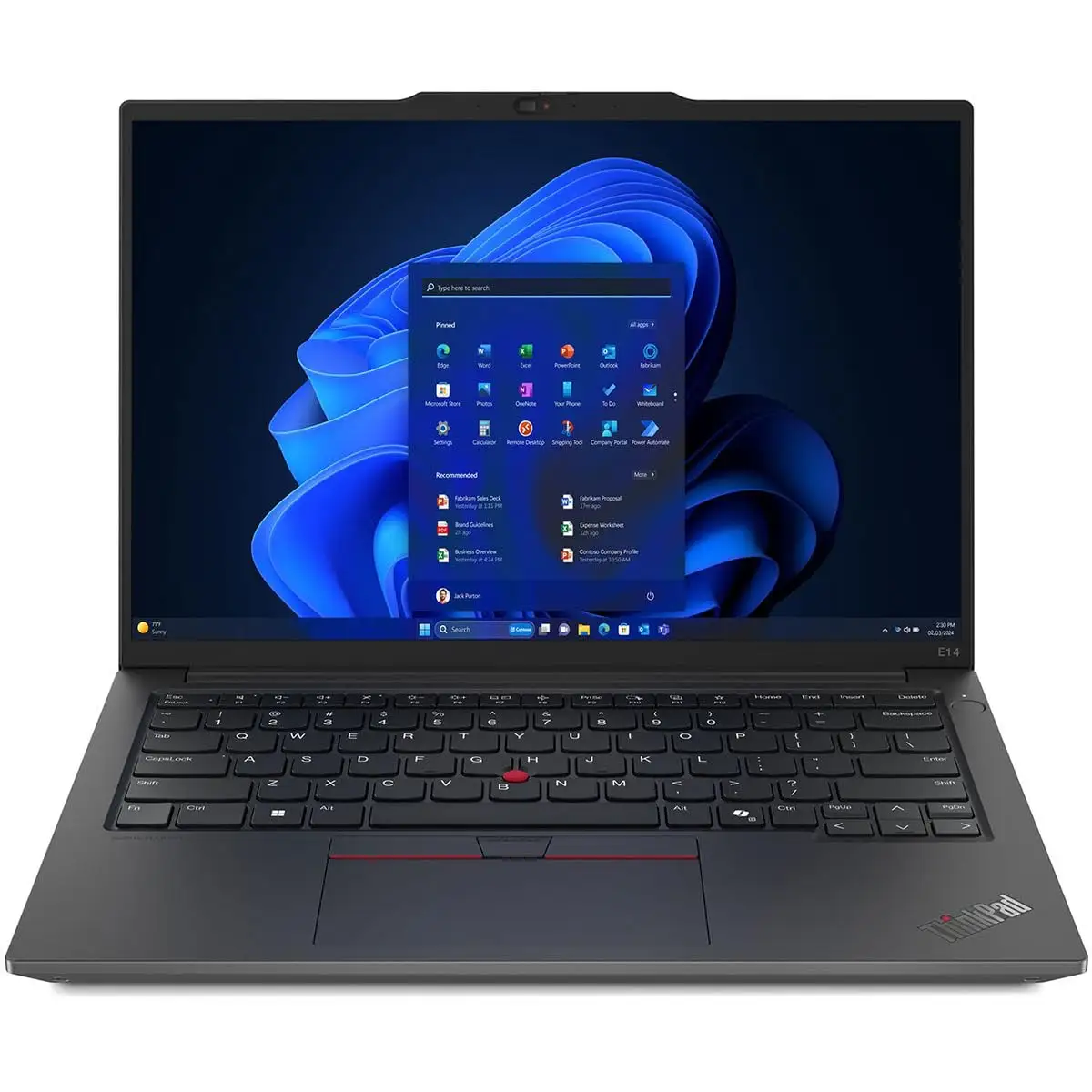
Display quality remains the Achilles heel across platforms. NotebookCheck's Intel review noted no higher resolution options beyond 1200p IPS, with limited color coverage—“no p3 colors, OLED, or HDR support… graphics editors will need to look elsewhere.” Reddit users lamented lack of 2.2K option in the US and dull visuals for media consumption. This particularly impacts creative professionals and those needing accurate visuals.
CPU performance disappoints compared to expectations. The AMD variant’s Ryzen 7 7735HS underwhelmed in multicore benchmarks, falling slightly behind Gen 5, despite theoretical gains. Intel Core Ultra 7 155U in testing performed better than its predecessor but was still “slower than current AMD options,” raising questions for buyers wanting future-proof performance.
Speaker quality is another recurring drawback. While Dolby Atmos branding promises immersion, AMD buyers found “good enough to watch movies” but lacking depth. For multimedia use, this may necessitate external speakers or headphones.
Divisive Features
Connectivity splits opinion due to variant differences. The AMD version lacks USB4/Thunderbolt, which NotebookCheck criticized, while Intel models gain limited Thunderbolt 4 support—yet only one of two USB-C ports supports it, leading to cable crowding. Some business users value the RJ45 Ethernet port present in AMD builds, while others avoid AMD for the missing Thunderbolt.
Battery life garners mixed responses. LibraSpecs reported 6–7 hours on Intel’s lower-wattage chip, satisfying office tasks, while Reddit discussion around older Gen 4 warned of poor life (~2 hours) and noisy fans. Buyers with balanced workloads will find it acceptable; heavy mobile users may want larger capacity models.
Trust & Reliability
Trustpilot-linked NotebookCheck reviews didn’t show scam patterns—most issues were product limitations rather than transaction concerns. Longevity is promising in build terms; materials resist flex and hinge wobble is minimal. Sustainability credentials (FSC-certified packaging, recycled content in components) suggest a longer environmental life cycle. Reddit’s early adopters expect theirs to “serve me nice” for years thanks to upgrade paths.
Alternatives
Competitors cited include HP ProBook 445 G10, lighter but with lower resolution display; Dell Latitude 3440, pricier with Intel CPU but less upgradeable; and Acer Swift Go 14 AI, sharper 2.5K display but less rugged. The higher-end ThinkPad T14 Gen 5 fixes display quality and connectivity, but at a much higher price.
Price & Value
Market pricing spans $719 (AMD base) to around $957 (Intel Core Ultra 7). eBay listings hover around $829 for Intel with 16GB/512GB configs. The strong upgrade potential boosts resale appeal; business buyers can market upgraded RAM/SSD later to offset depreciation. Community advice suggests buying directly from Lenovo for custom specs, ensuring top panel option if available.
FAQ
Q: Can I upgrade both RAM and storage?
A: Yes—two SO-DIMM slots support up to 64GB DDR5, and two M.2 bays (2242 + 2280) allow dual SSDs without removing the factory drive.
Q: How bad is the display for color work?
A: The WUXGA panel covers ~56.7% sRGB, which is inadequate for accurate photo/video editing. The optional 2.2K 100% sRGB screen is better but often region-limited.
Q: Does the AMD version support Thunderbolt?
A: No, AMD builds lack Thunderbolt/USB4 entirely. Intel variants support Thunderbolt 4 on one USB-C port.
Q: Is the keyboard as good as higher-end ThinkPads?
A: Feedback says it’s close—around 90% of the tactile experience of T-series models, with dependable key travel and comfort.
Q: How is battery life in real world use?
A: Intel U-series chips deliver 6–7 hours on balanced use; AMD HS chips may consume more power under load.
Final Verdict:
Buy if you’re a business professional, student, or IT buyer seeking a durable, highly upgradeable ThinkPad with solid everyday performance and willing to accept basic display quality. Avoid if your work depends on color-accurate visuals, cutting-edge CPU performance, or universal Thunderbolt connectivity. Pro tip from the community: If budget allows, source the 2.2K 100% sRGB panel through Lenovo’s regional store or third-party resellers to unlock its full potential.