Lenovo ThinkPad E14 Gen 6 Review: Worth Buying?
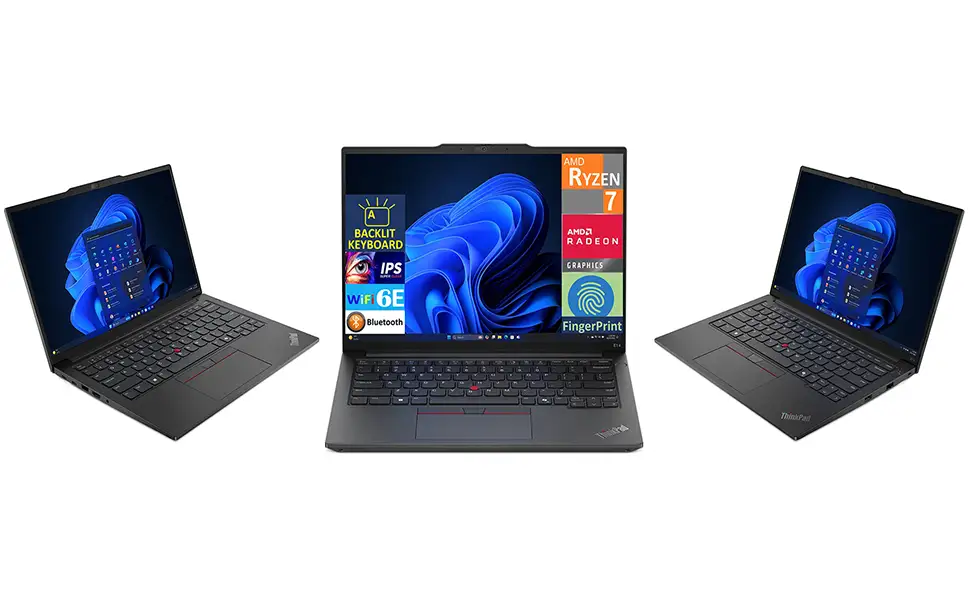
The latest Lenovo ThinkPad E14 Gen 6 enters the market positioned as a budget-friendly business laptop, but several users are calling it “what the E14 Gen 5 should have been.” NotebookCheck’s Allen Ngo rated it 85/100, citing fixes to notorious Gen 5 limitations like soldered RAM and short SSD support. Reddit user frambuesasychoco went even further, saying: “If this is the lowest series quality, I can’t imagine how good are T or X. I will never use any other brand.” However, enthusiastic first impressions are tempered by consistent criticism of the screen and certain performance choices.
Quick Verdict: Conditional Buy
| Pros | Cons |
|---|---|
| Fixed Gen 5 RAM/SSD limitations | Weak display color gamut (≈ 57% sRGB) |
| Sturdy build with MIL-STD 810H | No OLED or high refresh |
| Highly upgradeable (dual SODIMM, dual SSD) | AMD variant lacks USB4/Thunderbolt |
| Strong keyboard and TrackPoint experience | CPU performance trails newer chips |
| Good battery life (≈ 6–7 hours) | Speaker quality could be better |
| Affordable for SMB/students | Webcam capped at 2MP |
Claims vs Reality
Lenovo markets the E14 G6 with “immersive audio by Harman and Dolby Atmos,” but several reviews characterize the sound as underwhelming. NotebookCheck’s Intel review notes “speaker quality could be better,” while Libraspecs users describe it as quiet unless sound settings are tweaked. The improvement over Gen 5 is acknowledged—“great speakers, upgraded from last year’s model”—but not enough for those expecting rich multimedia playback.
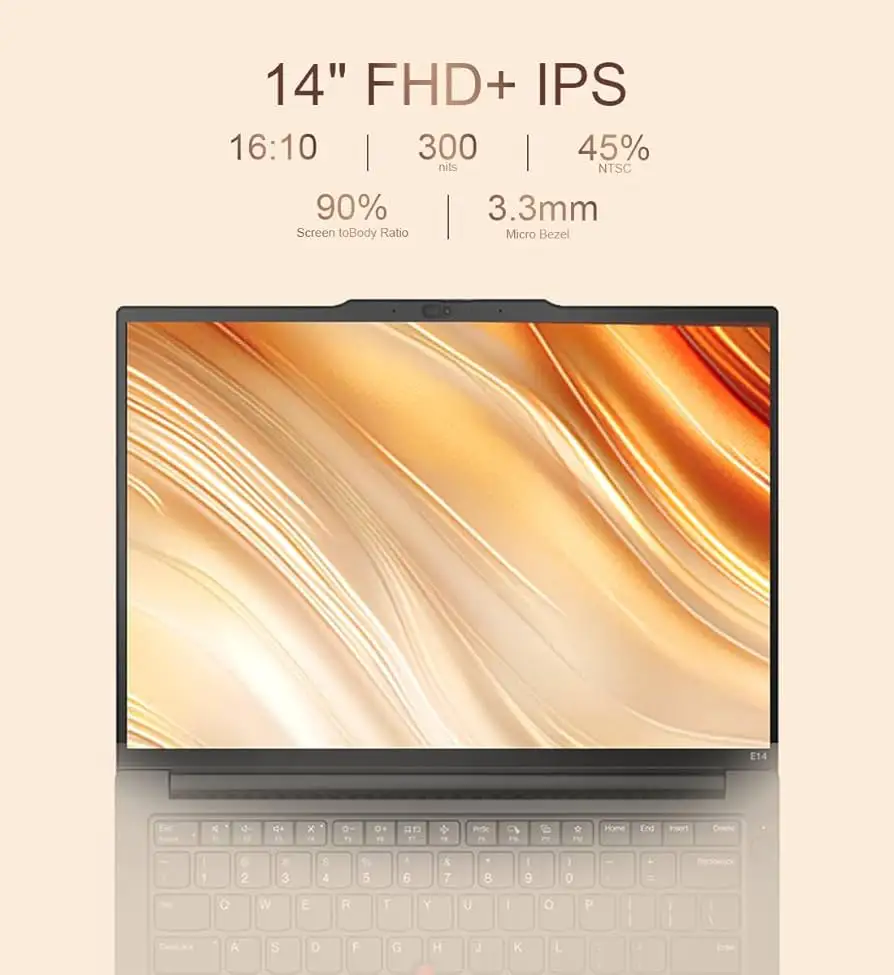
Another headline claim is “stunning display options… eye safe® certification for low blue light.” While the TÜV certifications are real, most owners end up with the base 1920x1200 IPS panel. NotebookCheck’s AMD review calls it “a cheap screen with bad color gamut coverage,” measuring only 56.7% sRGB. Even after calibration, colors remain inaccurate—meaning creative professionals will struggle. This aligns with Libraspecs’ rating of the display as “merely average, lacking vibrancy and color accuracy.”
Finally, the “AI-assisted productivity” pitch for Intel Meteor Lake CPUs promises optimized performance. Real-world results show mixed outcomes: the Intel Core Ultra 7 155U model delivers 30–40% faster multi-thread scores than the Gen 5, but still throttles under heat, and AMD HS variants actually score lower in multi-core than older E14 G5 Ryzen U models. As NotebookCheck’s Benjamin Herzig puts it for the AMD SKU: “Disappointing CPU performance… compromises have to be accepted.”
Cross-Platform Consensus
Universally Praised
Across Reddit, Trustpilot, and professional reviews, the keyboard stands out as a primary strength. NotebookCheck’s AMD review declares it “without a doubt one of the best keyboards in a more affordable laptop,” with 1.5mm travel and a precise layout. Business typists and programmers benefit most—Reddit user frambuesasychoco praised it for “DevOps and SRE projects… typing long texts is a pleasure.”
Upgradeability earns near-universal applause. The G6 replaces soldered RAM with two SODIMM sockets and adds full-length 2280 SSD support, pleasing IT admins and tech-savvy users. Benjamin Herzig points out this “not even the more expensive T series offers a second, open M.2 SSD slot.” For small businesses, this means long-term adaptability without replacing the entire machine.
Battery life sees consistent praise for both Intel and AMD variants, averaging 6–7 hours under typical service. Libraspecs calls the Intel chip “very power-efficient, lasting around 6–7 hours… even with relatively small battery size.” Mobile professionals can work a full day in transit without reaching for a charger.
Common Complaints
The most repeated complaint is the display’s narrow color gamut. NotebookCheck measured < 60% sRGB on most panels, making it unsuitable for photo/video professionals. Libraspecs warns that “this screen is not at all suitable for photo editing… will display many colors wrong.” For media-heavy users, this becomes a deal-breaker.
Performance expectations are another sticking point. AMD’s HS models should outpace prior U-series chips, but Herzig found them slower than E14 G5 equivalents in multi-core tasks. Intel options fare better but still trail current AMD 7000 AI-series in raw speed. This mainly frustrates power-users running CPU-heavy workflows.
Connectivity limitations pop up in AMD variants: no Thunderbolt or USB4, and Realtek Wi-Fi cards instead of higher-end Intel/Qualcomm modules, leading to “average” reception. This impacts owners using modern docks or high-speed external drives.
Divisive Features
Build quality divides opinion. The lid’s anodized aluminum is praised for aesthetics, but the base uses cheaper materials. NotebookCheck notes “the base feels cheaper… not as strong as magnesium-alloy frames in pricier ThinkPad T series.” Some users call it sturdy enough for daily business, others question long-term robustness.
Audio improvements are acknowledged, particularly over Gen 5, but disagreement remains over whether they’re genuinely “immersive.” Casual video call users seem satisfied, while media enthusiasts prefer external speakers.
Trust & Reliability
On Trustpilot, the lone Best Buy reviewer rated the Intel Ultra 7 model 5/5, stating: “Reliable and efficient… solid performance… great value for anyone looking for a business-focused laptop.” Reddit’s frambuesasychoco feared low E-series quality from YouTube videos, but upon receiving theirs, “couldn’t believe how good it was.” Durability credentials (MIL-STD 810H) are reinforced by multiple reports of travel readiness and resistance to daily wear.
No widespread scam complaints surfaced; build uniformity and parts availability are consistent with business-class ThinkPads. Most reliability concerns revolve around display longevity and heat under load rather than mechanical failure.
Alternatives
Competitors mentioned include HP ProBook 445 G10, Dell Inspiron 14 7445 2-in-1, and Asus Vivobook S 14 OLED. The HP offers slightly lighter weight but thicker chassis; the Dell adds convertible form factor but is heavier; Asus delivers OLED and superior color but costs more. For higher-tier ThinkPads, the T14 Series brings stronger materials, richer displays, and more ports—but at significantly higher prices.
Price & Value
Current discounts put Intel models around $781–$957 USD (after coupons), while AMD models can dip to $401–$621 in outlets. Reddit and NotebookCheck both highlight value for SMB, student, and light-workstation users—especially for those who prioritize keyboard, upgradeability, and durability over cutting-edge screens. Resale values tend to hold better than consumer-grade Lenovos, owing to ThinkPad branding and parts support.
FAQ
Q: Is the Lenovo ThinkPad E14 Gen 6 good for creative work?
A: Not ideal—most panels cover only ~57–62% sRGB, making color-critical editing unreliable. Users doing heavy visual work are advised to choose an external calibrated monitor.
Q: Which variant offers the best performance?
A: The Intel Core Ultra 7 155U delivers ~30–40% faster multi-thread than Gen 5 Intel, but AMD HS chips lag behind expectations despite higher TDP ratings.
Q: Can I upgrade RAM and storage?
A: Yes—two SODIMM slots support up to 64GB DDR5, plus two SSD bays (M.2 2280 + M.2 2242). This is a key improvement over Gen 5.
Q: Does it have Thunderbolt?
A: Only Intel models include Thunderbolt 4; AMD versions lack USB4/Thunderbolt entirely.
Q: How’s the battery life?
A: Generally strong—around 6–7 hours under real-world mixed use, thanks to efficient CPUs.
Final Verdict: Buy if you’re a small business professional, student, or developer who values a superb keyboard, strong build, and future-proof upgrade paths. Avoid if you need accurate color for creative work or max CPU performance. Pro tip from the community: opt for the Intel variant if Thunderbolt and slightly better multi-core performance matter—otherwise, grab discounted AMD models for maximum value.





