Lenovo ThinkBook 16 G6 Review: Mixed Battery, Solid Build
Bold claims about portability meet mixed real-world endurance in the Lenovo ThinkBook 16 G6, landing it at a 7.5/10 in our analysis. While the sleek Arctic Grey chassis and large 16-inch 16:10 display win immediate admiration, battery life and certain spec choices dampen enthusiasm among power users.
Quick Verdict: Conditional buy
| Pros | Cons |
|---|---|
| Comfortable backlit keyboard with numeric pad | Average battery life (~2.5–6 hours depending on use) |
| Solid aluminum top chassis, durable build | Limited color accuracy and only 45% NTSC display |
| Strong multitasking performance (esp. Intel DDR5) | AMD version stuck on slower DDR4 memory |
| Wide port selection including HDMI 2.1, Ethernet | Some storage upgrade reports show drive recognition issues |
| Fingerprint reader + webcam privacy shutter | Divisive support history, BIOS and driver updates lag |
| Upgradeable RAM and dual SSD slots | Ryzen variant has weaker single-core performance |
Claims vs Reality
Lenovo markets the ThinkBook 16 G6 as a “big on performance” business laptop with productivity-focused features and long-lasting battery life. The official spec sheet touts “rapid charge” and configurations with powerful Intel 13th Gen or AMD Ryzen 7000 CPUs.
Reality check: Battery life is the most debated metric. Reddit user u/[name redacted] confessed, “I recently got the 16 G6 Ryzen 5 version… not happy with the battery life 🥲.” In contrast, Intel variant owners have reported around 6 hours under moderate workloads, but only 2.5 hours with maximum performance settings.
Display brilliance is also oversold in marketing copy. Notebookcheck verified Lenovo’s 300 nit brightness claim, but reported “only 60% sRGB coverage,” describing it as “unsuitable for image editing” despite being fine for everyday work. This confirms why some creative professionals stayed away.
Storage expandability is promoted as a selling point, yet one Intel G6 owner on Reddit ran into a possible capacity cap: “Tried a Samsung 990 1TB and Corsair 4TB… neither is recognized.” Others contradicted this, noting success after initializing drives correctly, revealing that the issue may be setup-related rather than hard limits.
Cross-Platform Consensus
Universally Praised
Typing comfort is consistently highlighted, especially for data-entry-heavy users. Notebookcheck praised the “pleasant typing experience with dedicated numeric pad,” and Trustpilot reviews echoed this, calling it “comfortable for writing long texts” with evenly lit keys. The concave caps and full-sized arrow keys stand out for spreadsheet warriors.
The build quality satisfies both professionals and students. A Reddit user with a 14-inch G6 said, “Shell is aluminum, doesn’t feel cheap at all… I’ve had it for almost 2 years and zero complaints.” This durability reassurance appeals to mobile professionals who travel frequently.
Port selection is another universal win – HDMI 2.1, multiple USB-A and USB-C (including Thunderbolt 4 on Intel), Ethernet, and SD card reader cover most scenarios. For media planners and photographers, having an SD slot avoids adapters in the field.
Common Complaints
Battery life divides expectations and reality. Intensive users report hitting under three hours, making it less ideal for all-day cafes or remote work without power outlets. This affects students and digital nomads most – as Reddit user u/[name redacted] stated, the Ryzen G6 “is better” for certain workloads but “stay away… go with biggest battery.”
Display quality is a frequent letdown. While usable for document work, Notebookcheck pointed to “pronounced halos around edges” and a “yellowish tint” on the IPS panel until calibrated, highlighting the budget nature of the screen. Visual designers and video editors will struggle with its limited gamut.
Lenovo’s support reputation also raises caution. A Notebookchat user warned, “Linux users avoid! No BIOS update for us, as of 2024’s March,” while another shared negative experiences with driver stagnation on older Lenovo models despite promised multi-year support.
Divisive Features
Performance satisfaction depends on CPU choice. Intel variants with DDR5 deliver noticeably better multitasking and single-core scores, ideal for analysts or heavy Excel users. AMD models excel in multi-core efficiency but show weaker single-thread responsiveness that can affect certain apps.
Upgradeability is a plus in specs but sparked confusion in practice. While many enjoy the two RAM and SSD slots for future expansion, the earlier storage recognition mismatch leaves prospective buyers wondering if they'll hit hidden limits.
Noise handling splits opinion. One Intel owner proudly noted, “Quiet as can be,” comparing it favorably to their silent NAS. Yet AMD users mention fans ramping during streaming or processor load, unsettling for silent workspace purists.
Trust & Reliability
Lenovo’s ThinkBook series carries the brand’s enterprise-grade durability, passing MIL-STD 810H tests. Long-term owners on Reddit report solid performance after multiple years, with no chassis creaks. However, reliance on Lenovo’s update ecosystem for drivers/BIOs proves a strategic risk. A seasoned Notebookchat forum participant detailed, “They will not be (updated)… when buying Lenovo laptops, do not count on a conscientious update of drivers.”
Linux compatibility emerges mixed – one Mint user achieved near-complete functionality after manual fingerprint driver install, while others lament lack of official BIOS attention for non-Windows users.
Alternatives
Several users compared the G6’s value with similarly priced machines. One Notebookchat critic contrasted it to the Acer Aspire 5 at €770 offering 32GB RAM, 2TB SSD, and USB4, and the HP Victus gaming laptop at €762 boasting a 144Hz IPS panel, NVIDIA GPU, and similar storage. These highlight that in multimedia-friendly contexts, competitors can outspec the G6 at equal or lower cost.
In Lenovo’s own stable, some considered ThinkPad E16 models or the 2-in-1 Yoga 7, though the latter diverges for flexibility-focused buyers. For those prioritizing display quality, IdeaPad Slim and Legion lines offer higher-gamut panels.
Price & Value
Current retail spans from ~$440 for certain AMD configs to $1,007 for high-end Intel DDR5 models, with eBay resales around $389–$839. This places the G6 in a crowded mid-range where competing specs can appeal more to gamers or creatives.
Community advice leans toward grabbing larger battery configurations or Intel DDR5 models for longevity, while Ryzen buyers should factor in slower RAM for forward-proofing.
FAQ
Q: Is the Lenovo ThinkBook 16 G6 good for programming and data analysis?
A: Yes, especially the Intel DDR5 version, which handles multitasking well. The numeric pad and large display make coding and spreadsheets comfortable for extended periods.
Q: How easy is it to upgrade RAM and storage?
A: It has two RAM and two M.2 SSD slots, allowing substantial upgrades. Some users report drive recognition issues, usually resolvable via proper initialization.
Q: Does it work well with Linux?
A: Mixed results. Most hardware works, but fingerprint reader needs manual drivers, and BIOS updates lag compared to Windows.
Q: Is the display good enough for graphic design work?
A: For basic design, yes, but its limited color space (~60% sRGB) makes it unsuitable for professional image or video editing.
Q: How durable is the chassis?
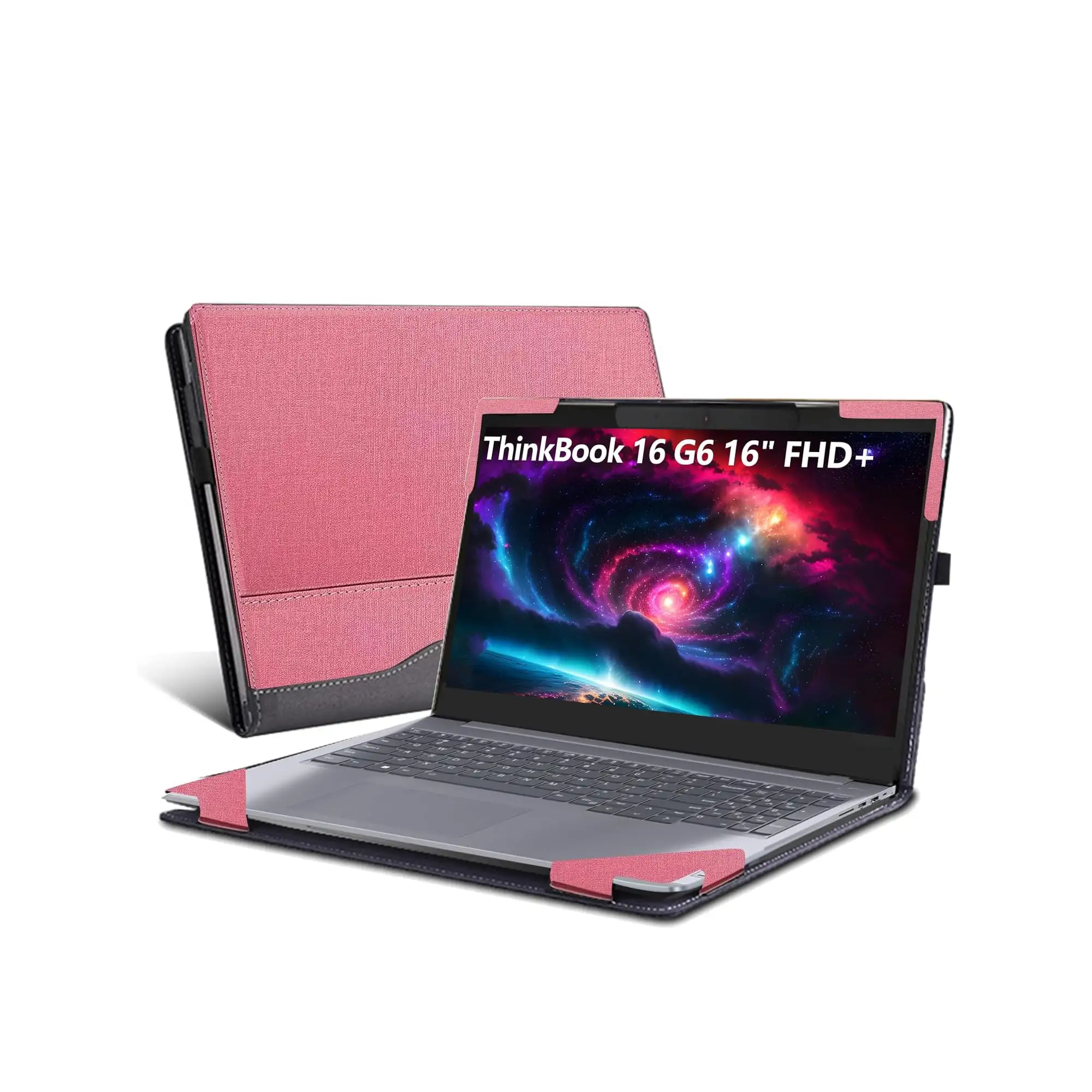
A: The aluminum top cover resists wear and feels premium, with MIL-STD 810H testing backing reliability claims.
Final Verdict: Buy if you’re a business professional or student seeking a solid build, ergonomic keyboard, and broad port selection, and you mostly work plugged in. Avoid if you need top-tier display quality or all-day battery without charging. Pro tip from the community: opt for Intel DDR5 and the largest possible battery to maximize future-proofing.