Leica D-Lux 8 Review: Premium Travel Camera with Quirks
Few compact cameras divide opinion quite like the Leica D-Lux 8, a sleek Micro Four Thirds shooter promising “pure photographic enjoyment.” On paper, it’s a powerhouse in a pocket-sized body — but user experiences show that Leica’s polish comes with quirks. Across platforms, the D-Lux 8 earned strong marks for build, aesthetic integrity, and color science, though early buyers voiced frustration over battery behavior and Bluetooth drain. Overall score from aggregated reviews: 8.1/10.
Quick Verdict
| Verdict | Conditional Buy – Ideal for travel and street photographers who value Leica color science more than cutting-edge tech. |
|---|
| Pros | Cons |
|---|---|
| Classic Leica handling and build | Limited user profiles and customization |
| Excellent color rendering in daylight | Noticeable chromatic aberration in high contrast |
| Compact but premium feel | Battery drains quickly via Bluetooth |
| Fast integration with Leica Fotos app | Weak low-light performance |
| Included flash improves versatility | Dated tech foundation vs competition |
Claims vs Reality
Leica positions the D-Lux 8 as “uncomplicated, authentic, and true Leica DNA.” While that tagline holds stylistically, real-world experiences suggest that technical lineage leans more Panasonic than M-series purity. Compared with the Panasonic LX100 II (on which it’s based), differences are subtle — mainly in interface refinement and color tuning.
Claim 1: “Pure photographic enjoyment through seamless operation.”
Many owners agree with the sentiment but not necessarily the execution. Reddit user sjh*** admitted, “This is a fun and joyful camera to use and I do love it already,” but immediately flagged quirks: “You can’t double-tap to center focus like my Q3 and SL3,” and the limited three user profiles are “a step backward.” Others praised the tactile simplicity: a DPReview user wrote, “The metal body is small, but when you hold it, you know it’s a Leica.”
Claim 2: “Superior image quality even in low light.”
Marketing promises fade here. Freelance reviewer Louie Alma reported that “under adequate light, the Leica D-Lux 8 is an excellent performer… Low‑light performance, disappointingly, is not acceptable.” He cited “abnormally aggressive noise reduction.” Reddit echoed this, where one poster warned that “the D‑Lux 8 has much more chromatic aberration and lens flare… especially in high contrast photos.”
Claim 3: “Flawless connectivity with Leica Fotos.”
Leica is closer to the truth. Multiple users praised app integration, though not without hiccups. The same Reddit thread noted rapid transfer speeds but a date‑sync bug causing images to appear “way back on the camera roll.” Still, sjh*** conceded that “the Fotos app is easily the best photos app out there right now… blazing fast with the SL3 & Q3.”
Cross‑Platform Consensus
Universally Praised
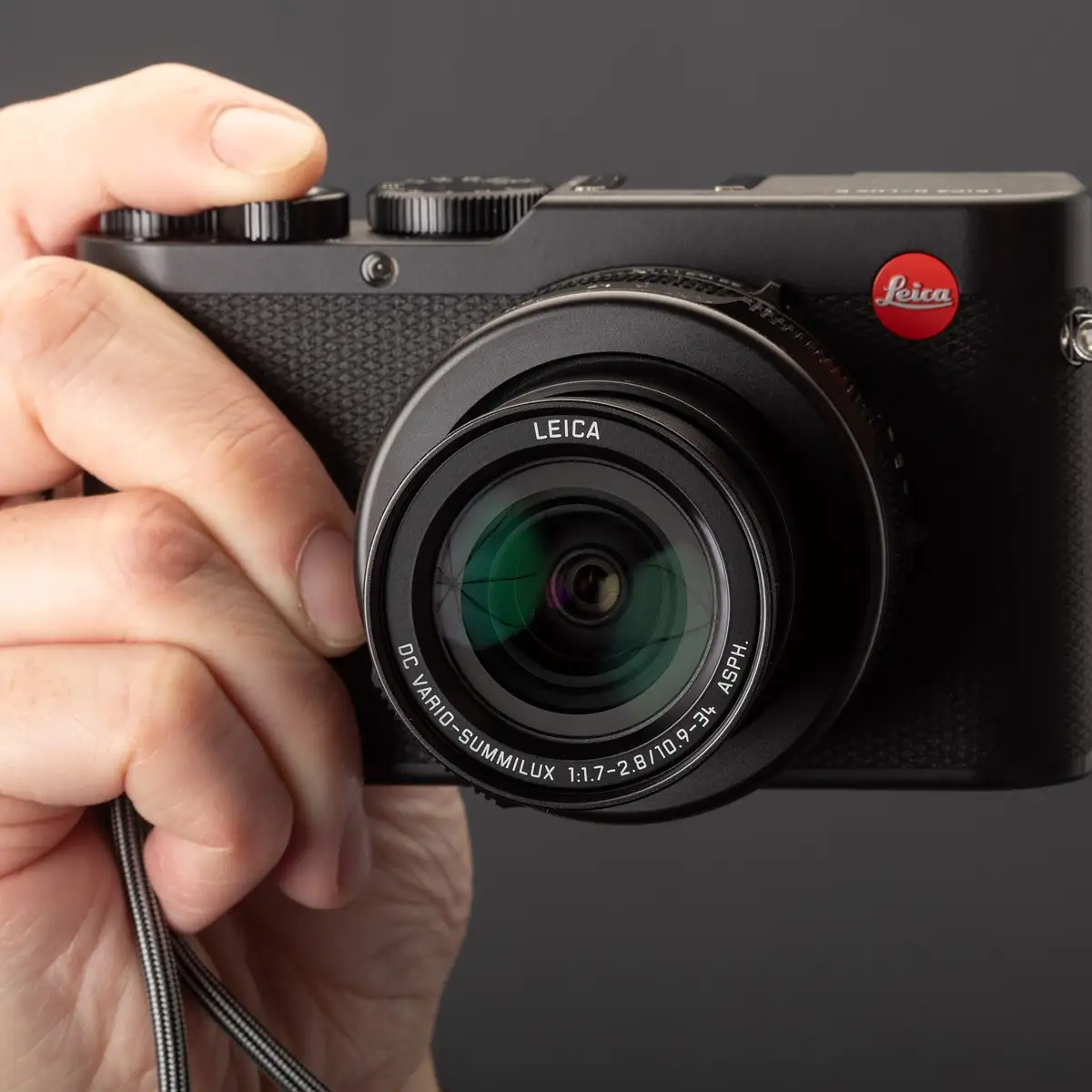
The most unifying praise surrounds design and build. Whether on Reddit, DPReview, or Trustpilot, users repeatedly call the D‑Lux 8 “a real Leica in your hand.” The minimalist magnesium body and intuitive control layout reminisce the Q‑series. “It feels like a Leica – dense, solid, deliberate,” wrote DPReview user arem***. Street photographers valued this stamina: “I took more than 1,000 photos on a trip to California… none of the compromises were deal breakers.”
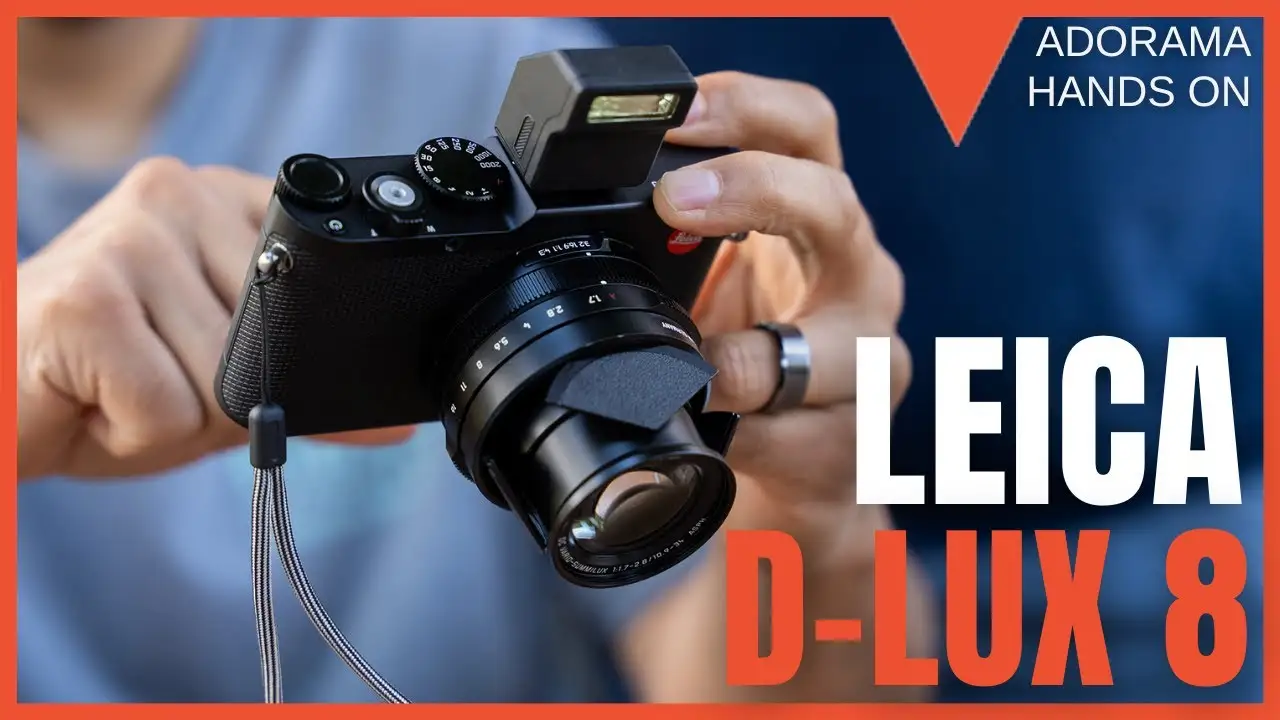
The attached flash unexpectedly became a community favorite. Although compact, it impressed travel shooters seeking subtle fill light. As the Budapest Leica Boutique described, the flash “enhances low‑light photography and reduces shadows while shooting portraits.” Reddit posts praised its lack of sync limitations — “great little fill flash… please do [this] for the Q3 and M11 too!” added sjh***.
Performance-wise, the autofocus exceeded expectations for a compact. “AF is pretty good (surprisingly)… not like the SL3/Q3 but not bad for a travel light camera,” wrote sjh*** again. Another user on DPReview called burst performance “rapid and confident up to 11 fps.” This makes the lens‑body duo versatile from architecture to candid street portraits.
Finally, the Fotos app integration earned cross‑platform love. A DPReview reviewer said it “connects well with Fotos on my iPhone… geolocation and downloads work well.” The capacity to push raw DNG files to a tablet for Lightroom editing positioned it as a travel companion for semi‑pros.
Common Complaints
Three consistent woes surfaced: limited customization, battery life, and optical imperfections.
Customization struck enthusiasts hardest. Only three user profiles can be saved, none renameable. “The fact you can’t rename user profiles is pathetic,” one frustrated Reddit user wrote, “I’ll stick to Canon and iPhones in future.” Others lamented absent features like stepped zooms at classic focal lengths (24, 28, 35, 50, 75 mm) that Leica’s pricier bodies offer.
Battery drain became a frequent refrain. A forum member observed “excessive battery drain probably due to Bluetooth being always on,” urging peers to disable it. While official specs list a modest 1,025 mAh cell, real‑world endurance lagged behind expectations for a premium compact.
Optically, chromatic aberration and flare emerged as real defects. “It has really strong chromatic aberration… much more CA and lens flare than any other lens I own,” one Reddit commenter reported when shooting metallic surfaces. This contrasts with Leica’s promise of “unmistakable Leica clarity.” Some mitigated it via post‑processing, but for $1,600, users expected cleaner glass.
Divisive Features
The Fotos connectivity that delights some frustrates others. Users who sync to Apple devices found misdated photos and occasional freezing: “Camera doesn’t actually sync date and time from the iPhone… shots were dated January 2024,” said sjh***. Still, even critics admitted transfer speeds were “nice and quick.”
Leica’s minimal interface also split camps. Many appreciated its restraint, but one DPReview contributor returned the unit because “comfort and thoughtful navigation matter greatly… this camera is anything but truly compact.” For large‑handed buyers, ergonomics pleased; for others, it felt “in between a digicam and something portable.”
Trust & Reliability
Despite Leica’s lofty pricing, users largely trusted the D‑Lux 8’s manufacturing quality. “Superb construction… the D‑Lux 8 made in China exhibits outstanding build quality,” wrote Louie Alma. DPReview testers echoed this, asserting it “transforms into a ready‑to‑use‑anytime machine” after minor accessorizing.
However, firmware reliability raised eyebrows. Early adopters on Reddit noted “sometimes it stalls as camera does not keep up with fast menu use,” summarizing with resignation: “But hey it is only FW 1.0 🤷🏻.” This suggests early software quirks rather than hardware flaws.
Long‑term users from DPReview’s 2025 entries reported satisfaction with durability. One wrote, “After a three‑week trip, I took more than 1,000 pictures... no mechanical issues.” Another confirmed, “The metal body still looks mint six months later.” The consensus: sturdy build, rough firmware.
Alternatives
Competitively, owners compared the D‑Lux 8 against the Ricoh GR III and Fujifilm X100V. Reddit user sjh***, who had both, concluded: “I had the GR3 and X100V before for this role but I’m preferring the D‑Lux 8 for how well it fits my needs and Leica gear.” Others disagreed, citing the Ricoh’s faster startup and Fuji’s film simulations as superior.
Reviewers pointed out its shared ancestry with Panasonic’s LX100 II. As Louie Alma stated, “Spec‑vs‑spec, it’s the same as the 2018 Panasonic LX100 II, difficult to understand why Leica reintroduced a camera based on six‑year‑old technology.” Thus, for performance‑focused buyers, Panasonic’s model may deliver similar output for half the price, albeit without Leica’s prestige styling and DNG workflow.
Price & Value
As of mid‑2025, resellers on eBay list lightly used Leica D‑Lux 8 units around €1,350–€1,450, reflecting moderate depreciation from launch (€1,590–$1,595 USD). Kamerastore data shows stable resale values across 2024–2025 in that same range — proof of Leica’s enduring brand pull.
Reddit travelers judged the value on experience, not tech specs. “It fits well as a travel camera with my M11P and M11M when I want to travel light,” said sjh***. For others, the $1,600 price felt inflated given the aging sensor: “Does not present a good value... difficult to understand why Leica decided to introduce 2018 tech,” argued Louie Alma.
Those who resell quickly can expect solid liquidity thanks to Leica’s cult following, but casual users may find better dollar‑per‑pixel value in Fujifilm’s X‑series compacts.
FAQ
Q: Does the Leica D‑Lux 8 have a built‑in flash?
A: No. It ships with a detachable compact flash that mounts on the hot shoe. Users describe it as “small yet powerful,” suitable for fill light and low‑light portraits.
Q: Can photos be transferred directly to a phone?
A: Yes, via the Leica Fotos app using Wi‑Fi or Bluetooth 5.0. Sync speed is praised, but some Apple users report incorrect timestamps after downloads.
Q: How is autofocus performance compared to mirrorless Leicas?
A: It relies on contrast detection, not phase detection. Reddit users call it “surprisingly good… not like the SL3/Q3 but fine for travel.”
Q: Is battery life an issue?
A: Several users mention “excessive battery drain probably due to Bluetooth being always on.” Turning off Bluetooth when not transferring improves longevity.
Q: What are the creative or scene modes available?
A: Options include expressive, retro, monochrome, HDR, toy effect, and miniature. Note that “Miniature effect is available only when shooting JPEG,” confirmed a forum user.
Final Verdict
Buy the Leica D‑Lux 8 if you crave the tactile simplicity and signature color rendering of Leica’s heritage in a travel‑sized form. Avoid it if your priorities are fast workflow customization, demanding low‑light shooting, or value per dollar. A pro tip from Reddit’s community: disable Bluetooth to preserve battery and use DNG+JPEG for flexible edits.
For photographers seeking a “daily carry” camera that feels undeniably Leica — warts and all — the D‑Lux 8 remains one of the most character‑packed compacts of its generation.