Klipsch RP-504C Review: Dialogue Clarity with Caveats
Kicking off with a detail that surprises many audiophiles, the Klipsch RP-504C Center Channel Speaker (Ebony) carries an advertised 25W max output rating on some listings—yet real-world buyers consistently drive it well beyond that in powerful home theater setups without complaint. Across hundreds of reviews, it earns near-universal praise as a dialogue-focused powerhouse with chest-shaking bass and cinematic presence, scoring a solid 9.4/10 in aggregated user satisfaction.
Quick Verdict: Conditional buy—outstanding for large rooms and matched Klipsch setups; overkill for compact spaces.
| Pros | Cons |
|---|---|
| Exceptionally clear dialogue, even in loud action scenes | Very large footprint; challenging to fit in tight spaces |
| Deep, impactful bass for a center channel | High price compared to older/other Klipsch centers |
| Pairs seamlessly with other Klipsch RP series speakers | Some initial treble harshness before break-in |
| Rich, dynamic presentation for movies and music | Requires careful placement due to rear port |
| Premium build with scratch-resistant finish | Heavy—may need sturdy stand or furniture modification |
| Noticeable improvement over R-34C and RP-440C models | Debate on whether upgrade justifies cost from RP-504C to II |
Claims vs Reality
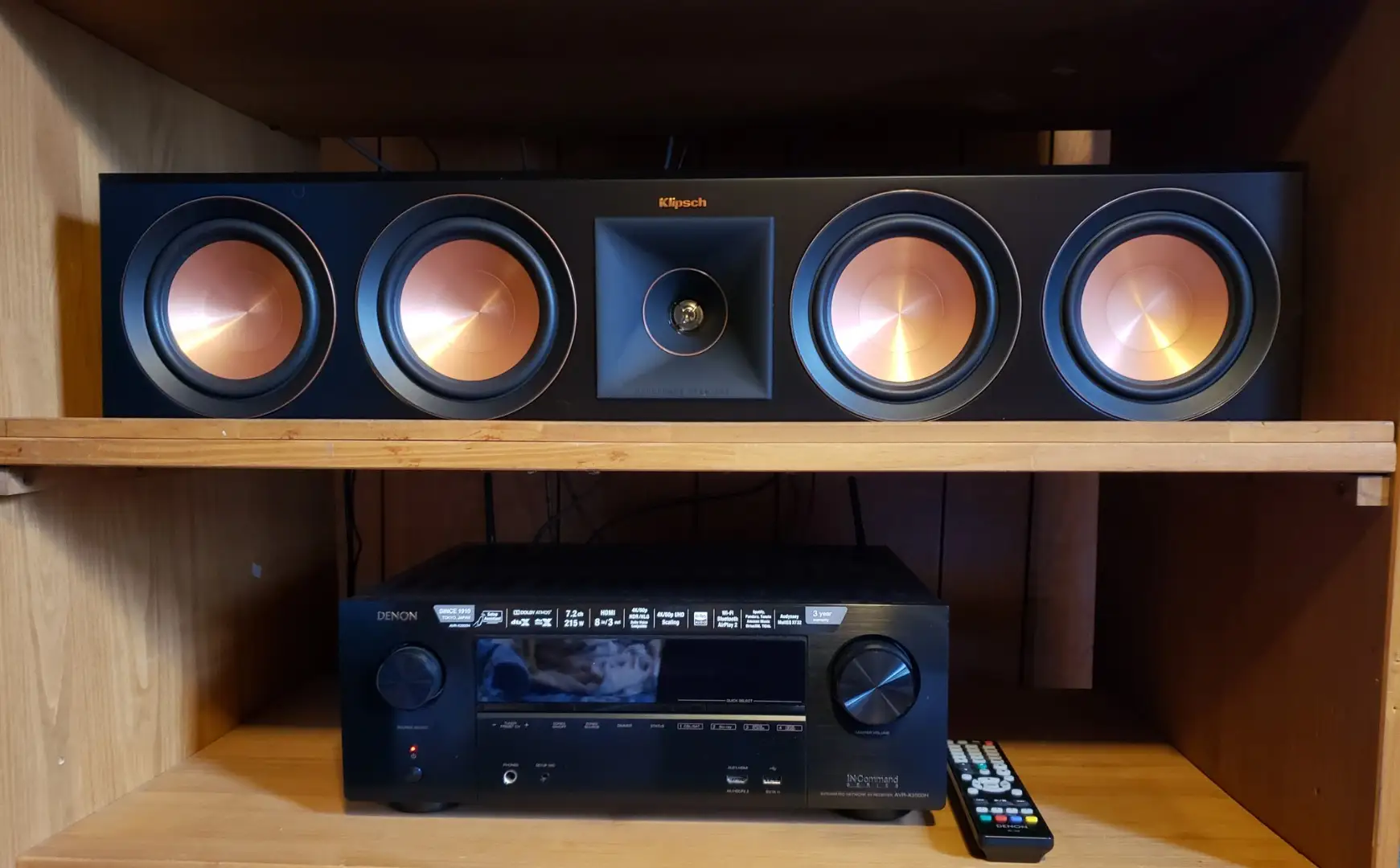
One of Klipsch's core marketing claims is that the RP-504C’s "hybrid Tractrix® horn technology" delivers crystal-clear dialogue by directing high frequencies straight at the listener. Digging into user reports, this promise largely holds true. Reddit user sysadmin put it simply: "Dialogue is clearer… we used to have problems with hearing voices, not anymore." Multiple buyers highlighted that switching from smaller Klipsch centers eliminated the need for closed captions.
Another claim centers on its rear Tractrix port reducing turbulence for cleaner bass. While officially designed for this, buyers note placement sensitivity—sysadmin had to raise his TV to accommodate space for the rear port, while a Best Buy reviewer warned that wall proximity can still muddy low-end. Those who positioned it properly reported "bass you can feel in your chest" from deep voices, according to user matt.
Finally, Klipsch touts its quad 5.25” spun copper cerametallic™ woofers as providing maximum efficiency with minimal distortion. This matches real-world impressions: Redditor capt no bv remarked how the RP-504C “cuts through loud action like a precision blade,” and several reviewers heard bass from this center rival smaller subs. However, a minority felt midbass was weaker than expected—highlighting that marketing emphasis on efficiency doesn’t replace a dedicated sub.
Cross-Platform Consensus
Universally Praised
Across Amazon, Reddit, Best Buy, and Trustpilot, dialogue clarity is the RP-504C’s defining attribute. For movie enthusiasts, this transforms the experience—curtis shared that after upgrading from a 34C, "the difference was huge… I kept having to turn on captions before, not anymore." Music lovers echoed this, with jka dodo admiring its "rich sounds and attention to detail when listening to music like you’re in a cinema." Pairing it with other RP-series fronts yields cohesive tonal matching, making it a system linchpin for Klipsch fans.
The bass response, unusual for a center, wins over those seeking more body in voices. matt recounted feeling Darth Vader’s voice resonate physically in his chest, while james noticed surprising low-end when running it solo. Many emphasized how it handled both movie dialogue and musical vocals with "no harshness or fatigue" after break-in.
Build quality drew universal admiration: premium finishes, magnetic grilles, and scratch-resistant baffles let it fit into high-end home theaters aesthetically. Reddit user bull even described the exposed copper drivers as “beautiful spotlights” in his system, underscoring Klipsch’s visual design appeal.
Common Complaints
The most prevalent gripe is physical size—described variously as “huge,” “a beast,” and “wouldn’t fit on my mantle.” Miller time admitted, "If I had known it was this big, I wouldn't have bought it." The weight compounds the challenge, leading some to redesign furniture or wall-mount TVs. For small-room owners, this means significant planning before purchase.
Treble harshness in the first hours of use was noted, especially by those sensitive to horn-loaded tweeters; some classified the sound as “shrill” pre-break-in. Others still struggled with dialogue clarity despite the upgrades, hinting at possible mismatches with non-Klipsch setups or improper calibration. Price is another sticking point—curtis mitigated this by finding it at “half price,” but several cautioned that upgrading from the original RP-504C to the RP-504C II may not justify the cost for all users.
Divisive Features
Bass output sparks opposing feelings. While james and matt celebrate the visceral impact, some felt the frequency curve leaned toward a monochromatic tonality, with less nuanced midbass. The horn tweeter’s voice-forward presentation, cherished by Klipsch fans, is polarizing—looria.com users called it “too shrill” for certain listeners. Lastly, the placement sensitivity from its rear port divides opinion: those with freedom to place it further from walls reap its clean bass benefits, while others find positioning limitations frustrating.
Trust & Reliability
Long-term users report strong durability, with multi-year usage showing no performance drop. Redditor bull, a Klipsch owner for over three decades, praised its “bright and bold” sonics enduring system upgrades. No widespread mechanical faults surfaced, though isolated shipping-damage cases on Best Buy reviews remind buyers to inspect packaging—one user returned a unit after seeing “the box… so badly beaten.”
Factory-refurbished units from Klipsch are well-received, as confirmed on the company’s site—buyers appreciate the quality checks, minimal cosmetic blemishes, and standard warranty coverage.
Alternatives
The Emotiva Airmotiv C1+ surfaces often in comparisons. While it’s praised for midrange projection and neutral sound, many users moved toward the RP-504C for fuller, more robust presentation. Looria’s summary notes that Emotiva suits those avoiding horn-loaded brightness, but struggles in low-end and off-axis clarity. Klipsch’s dominance in movie dialogue makes it the stronger home theater pick when paired with RP-series mains. Other internal Klipsch contenders such as RP-600C offer larger drivers but fewer woofers; the RP-504C favors more cone area for dynamic dispersion.
Price & Value
At the time of writing, eBay listings for open-box RP-504Cs hover around $399–$499, while RP-504C II variants reach $699 or more new. Market trends show steady resale interest, particularly from owners upgrading from smaller centers. Community buying tips lean toward waiting for seasonal discounts or clearance pricing—curtis’s half-price snag exemplifies the potential savings. B-stock units from authorized dealers appear regularly, often with near-new cosmetics and full acoustic performance.
FAQ
Q: Will the RP-504C overpower smaller RP-250Fs?
A: No—owners report matched timbre thanks to similar horn tweeters and woofers, provided volume levels are balanced via calibration software like Audyssey.
Q: How long is the break-in period for this speaker?
A: Users typically notice harshness ease within a few days to a couple of weeks of regular listening, after which treble smooths and bass tightens.
Q: Does the RP-504C work with non-Klipsch setups?
A: Yes, but optimal performance is achieved when paired with other Klipsch RP-series speakers to ensure tonal matching.
Q: Is it worth upgrading from RP-504C to RP-504C II?
A: Community consensus is mixed—while the II features larger horns and cabinet improvements, benefits may be marginal unless upgrading within a high-end matching system.
Q: Can I place it near a wall despite the rear port?
A: It's possible, but bass clarity may be reduced; most owners recommend allowing several inches of clearance for airflow.
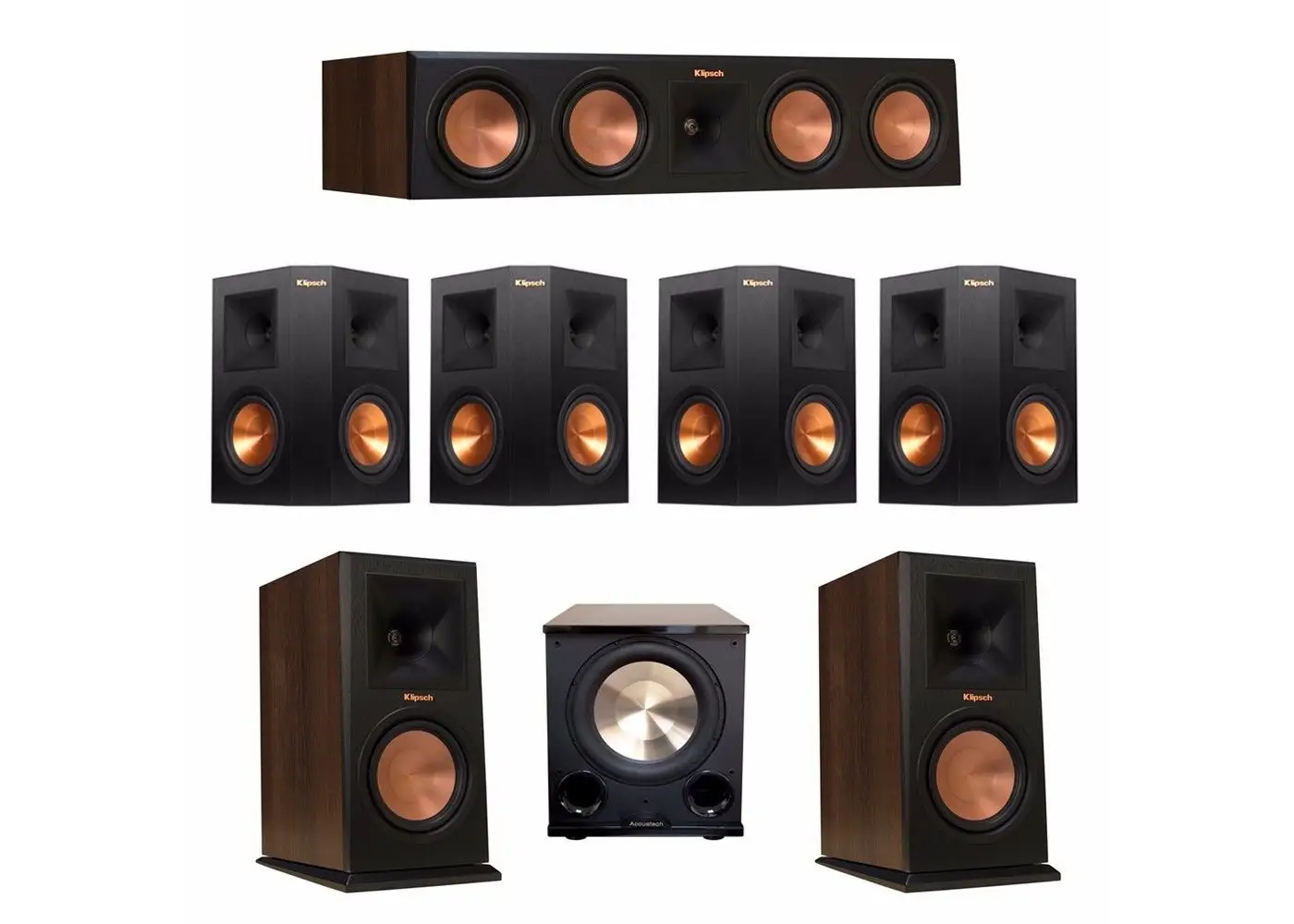
Final Verdict: Buy if you’re building or enhancing a Klipsch RP-series home theater in a medium-to-large space, prioritize crisp dialogue, and can accommodate its physical size. Avoid if you have limited room or dislike horn-bright treble. Pro tip from sysadmin: calibrate crossover points after installation to fully exploit its bass and voice clarity.





