Klipsch R-15M Review: High-Efficiency Sound, Mixed Verdict
Few bookshelf speakers spark such divided opinions as the Klipsch R-15M. Averaging strong ratings—often above 4.7/5—but with pockets of frank, even harsh criticism, they score a conditional 8.4/10. For some, they're "worth dying for" in their price bracket; for others, "marginal at best" without heavy EQ work. The gap between passion and disappointment hinges on listening preferences, room dynamics, and expectations.
Quick Verdict: Conditional — great for high-efficiency needs and lively sound, but can be bright and demand EQ or careful pairing
| Pros | Cons |
|---|---|
| Highly efficient (94dB), easy to drive even with low-powered amps | Noticeable treble peak; may sound harsh or “forward” to some |
| Tight, punchy bass for size | Lacks very low-end extension without a sub |
| Clear midrange for vocals | Some users report muddy upper mids and missing fine detail |
| Attractive copper-spun woofer design | Frequency response not flat; benefits from EQ |
| Strong value when discounted ($100–$125) | Not ideal for large rooms or bass-heavy music without augmentation |
| Versatile — works for music and home theater surrounds | Quality varies with amp pairing; poor synergy with cheap receivers |
Claims vs Reality
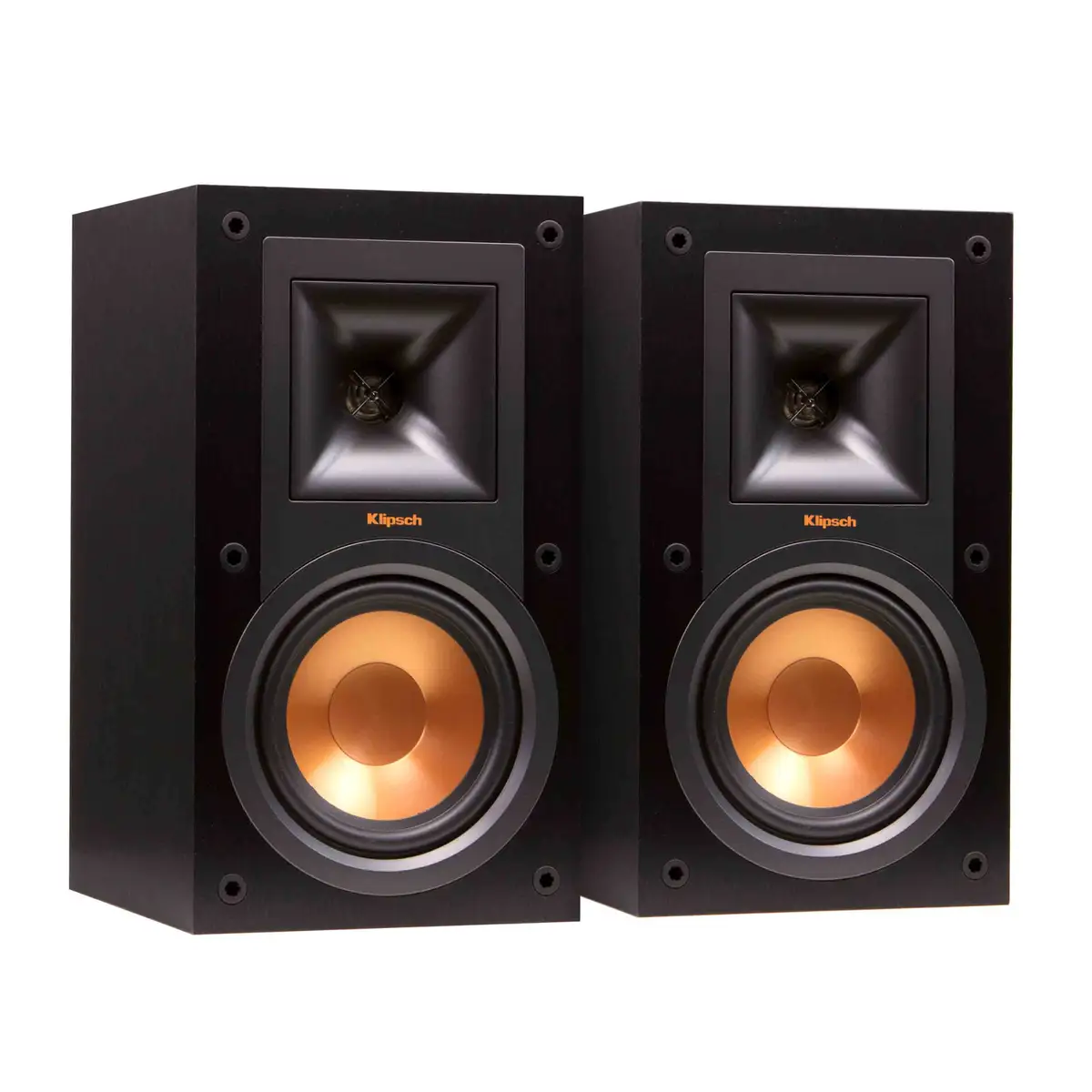
Klipsch markets the R-15M as delivering “big sound from a small footprint” with horn-loaded tweeters and copper-spun woofers for “powerful, lifelike performances.” Official specs tout a frequency range of 62Hz–24kHz ±3dB and extremely high sensitivity.
Digging deeper into user reports, that “big sound” claim holds up in many setups. A verified buyer on Amazon wrote: “for such a tiny speaker you wouldn't expect such a big sound… stereo image is clear enough that the speakers themselves disappear.” This illusion of scale is real—until the music demands ultra-low bass. Multiple listeners noted that while punchy, low-end extension is limited. Reddit user gullible_trout summed it up: “night/day difference… couldn't be happier with the upgrade,” but didn’t claim subwoofer-level depth.
Klipsch’s promise of “lifelike performances” via horn tweeter technology is more polarizing. Some relish the resultant crisp highs—Best Buy reviewer: “listening to symphony… clarity of each instrument is incredible.” Others echo Reddit complaints of “bright and harsh” character, with one Amazon buyer stating bluntly: “the brightness stereotype is true… harsh… yuck.” These contrast sharply with the marketing image of universally engaging, fatigue-free sound.
Cross-Platform Consensus
Universally Praised
When efficiency matters, the R-15M shines. That 94dB sensitivity number isn’t just marketing—users with vintage or low-powered amps regularly comment on strong, room-filling output. Reddit user jack_attack_219 powered them with an old 15W Pioneer SX-450 and declared: “at 94db/1 watt, that SX450 will be all the amp you’ll ever need.” For budget home theater, they also score repeat praise as rear or surround channels; Best Buy buyers report “love the clarity and the sound… makes my surround sound sing.”
Vocals and certain instrumental genres play to their strengths. One Amazon reviewer compared them head-to-head with ELAC Debut 2.0 B6.2: “Klipsch… more engaging, dynamic, more punch, and yes, ‘forward.’” Jazz, classical, and acoustic tracks particularly benefit from that forward presence and detailed treble, giving smaller spaces an “at the concert” feel.
High aesthetic appeal is nearly unanimous—copper-spun woofers draw attention without garishness. Quora experts note the combination of sleek black finish and signature driver as a source of Klipsch brand pride: “makes you proud to show off these speakers.”
Common Complaints
Brightness and treble emphasis are the top complaints, especially for rock or complex mixes. Amazon’s “brightness stereotype is true” review echoes a Reddit garage setup test where bugman53 found “muffled midrange and… piezo sounding tweeter.” Harshness at higher volumes drives some listeners to hit “stop” after just a few tracks.
Several experienced owners report perceived frequency response dips around 1kHz and peaks around 2–8kHz, leading to missing micro-detail in upper mids. The same Reddit thread saw EQ curves with ±6dB swings, prompting comments that heavy EQ is needed for neutrality. In the wrong environment or with poor amplification, tonal imbalances become fatiguing.
Bass limitations are another recurring theme—good punch, but low extension stops short. As one Amazon customer warned: “possibly… lower efficiency rating may have affected the low end?” Many users pair the R-15M with subs like Dayton Audio SUB-800 or Klipsch R-12SW to avoid compromises in movie playback.
Divisive Features
The horn-loaded tweeter polarizes like few other design choices. Fans laud its “crisp, clean highs” (Amazon) and “powerful vocals” (Best Buy), but detractors question its tonal timbre versus dome tweeters. Bugman53’s note—“I prefer dome tweeter sound over these though”—captures that divide.
Forward sound signature sparks subjective love/hate responses. Some liken it to “live” engagement, others call it “clinical” or “too dry.” Reddit’s shark_amino compared them unfavorably to British voicings: “often commented as… lacking warmth by the British ears.”
Trust & Reliability
Long-term reliability is generally favorable. These are passive speakers—no firmware or built-in amps to fail—and MDF cabinetry with a polymer veneer gives decent resilience. Audiogurus found them “well built,” with rubber feet to protect surfaces.
Yet synergy with associated gear influences perceived reliability of sound quality. Cheap receivers can mask their potential—as bugman53 observed, swapping a basic Insignia for a Denon AVR with Audyssey calibration made them “sound better… tweeter nice and bright.” Problems blamed on the R-15M often trace back to mismatched amplification or challenging room acoustics.
After months of ownership, positive voices remain steady. An Amazon reviewer updated after six months: “still impressed… keep up with bigger floorstanders in SPL.” Cosmetic durability also earns praise, with few reports of physical wear beyond expected handling marks.
Alternatives
Alternatives mentioned by users point to different tuning philosophies. ELAC Debut 2.0 B6.2 offers smoother mids and highs, though some find them “too neutral” or “sterile.” JBL Stage A130, cited in Frieve measurements, meets or exceeds R-15M’s measured performance for neutrality and controlled directivity—but at ~$300, it’s pricier.
Polk Audio RTi A3 or Boston Acoustics A25 come up as warmer-voiced bookshelf competitors. For higher-end Klipsch flavor, Reference Premiere models like RP-150M or RP-160M have refined horn designs with less treble aggression.
Those wanting active designs with modern convenience might look at Edifier S1000DB—Bluetooth and remote-ready—but trade off amplifier control.
Price & Value
Pricing shapes perception. At full MSRP ($249), several Amazon and Best Buy buyers would pass, noting “better speakers in that price range.” But at sale prices around $100–$125, value perception flips. Reddit’s governor_borat calls them “on sale regularly… can be had for around $100.”
Resale values on eBay show used pairs fetching $90–$150 depending on condition, with B-stock/open-box at ~$165. Their efficiency and Klipsch brand cachet keep second-hand interest strong, particularly among budget-focused home theater builders.
Community buying tips repeatedly advise: watch for sales, budget for a subwoofer if you want full-range output, and pair them with a decent amp to avoid false negatives on sound.
FAQ
Q: Do the Klipsch R-15M need a subwoofer?
A: For full-range performance, yes. They punch well for their size but roll off below ~54–62Hz. Many owners add subs for movies or bass-heavy music.
Q: Are they suitable for large rooms?
A: Not as mains. High efficiency helps with volume, but dispersion and low-end limitations make them better for small-to-medium spaces or surround roles in bigger setups.
Q: Will they sound good with a cheap receiver?
A: They produce sound, but tonal imbalances may be more pronounced. Users report major improvements with quality amps and EQ calibration.
Q: Are they fatiguing to listen to?
A: Depends on listener preference and content. Bright highs can feel lively or harsh; careful placement and EQ can reduce fatigue.
Q: How do they compare to ELAC Debut 2.0 B6.2?
A: ELACs are smoother and more neutral; R-15M is more forward and dynamic. Preference hinges on desired energy vs. relaxation.
Final Verdict: Buy if you value high efficiency, engaging forward sound, and are willing to pair with good electronics or a sub. Avoid if you’re treble-sensitive or want flat, warm tone out-of-the-box for large rooms. Pro tip from community: wait for sale pricing, set tweeters at ear level, and let them break in—your odds of loving them increase dramatically.





