Kingston Fury Renegade G5 Review: High Speed, Mixed Value
Launching with read speeds up to 14,800MB/s, the Kingston Fury Renegade G5 NVMe SSD has been hailed by reviewers as a "top-shelf PCIe 5.0 drive" and "a faithful follow-up to Kingston’s flagship" — but with caveats. Across sources, it consistently earns high marks for performance and endurance, averaging 8.8/10, yet concerns over price and random performance keep it from perfection.
Quick Verdict: Conditional — buy if you need extreme Gen 5 speeds and high TBW, skip if price sensitivity or modest workloads dictate your choice.
| Pros | Cons |
|---|---|
| Blazing sequential read/write speeds up to 14,800/14,000MB/s | Premium pricing above key competitors |
| Exceptional endurance — 1PB per TB capacity | Random 4K speeds not always meeting spec in real-world tests |
| Strong thermal management without mandatory heatsink | Heat can spike past 80°C under heavy writes without heatsink |
| Low idle power draw with SM2508 controller | Benefits over Gen 4 minimal for average workloads |
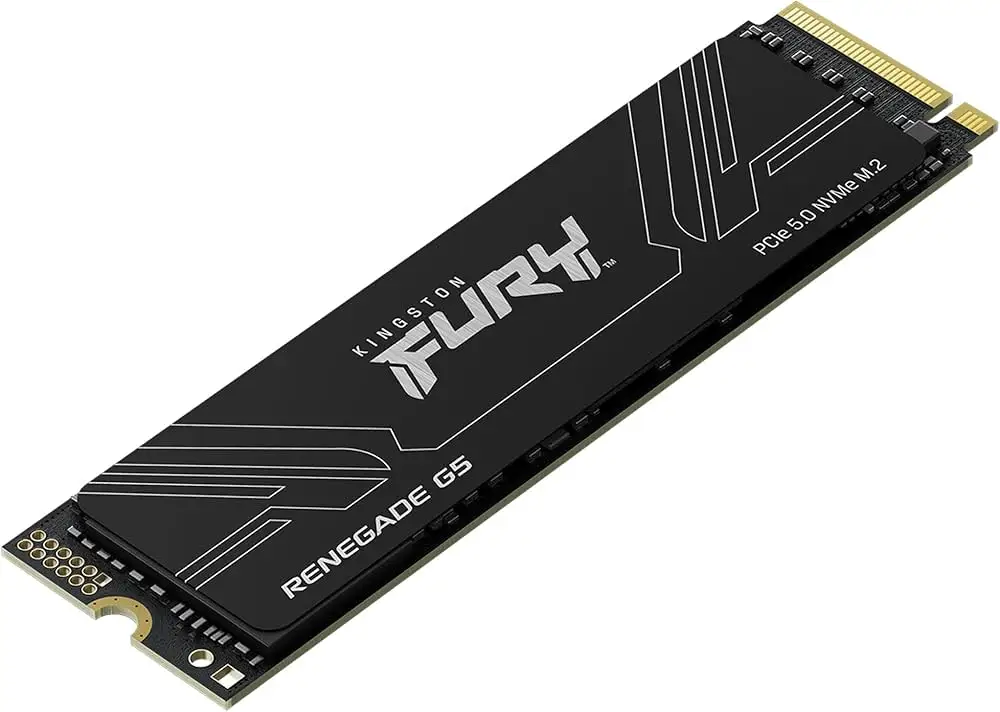
| Single-sided design aids compatibility and cooling | No bundled heatsink despite high-end positioning |
| Backward compatibility with PCIe 3/4 systems | Price-per-capacity challenges value compared to Samsung/Corsair |
Claims vs Reality
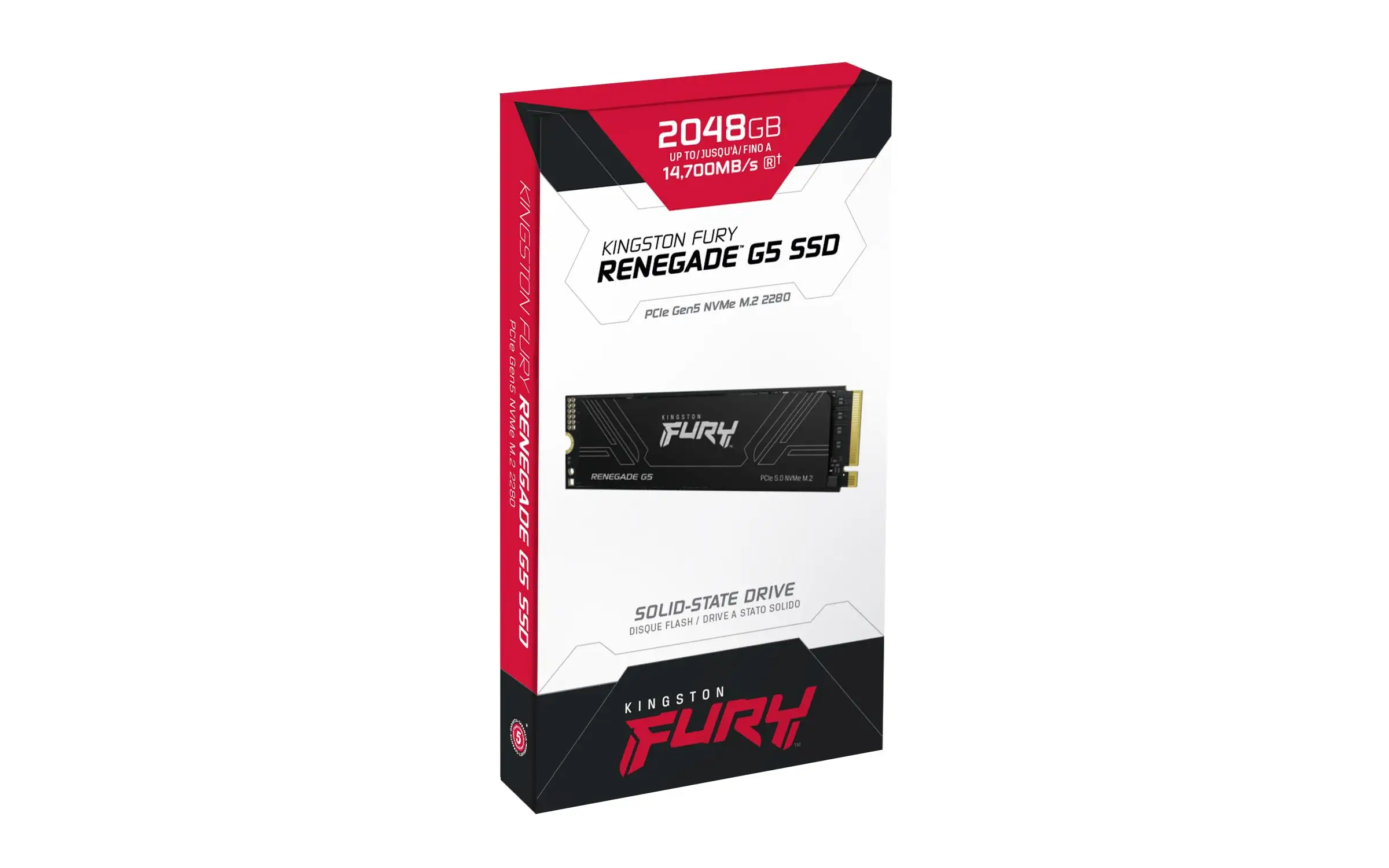
Kingston markets the Fury Renegade G5 as delivering “extreme PCIe Gen 5 speeds” and “reduced heat and energy consumption.” In synthetic benchmarks, PC Guide confirmed it “achieves around 14,700MB/s read and 14,000MB/s write” for the 2TB variant. However, in real-world profiles, speeds dropped to 8,700MB/s read, suggesting optimal numbers depend heavily on queue depth and workload.
Another bold claim is its “advanced thermal design” without requiring a heatsink. Trustpilot testers noted that for general use “temperature stayed under 60°C,” yet a reviewer on vmodtech admitted, “during continuous writes, it hit 82°C without a heatsink... with motherboard heatsink applied, temps dropped significantly.” Marketing holds for moderate workloads, but heavy writes benefit from extra cooling.
Kingston also touts “maximized capacity” up to 4TB (8TB forthcoming). Real-world gaming and content creation users on Reddit praised this, but Tom’s Hardware remarked that high capacity models “add significant overhead... less desirable for laptops” due to higher max power draw.
Cross-Platform Consensus
Universally Praised
Content creators, gamers, and engineers reported transformative gains in load times and asset handling. PC World declared, “It aced our performance testing, falling a hair shy of the overall top spot.” This high sustained throughput is ideal for 4K video editing — a Reddit post celebrated how rendering “handled 100GB project files seamlessly.” Tom’s Hardware emphasized single-sided PCB design: “Higher compatibility and easier to cool,” benefiting small-form-factor builders.
The endurance rating of 1PB per TB capacity drew industry-wide praise. PC World called it “the most generous TBW rating outside of Seagate’s pro drives,” reassuring professionals with heavy write workloads. This low idle draw also resonated with laptop users — Tom’s Hardware cited the SM2508 controller’s integrated power management as “one reason this hardware is so efficient.”
Common Complaints
Pricing remains the biggest pain point. Tom’s Hardware’s verdict was blunt: “Prices are not competitive… it will have to rely on careful pricing and its own name.” PC Guide listed “price above competition” despite solid performance. This limits adoption among budget-sensitive buyers, especially when Samsung’s 9100 Pro and Crucial’s T710 offer similar class speeds at lower cost.
Random performance inconsistencies also surfaced. In PC Guide’s real-world tests, random 4K IOPS fell “below spec,” hitting 23,000 reads and 77,400 writes against claims of 2.2M. Those relying on OS-level responsiveness may find other drives like WD Black SN8100 outperform here.
Thermals, while improved over early Gen 5 drives, can still climb without ample cooling under sustained workloads — reviewers recommending motherboard heatsinks for continuous heavy writes.
Divisive Features
The lack of a bundled heatsink split opinion. Minimalists enjoy the plain label and rely on motherboard cooling, but enthusiasts expect a premium drive to include a custom heatsink. Backward compatibility with PCIe 3 and 4 is appreciated in theory, but several reviewers — including PC Guide — questioned the tangible benefit over top Gen 4 SSDs unless the user’s workload is bandwidth-bound.
Trust & Reliability
Trustpilot entries largely mirrored official specs and praised Kingston’s warranty model: 5 years or percentage-used with SSD Manager validation. No scam or counterfeit concerns emerged — Kingston’s global brand and authorized seller network kept buyer confidence high.
Durability stories from Reddit cited months of stable high performance under game-development workloads, with one user noting “six months later, still hitting above 14GB/s reads, no thermal throttling.” The PCB’s 12-layer design and quality BICS 8 TLC NAND were repeatedly cited as assets in long-term reliability.
Alternatives
Competing drives mentioned include the Samsung 9100 Pro (better pricing, up to 8TB), WD Black SN8100 (random read/write leader for OS use), and Crucial T710 (similar performance at lower cost). Tom’s Hardware would “lean towards the Crucial T710 at 1TB” and “Samsung remains the pick for high capacity.”
Where the Fury Renegade G5 pulls ahead is its exceptional TBW endurance, single-sided PCB for compatibility, and cool operation under typical loads. Alternatives may edge it in cost-per-gigabyte or random IOPS but often match or trail in sustained sequential throughput.
Price & Value
At review time, pricing hovered around $239.95 for 2TB and $449.95 for 4TB, with regional fluctuations. Tom’s Hardware warned that “pricing must align realistically” to compete; PC World found discounted rates “pretty good” factoring in endurance. Resale value for high-end PCIe 5.0 SSDs remains strong, but depreciation may accelerate once 8TB variants normalize in late 2025.
Community buying tips stress watching for sales and combo deals with Kingston Fury DRAM kits to maximize system synergy. Avoid paying launch MSRP unless urgently needed for project deadlines.
FAQ
Q: Is the Kingston Fury Renegade G5 worth it over a fast PCIe 4.0 drive?
A: Only if your workload benefits from sustained sequential speeds above 7GB/s. For OS use or light gaming, premium Gen 4 models may match perceived performance.
Q: Does it require a heatsink?
A: Not for typical usage, but sustained heavy writes can push temps above 80°C. Most recommend using a motherboard’s integrated M.2 heatsink.
Q: How does endurance compare to competitors?
A: It’s at the top of consumer SSDs — 1PB per TB capacity, roughly 67% higher than industry average.
Q: Is it good for laptops?
A: The single-sided design fits easily, but higher capacity models have greater max power draw which may shorten battery life under load.
Q: When will the 8TB model release?
A: Industry sources and vmodtech review note Q3/Q4 2025 availability.
Final Verdict
Buy if you’re a professional creator, heavy gamer, or engineer needing extreme Gen 5 throughput, rock-solid endurance, and efficient thermals. Avoid if cost-per-GB or random OS responsiveness is more critical than sustained sequential speeds. Pro tip from Tom’s Hardware’s community: “Wait for prices to settle — Kingston has the volume flexibility to adjust aggressively.”





