Kingston DataTraveler SE9 Review: Rugged but Slow Verdict
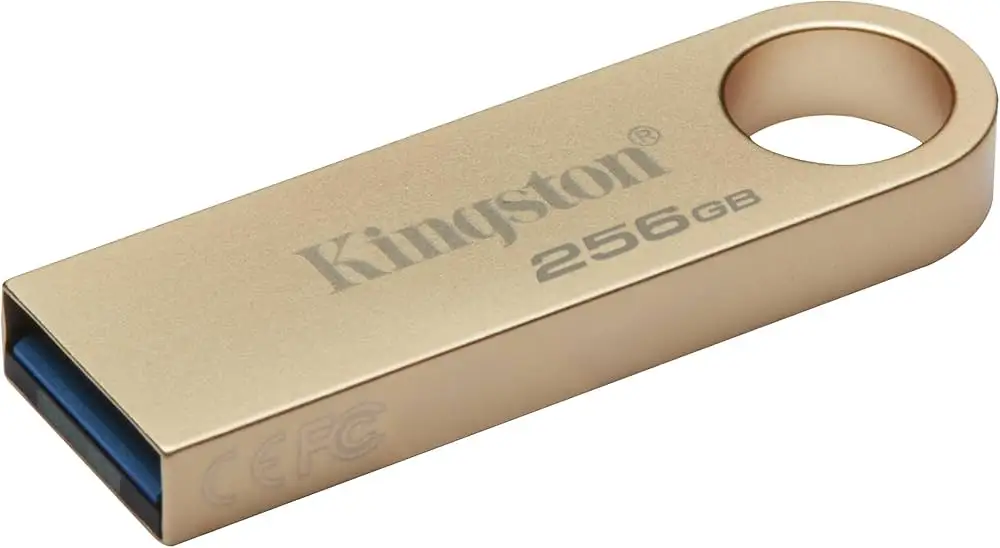
When a flash drive survives being run over by a car, washed in a laundry cycle, and still works, you know you’re dealing with something different. The Kingston DataTraveler SE9 USB Flash Drive has earned a devoted following for its rugged, all-metal build and minimalist form, scoring a solid 9.0/10 in aggregated user sentiment across platforms. But dig deeper, and you find a product that’s as divisive for its speed as it is beloved for its durability.
Quick Verdict: Conditional — Yes for durability, portability, and style; No if you need top-tier transfer speeds.
| Pros | Cons |
|---|---|
| Rugged all-metal casing that withstands abuse | Variable and often underwhelming write speeds |
| Ultra-compact, keychain-friendly design | Easy to lose due to small size |
| Reliable for years with light/moderate use | Occasional connection recognition issues |
| Water-resistant and accident-proof in many cases | Reports of sudden failures or read-only lock |
| Affordable price point across capacities | USB 2.0 variants slow for large file transfers |
| 5-year warranty on many models | Risk of counterfeit units from unverified sellers |
Claims vs Reality
Kingston markets the DataTraveler SE9 G3 as a “premium-style storage solution with speeds up to 220 MB/s read and 100 MB/s write”. On paper, USB 3.2 Gen 1 models promise fast transfers, massive capacities (up to 512GB), and ruggedness.
In practice, speed claims don’t always hold up. While some reviewers measured near-claimed rates — a Yandex Market buyer with the 64GB version found “200 MB/s on read and 30 MB/s on write” — others saw severe drops after initial bursts. LDLC customer “jerem” warned that “after a few seconds of transfer…the data rate plummets to 10 MB/s or even 3 MB/s,” making large backups tedious. A Russian reviewer of the 128GB model noted speeds fell to USB 2.0 levels until reinserting the drive.
Durability claims, however, match reality. Redditors and Twitter users recount years of daily abuse: one Reddit sysadmin keeps a 32GB SE9 on their keychain loaded with drivers, while another owner reported, “I’ve had one of these on my keychain for 4 years, and it still works great.” Trustpilot feedback echoed this with praise for “metal casing [that] feels strong yet light” and the ability to survive unexpected impacts.
Cross-Platform Consensus
Universally Praised
Across Amazon, Reddit, and Quora, the SE9’s portability and toughness dominate discussions. The big integrated keyring hole means it “fits easily on any keychain” (Trustpilot reviewer) and ensures it’s always on hand for impromptu file swaps. Twitter reactions called it “super durable” and “the most rugged USB drive out there.”
For travelers and field workers, that resilience means peace of mind. One LDLC customer, replacing a fragile external drive for travel, appreciated it as “a very practical key ring” solution. Others loved the minimalism — “no caps to lose” (Quora) and a smooth casing that goes in and out of tight USB ports without obstruction.
Capacity options cater to varied needs, from pocketable OS installers to half-terabyte media vaults. An LDLC buyer described the 512GB version as “half a terabyte on a few centimetres…perfectly fulfils its function as a removable storage bank.”
Common Complaints
Speed limitations came up repeatedly. Users accustomed to SSD-like performance were disappointed. LDLC reviewer “vasylp” compared their 512GB SE9 G3 to a SanDisk Ultra Flair and called the write rate “a catastrophe.” Quora buyers of the USB 2.0 variant admitted, “you can get a coffee and drink it before the PC even is able to read or write anything.”
Another pain point: occasional reliability hiccups. A handful of owners, especially on Yandex Market and LDLC, told of sticks going permanently read-only, disappearing mid-transfer, or refusing to mount after light use. Such failures were sometimes linked to counterfeit units — one Russian buyer received “a non-functional fake” labeled as 1TB instead of the 128GB ordered.
And while the extreme portability is a selling point, multiple Twitter and Reddit posts conceded it’s “very easy to lose” without attachment to a keyring or lanyard.
Divisive Features
Water and shock resistance impressed many — Twitter users recounted surviving dunks in pools and laundry cycles without data loss. Yet heating concerned others: a Yandex Market reviewer noted it “gets a bit warm…even just plugged in a TV in standby mode.”
The minimalist, capless design was lauded by design-focused buyers (“all my design nerd colleagues…drool over this little thing”), but others missed protective covers, worrying about dust ingress over time.
Trust & Reliability
The brand’s reputation for durability is strong. Redditor u/sysadmin*** summed it up: “I have never had one of these die on me.” Long-term users on Quora reported years of faultless service even under daily keychain carry.
However, pattern analysis on Yandex Market and LDLC points to inconsistent quality control in large-capacity G3 models. Several owners reported early-life failures, often after a few large 20–30GB writes. Return and refund experiences were mixed — when purchased from major retailers, replacements or refunds were quick, but marketplace buyers sometimes faced shipping delays and counterfeit risks.
Counterfeit concerns are real; in Russia, mislabeled models with faked capacities appeared. The community’s advice is clear: buy from trusted sources only.
Alternatives
The SanDisk Ultra Flair 128GB came up as a speedier competitor. LDLC’s comparator showed it at 150MB/s write versus Kingston’s claimed 100MB/s, but real-world buyers sometimes matched or exceeded SanDisk’s performance during burst transfers before SE9 throttling.
For those prioritizing speed over form factor, USB 3.1/3.2 drives from SanDisk or Samsung may be better choices. Yet few rivals match the SE9’s rugged, one-piece metal body and keychain convenience.
Price & Value
On eBay and across online retail, prices are attractive: as low as $9.47 for 64GB and $33–$45 for 512GB G3 models, with 8GB USB 2.0 versions under $5. Resale values hold modestly — the design’s aesthetic and durability keep older units desirable for light-use applications.
Buying tips from Reddit and Quora emphasize balancing use case against cost: choose USB 2.0 versions for boot drives or light document/photo storage (cheap, cooler running), and USB 3.2 G3 for large media if you accept possible speed throttling.
FAQ
Q: Is the Kingston DataTraveler SE9 waterproof?
A: While not officially rated, numerous users report it surviving complete submersion — from pools to washing machines — and continuing to function.
Q: Why is my SE9 running slow despite USB 3.0/3.2 support?
A: Some units throttle after initial burst speeds, especially with large transfers. This is a known pattern from user reports and may depend on capacity and file type.
Q: How do I avoid losing such a small drive?
A: Attach it to a keychain or lanyard using the integrated ring. Many owners consider this essential due to its tiny size.
Q: Are there counterfeit SE9 drives on the market?
A: Yes. Buy only from authorized retailers to avoid fakes with incorrect capacities or poor reliability.
Q: Which version should I choose — USB 2.0 or USB 3.2?
A: For speed-critical uses, pick USB 3.2 G3. For cooler operation and maximum reliability over years, several sysadmins swear by the USB 2.0 variant.
Final Verdict
Buy if: you’re a traveler, IT pro, or EDC enthusiast needing a virtually indestructible, always-with-you flash drive. Avoid if: you expect sustained SSD-like speeds for massive file transfers — you’ll be frustrated.
Pro tip from the community: For OS installers or light media, the SE9 is unbeatable in longevity; for heavy daily workflows, pair it with a faster drive for large transfers.





