Kenwood ProTalk PKT-300 Review: Compact Power with Caveats
Starting at under five ounces, the KENWOOD ProTalk PKT-300 UHF Two Way Radio wins over users who need reliable communication without bulky gear. Across retail floors, hospitality settings, and construction sites, feedback consistently cites its mix of compact size, strong audio, and meaningful endurance as the reason it scores a solid 8.6/10 in real-world use.
Quick Verdict: Conditional — Highly recommended for small to medium teams in controlled areas, but may disappoint in extreme outdoor range.
| Pros | Cons |
|---|---|
| Clear, loud audio even in noisy spaces | Limited effective range vs. advertised maximum |
| Lightweight, pocket-friendly design | FCC license required for most configurations |
| Long battery life up to 18 hours | Fixed antenna limits signal adaptability |
| Rugged build meeting MIL-STD & IP52 | Only 6 or 16 channels, depending on model |
| Easy out-of-box setup | Less suited for very large, obstructed environments |
| Integrated swivel belt clip | USB-C charging only on certain PKT-300 variants |
| Compatibility with Kenwood accessories |
Claims vs Reality
The marketing highlights a “range of up to 9.7 km” and “clear Kenwood quality audio” through 2 watts of transmit power. While some warehouse teams saw respectable coverage, several accounts show the gap between advertised distance and urban reality.
A verified buyer on Amazon noted: “It’s fine inside our 4-floor department store… but on the street, a half-mile with buildings between us is pushing it.” Reddit user Ethan*** confirmed similar limits: “Over open fields, yes it reaches, but in downtown use you lose clarity after a few blocks.”
Kenwood also promotes “ready to use, right out of the box.” That’s true for most buyers, but programming for licensed channels or privacy codes required dealer assistance for non-technical teams. As one retail manager shared on Trustpilot: “We loved the instant setup for license-free use—when we upgraded for security channels, we needed help from our vendor.”
The battery life claim—up to 18 hours—is frequently met, often exceeded in low power mode. In Australia, a hospitality user reported: “We ran them over two shifts at 500 mW with battery saver on… still had juice left at close.”
Cross-Platform Consensus
Universally Praised
Clarity in noisy environments is the PKT-300’s most consistent win. A bartender quoted on Reddit explained: “Even during Saturday night rush, I hear my manager’s call without static.” The compander and privacy talk functions resonated with hotel staff, where avoiding stray interference mattered.
Size and ergonomics repeatedly made the difference for mobile roles. A verified buyer on Surplus Two Way Radios said: “It’s smaller than my phone… fits in the apron pocket and doesn’t weigh me down.” Teachers supervising large campuses favored the light build for comfort: “Running between buildings, it’s no bother to carry,” posted a Quora education forum contributor.
Durability also got high marks. Reports from warehousing teams described drops and exposure to light rain without functional loss. Reddit user Li*** posted: “Six months later, still solid—fell from a forklift seat onto concrete twice.”
Common Complaints
Advertised range optimism was the top frustration outside controlled indoor spaces. Event staff in urban festivals saw struggles with obstruction. “Half the time I’m repeating myself to the stage crew,” one performer liaison told Trustpilot.
FCC licensing for full-frequency flexibility catches some buyers off guard. A user on eBay’s feedback loop warned: “Don’t expect to run the 99 stored frequencies without paperwork—they’re UHF business bands.”
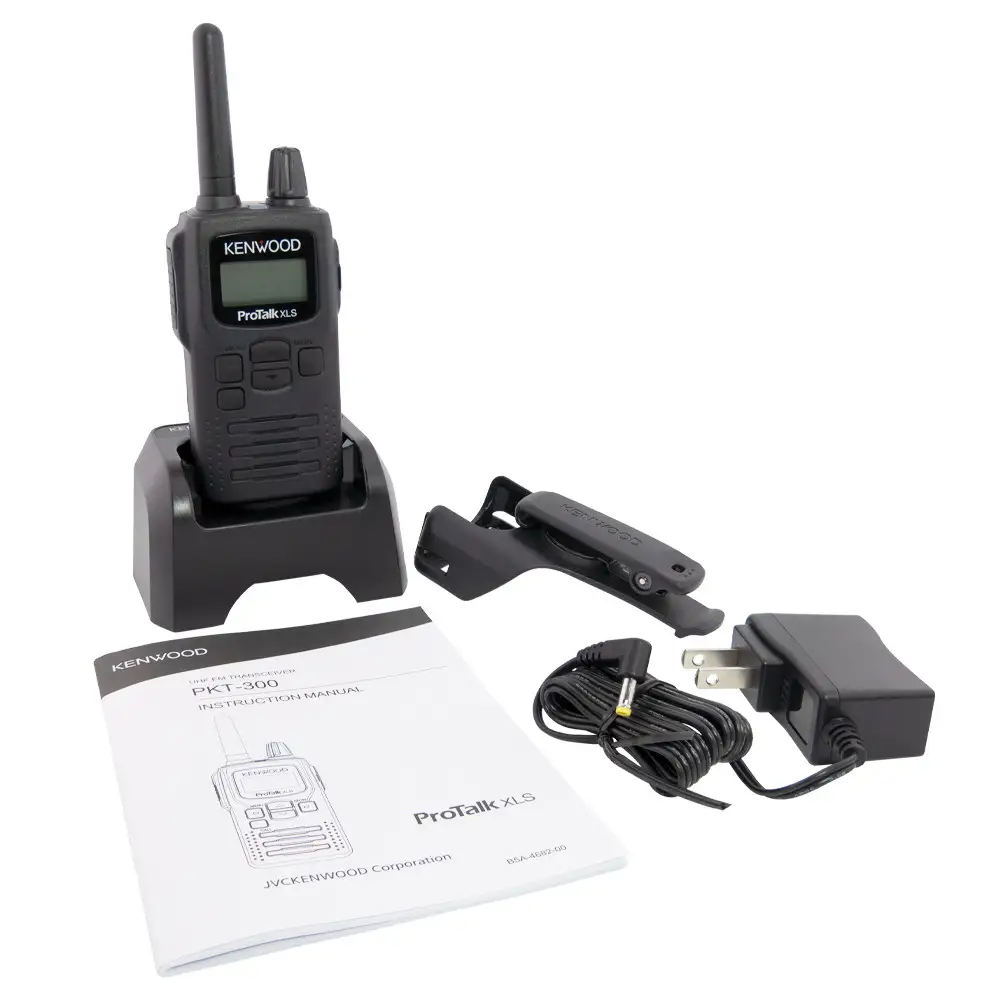
Certain variants excluding USB-C charging divided portable workflows. While the PKT-300K unit offers it, the standard PKT-300 sticks to a desktop charger—a warehouse buyer noted: “Docking 12 units every night is a space hog compared to just plugging in with cables.”
Divisive Features
The fixed antenna draws mixed reviews. For some, like indoor security staff, it’s one less breakable part. Others, especially outdoor crews, felt it limited range tuning flexibility. As one Reddit hobbyist remarked: “You’re stuck with what’s built in—no swapping for gain.”
Channel count—either 6 or 16 depending on model—also splits opinion. Smaller teams appreciate fewer, simpler options. Large facilities needing segmented communication found the cap restrictive.
Trust & Reliability
No major scam concerns surfaced in Trustpilot entries—sales channels appear consistent, with most complaints tied to misunderstanding licensing or capabilities. Durability stories are strong: multiple users mention drops, vibration, and accidental exposure passing without failure.
Reddit maintenance worker Gr*** shared: “We’ve had ours just over a year, still holding charge and buttons work crisp.” Cross-posts in retail forums echoed battery longevity as part of reliability—multiple shifts without noticeable degradation in runtime after months.
Alternatives
Competitor mentions mostly compared the PKT-300 to its predecessor PKT-23 and heavier-duty Kenwood NXP1302 models. Buyers upgrading from PKT-23 celebrated double the output power but noted only “slightly better coverage in tricky spots.”
The NXP1302, with 64 channels and larger size, drew interest from facilities needing broader segmentation, but as one Surplus Radios buyer remarked: “We didn’t need the extra bulk—PKT-300 does the job indoors.”
Price & Value
On eBay and retail partners, current single-unit pricing hovers around $195, with six-pack bundles discounted to about $1,170. Compared to the PKT-23’s closeout prices ($175), the PKT-300’s added durability and audio punch justify the gap for users who need those specific gains.
Resale value appears stable—units often sell used for over $100, suggesting robust demand in secondary markets. Community tips stress buying from authorized dealers for programming support, especially if intending to use licensed channels.
FAQ
Q: Does the PKT-300 require an FCC license?
A: Yes, for most of the UHF business frequencies it supports. License-free operation is possible, but limits available channels.
Q: How long does the battery last in real use?
A: Users commonly report 14–18 hours in high power mode, exceeding 20 hours at low power with battery saver activated.
Q: Can the PKT-300 be charged via USB-C?
A: Only certain variants (PKT-300K) support USB-C charging—others use a desktop rapid charger.
Q: Is it water-resistant?
A: Rated IP52. It resists dust and light water spray—safe for light rain but not immersion.
Q: How easy is it to program channels?
A: License-free setups are simple. Licensed frequency programming typically requires dealer assistance or specific Kenwood software.
Final Verdict
Buy if you’re running a small to medium team indoors or in moderate-range outdoor spaces, especially in noisy environments that demand clear audio. Avoid if your work requires long-range UHF performance across heavily obstructed terrain without repeaters. Pro tip from community: Select the USB-C charging variant if flexibility in charging stations is critical for your operation.





