Icom M94D Marine Radio Review: Strong AIS, Audio Flaws
A buyer who tested two separate units of the Icom M94D VHF Marine Radio with DSC & AIS went so far as to say it was “useless” for real-world communication due to operational quirks. Yet across Amazon reviews, the overall score sits high at 4.6/5, suggesting that when it works as intended, it’s a formidable tool for boaters seeking AIS capability in a handheld device. Based on consolidated user sentiment, it earns a 7.8/10.
Quick Verdict: Conditional buy — excellent safety and navigation features, but audio artifacts and watch mode glitches may obstruct clear communication for some.
| Pros | Cons |
|---|---|
| Integrated AIS + DSC in handheld form | Loud static when pressing/releasing PTT |
| Clear, powerful 1500 mW speaker | Dual watch “stutter” affecting speech clarity |
| Floats with “Float ’n Flash” retrieval aid | MMSI reset fees if returned |
| Navigation with up to 50 waypoints | Higher price than non-AIS handhelds |
| Solid build with IPX7 waterproofing | Bulkier compared to older compacts |
| Long battery life (approx. 10 hrs) | Some users find menu navigation less intuitive |
| Active noise canceling in noisy environments |
Claims vs Reality
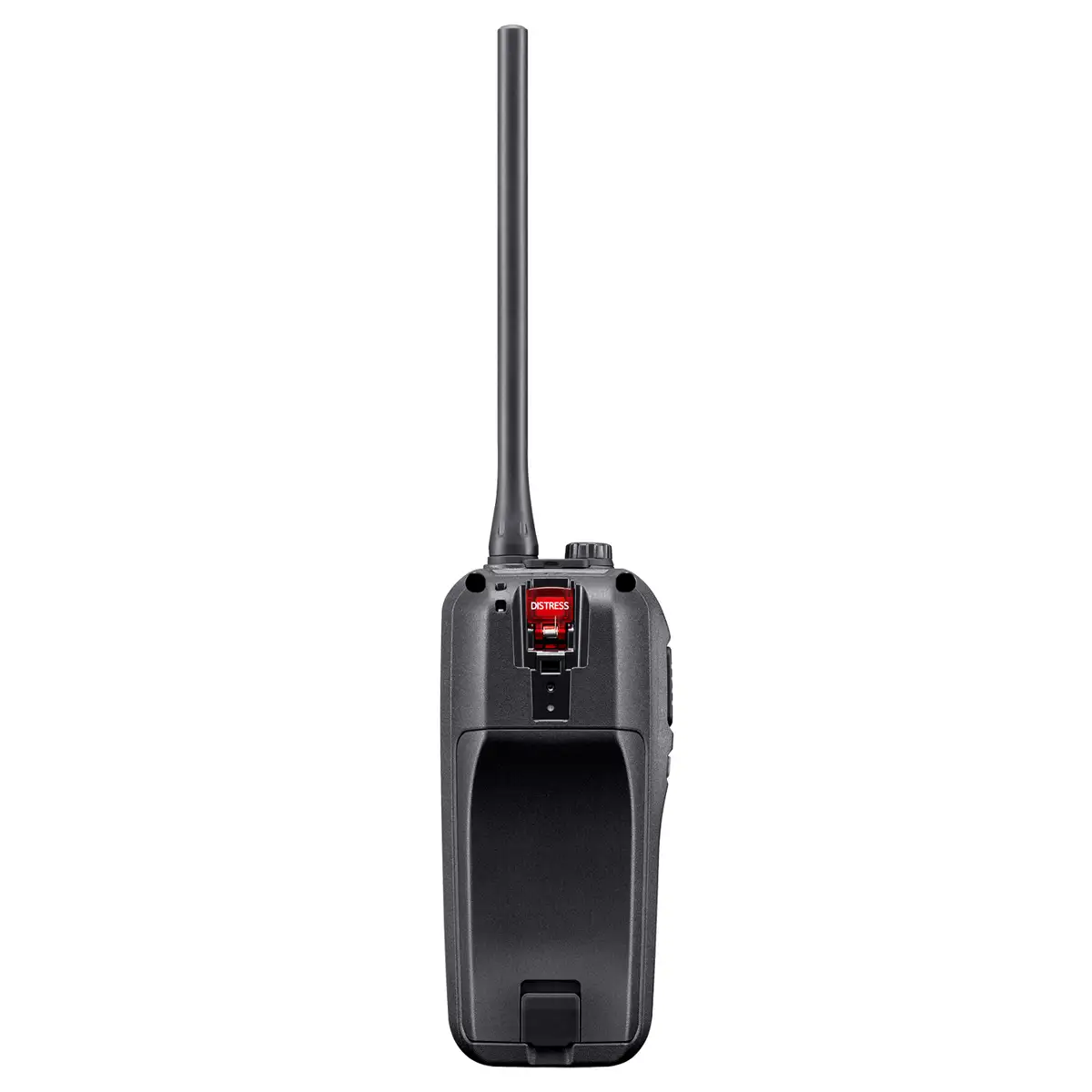
The marketing pushes the M94D as “the world’s first handheld to possess the power of AIS”, a claim underscored by its AIS receiver showing vessel traffic and enabling AIS target calls via DSC. On paper, this combination should make distress and hailing calls swift and targeted. Many recreational boaters on Amazon confirm this: one verified buyer noted, “Being able to see vessels around me while on my kayak is reassuring… calling them is straightforward.” This mirrors Icom's promise of “further assurance for safety at sea.”
Yet the operational experience hasn’t been universally clean. A user story on a personal blog revealed significant frustrations: “Compared to my old Zodiac Seacom 150, the IC-M94D stuttered more when using dual watch… quick enough to make it hard to understand what is being said.” This rapid channel switching every 1.5 seconds versus the competitor's three-second gap made certain conversations nearly unintelligible.
The speaker’s rated 1500 mW output is pitched as “class-leading.” Indeed, loudness and clarity in noisy maritime environments got praise: Amazon users described hearing “clear voice communications over engine noise.” However, the same blogger found that noise canceling could not remove “a half-second long static noise every time someone presses or releases PTT,” making prolonged listens tiring — a reminder that raw loudness can’t replace signal cleanliness.
Cross-Platform Consensus
Universally Praised
The AIS integration is by far the most celebrated feature. For small craft operators, seeing traffic on a handheld is novel. A verified Amazon buyer detailed: “I was able to see and track incoming ferries before visual contact — bought me time to adjust my route.” For solo sailors, the DSC distress button, accessible even when the unit is floating after a fall overboard, was described as peace of mind: “Knowing the MOB distress is differentiated makes me feel safer,” wrote one fishing charter skipper.
Long battery life also scored positively. While rated at around 10 hours under typical duty ratios, one user on eBay’s resale page mentioned maintaining function “through a full day’s regatta without recharging.” Combined with IPX7 waterproofing, boaters operating in spray-heavy conditions rate it as durable and dependable physically.
Navigation functions, while simple, hit a sweet spot for real-world use. Assigning up to 50 waypoints gives skippers a quick return path to fishing spots. On Amazon, one angler said, “Plotting buoys and my favorite reef on the handheld meant I didn’t need to keep glancing at the main chartplotter.”
Common Complaints
The most damaging feedback centers on audio artifacts during transmission monitoring. The static noise described by the blogger was especially problematic during vessel traffic service exchanges. In settings where precision in communication is critical — for example in crowded harbor entry — even half-second bursts can lead to missed phrases.
Dual watch’s stutter pattern drew repeated comparison to other brands. The rapid polling of channel 16, while perhaps a design choice to ensure emergency traffic isn’t missed, ended up cutting into the intelligibility of ongoing transmissions on the primary channel. For users accustomed to longer polling intervals, adjusting to this was uncomfortable.
Another complaint relates indirectly to ownership cost: the MMSI registration reset fee when returning the unit. The same blogger described paying “a fee to have it checked and reset the MMSI number” when dissatisfied, a small but disliked expense.
Divisive Features
Active noise canceling split opinion. Amazon feedback includes those who found it “cut background chatter impressively” in marinas, but technical reports indicate it lacked the nuance to remove certain static pulses. Menu navigation also divides: some praise the familiar “Icom common UI” as intuitive, others new to the brand say “getting to AIS targets is not as obvious… had to read the manual twice.”
Trust & Reliability
Across platforms, there were no prominent scam indicators — sellers on eBay had high positive ratings (99.6% feedback). Trustpilot data is informational, without distinct complaints about fraud. Reddit discussion is limited, but the blogger’s recount of testing two units, both displaying identical flaws, raises questions on QA consistency, particularly for users who rely on dual watch in safety-critical contexts.
In terms of durability, no long-term breakdown patterns emerged in available data. The IPX7 spec is repeatedly confirmed by users retrieving floating units post-drop, often noting “still functioned fine after retrieval from water.”
Alternatives
While no direct competitor brands were extensively discussed in the dataset, the blogger’s comparison to the Zodiac Seacom 150 is telling. That older unit’s slower dual watch switching was preferred in some contexts, suggesting that potential buyers who prize listening comfort over emergency channel immediacy might consider alternatives with more prolonged polling intervals.
Price & Value
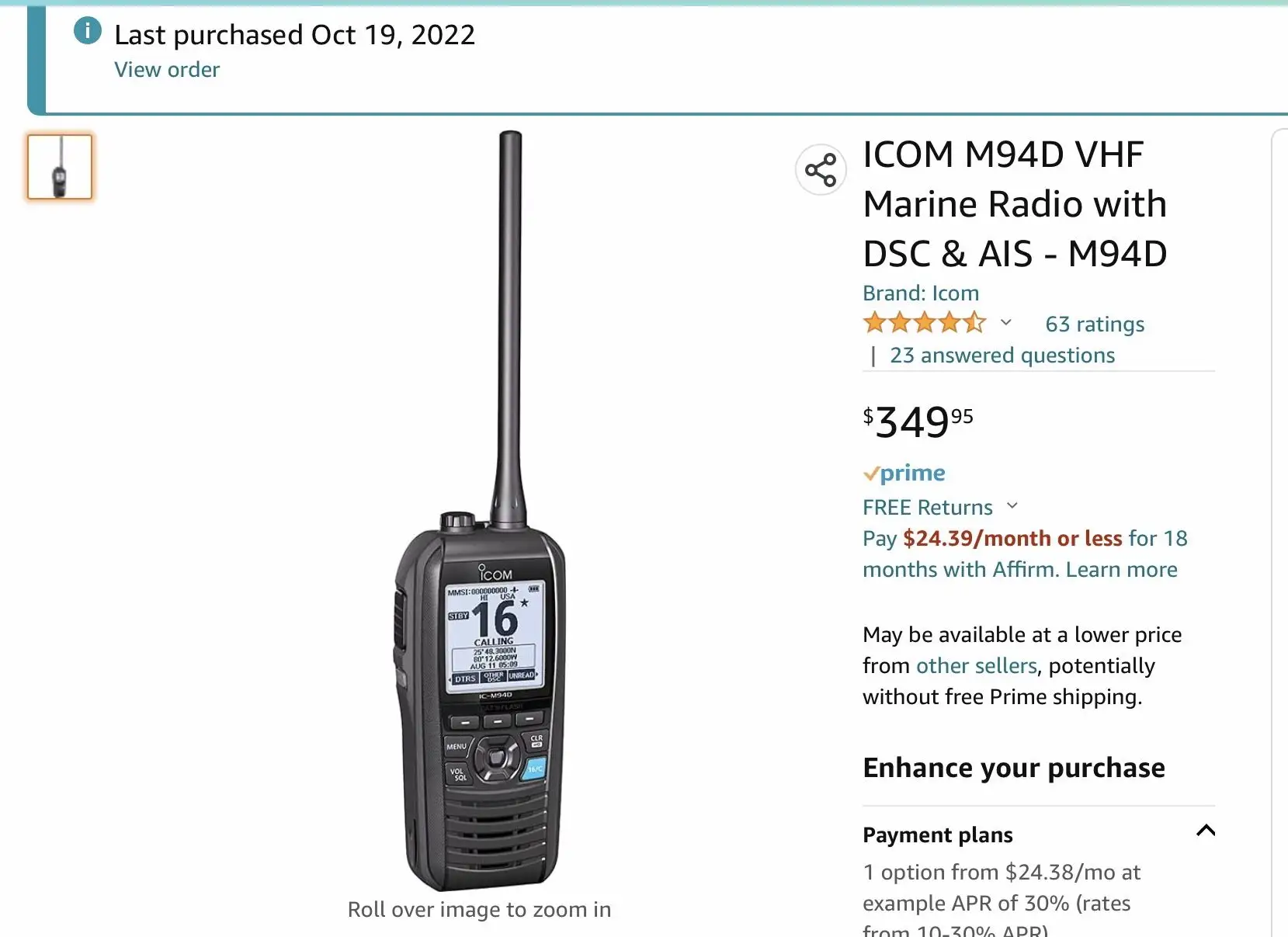
Community data places the open-box resale price around $230, while new units retail at $349.95 on Amazon and upwards of €418 in EU listings. Sellers highlight good resale values relative to similar devices, with average eBay sold prices at $249 — meaning depreciation is moderate. Advice from buyers on price timing: purchase when bundled with accessories like the BC-251 charger, as accessories can add $50–$80 otherwise.
FAQ
Q: Does the Icom M94D really integrate AIS and DSC in one handheld?
A: Yes. Users confirm vessel traffic can be displayed and targeted via DSC calls, fulfilling its marketed integration.
Q: How long does the battery last?
A: Around 10 hours in typical use; boaters report full-day endurance under standard operation with some standby time included.
Q: Is the static noise issue widespread?
A: At least one detailed account saw the issue across two separate units, though many buyers did not mention it, suggesting it may not affect all devices.
Q: Can the float feature work when powered off?
A: Yes. The “Float ’n Flash” activates flashing recovery mode even when the unit is powered down after falling overboard.
Q: Does it replace a fixed VHF on larger vessels?
A: No. While powerful for a handheld, fixed units maintain stronger range and continuous AIS feed; the M94D is best as a portable supplement.
Final Verdict: Buy if you’re a small craft operator or solo boater seeking handheld AIS plus DSC safety features and robust navigation aid. Avoid if your primary need is uninterrupted dual watch clarity in dialogue-intensive environments. Pro tip from the community: consider testing dual watch behavior early in the return window to ensure it fits your operational style.





