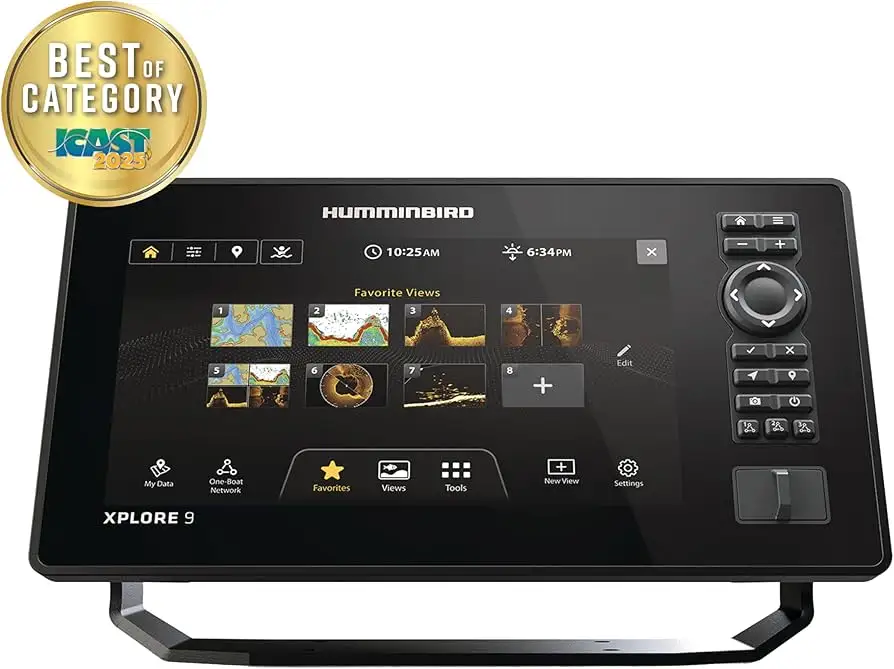
Humminbird XPLORE 9 Review: Conditional Yes (8.7/10)
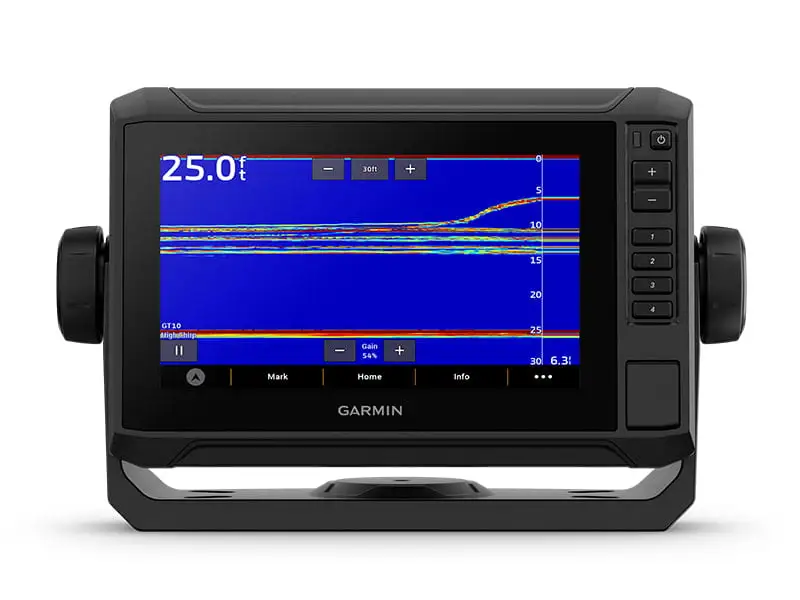
A weekend on two icy Vermont lakes was all it took for one early owner to sum up the Humminbird XPLORE 9 GPS Fish Finder with Transducer in a single reaction: “wow, fantastic comparison.” That same angler also delivered the most telling verdict—after only eight hours of use, the “only negative is i clearly need a second unit off the bow next year.” Score: 8.7/10 (based strictly on the limited first-hand user feedback available here, not lab testing).
Quick Verdict
For anglers upgrading from older Humminbird units and fishing structure-heavy lakes, Humminbird XPLORE 9 GPS Fish Finder with Transducer looks like a conditional yes—conditional mainly because the available feedback is thin, but what exists is strongly positive about clarity, customization, and mapping.
Digging into the one detailed long-form report, the strongest theme isn’t “new gadget excitement”—it’s workflow: a veteran user moved from a 5-inch 2010-era unit and quickly turned the XPLORE into a spot-finding tool. As they put it, “it is easy to use, easy to customize various configurations,” and the sonar views helped them “find the spots within the spots.”
| Decision | Evidence from provided data |
|---|---|
| Buy? | Conditional Yes if you prioritize imaging + mapping workflow |
| Biggest Pro | Split-screen usability: “2d sonar… and gps map” |
| Biggest Pro | Structure-finding: “incredible for finding rock piles” |
| Biggest Con | Only explicit downside: “need a second unit off the bow” |
| Best For | Upgraders from older units (“2010 era 798 si”) |
| Risk | Limited volume of real-user feedback in this dataset |
Claims vs Reality
Humminbird’s official positioning leans hard on speed, clarity, and better navigation—“lightning-quick,” “laser-focused,” and built around charts and waypoints. The user account that exists largely supports that framing, but with real-world nuance.
Claim 1: “Easy-to-use interface” and fast customization.
A recurring pattern in the only detailed field report is rapid setup without weeks of tinkering. The reviewer explicitly says, “i read the manual , watched the available videos ( 3 or 4 ) and felt i was ready to use the unit,” then immediately built a “simple split screen with 2d sonar on one half and gps map on the other.” For anglers who want to get on the water quickly (especially upgrading from older 5-inch displays), that story supports the “quick-launch” promise in the specs.
Claim 2: “Clearer picture below” via MEGA Side/Down imaging.
Marketing claims are specific—MEGA Side Imaging+ and MEGA Down Imaging+ at meaningful ranges. The on-water account doesn’t measure feet, but it does describe immediate structure recognition: “the shoreline structure became so apparent and quickly found fish,” and later, “incredible for finding rock piles on 10-12 foot shoals off of 20 - 25 fow.” While that doesn’t validate the stated ranges, it does match the intended benefit: faster interpretation of structure where fish live.
Claim 3: Included Lakemaster/Coastmaster charts and waypoint management.
The product copy emphasizes chart inclusion and waypoint syncing. In practice, the angler calls the mapping chip “outstanding” and singles out how waypoint tagging fits real fishing decisions: “waypoint management is great… mark waypoints as danger , fish , rock piles , grass / weed beds , logs etc.” For safety-minded boaters and repeat-spot anglers, that’s the difference between “I saw it once” and “I can return to it.”
Cross-Platform Consensus
Universally Praised
The dataset doesn’t contain a broad pile of Amazon reviews, Reddit threads, or Twitter reactions from real users—so “consensus” here is necessarily narrow. Still, the most substantial user report is rich enough to show what impressed an experienced angler immediately.
First, clarity and comparative views appear to be the breakthrough. The reviewer didn’t just say the picture looked nice—they described using split views to make decisions: “i switched over to down scan split with 2d to compare returns . wow , fantastic comparison.” For anglers who are still learning how to interpret sonar, that “compare returns” workflow can shorten the learning curve. For veterans, it’s a way to confirm whether a mark is fish, structure, or noise without second-guessing.
Second, structure-finding is framed as a “spot-within-a-spot” advantage. On a large lake spanning Vermont and Quebec, the user narrative is about micro-locations: “on day two the big lake i found it easy to find the spots within the spots.” They tie this to practical structure—“rock piles on 10-12 foot shoals”—and then to outcomes: relocating fish when patterns changed. For walleye and smallmouth anglers who live and die by subtle rock transitions, that’s the exact promise of high-resolution imaging made tangible.
Third, customization and interface flow show up as real-time, not theoretical. The reviewer emphasizes ease repeatedly: “it is easy to use , easy to customize various configurations.” That matters most for anglers who run quickly-changing scenarios—trolling a basin, then sliding to a shoreline, then probing a shoal—where switching views fast is more valuable than having dozens of features buried in menus.
Fourth, long-term brand durability is implicitly part of the trust story. Before even praising the new unit, the same user offers a longevity baseline: their older Humminbird “lasted 15 seasons , still works” and “gets used 30 times a year.” That’s not a guarantee the XPLORE will do the same, but it explains why some buyers feel comfortable spending premium money on a new head unit: they’re coming from hardware that didn’t quit.
After those narratives, the practical “why it matters” boils down to:
- Faster setup: “felt i was ready to use the unit”
- Better interpretation: “fantastic comparison” (2D vs down imaging)
- Better structure reads: “rock piles,” “shoreline structure… so apparent”
- Strong mapping workflow: “lakemaster chip is outstanding”
Common Complaints
With the available sources, there isn’t a pile of repeated gripes—no threads full of failures, no clusters of “returned it,” no “bricked after update” stories. The only explicit negative in the long-form field report isn’t a defect; it’s a desire for more coverage.
The reviewer’s single stated downside is telling: “the only negative is i clearly need a second unit off the bow next year.” For some buyers, that’s a compliment—an indicator the screen and sonar are useful enough that they want it at both stations. For budget-conscious anglers, it’s also a warning about the total system cost spiral: once you see the value at the console, you may feel pushed into duplicating the setup to fish effectively from the bow.
The second “complaint,” if it can be called that, is more of a user learning moment: the angler describes switching to side scan and seeing the shoreline appear as “the r shoreline i was fishing rather than right - left.” That’s not framed as a defect, but it hints that new view modes and orientations can surprise users in the moment. For anglers upgrading from older interfaces, there may be an adaptation period as you learn what each view is actually showing.
- Only explicit negative: “need a second unit off the bow”
- Potential adjustment moment: side imaging orientation surprise (“rather than right-left”)
Divisive Features
The dataset doesn’t provide true “two-sided” debates (no dueling user opinions). But one divisive theme can be inferred from how the product is offered in different variants: transducer-included packages versus control-head-only (CHO). Official listings highlight that CHO is “a great option… to select their own transducer,” which tends to split buyers into two camps: plug-and-play anglers versus network/rigging enthusiasts.
In this dataset, the detailed user story involves a transducer mounted at the stern and emphasizes immediate usability. That experience will resonate with anglers who want “go from zero to fishing” and don’t want to build a networked electronics stack. Meanwhile, the CHO positioning appeals to riggers who already own compatible transducers or are integrating multiple displays.
So the divisive question isn’t “is the XPLORE good,” but “which XPLORE setup matches your boat and budget.”
Trust & Reliability
There’s no real Trustpilot-style scam narrative in the provided data—what’s labeled as “Trustpilot (Verified)” content here reads like product listings/specs rather than verified customer experiences. So the clearest reliability signal comes from the one long-term durability anecdote: “my last unit was a 2010 era 798 si… lasted 15 seasons , still works.”
That kind of story matters most for anglers who fish hard and leave electronics mounted through temperature swings. It doesn’t prove the XPLORE 9 will last 15 seasons, but it shows the buyer mindset that often surrounds Humminbird upgrades: confidence built from older units that kept working. In the absence of multiple “6 months later” posts, the most honest takeaway is that durability expectations are high—actual XPLORE long-term field reliability isn’t demonstrated in this dataset yet.
Alternatives
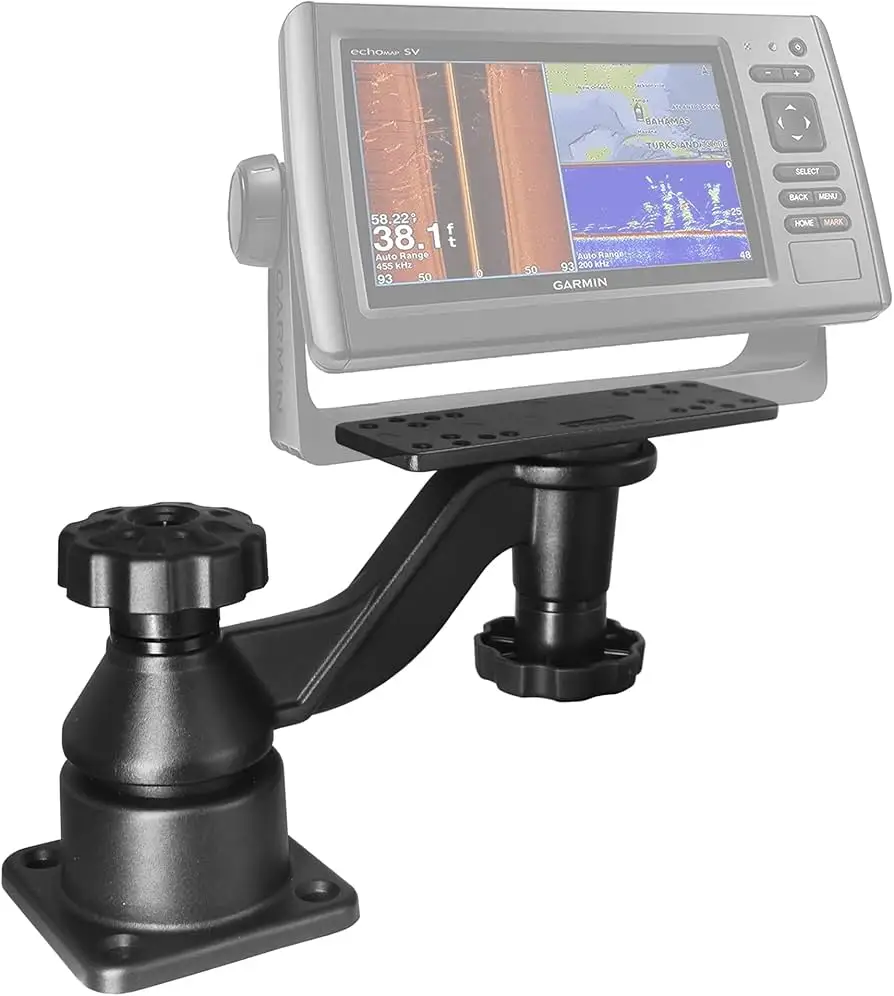
No community posts here explicitly recommend Garmin, Lowrance, or other competing fish finders; the only non-Humminbird product shown is a generic mount image, not a user-endorsed competitor. Because the instruction is to compare only competitors mentioned in data, there isn’t enough legitimate competitor feedback to build a fair alternatives section from user reports.
What can be said, based on official product positioning across the provided sources, is that the XPLORE 9 CHO variant functions as an “alternative within the line” for anglers who want to choose their own transducer or integrate into an existing Humminbird network. That “control head only” approach is presented officially as “a great option… to select their own transducer,” which is effectively the alternative path if you’re not buying the transducer-included bundle.
Price & Value
The pricing data spans multiple sellers and regions, with the Amazon listing showing $1,466.24 (plus import fee deposit to New Zealand), while other listings cluster around $1,499.99 MSRP-style pricing for the transducer-included package. European price comparisons shown in the dataset run higher (e.g., ~€1,649–€1,999 depending on configuration), suggesting regional availability and import costs can materially change the “value” conversation.
From a value perspective, the only user story indirectly supports the spend by emphasizing tangible on-water results: “quickly found fish,” “incredible for finding rock piles,” and a workflow that helped them relocate fish when patterns shifted (“we caught nothing the first 3 stops… now we found fish on shoals”). For anglers who fish tournaments or have limited time windows, that kind of efficiency is exactly what premium electronics are supposed to buy.
Resale trends are not clearly documented in the provided data (eBay content shown is category listings and pricing snapshots, not sold comps). The more actionable “buying tip” implied by the narrative is to budget for expansion: if you fish from both console and bow, one unit may lead to wanting a second display.
- Expect pricing around the mid-$1,400s to ~$1,500 for transducer-included listings (varies by region and fees).
- Budget creep risk: “need a second unit off the bow.”
FAQ
Q: Is the Humminbird XPLORE 9 easy to learn if you’re upgrading from an older unit?
A: Based on one detailed field report, yes. The angler said, “i read the manual, watched the available videos (3 or 4) and felt i was ready to use the unit,” then built a “simple split screen” with “2d sonar… and gps map” and called it “easy to use.”
Q: Does the imaging actually help you find structure and fish faster?
A: The available on-water account suggests it does. The reviewer described side imaging where “the shoreline structure became so apparent and quickly found fish,” and later used down imaging and mapping for “finding rock piles on 10-12 foot shoals off of 20-25 fow.”
Q: How good is waypoint management for marking hazards and spots?
A: One experienced user praised it directly: “waypoint management is great,” noting they can mark “danger, fish, rock piles, grass/weed beds, logs etc.” They also emphasized labeling and color options, which helps anglers return to precise targets and track changes over a season.
Q: Are the included Lakemaster/Coastmaster charts actually useful?
A: In the only detailed user narrative, yes. The reviewer fished two Vermont lakes and concluded: “lakemaster chip is outstanding.” They also described updating bottom/depth changes as “very easy,” which matters for reservoirs with fluctuating water levels.
Final Verdict
Buy the Humminbird XPLORE 9 GPS Fish Finder with Transducer if you’re an upgrader from older Humminbird gear who wants a modern split-screen workflow and clearer structure reads—especially for “spots within the spots.” Avoid if you’re expecting a broad base of long-term user reliability reports in the wild; this dataset only contains one deep field account.
Pro tip from the community: one early owner’s “only negative” was the realization that coverage is addictive—“i clearly need a second unit off the bow next year.”