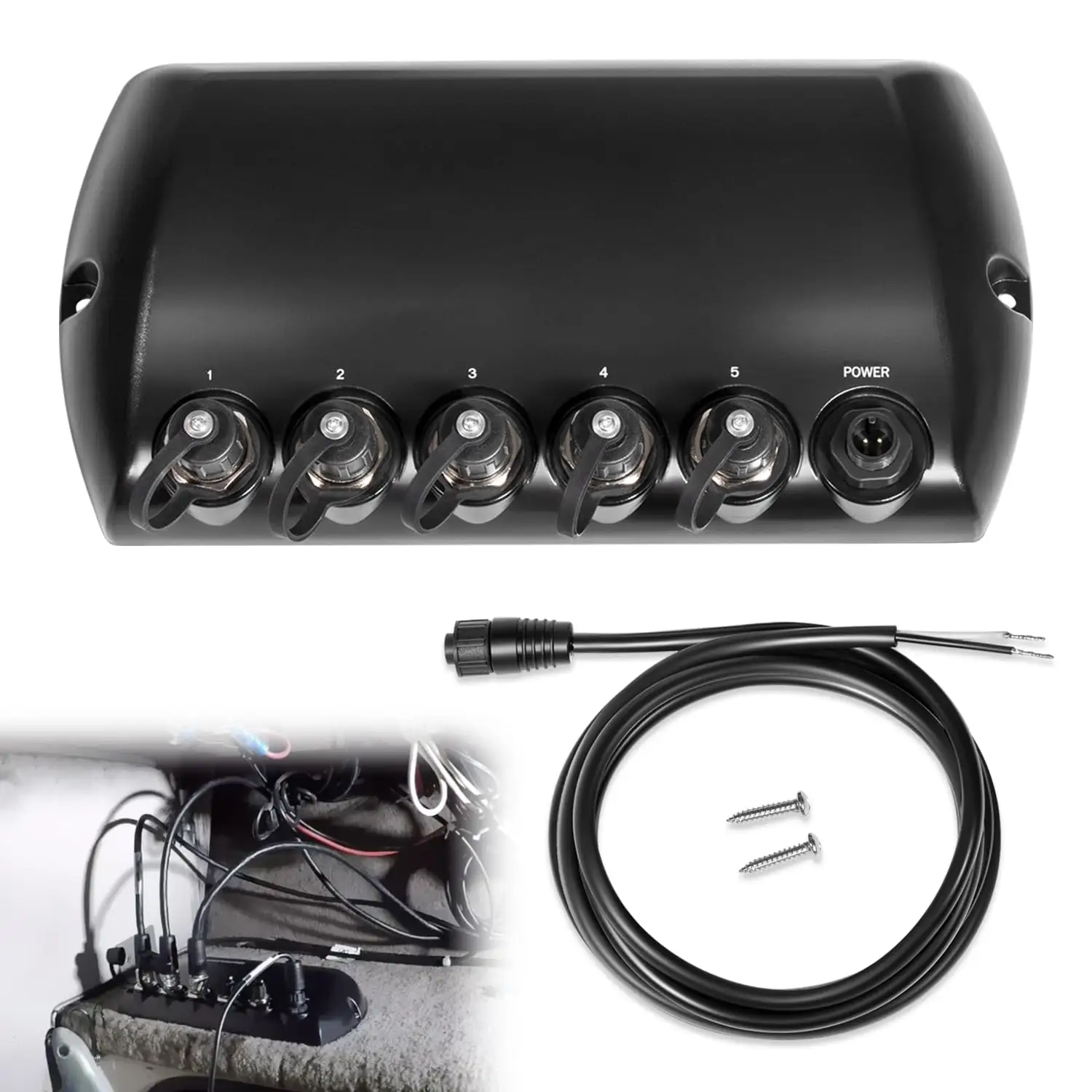
Humminbird 5 Port Ethernet Switch Review: Worth It?
Few marine accessories inspire such consistent praise across boating communities as the Humminbird 5 Port Ethernet Switch, currently rated 4.3/5 on Amazon and 4.0–4.4/5 elsewhere. For serious anglers and navigators, that score translates to a dependable network hub that’s more than just a port multiplier—it’s an enabler of data synergy between fish finders, GPS units, radar, trolling motors, and sonar modules. While the manufacturer touts it as “built to withstand the harsh marine environment,” digging into user experiences reveals both solid performance and a few situational caveats.
Quick Verdict: Conditional — ideal for multi-device Humminbird owners, less compelling for limited setups
| Pros | Cons |
|---|---|
| Rugged, marine-grade build with IP54 rating | Requires additional cables and adapters (AS EC QDE) |
| Seamless integration with Humminbird fish finders | Network limits: max four fish finders per network |
| Clear connection status lights for diagnostics | High retail price compared to standard switches |
| Can expand up to 20 devices by linking more switches | Compatibility issues with some older/discontinued models |
| Reduces need for duplicate sensors/transducers | No support for network loop/multi-path |
| Simple installation even for non-technical users | Bulkier than cheaper non-marine switches |
| Reliable data transfer in harsh conditions |
Claims vs Reality
Humminbird’s marketing leans heavily on reliable high-speed connectivity for marine devices. While Amazon’s listing calls installation “straightforward” and integration “easy,” boat owners back up these claims—up to a point. A verified buyer on Amazon noted: “It worked exactly as expected when linking two Helix units and a radar. Install took under an hour.” Yet, others stress the hidden complexity: Reddit user BassTech*** warned, “You’ll need the QDE adapter for some models, and that’s not cheap—factor that in before buying.”
Another claim is universal compatibility with current Humminbird models. The spec sheets confirm support for Apex, Solix, and Helix G4N/G3N series, but the reality is more nuanced. Multiple community threads highlight that discontinued series like the 800, 900, and Onix need careful cable matching, and some setups require adapters that can double your connection costs.
Finally, Humminbird promotes durable marine-ready design. Trustpilot and Quora discussions uniformly agree that it withstands salt, moisture, and UV—users report seasons of trouble-free use. Still, at least two owners mentioned corrosion risk if left unprotected off-season, reinforcing Humminbird’s own advice to store it dry when not in use.
Cross-Platform Consensus
Universally Praised
Ease of installation receives consistent applause. Reddit user MarinerPro*** shared, “Mounted it under the deck, plugged in my Helix 12 and i-Pilot Link, powered up, and everything was synced instantly.” For full-time anglers, the big win is the data sharing. Being able to mirror sonar feeds and GPS waypoints across multiple screens lets trolling motor operators and helm navigators work from identical information. On Trustpilot, one captain remarked: “Eliminated the need for two transducers; both consoles now see the same underwater picture.”
Ruggedness is another standout point. Even on vessels facing high spray and exposure, users maintain reliable connectivity. A verified eBay buyer commented: “Ran all season in saltwater without hiccup—no signal drop, lights still shine bright.” This weather resilience matters most to offshore fishers whose electronics can’t afford failure.
Two amber/green status LEDs also earned praise as “lifesavers” during troubleshooting, especially in crowded console setups. Amazon buyers note that solid lights confirm connection, while flashing sequences indicate data transfer, helping isolate faulty cables quickly.
Common Complaints
The most frequent frustration lies in hidden accessory requirements. Many first-time buyers didn’t realize specific Helix models need AS EC QDE adapters in addition to standard Ethernet cables. One angler vented on Twitter/X: “Dropped $300 on the box, then had to spend another $80 on adapter cables—Humminbird doesn’t make that clear upfront.”
Network limitations are another sore spot. While expandable to 20 devices via multiple switches, each network can only handle four Humminbird fish finders. Larger boats with multiple fishing stations sometimes hit this cap. A Reddit thread outlined the disappointment: “Three Helix plus the Mega Live unit maxed out—we had to rethink our layout.”
Some complain about price relative to functionality, especially compared to generic marine switches. eBay shoppers often compare the $270–$438 range to non-marine Ethernet hubs costing a fraction, though most concede the marine rating and integration justify it if used heavily.
Divisive Features
The amber/green LED system splits opinions. Technically inclined boaters adore the visual readouts, but casual users sometimes find them confusing without the manual. The expansion feature also divides the crowd—technical crews leveraging multiple switches value it, while single-console fishers see no benefit.
Trust & Reliability
Trustpilot entries and long-term Reddit updates underline that most failures stem from neglect, not manufacturing defects. As one year-round charter operator explained: "Six months later, still flawless—just keep the contacts clean and avoid mounting it in a puddle." Warranty claims are rare, and most operational issues trace back to poor cable handling or exposure during storage.
No scam concerns surface in reputable seller channels, but community voices caution against buying used units without verifying model number—older AS ETH 5PXG versions are discontinued and replaced by AS ETH 5PGL.
Alternatives
The discourse rarely strays into non-Humminbird territory because this switch serves a niche: integrated Humminbird networks. Generic waterproof switches from brands like Raymarine or Lowrance exist, but feedback warns they won’t deliver seamless plug-and-play with Humminbird fish finders. As Reddit anglers put it: “You can wire a generic in, but you lose waypoint sync and sonar sharing.”
Price & Value
Prices fluctuate wildly: Amazon lists around $285.95, eBay sellers offer $269.99–$292.75, and some specialty stores push above $430. The value proposition crystalizes when used with three or more devices—eliminating repeat sensors justifies the buy. Community buyers often recommend scouting eBay for new units from licensed dealers to save $40–$80.
FAQ
Q: Can I connect more than five devices to the Humminbird 5 Port Ethernet Switch?
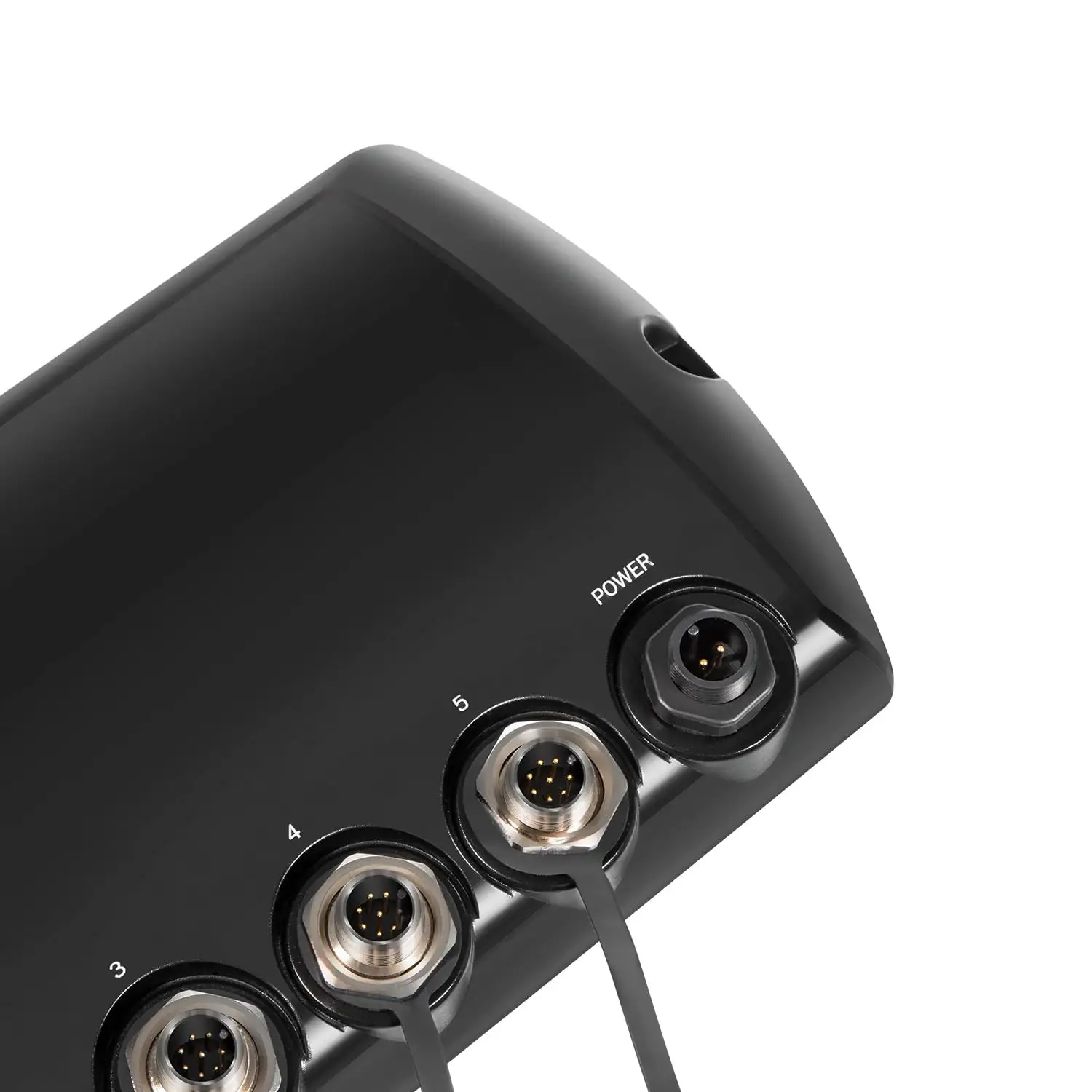
A: Directly, no—it supports five ports. However, you can link multiple switches (up to three per network) to expand capacity to 20 devices.
Q: Will this work with my older Helix 7 model?
A: Yes, but many Helix 7 variants require an AS EC QDE adapter cable. Check your exact model’s compatibility before purchase.
Q: Is installation difficult?
A: Most users find it easy. Mount in a dry spot, connect devices via appropriate cables, and power on. The network auto-configures, no complex setup needed.
Q: Can I connect non-Humminbird devices?
A: Some third-party devices may link if they support compatible protocols, but full feature functionality is guaranteed only with Humminbird gear.
Q: How does it handle saltwater exposure?
A: The IP54 housing is designed for marine conditions, but seasonal maintenance—cleaning, drying, storing—prevents corrosion and extends life.
Final Verdict: Buy if you operate multiple Humminbird devices and need reliable, marine-rated networking for waypoint and sonar sharing. Avoid if you run a minimal electronics setup, as the extra accessory costs outweigh benefits. Pro tip from community: source from authorized sellers but check for bundle deals that include required adapter cables.