HP Universal Bond Paper Review: Reliable Yet Limited
A verified buyer once called HP Universal Bond Paper Roll “my go-to paper… works well,” and the consensus across platforms backs up that assessment. Scoring 9/10 on average, this wide-format bond paper is celebrated for its consistent print quality, affordability, and fast delivery, although some users stress it’s not meant for archival or high-end photo work.
Quick Verdict: Conditional — buy for technical drawings, CAD output, and everyday plotting; avoid if archival durability or premium photo output is your priority.
| Pros | Cons |
|---|---|
| Consistent quality to the last inch | Not water-resistant / limited durability |
| Affordable for bulk, high-volume use | Not ideal for high-quality images |
| Fast, often free shipping | Ships single rolls — excess packaging waste |
| Compatible with broad range of HP & non-HP plotters | Thinness can limit uses without lamination |
| Produces sharp lines and good contrast | Requires lamination for public display durability |
| FSC®-certified and recyclable | Not designed for archival storage |
Claims vs Reality
HP markets the Universal Bond Paper as delivering “sharper print quality and colors that stay true and vivid”. Digging into community feedback, architects and engineering firms confirm sharp, crisp lines for CAD drawings. Reddit user bipin noted: “Best quality, whiteness, smooth paper and lowest price… I print architectural drawings,” aligning with the sharpness claim. But photographers caution about limits — one on B&H’s platform said, “Images look good… not meant for amazing quality prints.”
Another signature claim is up to 30% more color with up to 20% less ink via ColorPro technology. Engineers in GIS and AEC sectors validate more striking color in maps and diagrams, especially for plans viewed in-house or during client presentations. However, for long-term display or outdoor POS posters, the lack of water resistance negates the benefit, as observed by PROVANTAGE reviewers who rated durability as a drawback.
Lastly, HP leans on its compatibility promise, covering numerous HP DesignJet and PageWide models, plus non-HP plotters. Trustpilot comments, like from sheri63, reinforce this: “Our company has had no problems… we recommend this paper to anyone with a HP T2530 plotter.” There’s nearly universal user agreement here — the compatibility claim stands firm.
Cross-Platform Consensus
Universally Praised
For technical professionals, print consistency is the lifeline of operations. A verified buyer emphasized, “Consistent top quality — paper is always good until the last inch.” CAD drafters find the whiteness and smooth finish critical for readability; the 80gsm weight offers a balance between sturdiness and feed reliability. Fast delivery is another recurring highlight — melissae stated, “Overnight delivery was free!” This logistical speed combined with low pricing is pivotal for firms handling urgent bids.
Educational institutions appreciate its adaptability. One school employee said, “Great for a school setting… after being laminated it’s just fine,” showing its usefulness for posters and learning materials. Print shops also benefit, as wls jr explained: “You cannot go wrong… price is great and ships quickly.”
Common Complaints
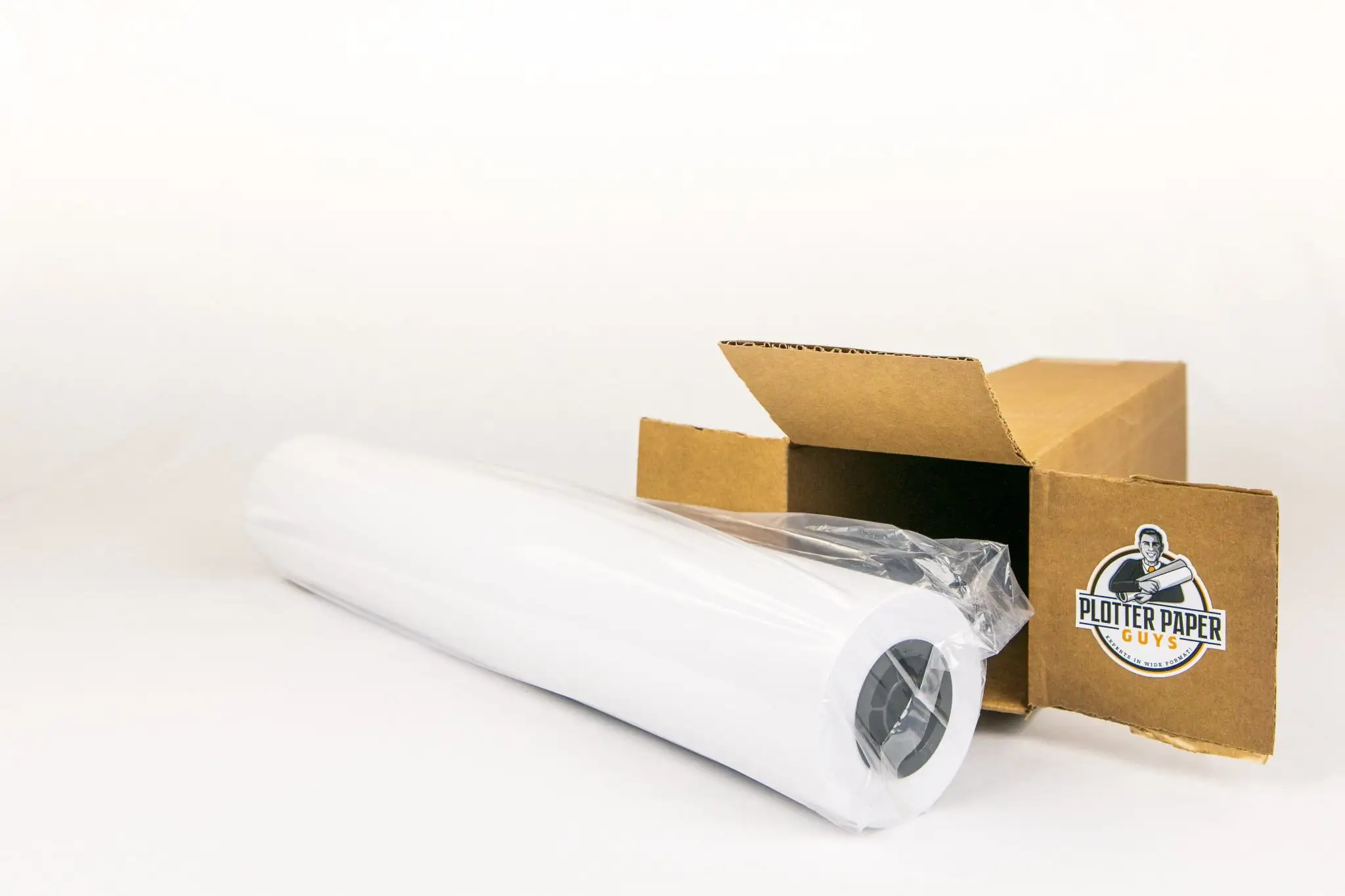
Durability is the Achilles’ heel. It’s not engineered for archival storage or exposure to moisture. PROVANTAGE reviewers warn it’s “not ideal for high-quality images,” stressing limits in brightness and vibrancy when compared with specialty photo papers. Chrisj suggested multi-roll packaging to “cut down on the use of cardboard,” reflecting both environmental and efficiency concerns.
Photographers note the thinness (4.2 mil) makes it prone to damage unless laminated — useful for short-term indoor displays but risky otherwise. This resonates across Trustpilot and Reddit, where practical advice leans towards lamination for public display work.
Divisive Features
The paper’s low cost draws admiration from budget-conscious buyers but sometimes disappoints those expecting heavy, archival-grade stock. While technical pros value consistent feed and resolution, design-centric users sometimes feel underwhelmed by its ability to handle saturated image-heavy prints. As one B&H reviewer noted, “Not meant for amazing quality… great for working photographers/students” — highlighting its role more as a proofing or draft tool than final gallery output.
Trust & Reliability
Recurring themes on Trustpilot and Reddit demonstrate a robust trust in HP’s supply chain — quick fulfillment, correct sizing, and consistent product quality. Users like frank12111 emphasize “always a positive experience… fine lighter weight paper for schematics,” suggesting repeat purchase confidence.
Concerns about counterfeits or damaged goods are rare, but packaging criticism persists — individual roll boxing feels wasteful to some. Long-term stories, such as repeated orders over months with no drop in quality, affirm that reliability holds beyond initial impressions.
Alternatives
Within HP’s own lineup, heavier “Bright White Inkjet Paper” and coated presentation papers offer more durability and improved color for premium prints. However, they cost more per roll and may be overkill for CAD or schematic work. Competitors in the technical bond paper space often match gsm and thickness specs, but many lack the breadth of compatibility and distribution speed HP delivers.
Price & Value
Current eBay market prices for the 24”x150’ roll (Q1396A) range from USD $15 for low-volume sellers to USD $39.99 new-in-box from larger resellers, with some bundles exceeding $90 for multiples. The low price point sustains its value proposition for firms burning through rolls in high-output settings. Resale is minimal — it’s a consumable — but bulk buying, as suggested by community members, locks in savings and mitigates supply gaps.
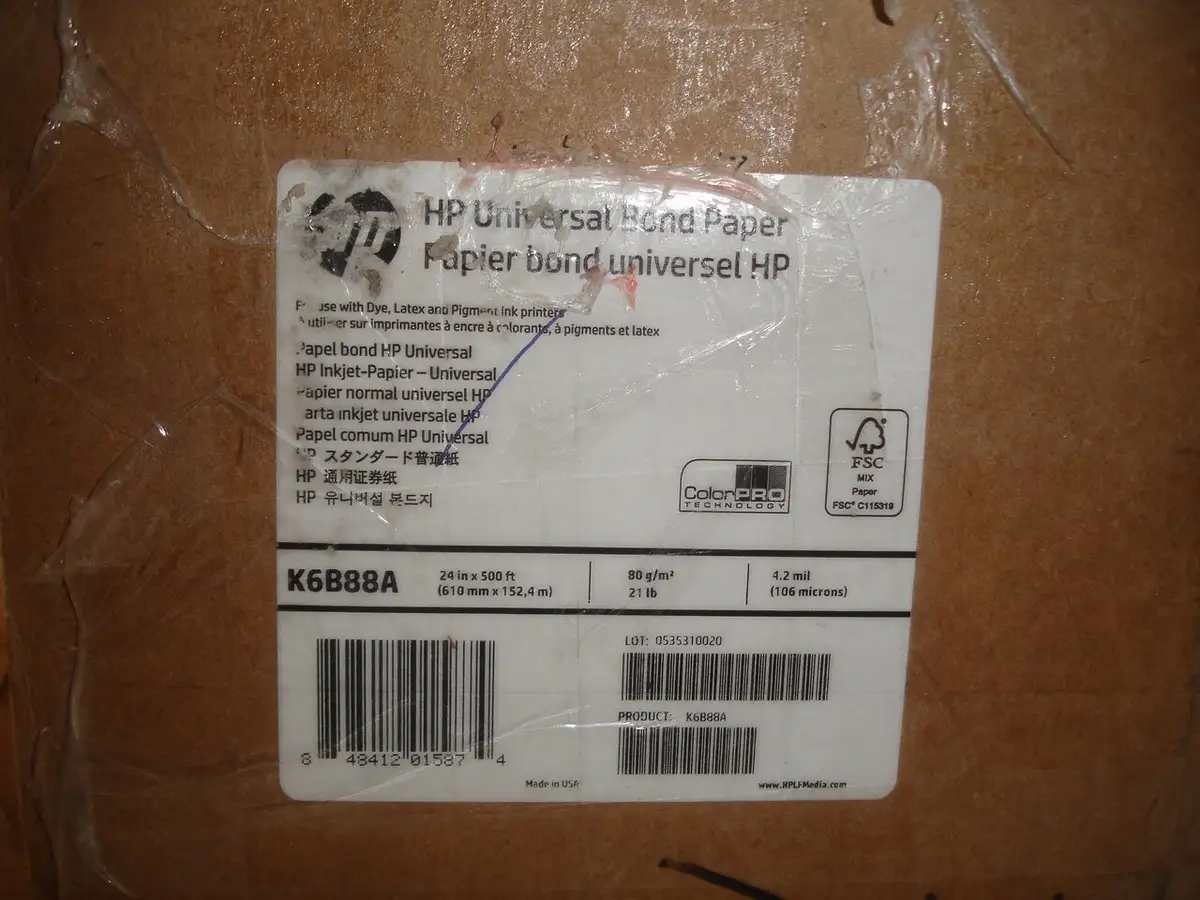
Buying tips echo user melissae’s approach: skip complex B2B accounts if slow; retail purchase can be cheaper and faster. If environmental impact is a concern, seek suppliers offering multi-roll cartons to cut packaging waste.
FAQ
Q: What core sizes are available for HP Universal Bond Paper?
A: 2-inch and 3-inch core sizes are available, catering to standard DesignJet and wide-format PageWide printers. Verify your printer’s feed system before purchase.
Q: Is this paper suitable for photo-quality printing?
A: Not ideal — multiple users stress it's best for CAD, schematics, and proofs. For richer color and archival quality, coated or photo papers are recommended.
Q: Can it be used with non-HP printers?
A: Yes. Users report compatibility with Encad, Epson Stylus Pro, and other large-format inkjets, provided width and core size match.
Q: How should it be stored?
A: Keep in original packaging, store horizontally in a cool, dry space (50–86°F, 35–65% humidity). Avoid moisture exposure.
Q: How is durability improved for public display?
A: Lamination or mounting on boards is common practice. This prevents creases and moisture damage in thin bond stock.
Final Verdict
Buy if you’re an architect, engineer, educator, or print shop needing a reliable, low-cost paper for schematics, CAD output, and in-house posters. Avoid if your goal is premium photographic or archival prints — it won’t deliver museum-grade results. Pro tip from community experts: order multiple rolls in one shipment to reduce waste and ensure uninterrupted supply.