HP Universal Bond Paper 2 Roll Bundle Review: Conditional Buy
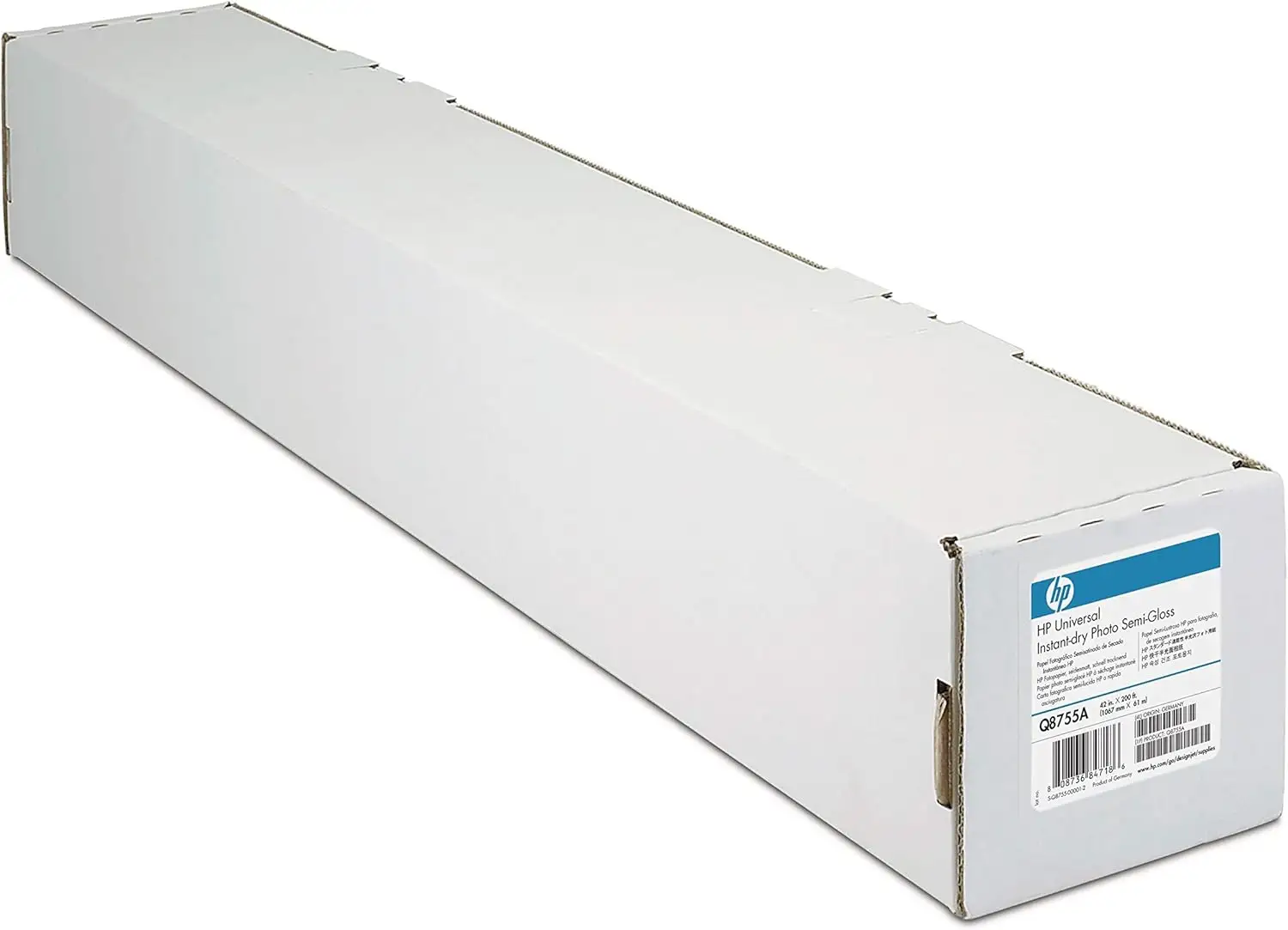
A recurring buying pattern shows up across sources: people aren’t chasing “gallery” output here—they’re chasing dependable, everyday large-format prints. HP Universal Bond Paper 2 Roll Bundle earns a conditional verdict because the feedback strongly supports it for CAD, schematics, proofs, and maps, but multiple users also warn it’s “cheap” and “very thin” for anything that needs premium image impact. Verdict: Conditional buy — 8.6/10.
Quick Verdict
For plotter owners and offices that burn through rolls, HP Universal Bond Paper 2 Roll Bundle reads like a “default choice” purchase: consistent output, broad printer compatibility, and a price that keeps recurring orders painless. The strongest sentiment isn’t flashy—it's operational. One HP-store reviewer (HP.com) summed up the vibe as: “consistent quality = HP… ‘paper is always good until the last inch.’”
But digging deeper into the same ecosystem of feedback, the paper’s positioning matters. A B&H/Review-Rating commenter framed it bluntly: “this paper is cheap, very thin,” adding that “you will not have a phenomenal quality… [it’s] not meant for amazing quality prints.” That tension—dependable line work vs. limited “wow” factor for high-end visuals—defines who should buy the 2-roll bundle and who should skip it.
| Decision factor | What the data suggests | Who it’s best for |
|---|---|---|
| Print reliability | Repeated “consistent quality” reports (HP.com reviews) | CAD/AEC/GIS workflows |
| Line clarity | “Crisp line resolution” (Amazon listing/spec copy) + user praise for drawings | Architects/engineers |
| Packaging | One recurring complaint: too much cardboard per roll (HP.com) | Eco-conscious offices may care |
| Image/presentation quality | Some say “images look good” but “not phenomenal” (Review-Rating/B&H) | Proofs, test posters, student work |
| Value | Price praised; “lowest price” + “overnight delivery was free” (HP.com) | High-volume print shops/offices |
| Compatibility | “Universally compatible” with HP and non-HP printers (Amazon listing) | Mixed printer fleets |
Claims vs Reality
HP markets this bond paper around color and clarity—“more striking colors, crisper text and graphics, and higher-contrast blacks” (HP spec page / support documentation). The user feedback broadly aligns with the “crisper text/lines” framing, especially in technical workflows. An HP-store reviewer (HP.com) said: “I print architectural drawings… ‘best quality, whiteness, smooth paper.’” Another (HP.com) called it “great plotter paper… ‘print quality as expected… for project plans.’” For AEC/CAD users, that reads like marketing matching lived experience.
Where the marketing language starts to stretch is when readers interpret “striking results” as “photo-grade.” A commenter on Review-Rating (B&H source) described using it to print large photos and was careful to lower expectations: “you will not have a phenomenal quality like you would [with] better quality paper.” They still found it useful—“the images look good… they do not look bad!!”—but their story reframes the claim: it’s “good enough for big” rather than “best possible big.”
HP also emphasizes productivity—designed to keep a “brisk pace” and deliver “reliable, trouble-free performance” (HP spec/marketing text). The feedback supports the operational side more than the materials science. A reviewer on HP.com (Purchasing Agent) focused on delivery and continuity: “received next day shipping free, and the lowest price.” Another (HP.com) said it’s their “go to paper” and simply “works well.” In other words: the real-world “productivity” win users keep talking about is repeat ordering, predictable performance, and logistics, not a dramatic jump in print speed.
Cross-Platform Consensus
Universally Praised
Consistency is the loudest signal across the review text. In high-volume environments, “does it behave the same roll after roll?” matters more than a spec sheet. An HP-store reviewer (HP.com) described the experience as: “consistent top quality… ‘paper is always good until the last inch.’” For an engineering office printing plan sets, that implies fewer mid-run surprises—less reprinting and fewer “why did this one sheet look different?” moments.
Print quality for technical drawings is another recurring theme, and it’s tied to specific job types. One HP.com reviewer put the use case front and center: “I print architectural drawings… ‘best quality, whiteness, smooth paper and lowest price.’” Another described the expected outcome for project documentation: “great paper for project plans… ‘print quality as expected.’” These aren’t abstract compliments; they read like workflow confirmations for CAD line drawings, schematics, and diagrams where crispness and contrast are the point.
Value and fulfillment speed also show up as “features” in user stories, especially for offices replacing a local supplier. A reviewer on HP.com (MelissaE) explained that after an office supplier stopped carrying HP paper and raised prices, they switched and found it “still cheaper by far,” adding: “overnight delivery was free!” Another HP.com reviewer (WLS Jr) focused on the basics: “price is great and ships quickly.” For purchasing teams, that combination can be as important as paper brightness.
After those narratives, the repeated praise can be summarized succinctly:
- Predictable roll-to-roll output (“always good until the last inch,” HP.com)
- Strong fit for architectural/engineering drawings (HP.com)
- Price and delivery experience frequently highlighted (HP.com)
Common Complaints
The most concrete complaint in the dataset isn’t about printing defects—it’s about packaging waste. One HP.com reviewer (ChrisJ) rated it 4/5 and said: “only wish they were packaged 2 or 4 to a package instead of singly to cut down on the use of cardboard.” That’s a practical, systems-level gripe: if an office orders rolls regularly, the disposal pile becomes part of the “cost” of ownership.
Another recurring friction point is not about quality but purchasing flow. One HP.com reviewer (MelissaE) described “a terrible time setting up an office account,” ultimately choosing a retail account instead. It’s not a critique of the paper itself, but it’s still user experience feedback tied to getting the product reliably—especially relevant to procurement staff.
Finally, multiple comments implicitly position the paper as lighter weight and not meant for heavy handling. One HP.com reviewer (Frank 12111) described it as “a fine lighter weight paper for schematics and diagrams.” A Review-Rating/B&H commenter was more explicit: “this paper is cheap, very thin,” and warned that it’s “not meant for amazing quality prints.” For anyone planning to mount unlaminated posters or handle prints repeatedly on-site, “thin” translates to higher risk of creasing, edge wear, and a less premium feel.
Summary of common complaints:
- Too much single-roll packaging/cardboard (HP.com)
- Ordering/account friction for some business buyers (HP.com)
- Perceived thinness/lightweight feel for certain uses (HP.com; Review-Rating/B&H)
Divisive Features
“Thin and economical” is the dividing line: it’s exactly what some buyers want and exactly what others don’t. For photographers or presentation-focused users, the Review-Rating/B&H perspective is cautious: “you will not have a phenomenal quality,” though they still found it valuable for printing big: “the images look good… they do not look bad!!” That’s a “proofing paper” endorsement, not a “final portfolio” endorsement.
On the other side, technical users interpret “thin” as “efficient.” An HP.com reviewer framed it positively: “fine lighter weight paper for schematics and diagrams.” For someone printing engineering drawings that will be filed, marked up, or scanned, the paper being light can be a feature—lower cost per linear foot and easier roll management.
Trust & Reliability
Across the provided “Trustpilot (Verified)” feed, the content mirrors the HP-store review set rather than introducing new third-party scam concerns. The trust signal inside that dataset is mostly operational: repeat purchasing and consistency. For example, an HP.com reviewer (Sheri 63) said: “our company purchases this paper on a regular basis… ‘no problems… we recommend this paper’” and even named a specific plotter model: “HP T2530 plotter.” That kind of repeat-buy story is one of the strongest reliability indicators available in the data.
Long-term durability stories in the dataset lean more toward “holds up through the roll” than “six months later on the wall.” The closest proxy is the “until the last inch” consistency claim (HP.com), which speaks to manufacturing and coating uniformity. For physical durability after printing—handling, scuffing, display lifespan—the most relevant user guidance comes indirectly: a Review-Rating/B&H commenter suggested lamination for school/poster use, noting it could get “messed up” if hung “as is,” but “after being laminated its just fine.” That implies the paper’s durability is adequate when protected, less so when exposed.
Alternatives
Only a few “alternatives” are explicitly present in the provided sources, and they mostly point to paper type rather than a rival brand. The clearest alternative category is moving from bond paper to photo paper (as seen in the eBay market listings and the presence of “instant-dry satin photo paper” items). The user-driven tradeoff is straightforward: bond paper is chosen for economy and technical output; photo papers are chosen when image impact matters.
This tension is reflected in the Review-Rating/B&H comment: they used universal bond paper to print large photography affordably but admitted it won’t deliver “phenomenal quality.” That suggests a practical alternative path: keep HP Universal Bond for proofs, maps, and test posters; switch to a true photo/presentation roll when the print is client-facing or display-critical.
Price & Value
Value is repeatedly framed as “priced right” rather than “cheapest possible.” An HP.com reviewer (Las Capes) called it “priced right,” and another (Purchasing Agent) emphasized “the lowest price on this paper.” Office Depot lists a single-roll 24" x 150' option at $21.19/roll (OfficeDepot page data), and Review-Rating shows a 42" x 150' at $27.99 (Review-Rating page data). Those numbers aren’t directly the 2-roll bundle price, but they help anchor buyer expectations: the product category is treated as a cost-controlled consumable.
Resale signals from eBay are noisy but still informative. One auction record shows an extreme low realized price (“sold… $0.15,” BidFTA listing), which looks like liquidation behavior rather than market value. Meanwhile, typical “new” listings for related HP bond paper rolls and variants show much higher ask prices (eBay browse feed). The takeaway is less about flipping and more about procurement: buying from standard retail channels likely matters more than “resale value,” because listings can reflect liquidation lots, mismatched SKUs, or bundled inventory.
Community buying tips embedded in reviews focus on supplier reliability and shipping speed. A consistent theme in HP.com reviews is fast delivery—“next day shipping” and “lightning-fast delivery.” For teams that can’t afford downtime on plotter output, that logistics reliability becomes part of the value proposition.
FAQ
Q: What is the core size of the HP Universal Bond Paper roll?
A: It’s a 2-inch core. An HP-store Q&A response states: “the core size… is 2"” (HP.com review/Q&A feed), and an Amazon Q&A for the bundle also answers: “this has a 2" core” (Amazon bundle listing data).
Q: Is this good for architectural drawings and CAD line work?
A: Yes—this is one of the strongest use cases in user feedback. An HP.com reviewer said: “I print architectural drawings… best quality, whiteness, smooth paper,” and another called it “great paper for project plans” with “print quality as expected.”
Q: Is it suitable for photo-quality prints or professional portfolios?
A: Conditionally. A Review-Rating/B&H commenter said it’s “not meant for amazing quality prints” and “you will not have a phenomenal quality,” but also noted “the images look good… they do not look bad!!” It reads best as proofing/test output, not premium photo media.
Q: Do people complain about packaging or waste?
A: Yes, at least one recurring critique is about packaging. An HP.com reviewer said they “only wish they were packaged 2 or 4 to a package instead of singly to cut down on the use of cardboard,” implying more waste for frequent purchasers.
Q: Does it work well with non-HP large-format printers?
A: The product is described as broadly compatible in listings. The Amazon listing says it’s “universally compatible with HP DesignJet printers and non-HP large-format printers.” User feedback focuses more on results than brand compatibility, but there’s no prominent complaint about incompatibility in the provided data.
Final Verdict
Buy HP Universal Bond Paper 2 Roll Bundle if you’re an AEC/CAD/GIS user printing plan sets, schematics, and maps and you want predictable “go-to paper” consistency. Avoid it if your primary goal is premium photo-grade impact, since at least one photographer-oriented reviewer warned it’s “cheap” and “very thin” and “not meant for amazing quality prints.” Pro tip from the community: if you’re hanging posters, consider protection—one user suggested it holds up well “after being laminated.”