HP PageWide 972X Toner Set Review: Conditional Buy 6.8/10
“HP’s firmware rejects their own cartridges.” That single complaint captures the sharpest controversy surrounding the HP PageWide 972X High Yield Toner Set—a set that many buyers praise for clean printing, yet others say can be bricked by updates and date-code checks. Verdict: Conditional buy — 6.8/10.
Quick Verdict
For offices already locked into HP PageWide Pro printers, the HP PageWide 972X High Yield Toner Set is a conditional yes: users repeatedly describe it as easy to install and capable of sharp output. But digging deeper into user feedback, a recurring pattern emerged around “overpriced” running costs, yield that “not as high as HP estimates,” and the more explosive claim that firmware can reject even genuine cartridges.
| Call | Evidence from users | Who it’s best for |
|---|---|---|
| Easy installation | HP-site reviewer Lynne C said: “open box, click cartridge into place, close door and print” | Busy office admins who want zero-fuss swaps |
| Strong print quality | A reviewer on Best Buy wrote: “prints great, clear and sharp” | Teams printing client-facing docs |
| High cost frustration | A reviewer on Best Buy complained: “does the job for way too much money!!!” | Budget-sensitive users should be cautious |
| Yield skepticism | HP-site reviewer DoubleG said: “actual output not as high as hp estimates” | High-volume users tracking cost-per-page |
| Compatibility lock-in | HP-site reviewer Bushido 21 said the printer “didn't want to accept the cartridge cause it wasn't an hp brand” | Anyone considering third-party refills |
| Firmware/date issues | HP-site reviewer Doug_999 said: “HP’s firmware rejects their own cartridges” | Buyers who stockpile backups may get burned |
Claims vs Reality
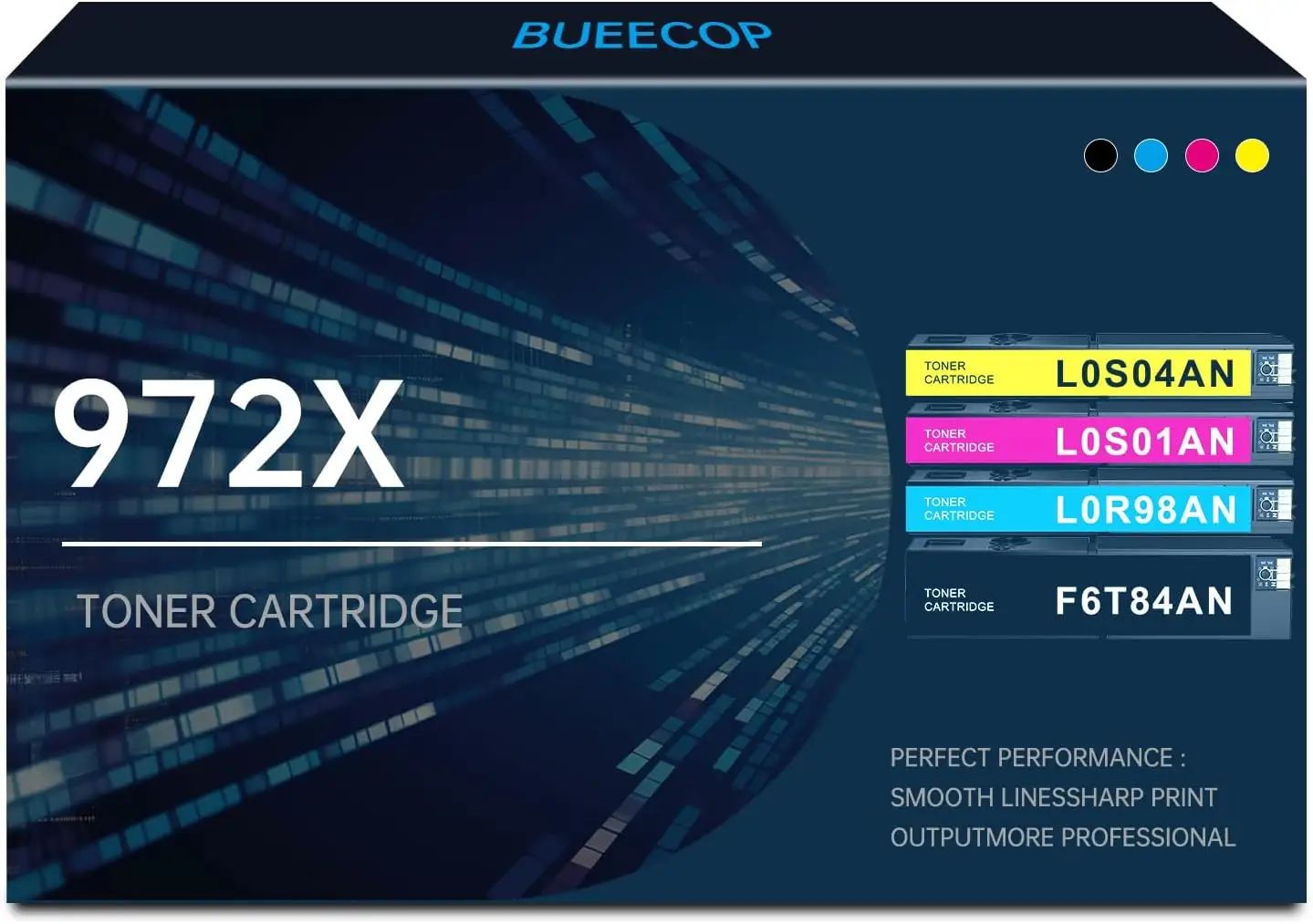
HP markets the HP PageWide 972X High Yield Toner Set (described in listings as PageWide ink cartridges) around dependable performance, standout results, and big page yields—about 7,000 pages for color (e.g., yellow L0S04AN) and 10,000 pages for black (F6T84AN), depending on cartridge. That’s the promise: fewer interruptions and consistent output.
Digging deeper into user reports, the first gap shows up around yield and longevity. While HP’s product pages and retailers repeatedly highlight “up to 7,000 pages” (yellow) and “up to 10,000 pages” (black), multiple users directly dispute how close real-world output comes to those numbers. HP-site reviewer DoubleG offered a measured critique: “original product better than generics” but “actual output not as high as hp estimates.” Another HP-site reviewer Joyce R was blunter: “never last as long as claim... not even close to what it claims.”
The second and more consequential gap is compatibility and control. While marketing language emphasizes “hassle-free” printing and anti-fraud protections, some user stories frame those same controls as punitive. HP-site reviewer Lopaka alleged: “sending an update to reject ink cartridges made before a certain date… i had an official hp ink cartridge… rejected by my printer… now i have a $150 full and useless cartridge.” HP-site reviewer Doug_999 echoed the theme: “my printer will not allow me to use [them] because it says the cartridges dated 1.5 years old was out of date.”
Finally, there’s the “simply works” narrative versus reports of defective or questionable-condition shipments. Some buyers describe perfect installs and clean prints, while others claim dead-on-arrival cartridges or even “refurbished” items sold as new. HP-site reviewer c8902 warned: “received… 4 refurbished, used cartridges… labels missing… feel ripped off.” HP-site reviewer Anonymous added: “my cartridge did nt work and was faulty.”
Cross-Platform Consensus
Several distinct storylines repeat across platforms when people talk about the HP PageWide 972X High Yield Toner Set. The first is a steady drumbeat of satisfaction with output and ease—especially from users who treat cartridges as a routine office supply and just want predictable printing. The second is anger about price and ecosystem lock-in. The third is the divisive question of HP firmware, date codes, and whether stockpiling cartridges is safe.
Universally Praised
A recurring pattern emerged around simple installation and immediate functionality. This matters most for office managers and small businesses where downtime is expensive and staff don’t want to troubleshoot consumables. On HP’s review page, Lynne C summed up the ideal experience: “open box, click cartridge into place, close door and print.” Best Buy reviewers often mirrored that “no drama” tone, with one writing: “easy to install and always works,” and another emphasizing they “never have issues with splotchy or uneven print.”
Print quality is the second consistent praise, especially for buyers printing professional documents rather than occasional photos. Best Buy feedback repeatedly mentions clarity—one reviewer wrote: “prints great, clear and sharp.” Another focused on cleanliness in output: “there is no smearing with this ink. it works perfectly.” For workgroups producing client deliverables, those comments read less like hype and more like reassurance that the PageWide system does what it’s supposed to do when everything is aligned.
Longevity—at least for some households and offices—is also a strong positive theme. HP-site reviewer Elena 1 said: “reliable, long lasting always.” Best Buy reviewers similarly described long stretches between replacements: “these last a really long time.” And for home users trying to justify the steep purchase, the perceived duration can soften the sticker shock; HP-site reviewer Shimmyj called it “the most expensive ink cartridge i have ever bought!” but added it “should last 10-12 months for our home use.”
- Frequently praised: easy installation, clean output, long intervals between replacements (for some users).
- Sources: HP store reviews, Best Buy customer reviews.
Common Complaints
Price dominates the complaint landscape, and it’s not subtle. Users often accept that genuine cartridges may print better, but they resent the cost structure—especially when a full set can rival the price of the printer. HP-site reviewer Rall said the “pricing… is unconscionable,” even while admitting “the cartridge works fine.” Best Buy’s most pointed critique framed it as industry-wide exploitation: “absolutely overpriced… part of the overall scam that big-industry companies like hp and cannon thrust upon us.”
Digging deeper into user reports, the price frustration often blends into a second complaint: being forced into OEM purchasing because alternatives get blocked. HP-site reviewer Bushido 21 described buying a cheaper third-party option, only to have the printer reject it: it “didn't want to accept the cartridge cause it wasn't an hp brand.” Another HP-site reviewer (Anonymous) echoed the lock-in: “the printer won’t take any other refill.” For cost-conscious organizations, that’s not just annoyance—it changes the entire economics of owning the printer.
Yield and reliability concerns appear alongside price. Some users say cartridges don’t meet stated page counts or run out quickly, which makes the high price feel even worse. HP-site reviewer DoubleG said “actual output not as high as hp estimates,” while HP-site reviewer Joyce R complained they “never last as long as claim.” HP-site reviewer ejamison repeatedly alleged: “all of them did not print the amount of pages as described,” and added: “the ink run out fast!”
- Most common negatives: “too expensive,” third-party rejection, yields below expectations for some users.
- Sources: HP store reviews, Best Buy customer reviews.
Divisive Features
The most divisive issue isn’t print quality—it’s trust. A number of reviewers describe HP’s security and firmware controls as hostile, especially for buyers who keep backups in storage. HP-site reviewer Lopaka claimed an update rejected an official cartridge: “rejected by my printer simply for sitting on the shelf as a back-up.” HP-site reviewer Victor V felt forced into repurchasing: “i had to buy this after i already owned an older cartridge that would not work due to hps upgrade.”
Yet the opposing camp effectively says: if you buy genuine and keep it current, it’s painless. That’s the subtext behind comments like Lynne C’s “easy pee sey” install and Best Buy’s “always easy to install and never have issues.” The same ecosystem controls that frustrate some users may be invisible to others—until they aren’t.
Another divisive thread is condition and fulfillment. Some users insist everything arrives perfect; others allege “refurbished, used cartridges” sold as new. c8902’s warning—“be careful - used merchandise for new prices”—contrasts sharply with buyers who simply say it “works as expected.”
Trust & Reliability
Scam-adjacent concerns in this dataset don’t come from classic counterfeit stories as much as from users who feel locked out of product they already paid for. The sharpest trust collapse happens when genuine cartridges are reported as rejected due to age or firmware checks. HP-site reviewer Doug_999 wrote: “HP’s firmware rejects their own cartridges… cartridges dated 1.5 years old was out of date… $300 down the drain.” HP-site reviewer Carolee 31 broadened it into a buying strategy warning: “if the chip on the cartridge gets outdated then all of your very expensive ink is trash… so buy them one at a time.”
Reliability stories split into two timelines: immediate success versus immediate failure. On one end, HP-site reviewer Lynne C described instant usability. On the other, HP-site reviewer Anonymous said: “i got a crappy cartridge!… faulty,” and Sayana reported: “i keep waiting for this to get replaced as we have an open ticket.” For organizations depending on continuous printing, those replacement and support delays become part of the reliability equation, not an afterthought.
Long-term durability is often described in terms of repeat purchasing rather than a single heroic cartridge. HP-site reviewer Bimmer said: “this is the 5th time or so i bought this… and it is always a good product.” That kind of repeat-buy narrative suggests that when the system works, it stays predictable—just expensive.
Alternatives
Only a few alternatives are explicitly mentioned in the provided data, and most are framed negatively. Users repeatedly contrast OEM HP cartridges with “generics,” “non-brand,” or “cheap refills,” often describing rejection by the printer. HP-site reviewer Bushido 21 said they tried a cheaper cartridge but the printer “didn't want to accept the cartridge cause it wasn't an hp brand,” ultimately returning it and buying HP instead.
Best Buy reviewers echoed the same practical conclusion. One wrote: “Don't buy cheap refills that mess up the printer. Original equipment only to guarantee quality.” So while third-party options appear in retail listings (like compatible multi-packs), the lived experience captured here suggests many buyers feel cornered back into OEM—either for compatibility or peace of mind.
Price & Value
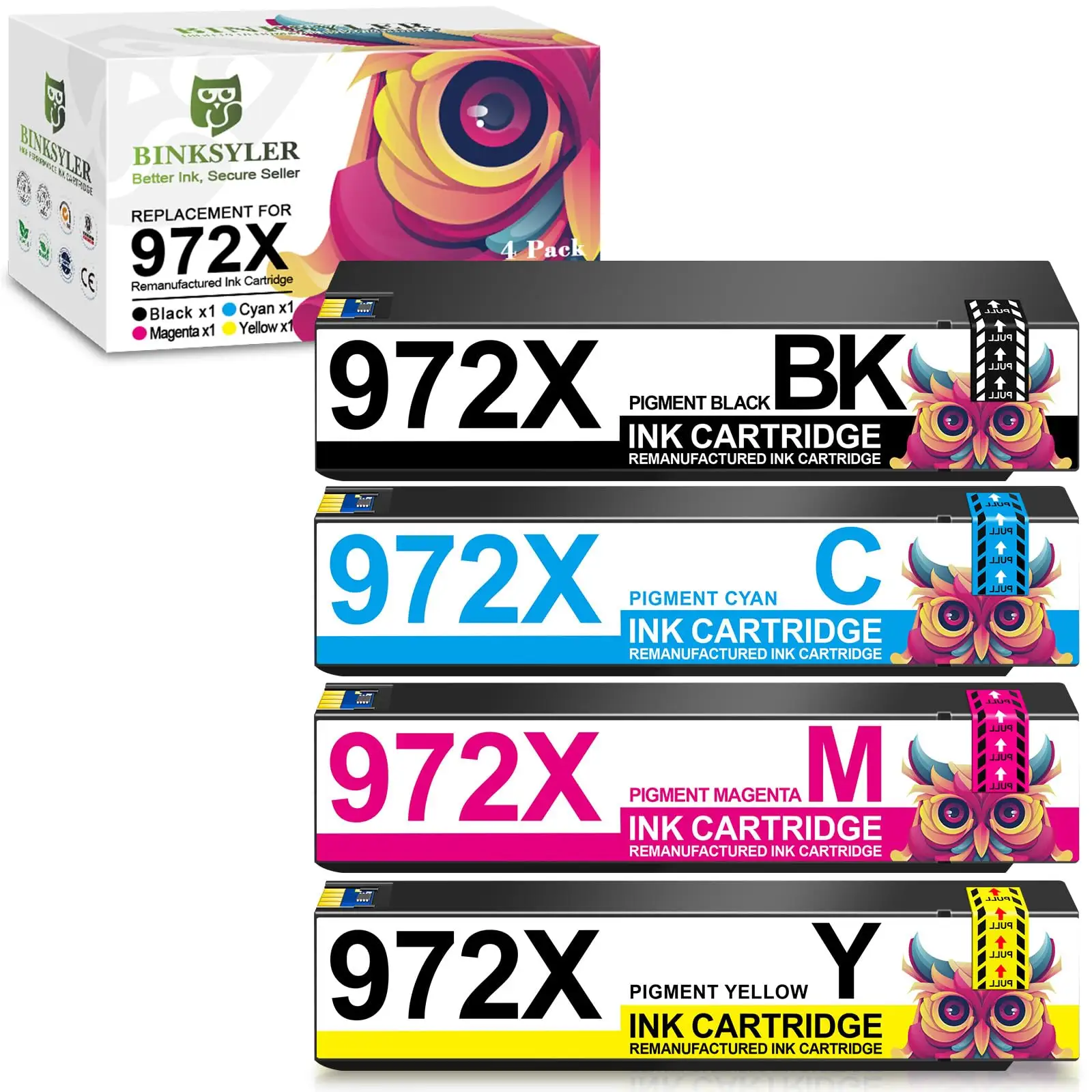
The price story is messy across listings, which is exactly what buyers experience in the wild. Amazon’s listing for the HP 972X Yellow (L0S04AN) shows $154.89, Best Buy lists the yellow cartridge at $139.99 (sold out in that snapshot), and Staples shows the black cartridge at $194.89 and yellow at $189.89. On resale/marketplaces, an eBay listing highlights a “2PK” cyan/yellow bundle at $199.99 with “free shipping” from a surplus seller.
Digging deeper into user reports, the value calculation hinges less on MSRP and more on whether the cartridge behaves like a predictable consumable. If you’re a home user printing intermittently, Shimmyj’s comment—expensive but “should last 10-12 months”—reads like a tolerable trade. If you’re a small business watching margins, the complaints become harsher: HP-site reviewer Dean 6681 called it “excellent… but costly,” while Best Buy’s 3-star review said it’s “fine… nothing special, and absolutely overpriced.”
Buying tips also emerge implicitly from the most bitter experiences. Multiple HP-site reviewers warn against stockpiling because of alleged chip/date rejections. Carolee 31’s direct advice: “buy them one at a time.” Lopaka’s story about a backup cartridge becoming unusable reinforces that risk for offices that keep surplus inventory.
- Real-world value drivers: install success, acceptable yield, and avoiding dead inventory due to alleged date/firmware checks.
- Pricing snapshots from: Amazon, Best Buy, Staples, eBay.
FAQ
Q: Does the HP 972X “high yield” actually hit the rated page yield?
A: Not always, according to some owners. While listings cite “up to 7,000 pages” (color) and “up to 10,000 pages” (black), HP-site reviewer DoubleG said: “actual output not as high as hp estimates,” and Joyce R wrote: “never last as long as claim… not even close.”
Q: Is installation easy for most people?
A: Yes, many reviewers describe a simple swap-and-print experience. HP-site reviewer Lynne C said: “open box, click cartridge into place, close door and print.” Best Buy reviewers also frequently mention “easy to install” and report no issues like “splotchy or uneven print.”
Q: Can HP PageWide printers reject non-HP or refilled cartridges?
A: Multiple users say yes. HP-site reviewer Bushido 21 described trying a cheaper cartridge but the printer “didn't want to accept the cartridge cause it wasn't an hp brand.” Another HP-site reviewer (Anonymous) complained the printer “won’t take any other refill.”
Q: Can genuine HP cartridges stop working after firmware updates or if they’re “old”?
A: Some reviewers claim this happens. HP-site reviewer Doug_999 wrote: “HP’s firmware rejects their own cartridges,” citing “out of date” messages. HP-site reviewer Lopaka alleged an “official hp ink cartridge” was rejected after being stored as a backup.
Q: Is the print quality worth the cost?
A: Many buyers say the output is strong, but the value is disputed. A Best Buy reviewer praised “prints great, clear and sharp,” while another said the cartridges are “fine… absolutely overpriced.” Several users describe OEM quality as better than generics, but still resent the price.
Final Verdict
Buy the HP PageWide 972X High Yield Toner Set if you run an HP PageWide Pro office printer, prioritize “clear and sharp” output, and want cartridges that—when everything aligns—install as easily as “click… and print.” Avoid it if you’re highly price-sensitive, plan to stockpile backups, or can’t tolerate the risk described by users who say “the chip… gets outdated” and the ink becomes “trash.” Pro tip from the community: HP-site reviewer Carolee 31 advises, “buy them one at a time.”