HP 972X Magenta Cartridge Review: Conditional Buy (7.6/10)
The loudest “feature” isn’t magenta at all—it’s the price shock. One Staples reviewer joked that when you see what these cost, “everyone else has same price, which causes you to faint.” That’s the backdrop for the HP 972X PageWide High Yield Magenta Ink Cartridge (L0S01AN): praised for crisp, vibrant output and low-drama installs, but routinely criticized for being painfully expensive. Verdict: Conditional buy — 7.6/10.
Quick Verdict
For offices already locked into HP PageWide Pro machines, HP 972X PageWide High Yield Magenta Ink Cartridge is often described as the “no errors” option with consistently sharp color. But if budget predictability matters, recurring complaints about “exorbitant” pricing and doubts about yield can turn it into a regret purchase.
| Decision | Evidence from user feedback | Who it fits |
|---|---|---|
| Buy | “prints crisp and high quality” (Staples) | Workgroups printing color docs |
| Buy | “just pop it in - no errors, problems, or drama” (Staples) | Anyone burned by incompatible refills |
| Conditional | “expensive but they work right down to the last drop” (Staples) | Buyers prioritizing reliability |
| Conditional | “questionable # of copies…perhaps not as advertised” (Staples) | Heavy printers tracking yield closely |
| Avoid | “price is not affordable” (Staples) | Cost-sensitive small businesses |
Claims vs Reality
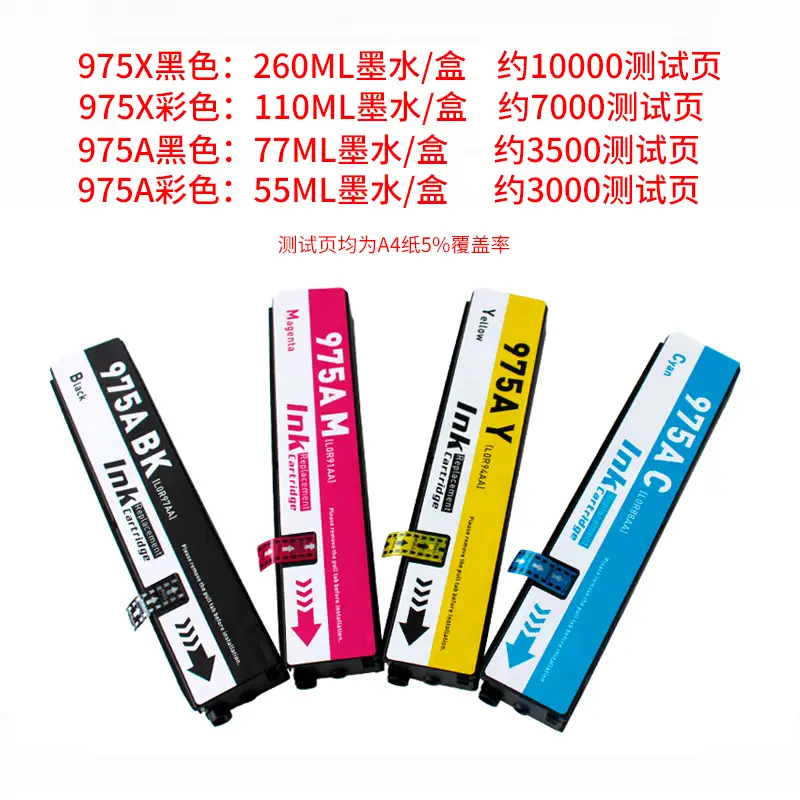
HP’s official positioning leans hard on high yield and smooth operation—“up to 7,000 pages,” “high-speed printing…without sacrificing quality,” and “hassle-free cartridges that simply work” (HP specs). Digging deeper into user reports, the “simply work” part is where feedback most strongly aligns: across retailer reviews, people repeatedly describe clean installs and consistent output with minimal troubleshooting.
A Staples customer framed the experience in plain terms: “works as expected. clean clear prints, with colors that pop,” emphasizing the end result rather than any learning curve. Similarly, a Best Buy reviewer focused on the absence of typical ink headaches: “there is no smearing with this ink. it works perfectly.” For busy admins or office managers, that reliability translates into fewer stalled print queues and fewer “why is magenta missing again?” moments.
Where the marketing message strains against lived experience is value. While the cartridge is officially rated around 7,000 pages (HP specs), at least one Staples reviewer pushed back: “it seems the number of printed pages from cartridges is questionable and perhaps not as advertised!” That doesn’t prove the rating is wrong—HP also notes yield varies based on content and testing methodology—but it does show that some buyers who track usage closely don’t always feel they’re getting the headline number.
The other gap is the “lower cost per page” framing. Users do acknowledge that high-yield can reduce replacement frequency, yet many still balk at the upfront hit. One Staples reviewer didn’t mince words: “horribly exorbitant price,” adding they hoped it would “last 6 years for the money i paid.” Even when performance satisfies, the sticker price remains a recurring source of resentment.
Cross-Platform Consensus
Universally Praised
A recurring pattern emerged around print quality: people buying this cartridge for business documents consistently describe output as sharp, bright, and professional-looking. The “who benefits” is clear—teams producing client-facing materials, internal reports, or graphics-heavy handouts where faded magenta makes everything look off. One Staples reviewer tied it to overall document clarity: “it prints crisp and high quality.” Another focused on color punch: “this ink is vibrant!…the colors are vibrant.”
For office settings using higher-brightness paper, the “pop” is part of the story. A Staples customer wrote: “clean clear prints, with colors that pop on 94 brightness paper.” In practical terms, that means presentations and charts look less washed out, and marketing drafts read closer to what people expect from a professional device rather than a home inkjet.
Reliability and ease-of-use is the second consensus theme, especially from buyers explicitly wary of third-party refills. One Best Buy reviewer warned: “don’t buy cheap refills that mess up the printer. original equipment only to guarantee quality.” That sentiment shows up on Staples too, where a customer said: “only use hp ink for your hp printer…knock off ink / toner is not the same.” For IT managers, the implication is fewer support tickets and fewer compatibility errors when the office is standardized on OEM supplies.
Longevity—at least in perception—also lands on the “praised” side. Several reviews emphasize that the high-yield format lasts longer than expected in typical office use. A Best Buy reviewer noted: “i have found this ink to last a long time…for standard color documents it works well.” Staples buyers echoed that with simpler phrasing: “it lasts a long time,” and “the extra large ink kind of last longer and is recommended.”
- Strongest praise themes: crisp/bright print quality, low-smear output, and trouble-free installation.
- Most-cited benefit group: offices printing standard color documents and reports rather than photo-heavy workloads.
Common Complaints
The clearest complaint is cost—often described as the defining negative even by people who like the cartridge. One Staples reviewer offered blunt advice: “recommend checking on another brand of printer that doesn't cost $ 600 + to replace the cartridges.” That’s not just a complaint about one cartridge; it’s a warning about the ongoing cost of ownership for the PageWide ecosystem.
Another Staples customer vented in broader terms: “horribly exorbitant price,” and even before installing, they felt the burden of the purchase. The emotional tone matters: buyers aren’t just doing a calm ROI calculation; some feel trapped because the printer demands a specific supply. For small businesses with tight cash flow, that upfront expense can matter more than any theoretical “cost per page.”
Shipping and availability show up as softer friction points. One Staples customer liked online delivery but wished for local stock: “wish staples would carry all three x cartridges in store stock. on line delivery is great just don't wait for the last minute to order.” That’s a common operational headache in offices—running out of a single color can stall an entire workflow, even if black is still fine.
There are also isolated complaints related to expectations and support around problems. A Staples reviewer raised concerns about yield accuracy: “questionable # of copies…perhaps not as advertised,” and then added a separate printer issue: “printer also ate up a check…no technicial support personnel has been able to assist.” While that second part isn’t strictly the cartridge’s fault, it shows how quickly a consumable purchase becomes part of a broader frustration when printing goes wrong.
- Primary complaint: high upfront price and perceived poor affordability.
- Secondary complaint: availability timing (need to order early) and occasional dissatisfaction with real-world yield.
Divisive Features
High-yield value is where opinions split—not about whether it prints well, but whether it’s worth paying for. Some buyers see it as the smarter option for frequent printing. A Staples reviewer argued that “the cost is reduced by purchasing this instead of the regular ink,” pointing to the logic of high-yield economics.
Others accept the cost only reluctantly, framing it as paying extra for reliability. One Staples customer summed up that trade-off: “worth the extra cost! expensive but they work right down to the last drop, no problems!” For buyers who can’t afford downtime, the “no problems” part becomes the justification.
On the other side are users who can’t get past the sticker shock no matter how well it performs. One Staples reviewer described the ordering moment as faint-inducing because “everyone else has same price,” suggesting the market price stays consistently high across retailers. That reality makes bargain-hunting feel futile for some, turning “high yield” into “high pain.”
Trust & Reliability
Concerns about authenticity and “cheap refills” surfaced repeatedly, with multiple reviewers explicitly urging OEM-only purchasing. A Best Buy customer advised: “don’t buy cheap refills that mess up the printer,” while a Staples reviewer echoed the lesson learned: “knock off ink / toner is not the same…i only use hp ink and toner…printouts are always bright and crisp.” In trust terms, the strongest user signal isn’t fear of counterfeits so much as fear of compatibility issues and print-quality degradation from non-OEM supplies.
Longer-term reliability is typically framed as “no drama” rather than detailed durability diaries, but the sentiment is consistent. One Staples reviewer praised the experience in a way that reads like relief: “just pop it in - no errors, problems, or drama.” For office environments, that kind of stability is effectively the long-term story—less troubleshooting over time, fewer interruptions, and predictable behavior when cartridges run low.
Alternatives
The dataset doesn’t contain real user feedback naming a specific rival cartridge brand or model as a better option; the closest “alternative” mentioned is switching printer ecosystems entirely. A Staples reviewer explicitly suggested “another brand of printer” because the cartridge pricing felt “not affordable.” That’s a notable takeaway: dissatisfaction often points outward to avoiding the platform, not to choosing a different magenta cartridge within it.
Within the same ecosystem, some user language implies choosing the high-yield “XL” style over smaller options. A Best Buy reviewer encouraged: “buy the xl version,” citing longer life. While that doesn’t name a competing product line, it does show that many buyers consider “high yield” the default choice once they accept the platform’s pricing.
Price & Value
Official pricing references vary by store listing, but the MSRP shown in HP specs is $189.99, and Staples lists a similar price point ($189.89). Best Buy’s listing shows $139.99 (sold out), and market listings like eBay show a much lower point (example: “us $ 60.00” for a new item listing). The spread suggests that deal-hunters may find substantially lower prices—but availability, seller terms, and return policies vary across marketplaces.
The value story depends on which buyer you are. For steady office printing, many reviewers treat high yield as cost-reducing over time because it lasts longer and avoids frequent replacements. One Staples reviewer said the high yield “reduces cost per page,” while another described the high-yield choice as “the way to go” for their PageWide setup.
But for budget-focused buyers, the dominant emotion is still sticker shock. “price is horribly exorbitant” and “not affordable” show that even if the cost-per-page math works out on paper, the purchase can still feel like a financial gut punch—especially when replacing multiple colors at once.
Buying-tip behavior also appears in user stories: order before you’re empty. One Staples reviewer recommended ordering when the warning appears so it’s “in stock when the cartridge becomes empty,” specifically to avoid last-minute downtime.
- Expect high retail pricing consistency; some users imply most retailers cluster around the same number.
- Community habit: order early when warnings appear to avoid workflow disruption.
FAQ
Q: Does the HP 972X magenta cartridge really print up to 7,000 pages?
A: HP lists the magenta yield at “~ 7,000 pages” (HP specs), but at least one Staples reviewer said the “number of printed pages…is questionable and perhaps not as advertised.” Real-world yield depends on page coverage, print settings, and how much magenta your documents use.
Q: Is print quality actually better with OEM HP ink versus refills?
A: Many reviewers argue yes. A Best Buy customer warned, “don’t buy cheap refills that mess up the printer,” and a Staples reviewer said “knock off ink / toner is not the same.” They describe OEM results as “bright and crisp” with “no smearing.”
Q: Is installation easy, or does it throw errors?
A: Multiple reviewers describe straightforward installs. One Staples customer said, “just pop it in - no errors, problems, or drama,” and another reported it “works perfect.” The dominant theme is low troubleshooting compared with third-party options.
Q: Is the HP 972X high-yield cartridge worth it compared with standard size?
A: Some buyers believe so, saying high yield “reduces cost per page” and “lasts a long time.” Others still feel the upfront cost is too high, calling the price “not affordable.” Value depends on whether you print enough color pages to benefit from fewer replacements.
Final Verdict
Buy HP 972X PageWide High Yield Magenta Ink Cartridge if you run an HP PageWide Pro office printer, care most about “clean clear prints,” and want the low-risk option that “works…no errors.” Avoid it if you’re cost-sensitive or resent ecosystem pricing—multiple reviewers call the price “horribly exorbitant” and “not affordable.” Pro tip from the community: order when the warning appears so you’re not scrambling at the last minute—one Staples customer recommends buying early so it’s on hand before you run out.