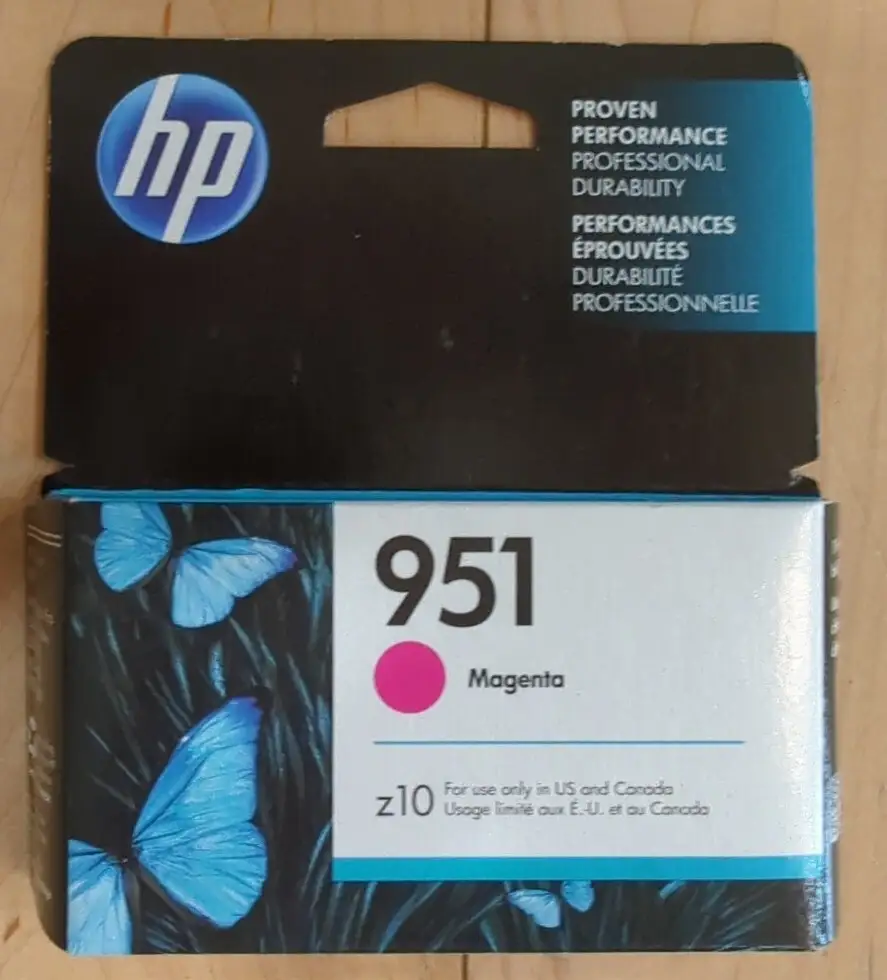
HP 951 Magenta Ink Cartridge Review: Conditional Buy (7.6/10)
“Right out of the package…the printer said the yellow ink was ‘depleted’.” That kind of “brand-new but not working” complaint sits uncomfortably alongside the glowing praise for HP 951 Magenta Ink Cartridge as an easy, reliable OEM choice. Verdict: Conditional buy — 7.6/10.
Quick Verdict
For buyers who prioritize consistent color and fewer printer headaches, HP 951 Magenta Ink Cartridge often lands as the safer bet than refills or generics. But digging deeper into cross-platform feedback, a recurring pattern emerged: some shoppers report error messages, “depleted” warnings, or even printer failures that they associate with cartridge installs—especially when buying multipacks or from certain marketplaces.
Best Buy reviewers skew strongly positive on print quality and install experience, while broader review analysis (aggregated from Amazon listings) includes sharper warnings about potentially “used” or “empty” cartridges showing up. Price frustration is nearly universal whenever buyers compare ink costs to the printer itself.
| Decision | Evidence from users | Who it fits best |
|---|---|---|
| Buy | Strong print quality, easy install, fewer clogs vs refills | Home/office users who want OEM reliability |
| Conditional | Some “used/depleted” errors reported in multipacks | People who can return quickly if issues appear |
| Avoid | Cost complaints + “printer failure” anecdotes | Budget buyers or heavy printers chasing lowest cost |
Claims vs Reality
HP marketing leans hard on reliability—“designed to work the first time, every time”—and many buyers echo that feeling when they stick to genuine cartridges. A Best Buy reviewer named kking said: “This ink cartridge was very easy to install and it works perfectly! It has excellent ink coverage and seems to last a long time.” Another Best Buy reviewer, jbf abf, framed it as a lesson learned: “Learned the hard way not to have old cartridges refilled… will always buy genuine HP cartridges in the future.”
But the data also shows a competing narrative: some users say the “first time” isn’t guaranteed, because their printers throw errors immediately. In a review-analysis excerpt tied to the HP 951 CMY 3-pack listing, one shopper wrote: “When I opened the package and inserted the first cartridge… I got an error message that the cartridge was depleted—same with all the others.” Another reported: “Can’t use these cartridges because printer says they are used and defective… they didn’t have the seals.”
HP also highlights page yield—Amazon specs list ~700 pages for the standard magenta cartridge. Some users feel they meet or exceed that expectation. A Best Buy reviewer named austin said: “I have no such concerns with this product… hp ink cartridges often print more pages than the minimum page count listed… consistently exceeds my expectations.” Yet Staples reviews include blunt counters about unexpectedly fast depletion. A Staples reviewer (no username provided) posted: “Out of ink in 8 days???… I did not print that much cyan… something is wrong with these cartridges.”
Finally, HP messaging around smudge resistance and professional documents runs into skepticism from other sources. Provantage’s summary includes a direct drawback: “not water-resistant—ink may smudge if exposed to moisture,” which undercuts the “handle and store” confidence implied in official descriptions. While that may be situational, it’s a reminder that real-world paper, moisture, and handling conditions can change outcomes.
Cross-Platform Consensus
Universally Praised
“Never a hassle to change” is the kind of quiet compliment that matters when you’re replacing ink in the middle of a deadline. Across Best Buy reviews for the single magenta cartridge and the 3-pack, ease of installation is a repeated theme. A Best Buy reviewer named mom of 3 put it simply: “Easy! never a hassle to change and the cartridge lasts for a while.” For small offices or home users who don’t want to troubleshoot printer errors, that “drop in and go” experience is the core value proposition.
Print quality is the other consensus strength—especially for buyers who’ve been burned by refills or generic chips. Best Buy reviewer tricky mickey said: “The authentic HP ink does not clog up the print head and colors are excellent.” Another reviewer, eight, echoed the comparison point: “I really like the hp ink vs the generic one. print quality is great!” For students printing color charts or small business owners producing client-facing documents, that reliability in color output is what justifies paying more.
A recurring pattern emerged around “OEM = fewer headaches.” Best Buy reviewer etron said: “I only use hp replacement ink cartridges in my hp printer… never any problems and they seem to last a long time.” That long-horizon framing matters: people aren’t just buying ink, they’re buying fewer interruptions. One Best Buy reviewer, ssarge, added a yield angle: “Works as expected, print quantity seems to be above average.”
Even ordering and delivery experiences get pulled into the praise when the buyer is rushing to finish a project. A Staples reviewer (no username provided) said: “I just wanted to say how easy it is to order ink… ordered at 7pm and it was… in the mail when I got home… next day.” In the broader review analysis snippets, delivery speed shows up as a positive: “delivery was very quick… arrived on time and as promised.”
After those narratives, the praise typically boils down to:
- Easy install and recognition by printer (Best Buy)
- Strong print quality and color consistency (Best Buy)
- Better experience than refills/generics (Best Buy)
- Fast, convenient delivery when ordered online (Staples; review-analysis excerpts)
Common Complaints
Price is the loudest complaint, and it’s not subtle. Staples buyers repeatedly frame it as a breaking point. One Staples reviewer (no username provided) wrote: “Ink should not cost more than the printer.” Another said: “Extreamly expensive… price gouge us.” A third, k in colorado, summed up the exhaustion: “Last time… $115… now it’s more expensive than a new printer… time to give up on hp!” For budget-focused families or low-volume printers who feel forced into OEM pricing, the resentment isn’t about color quality—it’s about the economics of ownership.
Then there’s the more alarming category: cartridges that trigger errors, show as “used,” or appear “depleted” right away. Those reports show up strongly in the review-analysis excerpts tied to the HP 951 CMY pack listing. One shopper wrote: “The cartridges are old—and apparently empty.” Another claimed: “Bought hp brand this time… kick out an error message stating that these have been used before.” These stories matter most for people who buy backups “to keep a set on hand,” because the same excerpt warns: by the time you open them, “it was too late to return.”
Some complaints shift from inconvenience to fear—potential printer damage. In the review-analysis quotes, a user alleged: “The item was used already… put my printer into a printer failure… now my printer is ruin.” Staples also contains an especially severe account (from Michele R., posted Sep 17, 2025): “After purchasing this multi-pack, the last cartridge in it disabled my awesome printer.” These are anecdotal, but they cluster around the same anxiety: a cartridge shouldn’t brick a printer.
After those narratives, the most common negatives are:
- High price and worsening value perception (Staples; Best Buy mentions price “a bit high”)
- Occasional “depleted/used/defective” error messages (review-analysis excerpts)
- Worries about printer failure after install (Staples; review-analysis excerpts)
Divisive Features
Yield expectations split users into two camps. Some feel the standard 951 cartridges last a long time, especially if they print mostly black. Best Buy reviewer old blondie said: “We use this printer for home use… about 20 copies per week… mostly in black… it takes about a year to use one of these ‘regular’ color ink cartridges.” That’s a very different life than a heavy color workflow, where a standard ~700-page yield (per Amazon specs) may feel cramped.
The “HP printers forcing genuine cartridges” dynamic also divides sentiment. Some reviewers see it as protection from bad refills; others see it as lock-in. A Staples reviewer (no username provided) complained: “System required ‘genuine’ hp cartridges… much more expensive than refills.” Meanwhile, Best Buy reviewers like jbf abf argue the opposite direction after refills fail: “Refill didn’t have good color and gave an error message.”
Trust & Reliability
Digging deeper into user reports, trust concerns aren’t mainly about HP’s official cartridge design—they’re about what arrives at the doorstep when purchased through certain channels. The review-analysis excerpts include repeated suspicion about packaging integrity: “they didn’t have the seals,” and “boxing used cartridges and selling them as new.” Those accounts read like marketplace or seller problems, but the end user experiences it as “HP ink didn’t work.”
Long-term reliability stories lean more positive when buyers stick to genuine cartridges and buy from major retailers. Best Buy reviewer etron said they “never” have problems, and tricky mickey emphasized that authentic ink “does not clog up the print head.” That’s the core pattern: where authenticity is trusted, performance tends to be described as predictable; where authenticity is questioned, failure stories intensify.
Alternatives
The only clear “alternative” mentioned in the feedback is generic/refilled cartridges. User experiences here are sharply contrasted rather than nuanced. Best Buy reviewer kking said: “I have always had problems with generic brand ink cartridges skipping color in spots and clogging… but not with hp ink cartridges.” Best Buy reviewer jbf abf described refills as a mistake: “Refill didn’t have good color and gave an error message after only a few uses.”
On the other hand, some Staples feedback frames the choice as financial rather than technical. When a reviewer says “more expensive than a new printer,” the implied alternative becomes “switch printers/brands” rather than “buy refills,” but no specific competitor brand is named in the provided data. So the practical takeaway from user commentary is narrower: people who tried generics often came back to OEM for reliability, even if they disliked the cost.
Price & Value
Current price perceptions vary by retailer context, but the emotional trend is consistent: OEM ink is viewed as expensive, and in some cases “getting worse.” Best Buy reviewers still buy because they trust the results; tcotts62 said: “Hi quality ink… just wish it was less expensive.” Staples reviewers are more likely to frame it as unsustainable: “Way too expensive now!” and “I should not have to debate, buy a new printer or ink every time.”
Resale/market pricing signals show that older stock is common in secondary channels. eBay listings frequently mention “old stock,” “expired,” or years like 2021/2022/2015. That matters because some of the harshest “depleted/used” complaints are tied to cartridges that appear unsealed or aged in the review-analysis excerpts. For buyers hunting bargains, community wisdom implied by these patterns is simple: the cheaper the channel, the more you should verify packaging and return windows.
Buying tips that emerge from user behavior:
- Don’t stockpile too far ahead if returns expire before you open the box (review-analysis excerpt about being “too late to return”).
- If you’ve had issues with refills, multiple Best Buy reviewers recommend sticking to genuine HP to avoid errors/clogs.
- Heavy printers may prefer high-yield options (HP 951XL is listed with ~1,500 pages on HP’s site), though this article focuses on the standard 951 magenta.
FAQ
Q: Does the HP 951 Magenta cartridge work reliably in compatible printers?
A: Generally yes, based on retailer reviews emphasizing smooth installation and consistent print quality. Best Buy user kking said: “very easy to install… works perfectly.” But some review-analysis excerpts tied to multipacks mention “error message… depleted” right out of the package, so returnability matters.
Q: Is the page yield really around 700 pages?
A: Amazon lists an approximate yield of 700 pages for the standard HP 951 magenta. Some users feel it meets or exceeds expectations—Best Buy user austin said it “often print[s] more pages than the minimum.” Others (especially in multi-pack contexts) report unexpectedly fast depletion in Staples reviews.
Q: Are generic or refilled cartridges a good alternative?
A: User feedback trends negative on refills/generics when reliability matters. Best Buy user jbf abf said refills caused “an error message after only a few uses,” and kking described generics “skipping color… clogging.” Cost-sensitive buyers still consider them, but the risk of errors is a repeated theme.
Q: Why do some people get “used” or “depleted” warnings on new cartridges?
A: The provided review-analysis excerpts suggest packaging and authenticity concerns, such as missing seals and cartridges being flagged as previously used. One excerpt says: “printer says they are used and defective… didn’t have the seals.” These reports appear more like seller/channel issues than a universal cartridge defect.
Q: Is the HP 951 Magenta worth it at today’s prices?
A: Value depends on how much you print and how much downtime costs you. Many users accept the premium for fewer problems—tcotts62 said they “wish it was less expensive” but still calls it “hi quality.” Staples reviewers frequently argue the opposite: “Ink should not cost more than the printer.”
Final Verdict
Buy HP 951 Magenta Ink Cartridge if you’re a home office user, student, or small business owner who wants dependable OEM color and minimal troubleshooting—Best Buy reviewers repeatedly highlight “excellent print quality” and “easy to install.” Avoid if your main goal is lowest-cost printing or you’re shopping channels where buyers report missing seals, “depleted” warnings, or “used” flags.
Pro tip from community: if you “like to keep a set on hand,” open and check cartridges sooner rather than later—one review-analysis excerpt warns that by the time they tried to use the set, “it was too late to return.”