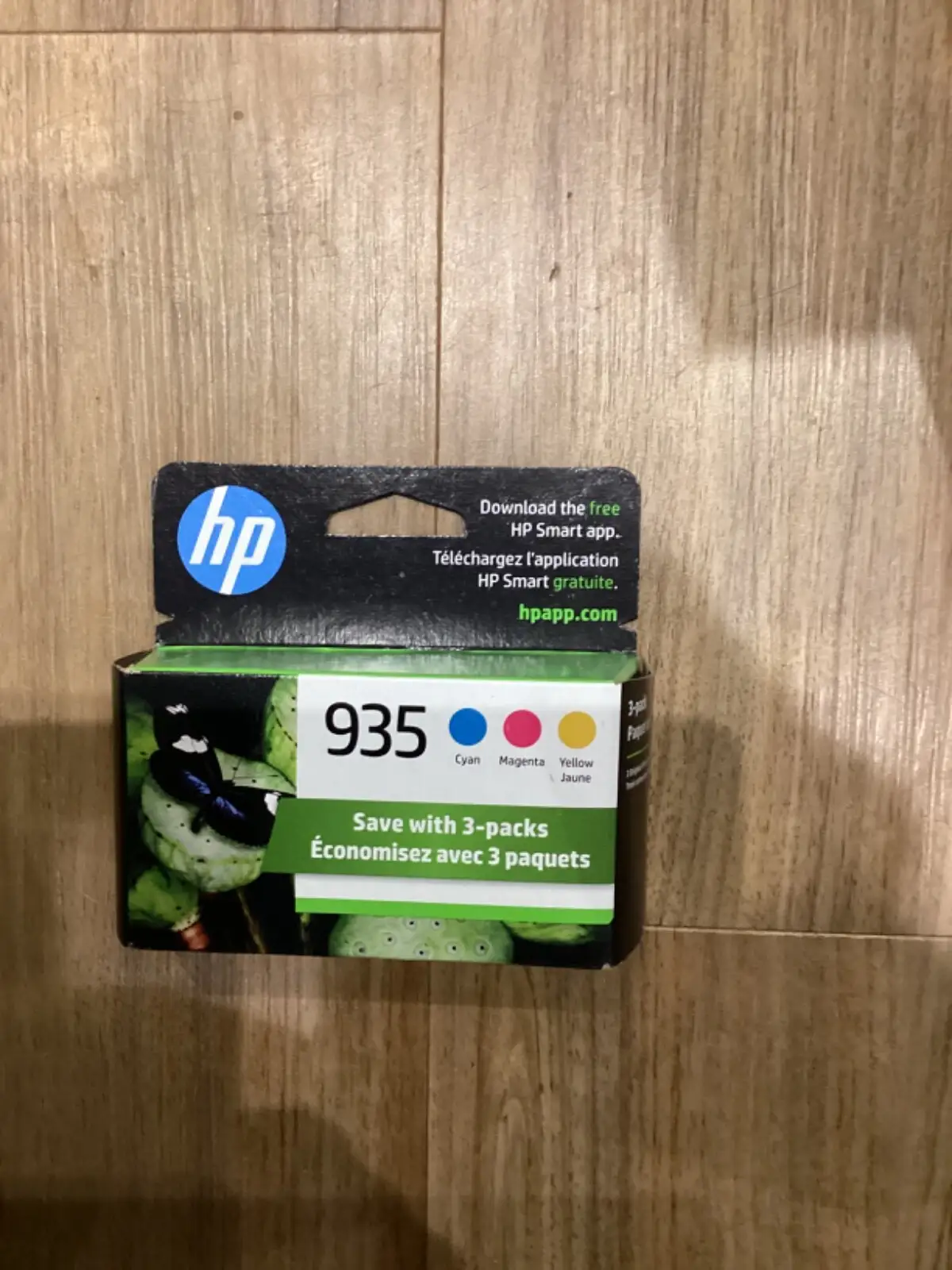
HP 935 Ink Cartridges (3-pack) Review: Conditional 8.3/10
“Genuine HP seems to be genuinely short filled.” That one line captures the tension around HP 935 Ink Cartridges (3-pack): strong satisfaction with OEM reliability, plus recurring gripes about cost and how long the ink actually lasts. Verdict: Conditional buy — 8.3/10.
Quick Verdict
For most owners of compatible OfficeJet/OfficeJet Pro printers, HP 935 Ink Cartridges (3-pack) gets the job done with predictable OEM quality. But if you’re sensitive to cost-per-page or you’ve been burned by cartridges reporting ink remaining while prints fade, user feedback suggests you may want to rethink your setup or at least buy strategically.
| Decision | Evidence from user feedback | Who it’s best for |
|---|---|---|
| Yes (most buyers) | Best Buy reviewers repeatedly praise “easy to install” and dependable prints | Home users who want low hassle |
| Conditional | Staples customers complain cartridges “still showed ink was available” but stopped printing | Light-to-moderate users who can troubleshoot |
| No (price-sensitive) | Staples: “too expensive” / “for the price they don’t last” | High-volume or budget printing |
| Yes (bundle value) | Best Buy: photo paper “adds to the overall value” | Casual photo printing |
| Conditional (yield expectations) | HP/Amazon list ~400 pages per color; some users report far less | Users needing predictable cost-per-page |
Claims vs Reality
Claim 1: ~400 pages per color (standard yield). HP’s product pages describe the standard cartridges as “up to 400 pages each cartridge” (HP Store) and Amazon similarly lists “page yield 400” per color. Digging deeper into user reports, that number doesn’t always align with real-world experiences—especially for people printing logos, graphics, or anything ink-heavy.
On Staples, one critical reviewer described a pattern where cartridges stop printing despite the printer indicating ink remains: “the color cartridges quit printing but still showed ink available.” Another Staples customer was even more blunt about real output: “it lasted for less than 40 pages.” While the official yield is presented as an approximate standard, multiple users suggest that content type, maintenance cycles, or printer behavior can make the effective yield feel far lower.
Claim 2: Consistent quality, reliability, and fewer reprints. HP’s manufacturer description frames Original HP Ink as “engineered to work with HP printers” for “consistent quality” and to help “avoid reprints.” A recurring pattern emerged on Best Buy: ease and reliability are a core reason people keep buying. Best Buy user tiger knc said: “i have been using this h / p cartridge for years now and i have no intention of changing.” Best Buy user nickm echoed the low-drama experience: “i have never had a problem with hp printer replacement cartridges.”
But the data suggests reliability isn’t universal. Staples user rob j wrote: “one of the colors isn't coming out as it is supposed to,” describing the frustration of paying premium prices only to troubleshoot print defects. Staples user mike g. reported an even harder failure: “it does not work,” then described difficulty trying to process a return.
Claim 3: Better value in multipacks / “everyday value and convenience.” HP’s store language pushes convenience and value for multipacks, and many buyers agree on the convenience part. Best Buy user apoffo said: “i have always preferred the hp combo - pack to the choice of buying color cartridges individuality,” framing the 3-pack as a practical way to avoid piecemeal purchases.
Still, the “value” claim faces headwinds in user feedback—mainly because some buyers compare the upfront price to how quickly they feel the ink is consumed. Staples user fern jg summed up the skepticism: “for the price they don’t last.” The picture that emerges is that convenience is widely accepted, but value depends heavily on your print patterns and tolerance for OEM pricing.
Cross-Platform Consensus
Universally Praised
“Installed the set & began printing right away” is the kind of line that shows up again and again when people talk about HP 935 Ink Cartridges (3-pack). For busy households and small offices, that lack of friction matters more than lofty marketing claims. Best Buy user flopz said: “this 3 pk color ink set is the exact cartridge set for my printer . installed the set & began printing right away.” For users who don’t want to gamble on compatibility prompts or recognition errors, the OEM route is repeatedly described as straightforward.
Print quality—especially color clarity—is another recurring positive. Best Buy user babs emphasized output: “colors are great when printing.” Best Buy user mr music described the results as “vivid and bright,” which speaks to the audience that prints photos or color documents and just wants the output to look like it should without experimenting with third-party ink profiles.
Longevity, at least for certain usage patterns, is also praised—particularly by light printers. Best Buy user the man explained that the cartridges “last a long time for us because we print things like recipes and personal items needed , but don't print every day.” That kind of context matters: for occasional printing (school forms, recipes, shipping labels with occasional color), several users describe the standard-yield pack as lasting “a good while.”
Even when reviewers acknowledge the price, many still frame it as acceptable because it’s official HP ink and predictable. On Best Buy, tv4me wrote: “hp ink produces great pictures and is easy to install . less expensive in combo pack,” pointing to the multipack as a way to soften the typical OEM premium.
After the narratives, the most repeated praises were:
- Easy installation and immediate printer recognition (“began printing right away”)
- Strong color output (“vivid and bright,” “colors are great”)
- Convenience of the combo pack vs buying individual colors
Common Complaints
The most serious complaints aren’t about color looking slightly off—they’re about cartridges not behaving as expected, especially around ink level reporting and performance failures. On Staples, one customer described repeated episodes where cartridges stopped working while the printer still indicated ink: “still showed ink was available,” yet “quit printing.” For anyone running a small home business (invoices, labels, logo prints), that kind of uncertainty can feel like lost time and wasted paper.
Price is the loudest ongoing frustration, and it shows up in blunt, buyer-to-buyer language. Staples user louise m. wrote: “the cartridges are too expensive now,” adding that “the fact they are not refillable will make continuing to use them irrational.” Even among people who accept OEM pricing, the tone suggests a breaking point: if you’re buying these frequently, the sticker shock becomes part of the product experience.
Some buyers also report quality or capacity disappointment—either because the cartridges run out quickly or because the output isn’t consistent for demanding prints. Staples user jax 944 described an especially specific failure for a graphics use case: printing a logo with a “1" x 6" blue background” was “disasterous,” even after cleaning print heads, because the “copy is not usable.” That kind of complaint is particularly relevant to small business owners printing branded materials on plain paper.
Defects and support friction also appear in user stories. Staples user rob j called out “defective cartridges” and “waste of paper and ink” while troubleshooting. Staples user mike g. described buying ink that “does not work” and then running into issues trying to get return information.
After the narratives, the most repeated complaints were:
- OEM pricing feels steep (“too expensive,” “for the price they don’t last”)
- Ink level vs usability confusion (“still showed ink was available”)
- Occasional reports of defective or underperforming colors
Divisive Features
A recurring divide shows up around “value.” Some users treat the multipack as a smart buy because it’s cheaper than purchasing each color separately. Best Buy user greyhawk 63 said: “buying this 3 pk item is a great value for the money.” Best Buy user flopz framed the pack as saving money: “the set save me some $ $ s.”
But another group argues that any savings is wiped out if the cartridges don’t last as long as expected. Staples user fern jg wrote: “for the price they don’t last,” while Staples user louise m. said the expense is becoming “irrational.” The same product, in other words, is perceived as either “good value” or “too expensive” depending on how fast you drain color ink and how often your printer runs maintenance cycles.
Capacity is another point of tension. Best Buy user andy in williamsburg praised quality and installation but added: “i only wish they were larger so replacement would be less frequent.” Best Buy user user 158 similarly said: “ink works well wish i could get bigger cartridges.” These aren’t outright rejections of the product—more like a consistent nudge toward high-yield options for frequent printers.
Trust & Reliability
Looking across retailer reviews, there’s a pattern of trust tied to “genuine HP” and avoiding off-brand supplies. Staples user stan warned: “hp makes great printers , but they can be damaged by buying off brand inkjets,” arguing that OEM ink keeps the printer “cleaner” with “less problems.” That sentiment aligns with Best Buy’s long-running customer confidence, like nickm saying they’ve “never had a problem” with HP replacement cartridges.
At the same time, reliability concerns do show up—especially around defects and shortfalls. Staples user rob j described paying “a lot of money” only to discover “one of the colors isn't coming out,” and Staples user mike g. wrote: “it does not work,” then detailed trouble trying to return it. The throughline is that when failures happen, the frustration is amplified because OEM ink is priced like a “safe choice.”
(There weren’t Reddit “6 months later…” style posts included in the provided data; the community-linked entries shown are HP Store pages rather than discussion threads.)
Alternatives
Only a few alternatives are explicitly referenced in the data, and they’re mostly “bigger” options rather than different brands. HP itself highlights HP 935XL high-yield cartridges on its store pages, describing them as “print more pages” and listing yields like “up to 825 pages” for color (HP Store listings). That matters for frequent printers who resonate with Best Buy’s “wish they were larger” refrain.
The other alternative mentioned indirectly is non-original ink, via the marketing comparison (“up to 2x more prints with original hp ink vs. non-original hp ink” on Amazon/HP). But user feedback in this dataset doesn’t provide detailed side-by-side stories of third-party ink performance—only the cautionary stance like Staples user stan encouraging buyers to stick with HP to avoid printer issues.
Price & Value
Pricing varies widely by retailer and channel in the provided data. Amazon lists the 3-pack at $50.89. HP’s store listings show higher prices in some regions (for example, the HP Store Canada page shows $79.99, while HP US shows an MSRP around $66.99). That variability shapes “value” discussions: a buyer who grabs a sale price may echo Best Buy’s “great value,” while someone paying full retail may sound like Staples’ “too expensive now.”
Resale and marketplace listings (eBay) show many listings at much lower prices—sometimes single-digit or teens—often with expiration dates noted (e.g., “exp 01/23,” “exp 05/18,” “warranty ends 2020/2022”). That suggests a buying tip that emerges from the data itself: low prices can correlate with older stock. The dataset doesn’t include user testimonials about buying expired cartridges, but the prevalence of expiration-dated listings indicates a clear tradeoff shoppers may face.
Buying strategies implied by user feedback skew toward convenience and avoiding downtime. Best Buy user bob 5042 said: “with the printing that i do i never want to run out of ink,” which fits the multipack purchase behavior: keeping color on hand even if you mainly print black.
FAQ
Q: Do HP 935 cartridges work well right out of the box?
A: Many buyers say yes. Best Buy user flopz noted: “installed the set & began printing right away.” Others repeatedly mention easy installation and straightforward replacement. A smaller set of Staples reviewers reported defects or colors not printing correctly, so experiences can vary by unit and printer condition.
Q: Are HP 935 cartridges worth the price?
A: It depends on how much and what you print. Best Buy user greyhawk 63 called the 3-pack “a great value for the money,” especially versus buying colors individually. But Staples user louise m. said they’re “too expensive now,” and others complain they don’t last long for the price.
Q: Do the cartridges really yield about 400 pages per color?
A: Official listings cite around “up to 400 pages” per color, but several user stories suggest real yield can feel lower. Staples feedback includes “it lasted for less than 40 pages” and reports of cartridges that “still showed ink was available” yet stopped printing, especially for heavier color coverage.
Q: Is print quality good for photos and color documents?
A: Many reviewers praise the output. Best Buy user babs said: “colors are great when printing,” and Best Buy user mr music described results as “vivid and bright.” However, Staples user jax 944 reported unusable results for a logo with a solid blue background, even after cleaning.
Final Verdict
Buy HP 935 Ink Cartridges (3-pack) if you’re a home user who wants OEM compatibility, easy installation, and reliable everyday color—especially if you can find the multipack on a good sale. Avoid if you’re cost-per-page focused, print heavy graphics, or you’ve experienced printers that stop printing while still reporting ink.
Pro tip from the community: Best Buy user apoffo summed up the convenience angle—“preferred the hp combo - pack”—and that mindset fits best when your priority is staying stocked and minimizing printer drama over chasing the lowest possible ink price.