HP 80X High-Yield Toner 2-Pack Review: Worth It?
“Only got 5,000 copies out of the 6,900” isn’t the kind of line you expect to read about a high-yield toner—yet it’s one of the clearest reality-checks repeated across buyer feedback for HP 80X Black High-yield Toner Cartridges (2-pack). Verdict: a premium, workhorse-friendly choice praised for print quality and longevity, but dogged by price shock, occasional fit/compatibility mishaps, and real-world yield that doesn’t always match the box. Score: 8.7/10
Quick Verdict
Conditional Yes — buy if you prioritize consistent, professional output and want to avoid aftermarket risks; hesitate if you’re extremely price-sensitive or you’re not 100% sure about printer compatibility.
| Decision Factor | What buyers say | Evidence (platform) |
|---|---|---|
| Print quality | “clear printing” and consistently professional output | Staples reviews |
| Longevity / yield | Many report long runtime; some report shortfalls vs rating | Best Buy + Staples |
| Price | Frequent sticker shock and frustration | Staples reviews |
| Reliability vs aftermarket | Some explicitly recommend original HP over remanufactured | Best Buy + Staples |
| Fit/compatibility | A subset reports “wrong size” / “did not fit printer” | Staples reviews |
| Value of 2-pack | Dual pack seen as convenient and cost-saving (when priced right) | Best Buy + HP specs |
Claims vs Reality
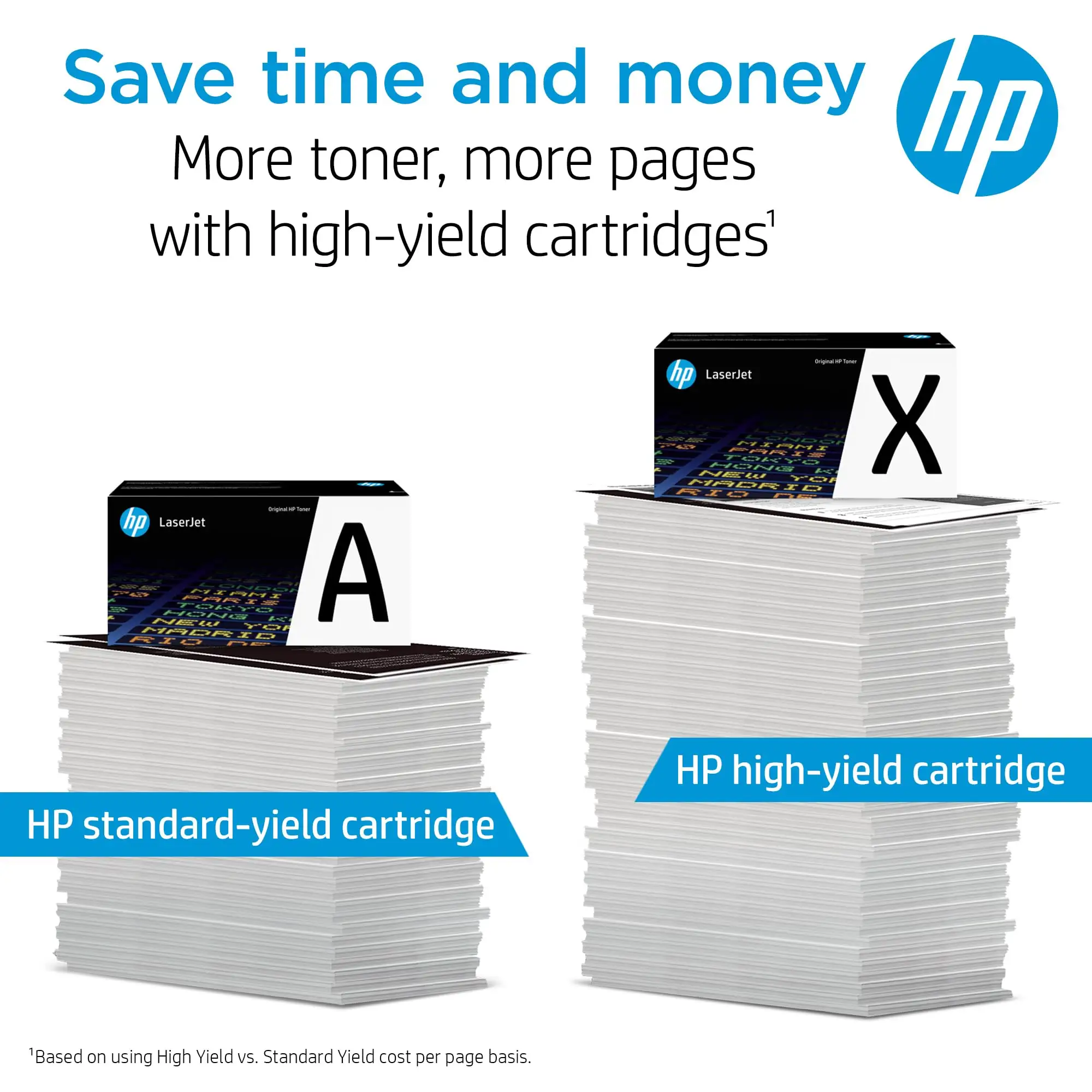
HP positions HP 80X Black High-yield Toner Cartridges (2-pack) as a productivity play: high capacity, crisp results, fewer interruptions. Official specs peg yield at ~6,900 pages per cartridge (ISO/IEC 19752 basis), framing it as reliable and consistent. That’s the baseline expectation shoppers bring in—especially office buyers who can’t afford downtime.
Digging deeper into user reports, the “high yield” promise lands for many, but not for everyone. One Staples reviewer flatly contradicted the rated yield: “As a CPA I process tax organizers. I only got 5,000 copies out of the 6,900. This is not the first time the copy quanitity has been low.” That kind of feedback doesn’t necessarily mean the spec is wrong—it highlights the gap between standardized testing and real-world coverage patterns (forms, graphics, density), exactly where heavy users feel the mismatch most sharply.
The “easy replacement and compatibility” narrative also meets friction in the wild. A Staples customer reported: “Wrong size, did not fit the printer,” and another echoed: “I did not use it, did not fit printer.” These aren’t nuanced performance complaints—they’re operational failures that matter most to small offices and admin staff who need swaps to be routine, not diagnostic projects.
Cross-Platform Consensus
Universally Praised
A recurring pattern emerged around print confidence—people who buy OEM toner often do it because they’re tired of troubleshooting. Across Staples and Best Buy feedback, the language is repetitive in a revealing way: “works great,” “clear printing,” “always deliver,” and “prints better.” One Best Buy reviewer reduced it to a simple rule: “Only use hp toner it will last longer and prints better.” For offices printing invoices, compliance documents, or client packets, that’s not just preference—it’s a workflow safeguard.
Longevity is the other big applause line, especially from multi-user environments. A Best Buy customer framed the dual-pack as an office survival tool: “This toner lasts forever. Believe me! i have an office of 30 sharing 3 of the same printers using this toner. the dual pack will get you through a lot of pages.” That’s the kind of story that resonates with managers supporting shared printers—fewer emergency runs, fewer “we’re out again” interruptions, and a more predictable supply cadence.
Even when the toner-level indicator becomes part of the story, it’s often in a positive way: one Best Buy buyer noted, “Ink said < 50 pages left and went on to print over 500 pages. last a long time. great product!” For accounting departments and school offices, that “still going” behavior reads like insurance—jobs finish even when the status looks grim.
After the praise, users often shift into a justification tone—acknowledging the cost, but defending the purchase on performance. A Staples reviewer put that rationale bluntly: “I have been told i could use a less costly cartridge but, believe the cost is justified.” The throughline is clear: for buyers who can’t tolerate reprints or inconsistent blacks, the premium is framed as the price of predictability.
Common Complaints
The loudest negative thread is price—less “this is expensive” and more “this is getting out of hand.” One Staples customer wrote: “Too expensive. I was totally shocked with the price. seems to be over rated.” Another complained about inflation creep: “I think it's high quality however the prices are steady increasing by far to fast.” These reactions matter because toner isn’t a discretionary gadget purchase; it’s a recurring operating cost. When the price crosses a psychological line, even satisfied users start sounding resentful.
Yield complaints—while less common than general praise—hit harder because they undermine the product’s core promise. The Staples CPA story isn’t just a one-off grumble; it’s framed as recurring: “This is not the first time the copy quanitity has been low.” While officially rated at ~6,900 pages per cartridge, multiple users imply real-world output can be meaningfully lower depending on workload. For high-volume roles (tax prep, medical admin, legal offices), that turns into budget unpredictability.
Fit issues show up as a separate category: not “it printed poorly,” but “it didn’t work at all.” Staples reviewers reported “wrong size, did not fit the printer” and “did not fit printer.” Another buyer described a smoother resolution only after intervention: they were “completely satisfied with their assistance in helping me return the item and pick up the correct cartridge.” The implication is that purchasing mistakes (or listing confusion) can be costly in time, especially if the office is already out of toner.
Divisive Features
The OEM-versus-aftermarket debate is where opinions split, and it’s unusually consequential for a consumable. On one side, buyers frame original HP as the only safe move: a Best Buy reviewer urged, “Go with the original! as tempting as aftermarket toners may be, nothing compare to the quality of original hp cartridges.” This camp treats OEM as risk management—less chance of streaking, failure, or printer issues.
On the other side, the data includes strong pro-savings sentiment around remanufactured alternatives. In Staples’ remanufactured 2-pack reviews, a positive highlight reads: “As a cost savings alternative to hp products, this toner cartridge always delivers!” But the same product line has a starkly different warning in a critical review: “Not worth the ‘savings’… these cartridges never produced the amount of copies promised, they ultimately ruined the fuser in my printer.” That contradiction makes the choice divisive: cost savings can be real, but the downside risk—whether isolated or widespread—feels existential to businesses that can’t replace printers often.
Trust & Reliability
Trust questions show up most sharply when buyers talk about non-OEM or third-party supply chains rather than HP-branded product itself. A Staples remanufactured-buyer scenario escalated beyond annoyance into fear of equipment damage: “they ultimately ruined the fuser in my printer and caused its death… i highly recommend spending the money on the hp brand instead.” For risk-averse teams, that kind of story becomes the deciding factor even if it’s not universally reported.
There are also quality-control anxieties around fulfillment condition. In the same Staples remanufactured listing, a customer claimed: “Received used cartridge! Ordered 4 2-packs for my school and received 1 used!” For school admins and procurement staff, “used” isn’t just a defect—it’s a trust breach that increases the appeal of official channels and sealed OEM packaging.
Long-run durability stories skew positive for OEM in day-to-day narratives. Best Buy buyers describe months-long cycles: “it last me about 3-4 months in my business of work,” and another reported, “This toner lasts 6 months for our accounting department… this two pack is good to go for at least 12 months!” Those aren’t lab numbers; they’re operational timelines, the kind office managers plan around.
Alternatives
The clearest alternative surfaced in the data is Staples’ remanufactured replacement 2-pack for HP 80X. It’s positioned as savings-first, and one reviewer endorsed it directly: “As a cost savings alternative to hp products, this toner cartridge always delivers!” For budget-constrained offices with consistent printer models (and tolerance for occasional quirks), that’s the appeal: lower upfront spend.
But the alternative also carries heavier downside stories than the OEM narrative. The critical Staples review didn’t just cite low page count—it alleged hardware damage: “ruined the fuser… caused its death.” Another buyer complained about fulfillment integrity: “received used cartridge!” In contrast, the OEM discussion from Best Buy and Staples revolves more around high price and sometimes variable yield—not catastrophic outcomes. If you’re running shared printers in an office or school, these alternative reports create a risk-versus-savings tension that buyers explicitly wrestle with.
Price & Value
Current pricing signals in the dataset vary widely by retailer and region, which mirrors how toner shopping often feels: chaotic, deal-driven, and timing-sensitive. HP’s own listing shows the CF280XD 2-pack “starting at $488.99,” while Best Buy’s review page lists a price of $372.99 (sold out at the time shown). That spread alone explains why some buyers call it a “great deal” while others are “totally shocked” by cost—it depends heavily on where and when they buy.
Resale and secondary-market pricing shows another angle: an eBay “open box” listing appeared at $189.98. That kind of listing can look like a bargain, but it also intersects with the trust concerns users raise elsewhere—condition, packaging integrity, and whether “open box” introduces uncertainty that offices can’t afford during a deadline week.
Buying tips embedded in community feedback skew toward two themes: go dual-pack for convenience, and consider OEM if reliability matters more than savings. A Best Buy reviewer summed up the efficiency logic: “if you've got a printer that uses these and you're printing a decent amount, save yourself some money and go with the high yield 2 pack.” Meanwhile, OEM loyalists frame the extra spend as avoiding downstream problems: “Only use original hp products… it is as good as it gets.”
FAQ
Q: Does the HP 80X (CF280X/CF280XD) really print 6,900 pages per cartridge?
A: Official specs cite “~6,900 pages” per cartridge (ISO/IEC 19752), but real-world reports vary. A Staples reviewer said: “I only got 5,000 copies out of the 6,900,” while others describe months of use, like “This toner lasts 6 months for our accounting department.”
Q: Is the 2-pack worth it versus buying one cartridge at a time?
A: Many buyers like the dual pack for fewer supply emergencies and better deal timing. A Best Buy reviewer wrote: “the dual pack will get you through a lot of pages,” and another advised: “go with the high yield 2 pack” if you print regularly.
Q: Are remanufactured replacements a safe alternative to HP 80X?
A: Feedback is split. One Staples reviewer praised remanufactured as “a cost savings alternative… always delivers,” but a critical review warned it “ruined the fuser in my printer.” Risk tolerance and how critical the printer is to your workflow matter.
Q: What are the most common complaints about HP 80X toner?
A: Price and occasional mismatch between expected and actual yield dominate. Staples buyers said “Too expensive… totally shocked with the price,” and one noted lower output: “only got 5,000 copies out of the 6,900.” Some also reported fit issues: “did not fit printer.”
Q: Does OEM HP toner actually print better than aftermarket?
A: Many buyers strongly believe so. A Best Buy reviewer said: “Only use hp toner it will last longer and prints better,” and another insisted: “nothing compare to the quality of original hp cartridges.” Others choose alternatives mainly for savings, not quality.
Final Verdict
Buy HP 80X Black High-yield Toner Cartridges (2-pack) if you run a busy office printer, care about crisp black text, and want fewer interruptions—especially if you relate to “only use hp toner it will last longer and prints better.” Avoid if you’re shopping purely on cost or you can’t verify exact printer compatibility, since some buyers reported “wrong size” and “did not fit printer.” Pro tip from the community: “Dual pack high yield is the only way to go!”