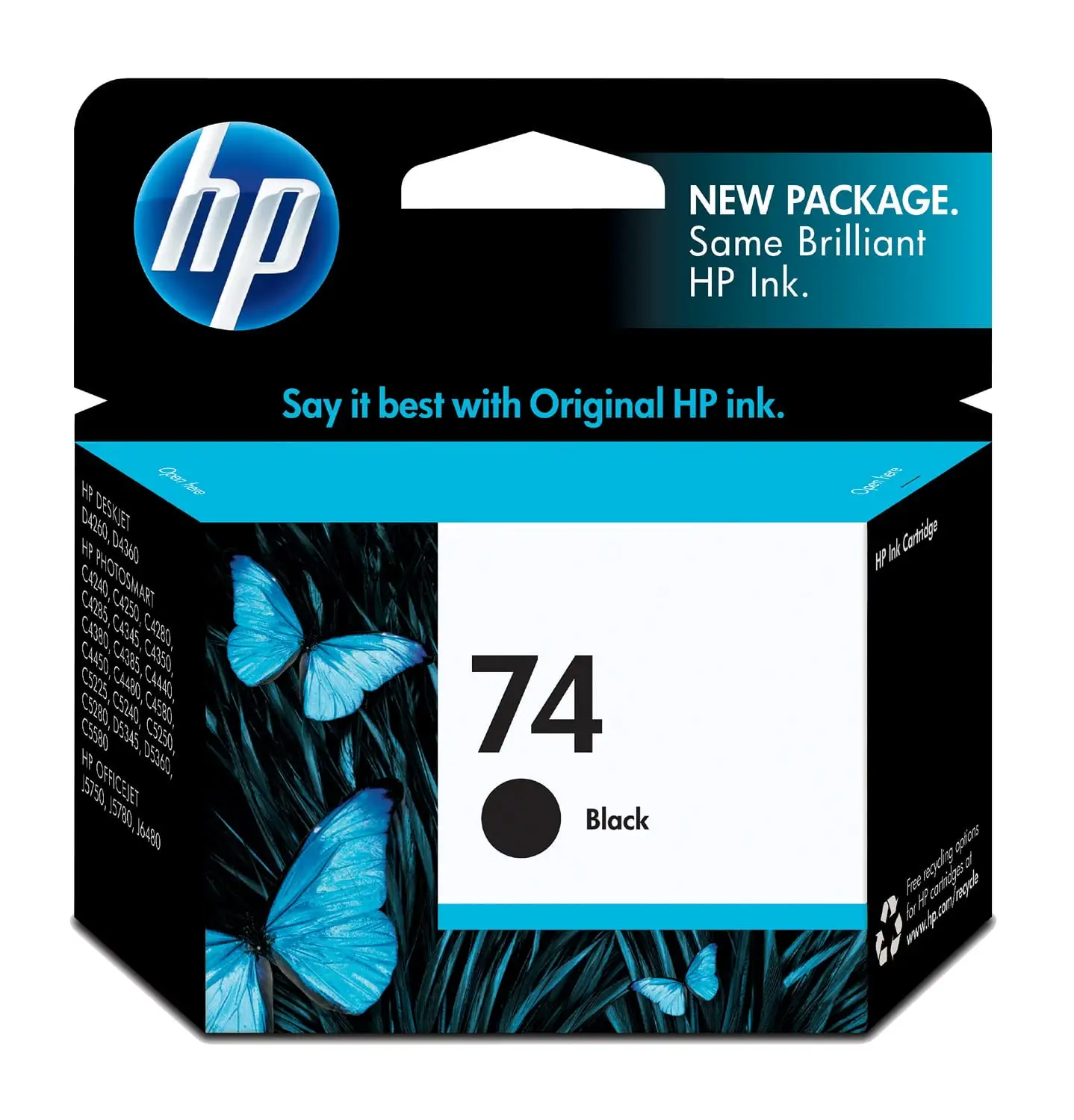
HP 74 Black Ink Cartridge Review: Reliable, Costly (6.8/10)
“I have been printing a lot of material for a book i’m writing and have not been able to get more than 125 clear pages from a single cartridge.” That one Staples complaint cuts straight through the marketing promise of “~200 pages.” For the HP 74 Black Original Ink Cartridge, the loudest theme across retailers is reliability and clean text—shadowed by cost-per-page anxiety and inconsistent real-world yield. Verdict: a dependable OEM buy for light, predictable printing—6.8/10.
Quick Verdict
Yes—conditionally. If you want a cartridge your printer recognizes and that “just works,” user feedback leans strongly positive. If you print in volume, multiple buyers say it runs out faster than expected and feels expensive for what you get.
| Decision lens | What users say (with sources) | What it means |
|---|---|---|
| Print quality | Best Buy highlights “ink quality” as a top pro; one reviewer said: “hp ink is always great quality ! no splatters or ink blots.” | Good for crisp everyday text and clean copies. |
| Reliability | Best Buy reviewer gaxx said: “it has never failed me.” | Fewer recognition/errors than off-brand refills (per user sentiment). |
| Ease of installation | Best Buy reviewers repeatedly call it “easy to install,” including ulli: “easy install. works well… no problem with error messages.” | Low friction replacement for home users. |
| Page yield reality | Staples reviewer reported “not… more than 125 clear pages” despite draft mode. | Heavy users may feel the ~200-page rating is optimistic. |
| Price pain | Best Buy’s joe kur called it “ridiculously expensive but very dependable.” | Value depends on how much you print and tolerance for OEM pricing. |
| Ink monitoring quirks | Best Buy reviewer abr1 noted low-ink warnings can come early: “you often get a message that ink is low when there is still ink left.” | Expect “low” alerts before prints actually fade. |
Claims vs Reality
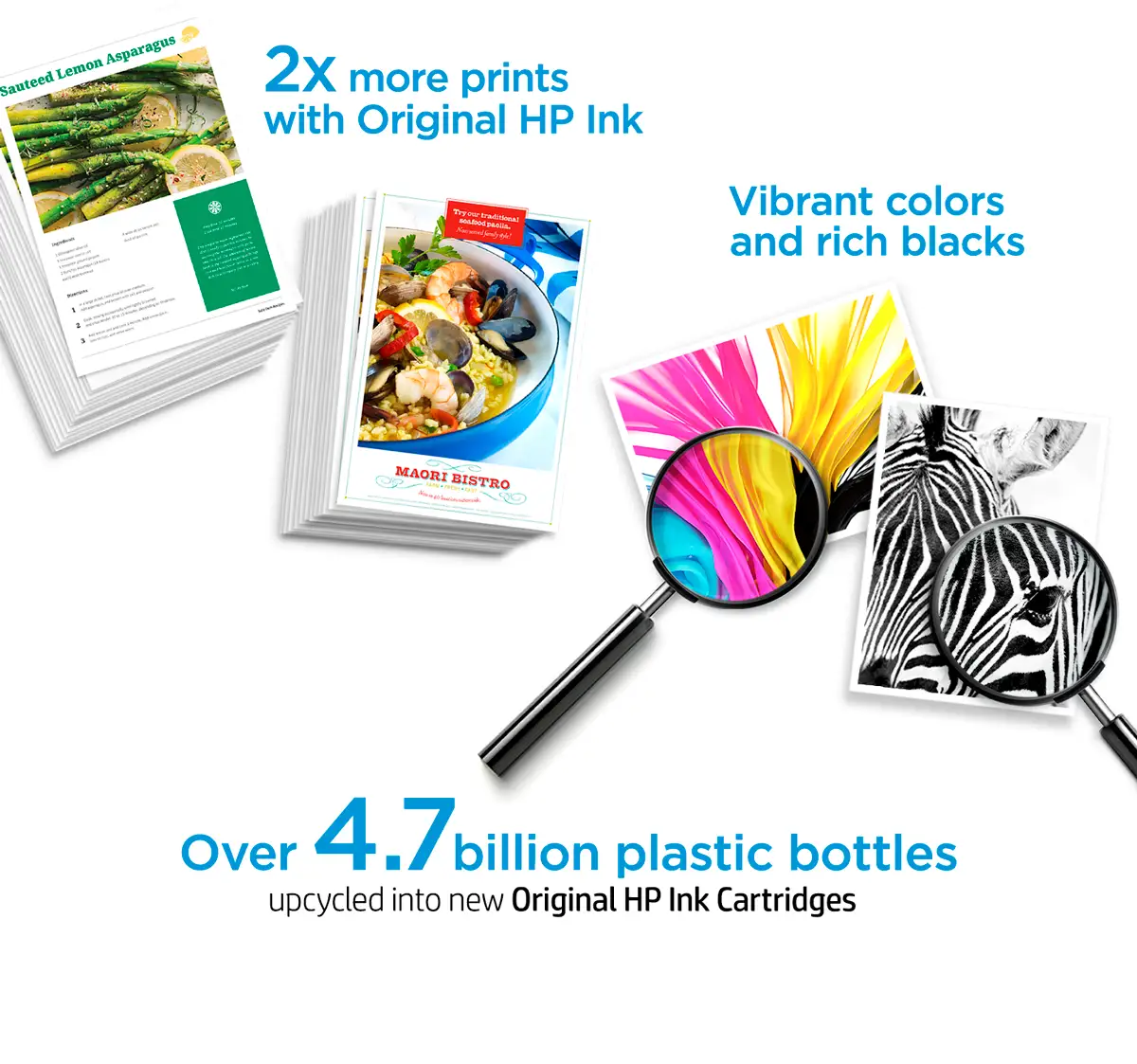
HP’s official positioning for the HP 74 Black Original Ink Cartridge is straightforward: “laser-quality black text,” “reliability,” and a stated yield of “~200 pages.” Digging deeper into user reports, the first two claims mostly land—especially for people printing schoolwork, forms, and occasional copies—but the “200 pages” expectation is where the real-world stories diverge.
Claim #1: “~200 pages” yield. Official listings (Amazon specs and HP Store pages) present ~200 pages under standardized testing conditions. Yet Staples includes a blunt counterexample from a high-output user: “i have been printing a lot of material for a book i’m writing and have not been able to get more than 125 clear pages from a single cartridge.” That’s not a casual “felt like less”—it’s a specific use case (book manuscript pages) that likely has denser coverage than test pages. While officially rated as ~200 pages, at least one detailed user report lands well below that in continuous, real-work printing.
Claim #2: “Consistent quality, reliability.” Here, the retail feedback is far more aligned with marketing. A recurring pattern emerged on Best Buy: users frame OEM reliability as the reason they keep paying. Best Buy reviewer gaxx said: “it has never failed me,” and bauer 71 called it “very dependable… have never had a problem.” The “works when you need it” angle is reinforced by multiple stories of immediate recovery after replacement—Best Buy’s samus 99 joked about “hitting the printer” before swapping the cartridge and finally getting printing again.
Claim #3: Smooth in-printer experience (status/monitoring). Even when output is strong, some users describe the ink-status experience as noisy or misleading. Best Buy’s abr1 warned: “you often get a message that ink is low when there is still ink left… continue printing until you see the print is coming out faded.” The data suggests the cartridge can still be usable after low-ink warnings, which matters for deadline-driven users (students printing assignments, home offices printing shipping labels).
Cross-Platform Consensus
Universally Praised
The most consistent praise for the HP 74 Black Original Ink Cartridge is that it produces clean, readable black text without drama. For home users who just need invoices, school essays, and occasional forms, the simplest win is “no smears, no blotches.” Best Buy reviewer drew hezzy summarized it plainly: “it prints on paper, and doesn't smear. works as expected.” That kind of “boring reliability” shows up repeatedly as the core reason people stick to OEM.
Another widely shared benefit is ease of installation—important for anyone who doesn’t want to troubleshoot drivers, firmware, or “cartridge not recognized” errors. Best Buy’s ulli said: “easy install. works well with hp printer. no problem with error messages.” That story is echoed in the broader Best Buy sentiment where “ease of use” is consistently highlighted, and in the “my printer can print again” anecdote from samus 99, who followed the picture instructions and got back to printing immediately.
There’s also a user persona that keeps surfacing: students and families. Best Buy reviewer char brown wrote: “we use the ink a lot… especially for school or college assignments.” For that crowd, the main value isn’t exotic photo output—it’s predictable legibility and fewer last-minute failures before a deadline.
Finally, several buyers frame OEM HP ink as a quality baseline. Best Buy’s rdw 9300 said: “hp ink is always great quality ! no splatters or ink blots.” Even when people complain about price, they often separate “expensive” from “bad,” and treat the cartridge as a known quantity.
Praised themes (summary):
- Clean black text and minimal smearing (Best Buy)
- Easy install and recognition by compatible printers (Best Buy)
- Dependability over time for routine home printing (Best Buy)
Common Complaints
The most persistent complaint is value—either because the cartridge feels expensive, or because page yield doesn’t match what some users expect from “~200 pages.” Best Buy’s joe kur captured the tension: “ridiculously expensive but very dependable.” That’s not a one-off gripe; it’s the central tradeoff people describe: pay more for a cartridge the printer “recognize[s] and use[s] virtually flawlessly,” or roll the dice on cheaper alternatives.
Yield frustration becomes sharper when users quantify it. Staples includes the most specific shortfall story: “not… more than 125 clear pages,” even in draft mode, while printing “material for a book.” For high-output users—writers, home businesses printing multi-page documents, or anyone doing regular bulk printing—the implication is simple: you may burn through standard-capacity cartridges faster than expected and feel the cost-per-page bite.
Some complaints aren’t about the cartridge’s ink at all, but about ecosystem constraints. One Staples reviewer described a dead-end scenario: “no corresponding color cartridge available… without color cartridge copier would not work… now the copier… is worthless.” Another Staples reviewer called it “plannedobsolescence” and complained that “aftermarketcartridgeswon’twork… because of hp’s software firewall.” While those comments are broader than the HP 74 alone, they reflect a real buyer pain point: the cartridge purchase can be tied up with printer model support and compatibility, not just print quality.
There are also reports of defective or aged stock experiences. Staples includes “dry / old” with fading lines after limited ownership and another reviewer saying: “cartridge does not work.” These are not dominant themes compared to “works great,” but they matter for shoppers considering third-party marketplaces or older inventory.
Complaint themes (summary):
- Cost-per-page feels high (Best Buy, Staples)
- Real-world yield sometimes below the ~200-page expectation (Staples)
- Ecosystem/compatibility frustration, especially when color cartridges or printer support becomes an issue (Staples)
- Occasional “dry/old” or non-working cartridge reports (Staples)
Divisive Features
Price is the biggest divider because it’s interpreted through personal context. Some users call it affordable when discounted—Best Buy’s butterfly grl said: “very good price for ink… easy to install… last about 4 to 6 months.” Others see the same category as inherently overpriced, like joe kur’s “ridiculously expensive.” The data suggests the cartridge’s perceived value hinges on buying timing (sales/clearance) and print volume.
Ink monitoring is also split. For some, warnings are just part of the experience; for others, they feel misleading. Best Buy’s abr1 described “low ink” notices despite continued usable output and advised printing until fading appears. Users who need accurate remaining-ink estimates (deadline printing, shipping batches) may find this more annoying than casual printers do.
Trust & Reliability
Across major retailer feedback (especially Best Buy), the HP 74 Black Original Ink Cartridge builds trust mainly through long-term “never had a problem” narratives rather than flashy performance claims. Best Buy reviewer bauer 71 said: “i have been using these cartridges for about 8 years and have never had a problem,” reinforcing the idea that OEM consistency is the safety play.
However, the trust story isn’t purely about defect rates—it’s also about the surrounding ecosystem. Staples includes pointed allegations of “plannedobsolescence” and complaints that “aftermarketcartridges won’t work… because of hp’s software firewall.” Those reports don’t prove wrongdoing, but they do show a recurring anxiety: buyers feel locked into OEM purchasing to keep older printers functional.
On scam concerns specifically, the provided Trustpilot slot contains no direct Trustpilot user posts—so the trust picture here is grounded in retailer review narratives (Best Buy, Staples) and the expectation that genuine cartridges reduce recognition issues compared with off-brand refills, as described by users like Best Buy’s joe kur.
Alternatives
Only alternatives explicitly mentioned in the data are worth discussing here—and the clearest one is the HP 74XL (high-yield) path, repeatedly referenced as a better value by the ink-cost community discussion. The “Freedom to Print” teardown-style writeup argues the standard HP 74 “runs out fast” and frames the XL as the smarter buy for anyone printing more than occasional pages, saying “there is really no reason to ever buy this cartridge” if you print more than “100–200 pages per month,” and calling out the XL as “a much better value.”
There’s also the broader alternative of “off-brand refills,” which Best Buy’s joe kur mentions as “much cheaper” but with “more questionable quality” and “lack of printer communication.” For users who depend on smooth ink monitoring and minimal errors, that tradeoff is a major deterrent. For budget-focused users willing to babysit print settings and tolerate warnings, the cheaper route can be tempting—but the dataset here leans toward OEM reliability as the safer pick.
Price & Value
Pricing in the dataset varies widely by retailer and timing: Amazon shows the single cartridge around $24.89 (plus shipping/import costs in the example), HP Store Canada lists $38.99, while Best Buy shows a clearance price of $5.99 in the captured listing snapshot. That spread explains why some buyers call it “very good price” and others call it “ridiculously expensive”—they may literally be talking about different purchase moments.
Resale/secondary-market context also appears via eBay listings, where “new” and often “expired” cartridges show up at much lower sticker prices. The risk, reflected in Staples complaints like “dry / old,” is that older inventory may underperform or arrive unusable. Buyers chasing the lowest price may want to be cautious about expiration/age and storage conditions, since a single bad cartridge wipes out the savings.
Community buying behavior in reviews suggests two practical tactics: wait for sales (Best Buy users mention buying “on sale”), or move to higher yield (HP 74XL) if you print more than light home volumes.
FAQ
Q: Does the HP 74 Black Original Ink Cartridge really print ~200 pages?
A: Official specs list a yield of about 200 pages, but real-world reports vary. A Staples reviewer wrote: “I have… not been able to get more than 125 clear pages,” even in draft mode, while other buyers focus more on reliability than page counts. Your coverage and print habits matter.
Q: Is it easy to install and does it avoid printer errors?
A: Many Best Buy reviewers emphasize smooth installation and recognition. Best Buy user ulli said: “easy install… no problem with error messages,” and multiple reviews frame OEM HP ink as the “works as expected” option for compatible printers.
Q: Why do I get “low ink” warnings when it still prints?
A: Some users say the warning appears early. Best Buy reviewer abr1 noted: “you often get a message that ink is low when there is still ink left,” and recommended printing until output fades. The monitoring may be conservative rather than a precise remaining-page counter.
Q: Is OEM HP 74 worth it versus off-brand refills?
A: Buyers split based on priorities. Best Buy’s joe kur described OEM as “very dependable,” while off-brand refills are “much cheaper” but “more questionable quality” with weaker printer communication. If avoiding recognition issues matters most, OEM sentiment is stronger.
Q: What’s the biggest complaint from heavy printers?
A: Cost-per-page and short runtime show up most often. A Staples reviewer printing a book manuscript said they couldn’t reach “more than 125 clear pages,” and another reviewer concluded: “i should have gotten the xl bersion,” pointing toward higher-yield options for frequent printing.
Final Verdict
Buy the HP 74 Black Original Ink Cartridge if you’re a light-to-moderate home printer who values “no splatters,” easy installation, and the comfort of OEM compatibility—like Best Buy’s gaxx, who said it “has never failed me.” Avoid it if you’re printing long documents regularly and care most about cost-per-page; Staples’ “not… more than 125 clear pages” story highlights that the ~200-page rating may feel optimistic in real workloads. Pro tip from the community: if you print often, multiple commenters steer toward the 74XL route for better value per cartridge.