HP 507A Magenta Toner Review: Worth It? 7.2/10
A single Amazon review summed up a fear that keeps popping up around HP 507A purchases: “Is it real or is it counterfeit?” That anxiety—paired with frequent complaints about pricing—dominates the story around HP 507A Magenta Toner Cartridge. Verdict: best suited for offices prioritizing OEM consistency and troubleshooting peace of mind, but value shoppers keep circling alternatives. Score: 7.2/10
Quick Verdict
Yes/Conditional — Yes if you’re committed to OEM toner for consistent output and fewer print-quality surprises; conditional if you’re chasing savings through “discount, factory-sealed” listings or remanufactured bundles.
| Factor | What the data shows | Source |
|---|---|---|
| Print quality consistency | Some users say OEM fixes streaking and delivers “superior” results | Staples reviews |
| Price pain | Repeated “expensive” / “too high” comments | Staples reviews |
| Longevity | Some report it “lasted a very long time,” others say it “runs out… too quickly” | Staples reviews |
| Authenticity concerns | Discount channels raise “iffy” quality + fading worries | Amazon review |
| Rated yield | Officially around 6,000 pages for magenta | HP Store UK / HP Support |
Pros
- “Generic toner cartridge was causing streaking… HP toner cartridge resolved the problem.” (Staples reviewer Thomas)
- “HP makes a superior cartridge. longlasting. easy to install.” (Staples reviewer Elizabeth R K.)
Cons
- “Works fine but is to darn expensive.” (Staples reviewer Archbishop H.)
- “Runs out of ink too quickly; does not last very long :-(” (Staples reviewer Jamie L.)
- “If you’re going to buy this item at a spectacularly reduced price… you might not be getting what you think you are.” (Amazon reviewer, link provided)
Claims vs Reality
HP’s official positioning emphasizes business-ready reliability and avoiding reprints. The HP Store UK page frames HP 507A Magenta Toner Cartridge as a productivity play: “avoid the hassle and expense of reprints” and “produce standout business documents and presentations,” alongside a stated yield of about 6,000 pages.
Digging deeper into user feedback, the reliability claim resonates most strongly when people are escaping problems caused by non-OEM supplies. A Staples reviewer named Thomas described a very specific “before and after”: “Generic toner cartridge was causing streaking issues on all printed documents. HP toner cartridge resolved the problem.” For an office manager trying to stop streaked handouts or client-facing documents, that kind of story functions as lived proof of the “avoid reprints” promise.
But the “save time and money” framing runs into a wall of price frustration. Staples reviews repeatedly return to cost: Fred F. admitted, “The price was a little steep but overall the quality is there.” Diane D. was blunter: “very expensive for one ink cartridge” and “i thought the price was too high !” Even fans often sound like reluctant loyalists—willing to pay for fewer headaches, not because they feel it’s a bargain.
A second marketing-adjacent claim floating around the ecosystem is that OEM supplies protect output over time. That’s where a detailed Amazon review introduces a credibility test: fading. The reviewer wrote that discount listings can look legit—“factory sealed”—yet still underperform: “the prints do not hold their color over time… they fade quite quickly.” For anyone printing marketing collateral or archival paperwork, that is the kind of gap between “standout documents” and reality that only shows up weeks later.
Cross-Platform Consensus
Universally Praised
The strongest positive pattern isn’t that HP 507A Magenta Toner Cartridge is “amazing,” but that OEM 507-series toner is treated as a reliable escape hatch when printing goes sideways. In Staples feedback, a recurring narrative emerges: switching back to HP stops defects and stabilizes the printer. Thomas’s report—“generic… causing streaking… HP… resolved the problem”—reads like a troubleshooting log entry, and it’s exactly the scenario where OEM toner matters most: IT staff and office admins who don’t want to diagnose whether the cartridge, chip, or toner formulation is at fault.
Another consistent theme is that OEM users expect low drama. S. M. described operational reliability rather than dazzling output: “we us hp toner for several of our printers & we never have any issues w/ them. hp is great !” For a multi-printer environment, “never any issues” is the whole product—less downtime, fewer escalations, fewer emergency supply runs.
Longevity also appears as a positive story for higher-volume users, though not unanimously. Deb Roe wrote, “lasted a very long time… pricey but last almost a year & we do a lot of printing…” Stan F. echoed the same tradeoff: “it’s expensive but it lasts a long time.” For small offices that print steadily but can’t tolerate frequent cartridge changes, these stories suggest OEM yield and consistency can offset sticker shock—at least emotionally, if not on a strict cost-per-page spreadsheet.
After those narratives, the praise boils down to a predictable trio: fewer print defects, fewer surprises, and acceptable longevity for some workloads.
- “Resolved… streaking issues” reliability story (Staples)
- “Never have any issues” fleet-management story (Staples)
- “Last almost a year” high-usage endurance story (Staples)
Common Complaints
The most persistent complaint is price. Not “kind of expensive”—but the kind of expensive that becomes a recurring theme even in positive reviews. Archbishop H. captured that contradiction perfectly: “works fine but is to darn expensive.” Fred F. echoed the same two-step: “price… steep” yet “quality is there.” This signals a buyer psychology where satisfaction hinges on avoiding problems rather than feeling delighted by value.
A second complaint is unpredictable longevity—especially when users expect the official yield to translate neatly into their real-world workflow. Jamie L.’s comment is short but sharp: “runs out of ink too quickly; does not last very long :-(” Donald D. adds a cadence that sounds like operational pain: “good but expensive when you have to buy every 3 to 4 week.” For busy departments printing color-heavy materials, the ISO-rated “~6,000 pages” can feel distant from lived experience.
Finally, authenticity and channel risk show up as a concrete fear with consequences. In the Amazon review about counterfeit concerns, the reviewer described buying from more than one retailer and still feeling uncertain: “quality… ‘iffy’” and “no way to tell if the ink inside is actually ‘hp’ quality.” The sting isn’t just distrust—it’s that the defect can be discovered too late: “by the time you realize the defect, it’s too late to do anything about the purchase.” For businesses printing client deliverables, that is reputational risk, not just a supply issue.
Summarized, the complaint pattern is:
- High upfront cost that users repeatedly call out (Staples)
- Yield variability that frustrates frequent replacers (Staples)
- Discount-channel anxiety about authenticity and fade over time (Amazon review)
Divisive Features
“Value” is the most divisive dimension because it’s tied to workload and tolerance for troubleshooting. Some users implicitly justify the OEM premium as insurance. Cathy put it plainly: “i always use oem toner and never have any problems. highly recommend.” For that persona—office admins who prioritize predictability—OEM is the default, and the price is the price.
Others experience the price as borderline unreasonable, even if the cartridge performs. Archbishop H.’s “works fine” paired with “to darn expensive” is the split-screen view: performance is not the debate; cost is. That divide suggests the product is less controversial on output than on purchasing philosophy: pay more for stability, or accept risk to save money.
Even “how long it lasts” splits users. Deb Roe’s “last almost a year” clashes with Jamie L.’s “does not last very long,” highlighting that page yield expectations collide with real-world coverage, graphics, and print habits—exactly what HP’s own yield footnotes warn (“actual yield varies considerably”).
Trust & Reliability
Scam and waste concerns aren’t limited to toner discussions; they bleed into broader frustration with how printers enforce cartridge usage. A Trustpilot-linked Amazon review raged about being blocked from printing when one cartridge is empty: “you cannot print any color, even black, when one single cartridge is empty.” The reviewer interpreted the experience as a system designed to force replacements: “It is obviously designed this way to get you to replace partially full cartridges.” While that review is about “ink” behavior and not explicitly the 507A toner itself, it reflects the emotional context buyers bring into HP supply purchases: distrust of lockouts, suspicion of waste, and anger about forced spending.
On the flip side, reliability stories show up as “problem solved” narratives tied to OEM supplies. Thomas’s Staples review is essentially a reliability case study: third-party toner introduced streaking; HP eliminated it. For IT teams and small offices that have already paid the “hidden costs” of reprints and troubleshooting, these are the stories that anchor trust in OEM.
Long-term, the data here doesn’t include Reddit-style “6 months later” ownership diaries for the 507A specifically—most community text provided is product-description-like rather than user posts. What does emerge is that buyers often measure reliability less by dramatic praise and more by the absence of issues: “we never have any issues” (Staples reviewer S. M.).
Alternatives
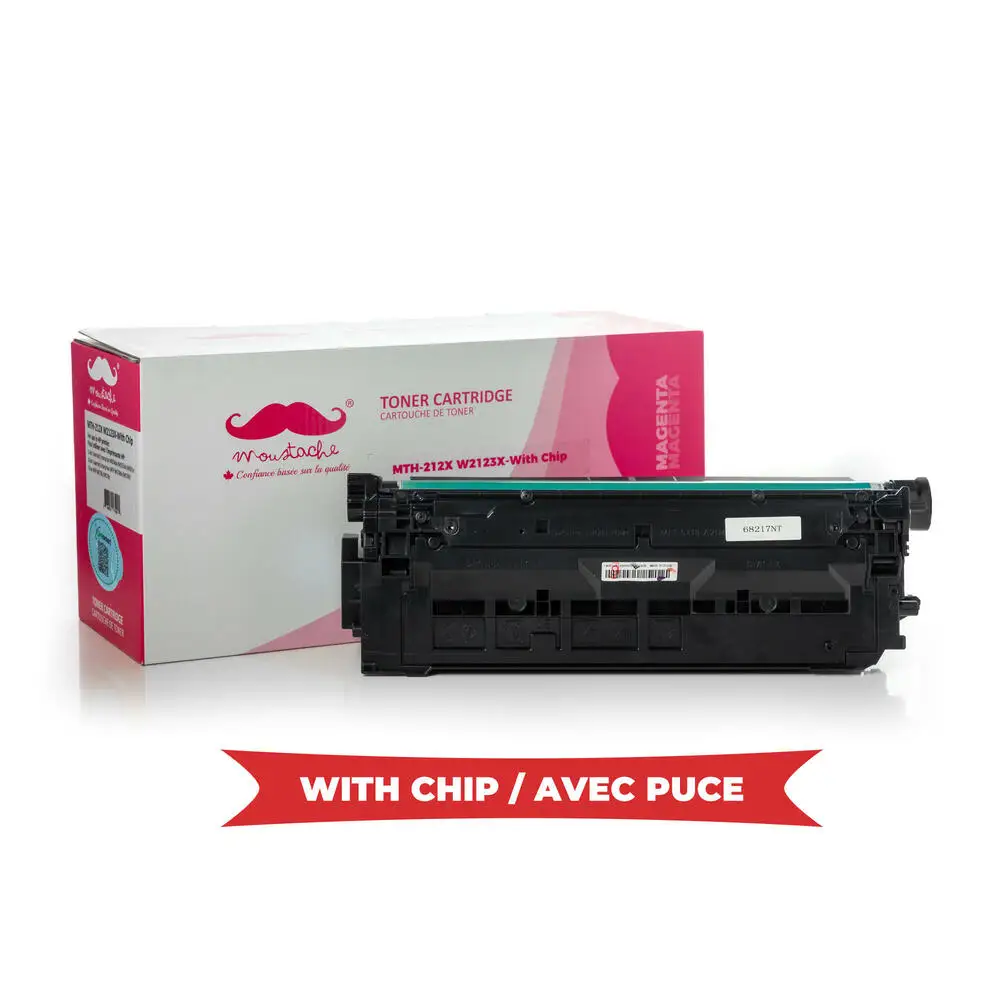
The alternatives that appear in the data lean heavily toward compatible or remanufactured options and multi-pack bundles rather than a single direct OEM competitor. On Amazon, LD Products sells a remanufactured 507X/507A set with a low rating shown as “2.7 out of 5 stars” based on “5 reviews.” Even without individual quotes, that rating signals risk for buyers who can’t tolerate returns and downtime.
Another Amazon listing for a “4 Pack Replacement for HP 507A” emphasizes “upgraded chip” recognition and “no fading, no powder leakage, no streak,” but those are seller claims, not user feedback. The presence of these alternatives in the shopping ecosystem matters because they sharpen the OEM tradeoff: lower price versus uncertainty about consistency, chip compatibility, or long-term print stability.
On eBay, the market shows everything from “genuine… sealed” cartridges to remanufactured “Sustainable Earth” options. The sheer spread of listings underscores the authenticity anxiety expressed in the Amazon review about “factory sealed” boxes that may still be “iffy.” For bargain hunters, the alternative is cheaper supply; for risk-averse teams, the alternative may be paying more through reliable channels.
Price & Value
Official pricing in the provided data positions HP 507A Magenta Toner Cartridge as a premium consumable—HP Store UK lists it at “£289.00” (VAT included), shown as “out of stock” at the time captured. Staples’ product ecosystem references the same family of cartridges at even higher list-style pricing in some contexts (e.g., a Staples page showing $338.89 for magenta in one section of the captured text), reinforcing that OEM supply costs can swing by retailer and region.
Meanwhile, resale and marketplace listings on eBay show a broad range—some “genuine hp 507a magenta… sealed” around the low hundreds in NZD, plus numerous compatible listings far below that. That gap is exactly where the counterfeit concern story lives. The Amazon reviewer warned that discounted “factory-sealed” deals can lead to hidden losses: “prints do not hold their color over time… they fade quite quickly… you end up wasting good quality printing papers.” For a business printing on expensive stock, the paper waste can erase savings quickly.
The buying tips embedded in user feedback are less about coupon-hunting and more about avoiding regret. The same Amazon reviewer offered a hard-earned heuristic: “better to pay a little higher price than field complaints about your prints.” Staples reviewers indirectly suggest another: if you’ve had issues with “generic” supplies, OEM may be the fastest route back to stable output.
FAQ
Q: How many pages does the HP 507A magenta toner claim to print?
A: The official specification repeatedly shown is about 6,000 pages for magenta, based on ISO/IEC 19798. HP also notes that “actual yield varies considerably based on content of printed pages and other factors,” which matches why some buyers report very different lifespans in real use. (HP Store UK / HP Support)
Q: Does OEM HP toner really fix print quality problems like streaking?
A: Some users say yes—especially when switching away from third-party cartridges. A Staples reviewer named Thomas wrote, “Generic toner cartridge was causing streaking issues on all printed documents. HP toner cartridge resolved the problem.” That kind of troubleshooting outcome is a common reason offices pay OEM prices. (Staples)
Q: Is the HP 507A considered expensive even by satisfied buyers?
A: Many satisfied reviewers still complain about cost. Staples reviewers said things like “the price was a little steep but overall the quality is there” (Fred F.) and “works fine but is to darn expensive” (Archbishop H.). The pattern suggests performance satisfaction doesn’t always translate into value satisfaction. (Staples)
Q: Are “discount, factory-sealed” listings safe for HP 507A cartridges?
A: At least one Amazon reviewer cautioned against it, saying quality can be “iffy” and that prints may “fade quite quickly,” adding that “by the time you realize the defect, it’s too late.” That feedback doesn’t prove all discount listings are bad, but it highlights the authenticity and long-term output risk buyers worry about. (Amazon review)
Q: What’s the main risk with compatible/remanufactured alternatives?
A: The data signals uneven satisfaction and uncertainty. One Amazon remanufactured set is shown at 2.7/5 stars from a small sample (5 reviews), and user anecdotes emphasize avoiding problems like streaking or fading. For teams that can’t tolerate downtime or reprints, the risk is operational disruption more than upfront cost. (Amazon listing + Staples/Amazon review narratives)
Final Verdict
Buy if you’re a busy office admin or IT manager who wants the lowest chance of print defects and fast problem resolution—Staples reviewer Thomas’s “resolved… streaking” story is the clearest case for OEM stability.
Avoid if you’re highly price-sensitive or printing color-heavy jobs where frequent replacements will feel brutal—multiple Staples reviewers called it “very expensive,” and some reported it “runs out… too quickly.”
Pro tip from the community: if a deal seems “spectacularly reduced,” be cautious—an Amazon reviewer warned that “factory sealed” can still be “iffy,” and suggested it can be “better to pay a little higher price than field complaints about your prints.”