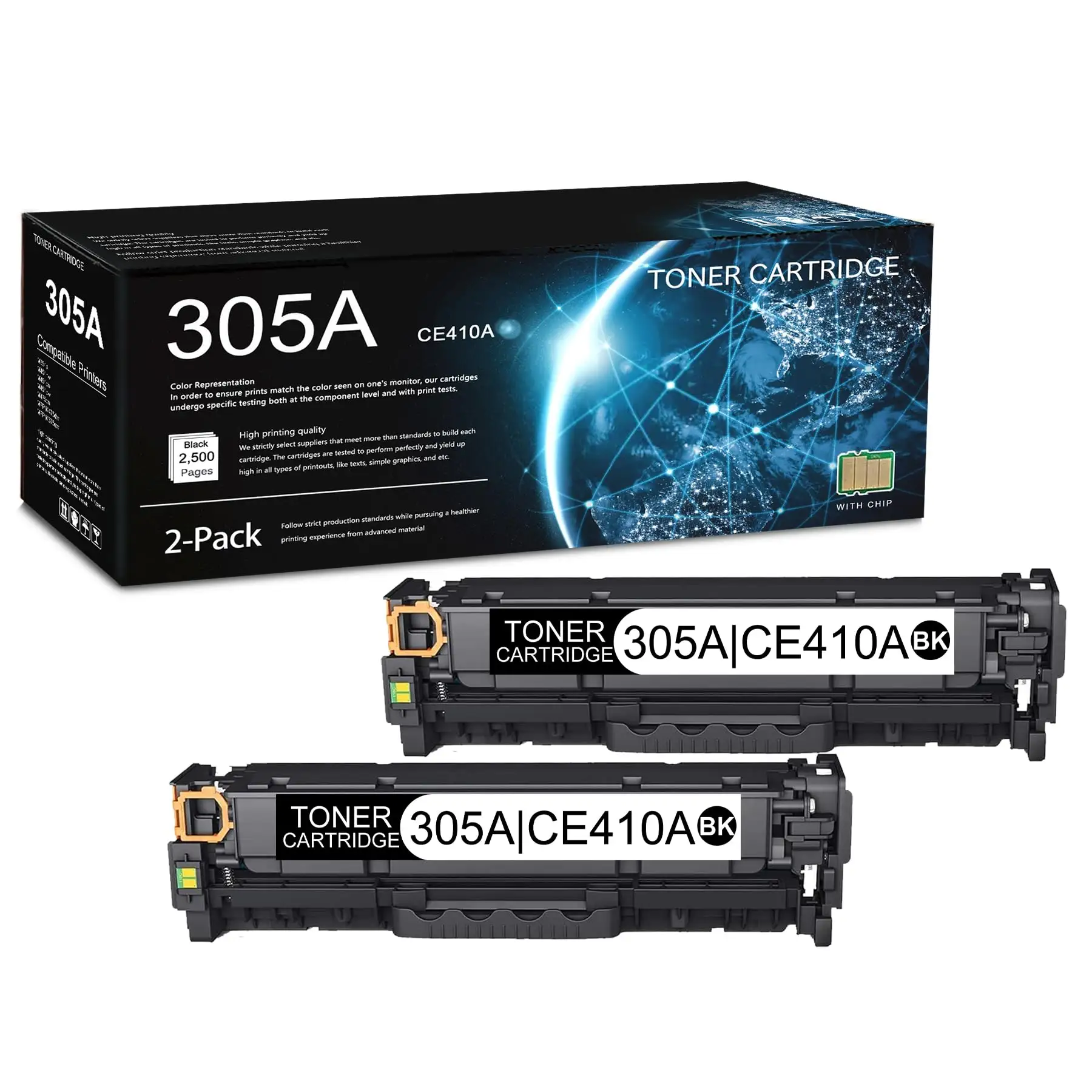
HP 305A Black Toner (CE410A) Review: Conditional Buy 8.2/10
A cartridge that inspires both “we always get at least 3000 pages” and “only 57% of the printed pages I should have received” is never going to have a quiet reputation. HP 305A Black Toner Cartridge (CE410A) lands with a confident verdict from many buyers—especially on print quality and easy installation—yet page-yield experiences swing hard depending on the user and setup. Verdict: Conditional buy — 8.2/10.
Quick Verdict
For most owners of compatible HP Color LaserJet Pro printers, HP 305A Black Toner Cartridge (CE410A) is a safe, high-quality pick—if you can stomach the price and accept that yield may not match what you expect.
| Decision | Evidence from user feedback | Source |
|---|---|---|
| Conditional “Yes” if you want OEM reliability | “You can count on your hp cartridge to perform as advertised.” | Best Buy |
| Strong pro: print quality | “The color is crisp, dark, and not blotchy.” | Best Buy |
| Strong pro: easy install | “The instructions for replacing the cartridge were easy to follow.” | Best Buy |
| Common con: expensive | “Great product - but expensive” | Best Buy |
| Risk: yield variability | “Had to replace… after only 1256 pages… should get around 2200 pages.” | Staples |
| Retail friction: stock/availability | “The store has limited stock… makes you order online…” | Staples |
| Packaging/listing confusion | “It’s 1 cartridge, not 2… described as… 2/pack.” | Staples |
Claims vs Reality
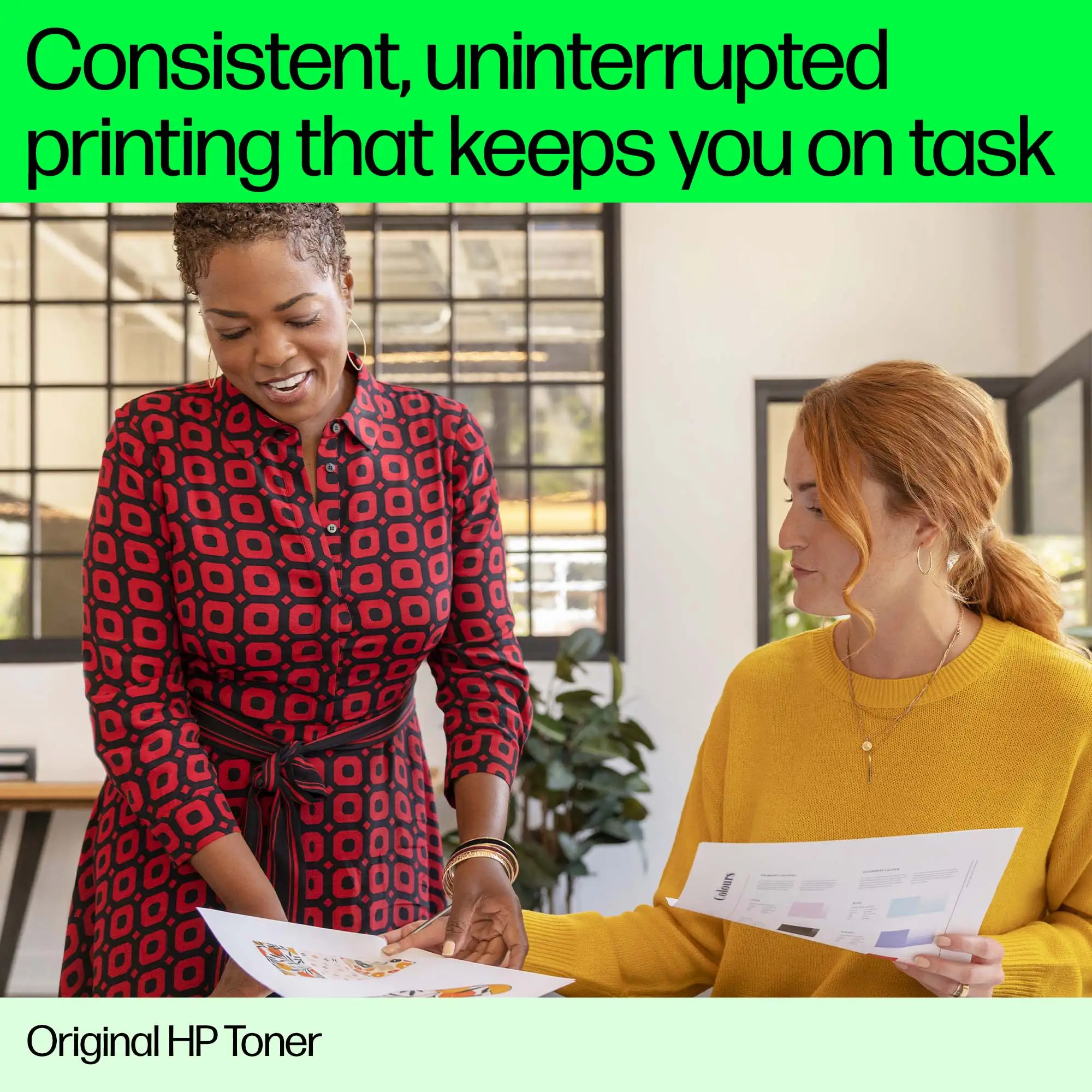
HP’s official messaging leans heavily on consistent results and productivity—“designed to work the first time, every time”—and the broad sentiment from buyers largely aligns on day-to-day usability. On Best Buy, ease-of-use comes through as practical, not poetic. Best Buy reviewer char plum wrote: “The instructions for replacing the cartridge were easy to follow,” while nurse guy kept it even simpler: “Easy to install!” That kind of feedback matches the “install in a snap” promise buyers expect from an OEM cartridge.
Where reality gets more complicated is page yield. Official listings repeatedly anchor around roughly 2,090 pages (HP and major retailers cite ~2,090 pages; some listings also display 2,200). But Staples reviews show the lived experience can overshoot—or crater. One Staples customer celebrated: “We always get at least 3000 pages,” framing it as a real office workload outcome (“lasts about 1.5 months for our office”). Another Staples customer described the opposite: “Had to replace… after only 1256 pages printed… I only got 57% of the printed pages I should have received.”
The other gap is not performance but the buying experience. The product may be dependable, yet availability and listing clarity can sabotage the moment you need toner urgently. A Staples reviewer complained: “The store has limited stock… makes you order online which does not help if you need it now,” and another flagged misleading expectations: “It’s 1 cartridge, not 2… described as… 2/pack so you’d imagine it was a pack of 2 cartridges? it’s not.”
Cross-Platform Consensus
Universally Praised
A recurring pattern emerged across retailer reviews: when users pay for original HP toner, they expect consistent output—and many say they get exactly that. Print quality is described in concrete terms, not vague approval. Best Buy reviewer ge customer reported: “The toner quality is excellent. The color is crisp, dark, and not blotchy,” and added a detail that matters to home offices and small businesses: “It is easy to insert in the printer and does not make a mess.” For people printing contracts, invoices, or black-heavy marketing drafts, that “crisp, dark” black is the difference between “good enough” and “looks professional.”
Longevity—at least for a sizable chunk of owners—also shows up as a real-world benefit. Best Buy reviewer juzam kjd said the cartridge “has also lasted a long time (as advertised for me),” which reads like the ideal outcome for anyone trying to avoid mid-project interruptions. Another long-life story comes from si rocket, who framed it at an office scale: “This cartridge lasted an office of 10+ a long time… the life of the cartridge was impressive.” For shared printers, that kind of endurance is less about saving money and more about avoiding downtime and emergency reorders.
There’s also a strong undercurrent of “OEM trust” shaped by bad experiences with third-party cartridges. Best Buy reviewer rlane11 explained the switch-back effect: “I’ve had problems with the off-brand toner cartridges and have returned to buying hp.” And fat hawkeye offered a cautionary tale in blunt terms: “You gotta buy the authentic ink and toner or you will ruin your laser printer. Learned the hard way…” For risk-averse offices—especially those with older LaserJet Pro units they want to keep running—this feedback reads like an argument for predictable, supported consumables.
After that narrative, the praise clusters into a few consistent themes:
- Print quality that looks “crisp” and “dark” (Best Buy)
- Installation that’s “easy” with “clear instructions” (Best Buy)
- Many reports of long-lasting performance, sometimes “as advertised” (Best Buy) or better (Staples)
Common Complaints
Digging deeper into the negative comments, the loudest complaint is price—and it’s not subtle. Staples reviewers use emotionally loaded language rather than mild grumbling. One wrote: “The hp 305 is the genuine replacement for my printer, but the coast is getting cr aaaaaa zy,” while another called out “exorbitant price increase.” Best Buy reviews echo the same frustration: chew blaka summarized it as “great product - but expensive,” and chuckh1234 was even more direct: “great toner for laser printing but very expensive.”
Yield anxiety is the next big fault line, and it hits hardest for heavy printers who measure value by pages, not brand names. Staples includes one of the sharpest yield complaints: “Had to replace… after only 1256 pages… should get around 2200 pages.” That user didn’t treat it as a minor variance—they calculated it as “57%” of expected output and said the second cartridge also looked headed toward around “1000 pages.” For small offices budgeting supply costs, that kind of shortfall turns OEM toner from “reliable” into “unpredictable.”
Finally, buying logistics and retail execution show up as practical pain points. Staples reviewers called out inventory issues—“limited stock… makes you order online”—which matters most when a printer is a shared office dependency. And listing errors can sour trust even when the cartridge itself is fine: “It’s 1 cartridge, not 2… described as… 2/pack.” Those aren’t performance flaws, but they shape the overall experience people remember.
After that narrative, complaints consistently revolve around:
- High cost and perceived “absurd” pricing (Staples, Best Buy)
- Page-yield disappointments for some users (Staples)
- Stock constraints and listing confusion at retailers (Staples)
Divisive Features
The most divisive feature is page yield relative to the advertised number. While officially rated around 2,090 pages (HP and major retailers cite ~2,090; some listings show 2,200), Staples includes users reporting dramatically different outcomes in both directions. One customer wrote: “We always get at least 3000 pages,” framing it as repeatable office reality, while another described a steep underperformance: “Had to replace… after only 1256 pages.”
There’s also a split on value: some buyers call it “great value for laser printing” because it lasts and avoids headaches, while others see the same cartridge as a tax on printing. Best Buy’s meta-summary notes customers “wish the price was lower,” and individual reviewers underline the tension—powerss1310 said, “only wish it was cheaper,” while rlane11 argued that trying to save money with off-brand cartridges “cost you in other ways.”
Trust & Reliability
Concerns about reliability in this dataset don’t center on counterfeits so much as “new vs used” fulfillment and retailer handling. A Staples reviewer described a serious fulfillment failure: “The first time a cartridge was shipped the cartridge was used and broken. hp replaced it quickly and the next one worked fine.” That story suggests the product can be dependable, but the supply chain experience can create edge-case disasters.
Long-term dependability is mostly reflected indirectly through “workhorse printer” narratives tied to repeated toner purchases. Best Buy reviewer chew blaka said their color laser printer “is a workhorse,” and that even with “frequent toner replacement,” “the quality of the toner cartridge is great.” Another durability-tinged comment comes from fat hawkeye, who framed a multi-year timeline: “use authentic now and ours has ran for more than 3 years.” While not a “6 months later” post, it does reflect sustained ownership tied to sticking with OEM supplies.
Alternatives
The only clearly mentioned alternative category in user feedback is off-brand/third-party toner, discussed as a money-saving attempt that can backfire. Best Buy reviewer rlane11 described trying “off-brand toner cartridges” because of pricing pressure, then reversing course: “I’ve had problems with the off-brand toner cartridges and have returned to buying hp.” Fat hawkeye’s warning lands in the same lane, framing third-party as risky: “Learned the hard way… buy the authentic ink and toner.”
If your alternative is simply “cheaper compatible toner,” the community narrative here is less about small print differences and more about avoiding returns, print issues, and the frustration of troubleshooting consumables.
Price & Value
Sticker shock is part of the CE410A story on every platform that includes reviews. At Best Buy, customers repeatedly praise performance while sounding resentful about cost—“great product - but expensive”—and rlane11 questioned why HP can’t “lower their prices.” Staples reviewers escalated the language: “exorbitant price increase” and “price has become absurd.”
Market pricing signals also vary across channels. Office Depot lists it around $101.89, while HP Store Canada shows $158.99, and Best Buy shows $120.99 (sold out). Meanwhile, eBay listings highlight “compatible” sets and lower per-unit pricing, illustrating why some users feel pushed toward third-party—only to later complain about problems and return to OEM. That price pressure is a repeating loop in the feedback: people want HP reliability, but feel the cost forces experimentation.
Buying tips embedded in user stories skew toward timing and promos. Best Buy reviewer juzam kjd explicitly tied satisfaction to a discount: “purchased it for 15% off… price was great,” and chew blaka noted sales as relief: “luckily bb has these on sale (which helps).” For value-focused buyers, the community implication is clear: OEM is easiest to live with, but many try to buy only during promotions.
FAQ
Q: Does the HP 305A (CE410A) actually hit the advertised page yield?
A: Official listings cite about 2,090 pages (sometimes shown as ~2,200), but user results vary. A Staples reviewer said: “We always get at least 3000 pages,” while another reported replacing it after “only 1256 pages,” calling it “57%” of expected yield. (HP, Staples)
Q: Is print quality noticeably better with the original HP cartridge?
A: Many reviewers say yes, describing dark, clean text. Best Buy reviewer ge customer wrote: “The color is crisp, dark, and not blotchy,” and said it “does not make a mess.” Several buyers who tried off-brand cartridges reported issues and returned to HP. (Best Buy)
Q: Is it easy to install for non-technical users?
A: Feedback strongly supports easy replacement. Best Buy reviewer char plum said: “The instructions for replacing the cartridge were easy to follow,” and nurse guy called it “easy to install.” Ease-of-use is one of the most consistent positives across reviews. (Best Buy)
Q: What’s the biggest complaint from buyers?
A: Price, by far. Best Buy reviewers call it “expensive,” and Staples reviewers used harsher language like “exorbitant price increase” and “price has become absurd.” Even satisfied owners often frame cost as their “one and only complaint.” (Staples, Best Buy)
Q: Should I buy third-party compatible toner instead?
A: Several users tried off-brand toner to save money, then switched back. Best Buy reviewer rlane11 said they “had problems with the off-brand toner cartridges and have returned to buying hp,” and another warned: “You gotta buy the authentic ink and toner… Learned the hard way.” (Best Buy)
Final Verdict
Buy if you’re a small office or home-office user who prioritizes predictable OEM output, clean installation, and “crisp, dark” black text—especially if you can wait for a sale. Avoid if you’re buying purely on cost-per-page and will be angry if your cartridge lands closer to “only 1256 pages” than the advertised yield. Pro tip from the community: watch for promotions—Best Buy reviewer juzam kjd said a “15% off” sale made the “price… great,” and multiple buyers suggested sales are what make OEM toner feel worth it.