HP 212X Magenta Toner Review: Good OEM, Leak Risk
A toner “no delays or mess” promise doesn’t land the same way after someone describes spending “hours to clean up the inside of the machine.” That contrast defines the HP 212X Magenta Toner Cartridge (W2123X): officially positioned as a high-yield, professional, security-forward OEM cartridge, yet user feedback includes at least one severe failure story alongside convenience praise. Verdict: Conditional buy for offices prioritizing OEM consistency and rated yield, with a caution flag on leak-risk anecdotes. Score: 7.6/10.
Quick Verdict
For many business buyers, HP 212X Magenta Toner Cartridge reads as the “safe OEM” choice—rated around “~10,000 pages” and marketed for “professional-quality prints” with JetIntelligence and anti-fraud features. But digging into customer commentary, there’s at least one report of streaking and toner leakage that turned routine replacement into a cleanup event.
| Decision | Evidence from feedback | Who it fits | Risk |
|---|---|---|---|
| Conditional Yes | Staples review praised speed: “ease of ordering and receipt - less then 4 minutes” | Busy admins, procurement teams | Doesn’t address print performance |
| Yes (OEM-first teams) | HP/retailer claims: “designed to work the first time, every time” | Enterprises standardizing on OEM | Assumes defect rates are low |
| Caution | Staples reviewer reported: “cyan blotches and streaks… toner leaked out all over the inside of the printer” | High-volume environments | Cleanup downtime, service calls |
| Yes (high-yield planners) | Spec claim: “~10,000 pages per cartridge” | Departments tracking cost-per-page | Real yield varies by coverage |
| Conditional | Messaging emphasizes security/anti-fraud | IT-managed fleets | Doesn’t prevent mechanical failures |
Claims vs Reality
HP positions HP 212X Magenta Toner Cartridge as a high-yield workhorse—“~10,000 pages per cartridge”—with JetIntelligence, “anti-fraud protection,” and “print gauge technology” to help businesses predict replacements. On paper, that’s an operations-friendly story: fewer swaps, fewer interruptions, more predictable supply runs.
But user feedback introduces a harsher operational reality when failures occur near end-of-life. A verified Staples reviewer described that “when the cartridge reached ‘low status’ there were cyan blotches and streaks on printed pages and the toner leaked out all over the inside of the printer.” For teams running Color LaserJet Enterprise fleets, that’s not just a bad print—it’s downtime, wasted paper, and potentially technician time.
Another marketing theme is “no delays or mess” and “easy to replace cartridges.” That promise is echoed indirectly by a Staples buyer focused on the purchasing side, saying the process was “simply ease of ordering and receipt - less then 4 minutes,” contrasting it with the old routine of driving to a store. The gap is telling: the buying experience can be frictionless even when the install-and-run experience isn’t universally so.
Finally, HP repeatedly frames this cartridge as the reliability play—“designed to work the first time, every time” and “reliability and consistency.” Yet the same Staples account reports two separate leak-related cleanups: “it took hours to clean up… and this was after cleaning up the leaked magenta toner a few days earlier.” While that’s a single anecdote in the provided data, it directly challenges the “no mess” narrative.
Cross-Platform Consensus
Universally Praised
When buyers choose HP 212X Magenta Toner Cartridge, the consistent through-line across official listings and aggregated retailer narratives is confidence in OEM output and planning around high-yield printing. The product is repeatedly framed as “professional-quality prints” with “vibrant colors,” and third-party listings like Provantage emphasize “high yield and consistent print quality,” calling it “a reliable choice for businesses.” For marketing teams printing “graphics-heavy content,” that kind of message matters because color drift and reprints translate directly into wasted time and credibility.
Procurement and office managers also gravitate toward predictability. HP and retailer specs anchor expectations around “~10,000 pages,” and the language around “print gauge technology” and “intelligently tracks toner levels” caters to teams that schedule supplies rather than react to emergencies. In a corporate environment, that can mean fewer surprise outages mid-project and less scrambling across departments.
There’s also a convenience thread in actual customer commentary—though it’s not about print quality, it’s about getting the cartridge in hand with minimal hassle. A verified Staples buyer highlighted the logistics win: “simply ease of ordering and receipt - less then 4 minutes,” adding that it beat the older routine of driving to a store and “hope it was on the shelf.” For administrative staff, that’s a tangible quality-of-life improvement even before the first page prints.
Summary of praise (after the stories):
- High-yield expectation: “~10,000 pages per cartridge” (HP/retailer specs)
- OEM confidence framing: “professional-quality prints,” “vibrant colors” (HP/retailer messaging; Provantage sentiment)
- Ordering convenience story: “ease of ordering and receipt - less then 4 minutes” (Staples review)
Common Complaints
The most concrete negative user story in the provided data is not subtle: print defects and leakage. A verified Staples reviewer reported that once the cartridge hit “low status,” output issues appeared—“cyan blotches and streaks on printed pages”—followed by toner escaping into the machine: “the toner leaked out all over the inside of the printer.” For IT admins and office managers, the nightmare isn’t just bad color; it’s the operational cost of cleaning, potential contamination of other components, and the risk of recurring issues.
That same reviewer emphasized the labor cost, stating “it took hours to clean up the inside of the machine,” and described it as a repeat event: “after cleaning up the leaked magenta toner a few days earlier.” For departments with deadlines—finance month-end, marketing launches, school admin packets—this kind of failure turns supplies into a productivity incident.
A quieter but relevant “complaint” theme emerges from the product’s nature: it’s magenta-only. Aggregated copy (Provantage) explicitly calls out that limitation—“limited color options - only prints magenta”—and notes it “requires separate cartridges for other colors.” For small offices that don’t print color often, that can feel like fragmented spending: you’re buying one color at a time to keep the printer operational.
Summary of complaints (after the stories):
- Severe failure report: “toner leaked out all over the inside of the printer” (Staples review)
- Print artifacts near low status: “cyan blotches and streaks” (Staples review)
- Operational burden: “took hours to clean up” (Staples review)
- Single-color limitation: “only prints magenta” (Provantage narrative)
Divisive Features
High yield is marketed as the big win—“print for longer,” “get over 2 times more pages per optional high-yield cartridge,” and “~10,000 pages.” For high-volume teams, that’s a budget-and-maintenance advantage: fewer swaps, fewer procurement cycles, and less interruption. But the same “long run” framing can become divisive if issues appear near end-of-life. The Staples leak story specifically triggers “when the cartridge reached ‘low status’,” implying that the tail end of the yield window is where problems surfaced for that buyer.
Security and authenticity messaging is another point that can split audiences. HP emphasizes “anti-fraud protection” and supply-chain security features, and third-party product narratives echo “JetIntelligence technology… enhances printer performance and security.” For IT-managed organizations, that’s a benefit; for small businesses that mainly care about cheapest-per-page, that messaging may feel like justification for higher OEM pricing—especially when compatible alternatives in the broader market advertise “with smart chips” and similar compatibility claims.
Trust & Reliability
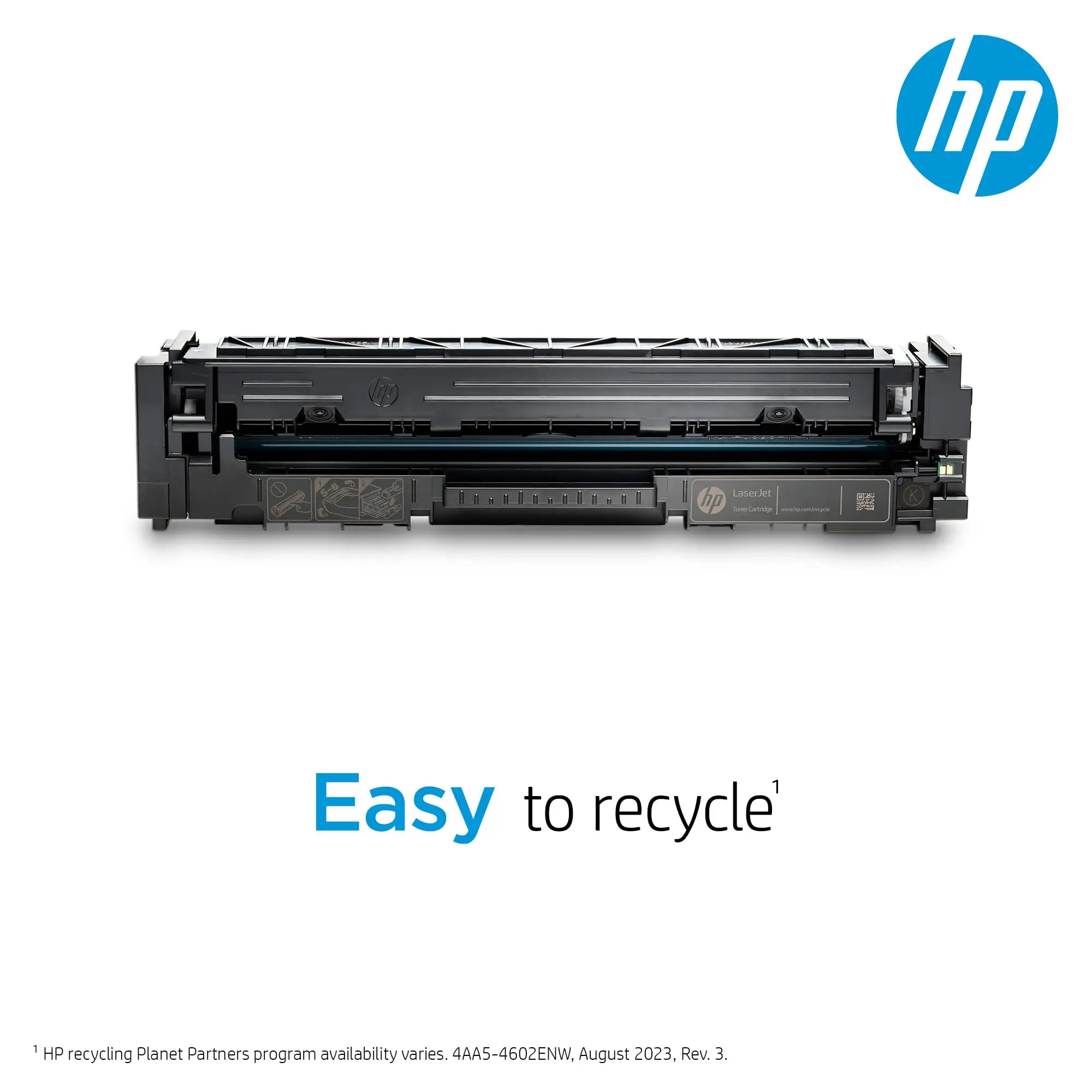
Trust questions around toner often come down to two fears: counterfeits and defects. HP leans hard into the anti-fraud story for HP 212X Magenta Toner Cartridge, repeatedly mentioning “anti-fraud protection” and security features “from chip design to programming, installation, and packaging.” For buyers who’ve been burned by counterfeit supplies, that official positioning is meant to reduce anxiety about what’s going into an expensive enterprise printer.
But reliability is also where user stories carry disproportionate weight. The Staples account of leaking toner—paired with streaking and cross-color blotching—reads like a failure that undermines the “no delays or mess” promise. When one customer describes spending “hours” cleaning a printer interior, the trust calculus shifts for risk-averse offices: even if defects are rare, the impact is high.
Notably, the provided “Reddit (Community)” data is actually a product-listing style summary (Provantage) rather than direct community posts, and it doesn’t include “6 months later…” durability anecdotes. So the strongest real-world reliability signal here is that single but vivid Staples story—balanced against generally positive framing in retail/official descriptions.
Alternatives
The only explicitly presented alternative in the provided sources is a non-HP, replacement ecosystem around “HP 212A/212X” compatibles and packs. For example, an Amazon listing for a “212A Toner Cartridge 5-Pack Replacement” advertises “high yield” and gives page-yield numbers like “6,000” with “5,000 pages per… color,” alongside promises like “3 years limited free replacement service.” Separately, Ready Toner markets a replacement “HP 212X toner cartridge set” emphasizing “with smart chips” and page-yield claims for each color.
For cost-sensitive buyers, these alternatives are framed around savings and convenience (“competitive price point,” “free shipping”), and they directly target the same printer families (M554/M555/M578). For OEM-first organizations, HP’s differentiator in the text is authenticity/security and the expectation of consistent color output. The trade-off, based on the provided material, is less about features and more about which risk you prefer to manage: higher upfront OEM cost versus the variability and support experience of compatibles.
Price & Value
Pricing signals vary by channel in the provided data, but they paint HP 212X Magenta Toner Cartridge as a premium enterprise consumable. HP’s official shop pages emphasize rewards (“9% back in HP rewards”) and the 10,000-page high-yield positioning rather than discounting, while an HP New Zealand listing shows a high sticker price and “out of stock,” reinforcing that this is not a casual, cheap consumable in many regions.
Value arguments hinge on page yield and predictability. HP repeatedly markets “page maximizer technology” and “print gauge technology,” essentially selling the idea that you’ll “get the pages you paid for.” In contrast, compatible sellers compete by lowering entry price and bundling sets, often emphasizing chips and yields. The only market/resale-style data provided is eBay listings—but those appear to reference HP 131A series, not HP 212X, so they don’t meaningfully establish resale trends for W2123X.
Buying tips implied by the feedback: if you’re choosing OEM, prioritize reputable channels and keep packaging/documentation for warranty support; if you’re in a high-volume environment, plan for what happens if a cartridge fails near “low status,” because the cleanup story suggests the end-of-life window can be where problems become most disruptive.
FAQ
Q: What is the rated page yield for the HP 212X Magenta (W2123X)?
A: Official listings repeatedly state “~10,000 pages per cartridge” for the high-yield magenta. That rating is typically based on standardized testing and varies with coverage. The product is positioned as “high yield” to reduce replacement frequency in Color LaserJet Enterprise environments.
Q: Which printers are listed as compatible with the HP 212X Magenta toner?
A: Product listings cite compatibility with HP Color LaserJet Enterprise M554 and M555 series and HP Color LaserJet Enterprise Flow MFP M578 models. Provantage specifically lists M554dn, M555dn, M555x, and multiple M578 variants; always double-check your exact printer model before ordering.
Q: Do users report problems with leakage or streaking?
A: At least one verified Staples reviewer described serious issues near “low status,” including “cyan blotches and streaks” and that “the toner leaked out all over the inside of the printer,” adding it “took hours to clean up.” This is a high-impact complaint, even if not widely documented in the provided data.
Q: Is this cartridge easy to buy and replace?
A: Buying convenience is explicitly praised by a Staples reviewer who said ordering and receipt was “less then 4 minutes,” contrasting it with driving to a store. HP’s own copy also stresses “easy to replace cartridges” and “no delays or mess,” though that clashes with the leak cleanup story.
Q: Are compatible alternatives mentioned, and what do they claim?
A: Yes. The provided data includes replacement/compatible 212A/212X listings that market “high yield,” bundled packs, and “smart chips,” plus replacement policies like “3 years limited free replacement service.” These alternatives focus on cost savings, while OEM messaging focuses on authenticity, security, and consistent print quality.
Final Verdict
Buy HP 212X Magenta Toner Cartridge if you’re an office admin or IT-managed business standardizing on OEM supplies for Color LaserJet Enterprise printers and you want the officially rated “~10,000 pages” high-yield planning model.
Avoid it—or at least budget for risk mitigation—if your environment can’t tolerate messy failures, because a verified Staples buyer warned that near “low status” they saw “cyan blotches and streaks” and that “the toner leaked out all over the inside of the printer,” taking “hours” to clean.
Pro tip from the community-facing feedback: procurement friction matters. One Staples customer’s biggest win was simple: “ease of ordering and receipt - less then 4 minutes,” suggesting that reliable sourcing and fast replenishment can be as valuable as the cartridge itself.