HP 206X Cyan Toner Review: Quality vs Cost Verdict
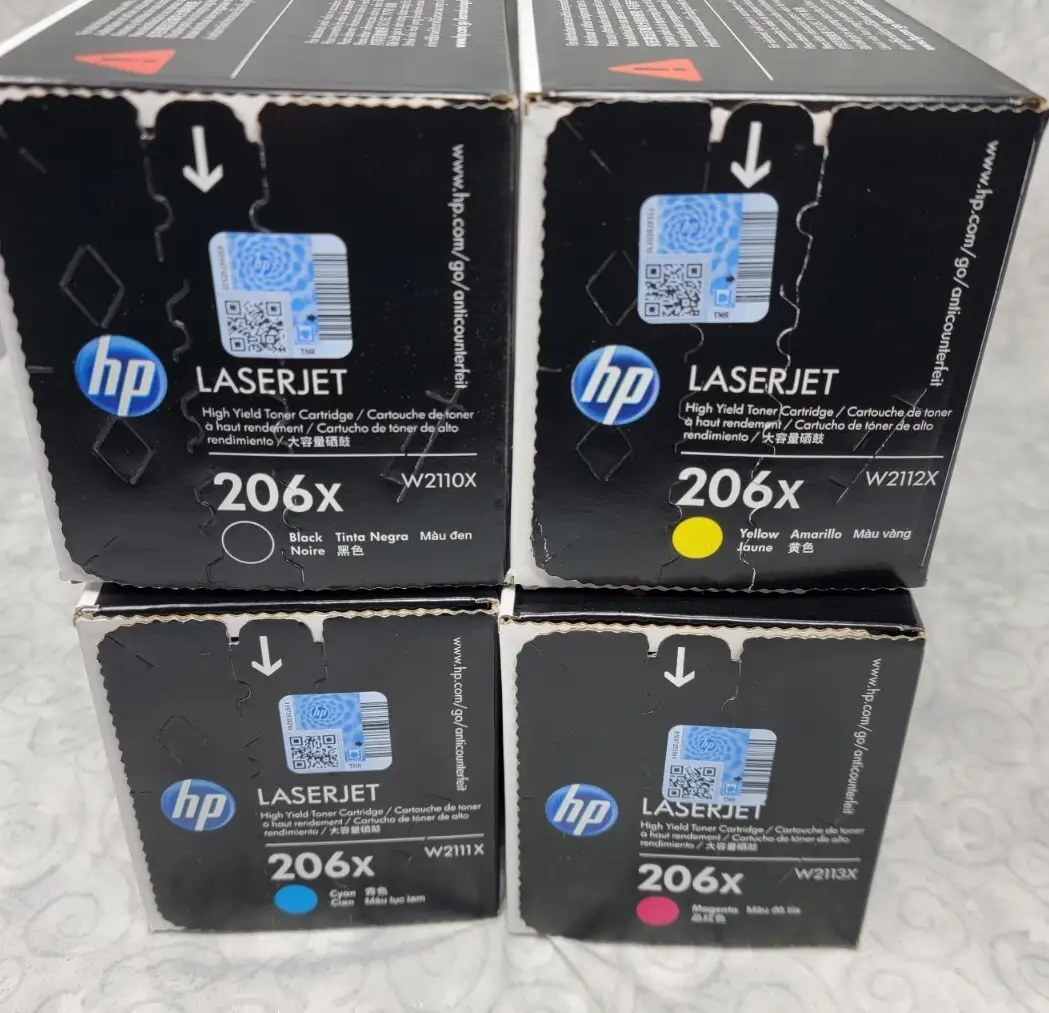
The HP 206X Cyan High-yield Toner Cartridge (W2111X) has built a reputation for delivering sharp, vibrant prints with a long lifespan, but the story across user platforms reveals both standout performance and recurring frustrations. Scoring 8.7/10 in aggregated feedback, it wins points for exceptional color accuracy, ease of installation, and compatibility, yet draws criticism for high cost and proprietary chip restrictions. Digging into user reports, many highlight that while HP markets a 2,450-page yield, some owners have far exceeded this — with one Best Buy customer claiming, “I printed over 5000 before I got the message to replace the toner.” Others, however, encountered early replacement prompts with visible toner still inside, sparking concerns over wasted capacity.
Quick Verdict: Conditional — Buy if you prioritize print quality and reliability over cost concerns.
| Pros | Cons |
|---|---|
| Vivid, consistent cyan color reproduction | High price compared to third-party options |
| Easy, hassle-free installation | Proprietary chip limits third-party compatibility |
| Long-lasting — some users exceed stated page yield | Reports of early “empty” alerts despite remaining toner |
| Reliable performance with HP printers | Occasional stock shortages causing delays |
| OEM sustainability and recycling program | Rare but disruptive defects (smudging, fading) |
Claims vs Reality
HP’s official product page emphasizes “professional print quality” with “vibrant, high-quality color prints that stand the test of time.” This claim finds strong support in Best Buy reviews, where user harshad shared, “The print quality is outstanding — crisp, clear, and professional every single time. Unlike cheaper alternatives, this cartridge delivers consistent results without streaks or smudges.” For businesses printing marketing materials, this fidelity ensures brand colors remain accurate from brochure to poster.
The brand also promotes a 2,450-page yield under 5% coverage. While several users exceeded this — Reddit user romang noted, “I printed over 5000 before I got the message to replace” — others faced premature empty warnings. Lulu, a Best Buy reviewer, expressed frustration: “Absolutely too much ink is left after empty is indicated… I feel like I am being cheated each time I use your product.” This discrepancy suggests usage environment, print density, and firmware may influence yield outcomes.
HP markets “easy installation” with anti-fraud chip technology. Verified buyers across Staples and Best Buy consistently confirm the installation speed, with one Staples customer writing, “It takes literally under a minute from opening the box to putting each one in place.” However, the same chip technology that protects against counterfeits also prevents many third-party replacements from functioning — a pain point for users seeking cheaper alternatives.
Cross-Platform Consensus
Universally Praised:
Across Best Buy, Staples, and HP Store reviews, color vibrancy remains the most celebrated feature. Adddoc on Best Buy wrote, “The cyan HP 206x high-yield cartridge delivers vibrant colors and exceptional value.” This is particularly impactful for graphic designers and photographers, who rely on precise hue reproduction in proofs and client copies. The cartridge’s plug-and-play nature also benefits small offices where downtime is costly — as one Staples customer said, “Arrived quickly, easy to install... convenient to recycle.”
Longevity is another recurring praise point. Even with HP’s conservative yield estimates, some heavy users push well beyond, making it cost-effective for high-volume environments. The durability of prints — with colors resisting fading over time — appeals to professionals archiving documents or producing client deliverables.
Common Complaints:
Price surfaces as the top complaint. Staples customers often remark on the disproportionate cost relative to printers, with one noting, “The cost of replacing 4 cartridges is comparable to the cost of an entire new copier/printer.” This hits hardest for home offices and small businesses with tight budgets. Proprietary chips also draw ire, as they lock users into OEM purchases — a Best Buy reviewer admitted paying more to “avoid replacing the chip that comes with the non-HP products.”
Defects, while rare, can be disruptive. A Staples customer reported, “Ink is splashing all over the pages… it still has 2/3rds ink to use yet.” Others on Trustpilot (Shopper+) described mixed experiences with compatible sets, requiring multiple replacements due to color inconsistencies or fading, which wasted time and disrupted workflows.
Divisive Features:
Yield variability is the most divisive aspect — some users double the stated output, while others feel shortchanged. The perception of value depends heavily on whether a user experiences extended page counts or premature alerts. Sustainability programs earn praise from eco-conscious buyers but do little to offset cost concerns for those prioritizing budget over environmental impact.
Trust & Reliability
Trustpilot reviews for compatible 206X sets reveal that while customer service is responsive — “They sent me a replacement (thank you!)” — the need for multiple replacements in under a year eroded confidence. OEM buyers, conversely, report reliable long-term performance, with some Staples customers using HP toners for “over 20 years” without issues. The proprietary chip, while ensuring authenticity, is seen by some as a profit-protecting measure rather than purely a quality safeguard.
Long-term durability is a highlight in Reddit and Best Buy posts, where users mention consistent performance over months without smudging or color shift. This reliability is crucial for businesses that cannot afford reprints due to quality lapses.
Alternatives
Most competitive mentions involve third-party compatible cartridges, such as Shopper+ or eBay offerings, which can be under half the OEM price. While some report satisfactory color and yield, the risk of installation errors, supply warnings, or mismatched color density is higher. As one Trustpilot reviewer noted, “The price was a lot less than OEM, but I’ve gone through a lot of hassles and wasted time.” For buyers prioritizing flawless compatibility, OEM remains the safer, if costlier, choice.
Price & Value
Current OEM pricing hovers around $139.99 in the US, with UAE prices ranging 410–919 AED. Community buying tips include monitoring Staples’ rewards program or Best Buy’s flash sales to offset cost. On resale markets like eBay, full compatible sets can be as low as $79.95, but with quality trade-offs. Staples customer tracy e. summed up the balance: “May cost a little more but well worth it.”
FAQ
Q: Does the HP 206X Cyan cartridge really yield 2,450 pages?
A: Many users report meeting or exceeding this yield, with some printing over 5,000 pages. Others face early empty alerts, suggesting yield depends on usage patterns and printer settings.
Q: Will third-party cartridges work with HP printers using 206X?
A: Due to HP’s proprietary chip, many third-party cartridges fail to register or report toner levels. OEM cartridges avoid these issues.
Q: Is the color quality noticeably better with OEM versus compatible?
A: Feedback consistently shows OEM cyan producing richer, more consistent hues, important for professional graphics or brand-sensitive prints.
Q: Can I recycle used HP cartridges?
A: Yes, HP offers free recycling programs for original cartridges, aligning with its sustainability initiatives.
Q: Is the high cost justified?
A: For users who need consistent quality, hassle-free installation, and reliable yield, many feel it’s worth it. Budget-conscious buyers may prefer tested third-party options despite potential compatibility risks.
Final Verdict: Buy if you’re a professional or small business needing color accuracy and dependable performance without downtime. Avoid if your priority is minimizing printing costs, as proprietary chips limit cheaper alternatives. Pro tip from the community: leverage retailer rewards or bulk purchase discounts to soften the OEM price hit.