HP 201A Yellow Toner (CF402A) Review: 8.1/10 Value?
A Best Buy reviewer summed up the emotional whiplash perfectly: “going broke buying toner.” That single line captures the tension around the HP 201A Yellow Toner Cartridge (CF402A)—praised for color and consistency, criticized for cost and (for some) disappointing real-world yield. Verdict: 8.1/10.
Quick Verdict
Conditional — Buy if you prioritize dependable color output and easy swaps; think twice if you print heavily or hate high consumable costs.
| What shows up in feedback | Evidence from users | Who it impacts most |
|---|---|---|
| Strong print quality | Best Buy reviewers highlight “print quality” and “color vibrancy” as top positives | Offices printing client-facing materials |
| Easy installation | Best Buy user “razt” described the swap as “easy to install” with simple steps | Home users, beginners |
| Expensive consumable | Best Buy user “hpm 27 dw” wrote: “going broke buying toner” | Small businesses, high-volume users |
| Yield frustrations | Best Buy “hpm 27 dw” claimed “half the yield”; others want it to “last as long as i’d like” | Anyone budgeting per-page costs |
| Aftermarket risk (if you don’t buy OEM) | Staples reviewer warned of “very poor color / print quality” and “mottled” output | Cost-savers considering remanufactured |
Claims vs Reality
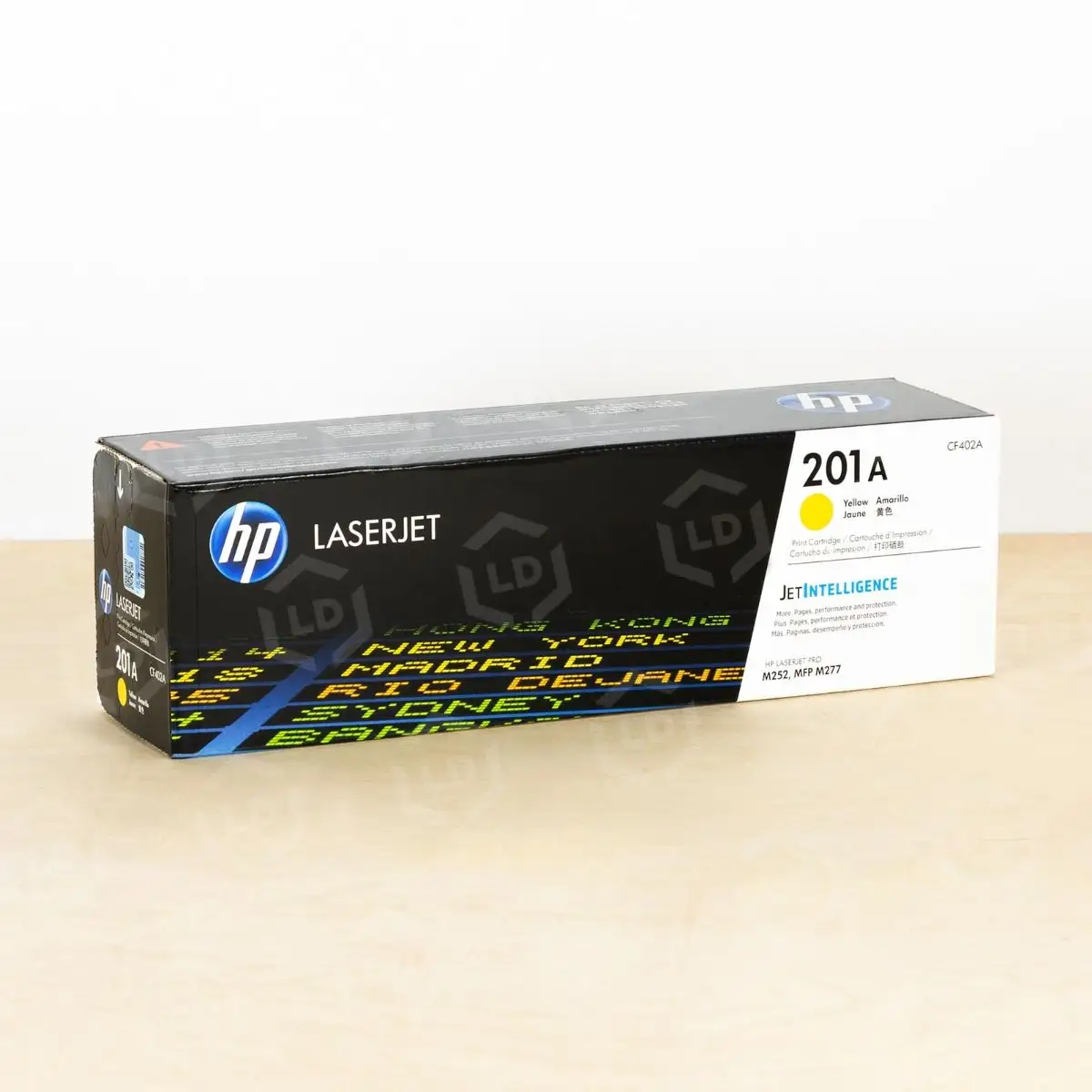
HP’s official and retailer listings frame HP 201A Yellow Toner Cartridge (CF402A) as a reliability play: “high-quality, reliable printing,” fewer “common printing problems,” and an approximate yield around 1,330–1,400 pages (depending on listing). Digging deeper into user reports, the quality narrative generally holds—but the value narrative gets complicated fast.
Claim 1: “Consistent, vibrant color prints.”
On Best Buy, the crowd largely backs that up. Best Buy user “windtunnel” called it: “true vivid color,” while user “louie 1” said: “delivers a nice vibrant color.” For users printing presentations, flyers, or anything where yellow accuracy matters (logos, charts, highlights), these comments read like relief: the color is what the printer was designed to produce. Best Buy user “alex” echoed that idea: “toner gives the printer vibrant color scheme it was designed to give.”
The gap appears when shoppers try to save money with non-OEM options. A Staples reviewer (name not clearly provided in the snippet) described a dramatic quality failure with the remanufactured alternative: “very poor color / print quality,” explaining that what should have been “solid purple… came out as very mottled purple and blue.” While that’s not the OEM HP cartridge, it shapes the “claims vs reality” landscape: users who want consistent color often circle back to genuine HP after being burned by cheaper replacements.
Claim 2: “Fewer printing problems (leaks, failures, easy replacement).”
Best Buy narratives repeatedly describe an uncomplicated swap. Best Buy user “razt” reported it arrived “well packed” and was “easy to install,” laying out a step-by-step process of sliding out the tray and dropping in the new cartridge. Best Buy user “joycy” added: “easy to replace… a beginner can do it.” For a home office user who just wants printing to resume without troubleshooting, that “plug it in and move on” tone is a recurring theme.
But the reliability story isn’t universally rosy once you broaden beyond OEM-only experiences. In Staples reviews of a remanufactured replacement, “renee r.” complained: “excessive yellow toner leaks out all over the pages every time i print.” That stands in stark contrast to the OEM messaging about preventing leaks, and it’s exactly the kind of incident that makes some users willing to pay OEM prices just to avoid a mess.
Claim 3: “Expected page yield around ~1,330 pages.”
Officially, the cartridge is positioned around that yield range, but user feedback suggests results can feel lower than expected—especially given the price. Best Buy user “hpm 27 dw” didn’t mince words: “i’m getting half the yield at 10 times the price.” Another Best Buy reviewer, “world via la,” said the cartridges “do not last as long as i’d like,” tying the complaint directly to cost frustration.
While yield depends on coverage, print settings, and what’s being printed, the investigative takeaway is clear: even when performance is praised, some users still feel the economics don’t match the promise.
Cross-Platform Consensus
Universally Praised
A recurring pattern emerged across Best Buy feedback: when users buy the genuine cartridge for the compatible printers, they largely get the output they were hoping for. The praise centers on print quality and color that “looks right,” rather than dramatic performance claims.
For office users printing professional documents, the “clean and vibrant” theme comes up repeatedly. Best Buy user “ladydi” described results as “clear and vibrant.” Best Buy user “windtunnel” framed it as brand dependability: “top notch… a trusted brand i can depend on.” Those aren’t lab measurements—they’re the kind of comments that show up when someone prints something for a meeting and doesn’t want surprises.
Ease of use is another near-universal win, especially for non-technical owners. Best Buy user “joycy” wrote: “a beginner can do it,” and Best Buy user “michael” said it was “very easy to install,” emphasizing that even selecting the right cartridge was straightforward with help. For home offices and small teams without IT support, that matters: the cartridge is treated like a simple maintenance item, not a troubleshooting project.
There’s also a quieter “workflow confidence” thread. Best Buy user “sally” said: “love the notice on the printer screen menu of how much ink is left.” Even though toner level accuracy isn’t deeply debated in these snippets, the appreciation suggests that visibility into consumables reduces anxiety—especially for users trying to avoid being caught mid-job.
Aftermarket alternatives reinforce the OEM praise by contrast. A Staples customer “thom c.” said remanufactured fit “perfectly” and “work just fine,” but the existence of equally strong negative stories (mottled output, leaks) makes the OEM path look like the “pay more, worry less” option for users who can’t afford inconsistent color.
Common Complaints
The loudest complaint is cost—and it’s not subtle. Best Buy user “hpm 27 dw” posted: “going broke buying toner,” explaining they bought the printer expecting savings, only to feel trapped in expensive supplies. Best Buy user “smart” echoed the theme: “good quality… but… too expensive.” Even positive reviews often tack on a reluctant admission: Best Buy user “nursie 24” called it “awesome quality” but added: “a bit expensive.”
That sticker shock compounds when multiple colors need replacing close together. Best Buy user “joycy” warned it’s “expensive when replacing more than 1 color at a time.” For small businesses printing marketing materials or invoices with color accents, this can feel like a predictable budget hit that arrives at the worst moment.
Page yield dissatisfaction appears as the second major pain point—not necessarily because the cartridge performs badly, but because expectations are high when the price is high. Best Buy user “michael” called it “rather pricey for only 1500 - 2000 sheets,” and “world via la” said the cartridges “do not last as long as i’d like.” While officially rated around ~1,330 pages, multiple users describe lived experience that feels shorter, making the “cost per page” feel punishing.
Compatibility limitations also frustrate buyers who want flexibility. Best Buy user “world via la” complained the cartridges “basically run with 1-2 types of printers,” calling it “super annoying.” That’s less a flaw of the cartridge and more the ecosystem reality—but in feedback terms, it lands as a real-world downside.
Divisive Features
The biggest split is whether the cartridge feels like a “necessary evil” or a “worth it” purchase. Best Buy user “crj900” leaned toward acceptance: “they are expensive but well worth it.” Meanwhile, “hpm 27 dw” sees it as a financial trap, describing a “terrible investment.”
Aftermarket purchasing is another dividing line. Some Staples buyers report success with remanufactured replacements—“thom c.” wrote: “as good as new… they work just fine,” and “c.m.” said: “i can’t tell a difference in quality from hp.” But others report failures severe enough to derail printing: “j.g.” claimed it arrived with “barely any ink” and produced “lines in the wrong places,” while “renee r.” described toner leaking “all over the pages.” The implication is stark: bargain hunters may save money—or they may gamble away the very reliability they’re buying toner to get.
Trust & Reliability
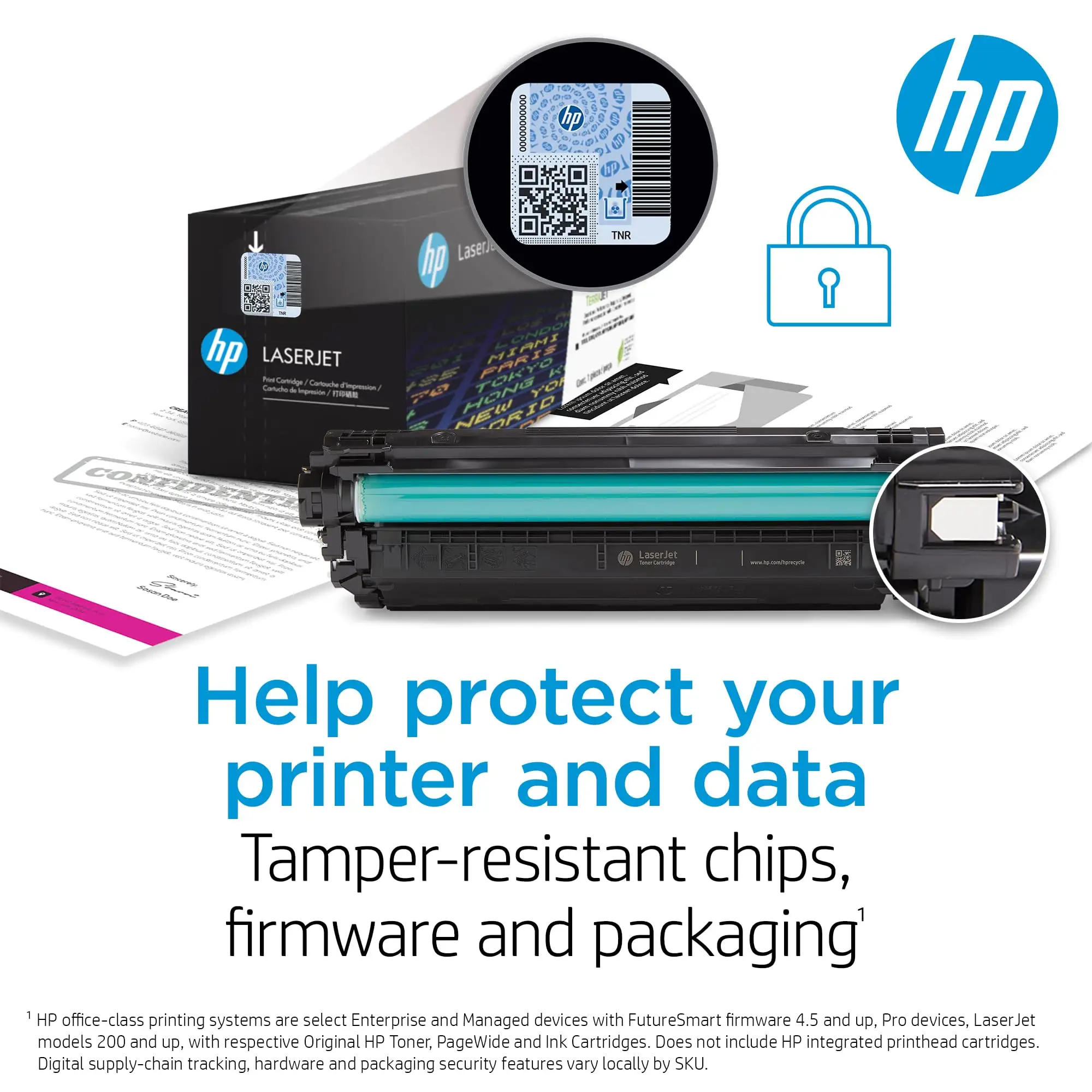
A scam-shaped anxiety shows up most clearly in a strongly worded Amazon review about HP’s broader cartridge behavior. An Amazon reviewer titled their post “BEWARE- INK IS A SCAM,” arguing: “you cannot print any color, even black, when one single cartridge is empty.” They described a cascade where replacing one cartridge seemed to trigger another “empty” reading, calling it “a wasteful scam.” While this complaint references ink behavior and a printer ecosystem rather than the yellow toner alone, it reflects a trust issue: some users feel locked into frequent, costly replacements and resent the way the system enforces it.
For long-term reliability narratives, Best Buy comments skew toward steady satisfaction rather than dramatic “six months later” breakdown stories. Best Buy user “nursie 24” reviewed after “owned for 6 months,” saying it “lasts a good long time” despite being expensive. That kind of time-stamped ownership note suggests that for many OEM buyers, the product does what it’s supposed to do—just at a price that continues to sting.
Alternatives
Only a few competitors are explicitly mentioned in the provided data, but they’re revealing. In the PasProg write-up, the author claims Brother and Canon “often fall short” in “color vibrancy and page yield,” and alleges Canon has “higher rates of toner leaks.” That’s not a marketplace consensus (it’s a single source), but it mirrors what some shoppers fear when they move away from OEM supplies: consistency drops.
The more direct “alternative” evidence comes from Staples remanufactured cartridges. For budget-focused users, the appeal is obvious—Staples positions remanufactured as savings versus national brands. And some buyers validate that route: “thom c.” said they “save me money” and “work just fine,” while “c.m.” wrote they “can’t tell a difference.” Yet other Staples reviewers report quality and leak problems severe enough to negate the savings.
Price & Value
Current pricing signals are scattered across platforms, but the story is consistent: OEM is expensive, and users feel it. Amazon lists the HP 201A Yellow (CF402A) at $95.89 in the provided snapshot, while Best Buy shows $119.99 (sold out in the snippet). That spread alone helps explain why some buyers hunt for deals or consider remanufactured options.
Resale market data from eBay suggests shoppers frequently look for cheaper genuine units or bundles. eBay listings show “hp 201a original… yellow” around $44.95 new in one excerpt, and various multi-pack options at widely varying prices. For deal hunters, the community implication is simple: pricing volatility is real, and waiting or shopping around can materially change what “worth it” means.
Buying tips also emerge indirectly from complaints: if replacing multiple colors hurts, it’s easier to stomach when purchased as a planned set or when discounts apply. Best Buy user “ladydi” appreciated “15% off” and a small coupon for returning used cartridges, hinting that loyalty programs and recycling credits can soften the blow.
FAQ
Q: Is the HP 201A Yellow Toner Cartridge easy to install?
A: Yes—many Best Buy reviewers describe it as straightforward. Best Buy user “joycy” said a “beginner can do it,” and “razt” outlined a simple swap: open the cover, slide out the tray, and replace the cartridge. Ease-of-use shows up repeatedly as a top positive.
Q: Does it actually deliver vibrant yellow color?
A: Generally, yes. Best Buy user “windtunnel” called it “true vivid color,” and “ladydi” described output as “clear and vibrant.” Users who stick with the genuine cartridge tend to frame color quality as dependable and “what the printer was designed to give,” as “alex” put it.
Q: Do users think the page yield matches the official estimate (~1,330 pages)?
A: Not always. While official listings cite roughly 1,330–1,400 pages, some users feel it falls short for the cost. Best Buy user “hpm 27 dw” claimed they got “half the yield,” and “world via la” said the cartridges “do not last as long as i’d like.”
Q: Are remanufactured or third-party replacements worth it?
A: It depends—feedback is sharply split. Staples reviewer “thom c.” said remanufactured cartridges “work just fine,” and “c.m.” couldn’t “tell a difference.” But others reported major issues like “very mottled” color output or toner leaking “all over the pages,” which can erase the savings.
Q: What’s the biggest downside people mention?
A: Price. Even satisfied buyers complain about cost. Best Buy user “hpm 27 dw” wrote “going broke buying toner,” and users like “nursie 24” called it “awesome quality” but still “a bit expensive.” The value argument often hinges on how much you print.
Final Verdict
Buy the HP 201A Yellow Toner Cartridge (CF402A) if you’re a home office user or small team that needs reliable, vivid color and wants an easy install—the kind of buyer who agrees with Best Buy user “windtunnel” calling it “top notch” with “true vivid color.” Avoid it if you print at high volume and can’t tolerate premium consumable pricing, especially if you echo “hpm 27 dw” feeling “going broke buying toner.”
Pro tip from the community: if you’re tempted by cheaper replacements, weigh the gamble carefully—Staples reviews range from “work just fine” to complaints about “mottled” prints and toner leaking “all over the pages.”