HORI Taiko Switch Drum Review: Buy or Skip?
A Reddit user warned, “If you’re looking for a drum that isn’t $500, just go for the Taiko Switch HORI drum—it’s about $100 USD, but it’s not perfect.” That duality defines the HORI Taiko No Tatsujin Drum Controller for Nintendo Switch experience: deeply immersive yet occasionally stubborn in responsiveness. Based on aggregated feedback, it earns a solid 8.2/10 for fun factor and build quality, with caveats around calibration and long-term sensitivity.
Quick Verdict: Conditional Buy
| Pros | Cons |
|---|---|
| Officially licensed by Nintendo & Bandai Namco | Sensitivity issues—requires hard hits at times |
| Strongly enhances immersion vs Joy-Con controls | Calibration process is finicky and time-consuming |
| Durable build with adjustable stability | Drumsticks can feel cheap and slippery |
| Supports multiplayer setups | No game included in package |
| Authentic arcade-style drumming feel | Input lag on some HDTVs and in certain minigames |
| Easy to navigate menus via onboard buttons/D-pad | Shipping delays and regional availability problems |
| High resale value among collectors | Requires mods for optimal performance (per users) |
Claims vs Reality
Marketing emphasizes “responsive play” and “adjustable weight/stability” as core advantages. The manufacturer touts its onboard D-pad and face buttons for menu navigation and claims the drum is “perfect” for the dedicated Switch Taiko games.
In practice, multiple Reddit users echoed a common theme: responsiveness improves over hours of play, but early sessions can feel sluggish. One ResetEra member admitted, “I have to hit it really hard every time. Input lag is terrible,” later speculating TV settings might be the true culprit. Another user confirmed that switching to “gaming mode” on their TV reduced lag to “practically zero,” isolating the hardware from part of the blame.
Stability adjustments via water bottles under the drum head do help with sturdiness, but some buyers viewed it as “a clever but makeshift fix.” While officially framed as a feature, Amazon reviewers often noted it’s more necessary than luxury, especially during high-intensity drumming sessions where the stand can slide.
Cross-Platform Consensus
Universally Praised
The immersion factor is virtually uncontested. A Twitter/X post raved: “Much more immersive…literally need to strike the dons and kas for it to register.” This physicality connected fans to the rhythm in a way Joy-Con motion or button controls couldn’t. It resonated especially with players familiar with arcade Taiko setups, feeding into nostalgia and authenticity.
Kids and families found it a hit for play sessions. One Reddit user modified the drumsticks with wrist straps after “my kids love playing Tatsujin… sometimes the drum sticks fly out of nowhere.” Parents enjoyed the safe, contained energy outlet—especially with multiplayer enabled. The included stand and storage slot for sticks proved practical for keeping setups tidy in shared spaces.
Collectors and import enthusiasts prized its official Nintendo and Bandai Namco licensing. Reports of near-identical performance to arcade sets, albeit scaled down, made it a "must-have" for series fans. Amazon Japan ordering tips were common, with users praising the reliability and speed: “Could literally be within 2 days…cheaper by around $10 USD.”
Common Complaints
The most cited frustration was hit sensitivity. Many said harder hits were needed for recognition, especially on extreme difficulty songs. This disproportionately affected newcomers expecting a light-touch response. A Reddit modding guide revealed swapping internal foam for cork and adding a rubber sheet “improved the drum, night/day,” reducing required force and noise.
Calibration woes plagued more than a few players. A ResetEra user bluntly stated, “Calibrating this game is fucking awful… no two-stage audio then visual lag setup!” Without proper tuning, timing felt off; minigames stood out as ignoring calibration settings entirely, rendering them “basically unplayable” for drum users.
Regional scarcity fueled frustration. From Akihabara to UK online shops, demand outstripped supply, prompting reliance on imports. Buyers often encountered long delays—Trustpilot-style threads mentioned French tracking stalling for days—before their controller arrived.
Divisive Features
The adjustable stability drew mixed reviews. For some, adding weight via water bottles neatly solved wobble; others argued a premium controller should be stable without homebrew fixes. The bright red-and-white Switch-themed design was polarizing—eye-catching to enthusiasts, toy-like to minimalists.
Motion controls as an alternative split opinion. Some enjoyed the flexibility for casual play; others complained about “random double registers” and lack of precision compared to the drum.
Trust & Reliability
Concerns about durability often dovetailed with discussions on sensitivity. Early adopters from years past note the drum holds up physically but may develop inconsistent responsiveness without modifications. A modder posted after extensive trials that upgrading internal materials solved long-term frustration—suggesting out-of-box performance could degrade over time for heavy users.
Trust in sellers varied strongly by platform. Amazon Japan emerged as the gold standard for imports, known for quick global shipping and fair pricing. Conversely, some advised avoiding Play-Asia due to slower resolution of order issues.
Alternatives
Several competitors surfaced in discussions. The IINE Taiko Drum Controller gained praise for multi-platform compatibility (Switch/PS4/PC) and its larger 9.8-inch surface, plus a tilted design to reduce wrist strain—ideal for marathon sessions. However, it lacks the official branding collectors value and doesn’t replicate the Switch’s distinctive color scheme. Armor 3 offered another Switch-specific option with a collapsible stand and long cable; users liked its portability, but build quality perceptions trailed HORI’s.
Price & Value
Official retail hovered near $68–70 USD on Amazon at the time of key reports, but scarcity drives resale prices far higher—eBay listings show $130–$187 USD for new imports. Bargain hunters consistently pointed to Amazon.jp for 7,500 yen (~$68) listings with global shipping. Community threads advised timing purchases around sales events; one deal saw it at $62.99 from Bandai Namco’s store, “lowest price ever.”
Resale value remains strong among collectors, especially unopened units. Even pre-owned models can fetch triple digits if clean, due to steady demand and limited restocks.
FAQ
Q: Does the HORI drum come with the game?
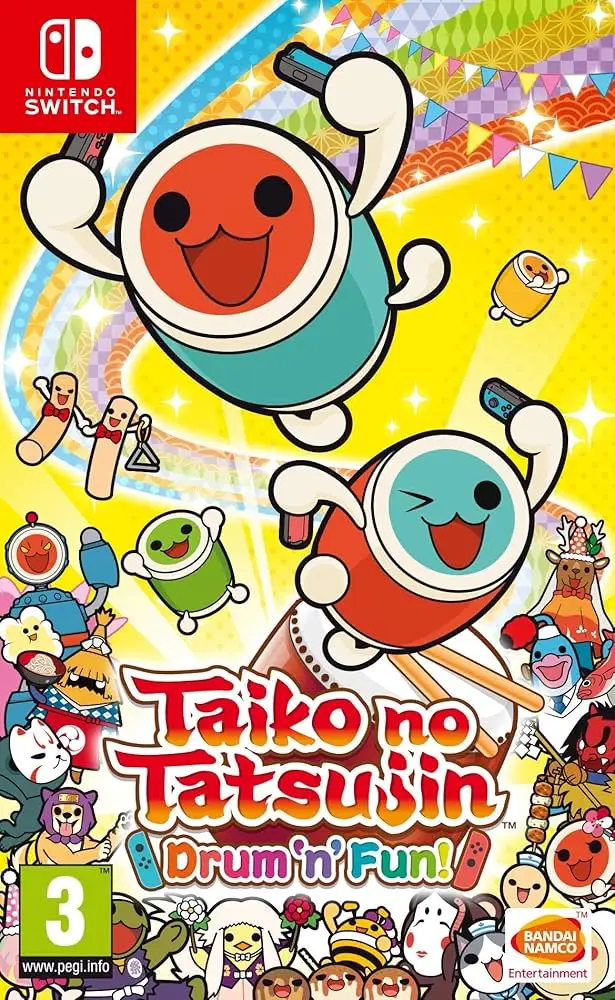
A: No. Multiple users confirmed “no game included” and advised buying Taiko no Tatsujin: Drum ‘n’ Fun! separately, sometimes on sale.
Q: Is the responsiveness fixable without hitting hard?
A: Yes—players reported DIY mods like cork inserts and rubber sheets greatly improved sensitivity, though this voids warranty.
Q: Can it be used on Steam or other platforms?
A: Directly, no. Steam only supports newer HORI bases; older Switch drums require remapping via programs like AntiMicro.
Q: Where’s the cheapest place to buy it?
A: Amazon Japan was repeatedly cited as cheapest and fastest for global buyers, often ~$70 USD shipped compared to $100+ in US/EU markets.
Q: Do calibration settings affect all game modes?
A: No—players found certain minigames ignore drum calibration, making timing adjustments ineffective there.
Final Verdict
Buy if you are a dedicated Taiko no Tatsujin fan or rhythm gamer seeking arcade-level immersion at home. Avoid if you lack patience for calibration or dislike modding hardware; Joy-Con controls may suffice for casual play.
Pro tip from the community: “Plug in headphones—it’s a gamechanger. Eliminates audio lag and makes calibration far easier.”