Google Coral USB Accelerator Review: Strong but Aging
Few AI accelerators have inspired as much loyalty—and frustration—as the Google Coral USB Accelerator, a compact Edge TPU coprocessor that still commands strong praise years after release. Verdict: 7.8/10 — exceptional efficiency and ease for certain workloads, but increasingly hampered by limited model support, stock shortages, and a stagnant ecosystem.
Quick Verdict: Conditional buy — best for object detection and low-power ML on Linux-based systems, but only if current model limitations and availability issues suit your use case.
| Pros | Cons |
|---|---|
| Low power consumption (0.5W per TOP) | Stock scarcity drives inflated prices |
| Extremely fast inference for supported models (10ms typical) | Limited operator set, struggles with newer models like YOLO without tweaks |
| Easy integration with Frigate NVR and Raspberry Pi | Prone to overheating in USB form; fan or throttling needed |
| Compatible across Linux, Mac, Windows | Google ecosystem stagnating since ~2019 |
| Compact, portable USB form factor | Alternatives now offer higher TOPS at similar or lower prices |
| Offloads CPU, reducing load for multi-camera setups | Works best only with pre-compiled TensorFlow Lite models |
Claims vs Reality
Official Coral marketing promises high-speed ML inferencing—Mobilenet V2 at “almost 400fps”—over USB 3.0, with universal OS support. In reality, most community reports sit far lower in multi-stream scenarios. A Reddit user dulcow noted: “Even with GPU acceleration and proper TPU detection, I’ll almost never go below 20ms inference speed… 4 cameras in Frigate, each substream at 640x360.” Others have matched spec speeds, but only with ideal hardware and minimal USB bus contention.
Another claim is “works with Linux, Mac, and Windows systems” with ease. While plug-and-play is true for base examples, users tackling custom models face friction. A Coral user who tried YOLO ports admitted: “Beyond the basic examples…I wasn’t able to run anything else… only works with older Python versions.” The supported TensorFlow Lite subset quickly aged, making adaptation harder without deep ML workflow experience.
On “low power” operation—two TOPS per watt—feedback aligns. One Frigate server operator said inference on 10 cameras “keeps CPU under 12%… Coral runs on 0.5 watts, way less than my GeForce 1080 before.” Still, in USB form the device can run hot. Amazon reviewers point out: “The heat was pretty intense… we just put some fans around it.”
Cross-Platform Consensus
Universally Praised
One enduring strength is its ability to dramatically cut CPU load in surveillance and NVR setups. An Amazon verified buyer explained: “Before Coral, my 7 CCTV cameras averaged 50% CPU load—now I run 15fps per camera effortlessly.” For Frigate users, this fast object detection triggers only seconds after a subject enters frame, vital for precise alerts. GitHub contributor nick m quantified: “High-end CPUs do ~100ms inference… USB Coral is ~10ms.”
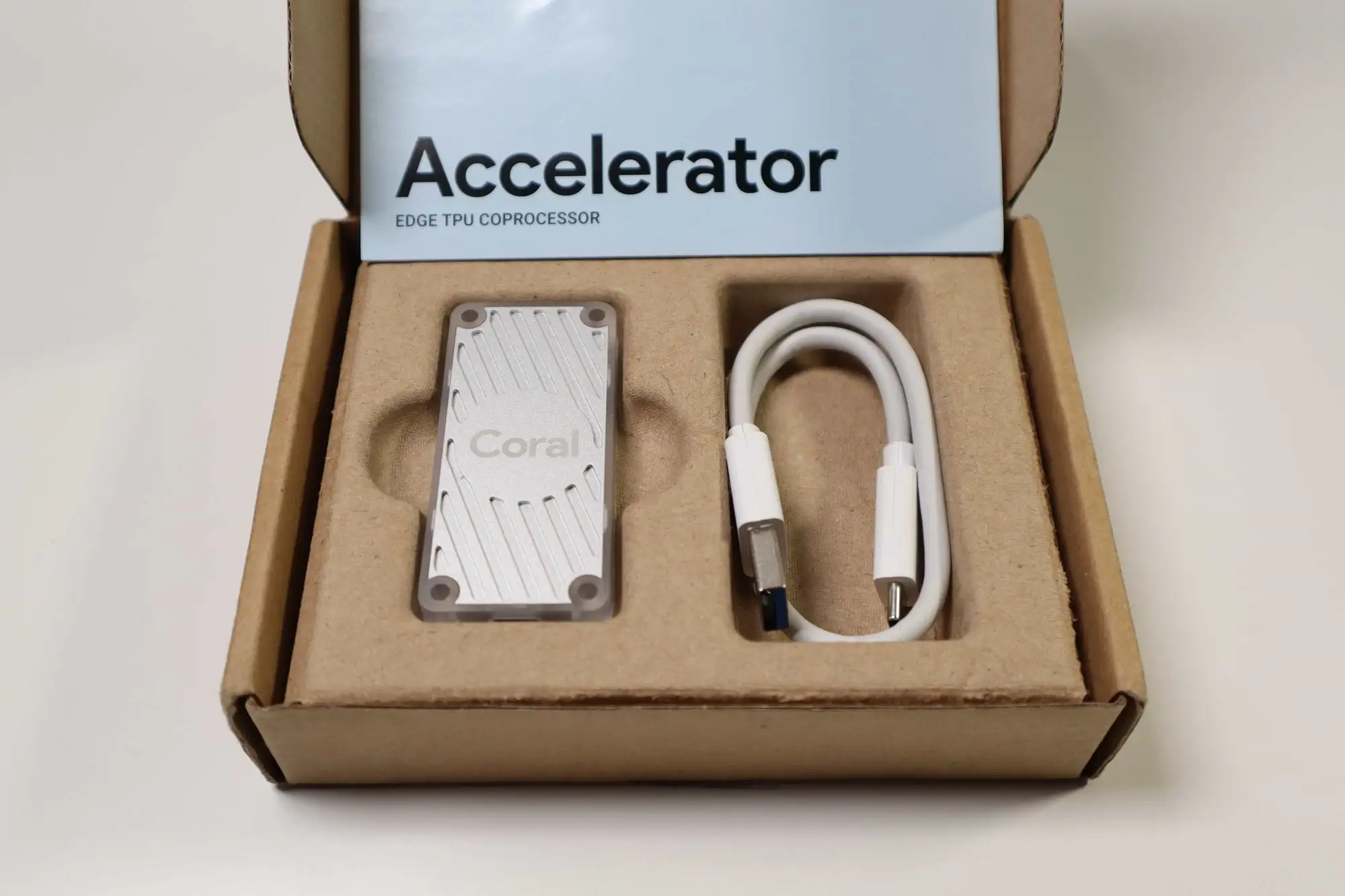
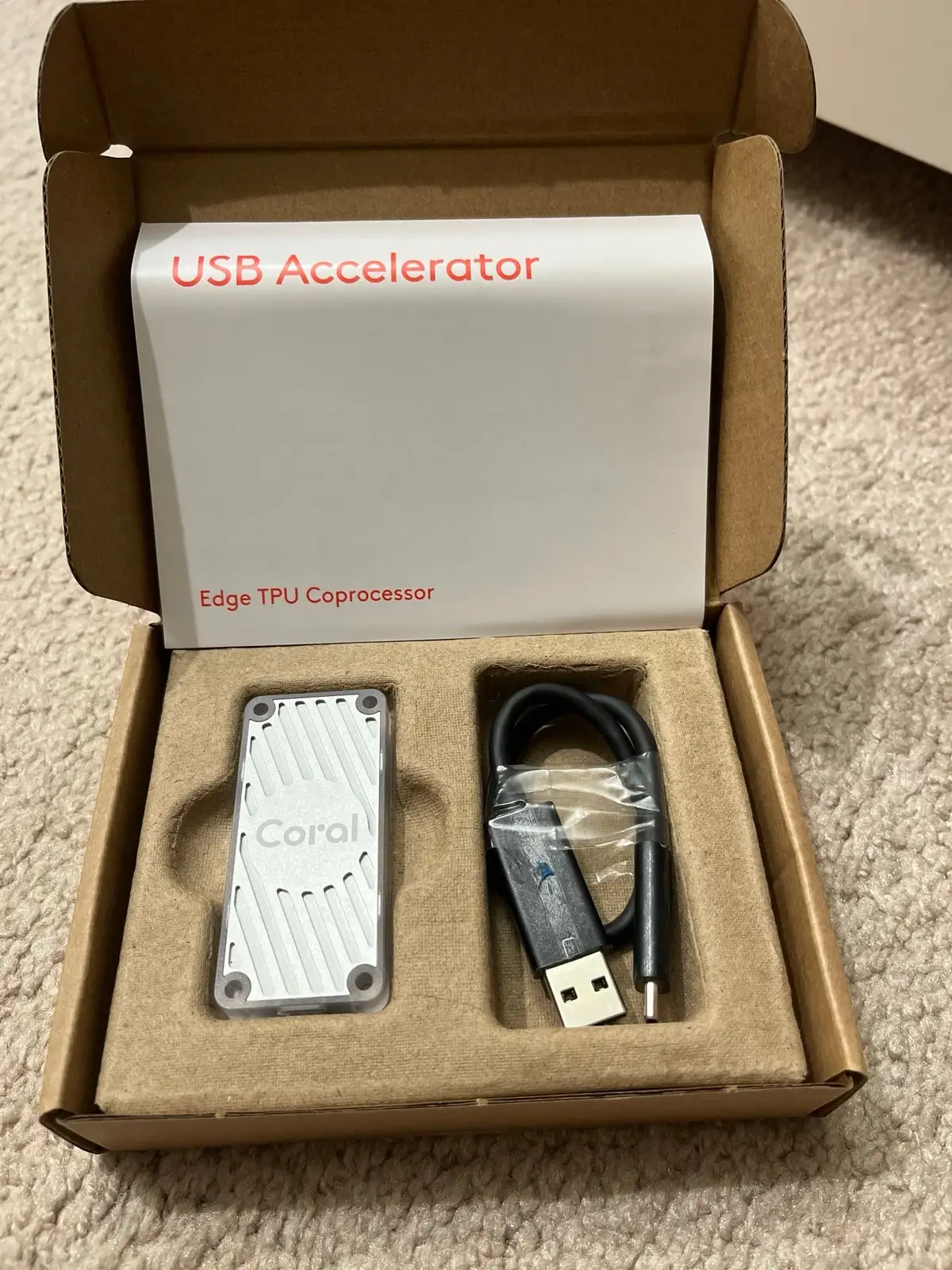
Portability and compatibility matter. A Trustpilot discussion praised that “Google Coral was different—off the shelf, easy to buy, plug and play, Python API.” Engineers liked moving a single accelerator between dev boards, servers, and laptops. Its small footprint, as seen in the matte-coated aluminum shell and USB-C connector, makes it viable for tight embedded setups where full GPUs can’t fit.
Common Complaints
Scarcity dominates complaints. Users across Reddit, GitHub, and Trustpilot documented 6–12 month waits due to batch shipping delays and pushed back distributor dates. As one frustrated buyer put it: “I’ve been chasing this mirage since last November… dates keep slipping by one more day, every day.” This has caused gray-market pricing near triple MSRP.
Technical stagnation is another. Multiple Hacker News voices stated the ecosystem has “been abandoned since 2019,” warning that newer accelerators like Hailo now outperform Coral in TOPS and model flexibility for similar cost. A developer wrote: “I expected Google to abandon it within 2 years… exactly what happened.” Missing modern operator support weakens its role for evolving ML workloads, especially outside Google’s precompiled models.
Hardware-specific flaws include overheating in continuous USB 3.0 use and “green screen” errors in Frigate when too many camera streams max out decoding memory on low-end hosts. As GitHub user alan pilz learned, “The Coral only does object detection—it does not help with decoding the video.”
Divisive Features
Faster inference speeds are indisputable—but their necessity varies. Small environment users question the jump from CPU detection. One Quora thread saw joka killa ask if it brings benefit over their Ryzen 5600G, already with low usage. They were convinced when others explained multi-detection per frame; they later reported: “Inference now down to 10ms… installation was easy peasy.” Some stick to CPU or OpenVINO pipelines for adequate results at lower cost.
Its narrow ML scope—excellent for vision models, poor for LLM or speech tasks—is viewed as specialization by some, and limitation by others. As one engineer summed up: “Great for demos… forget running Whisper.cpp.”
Trust & Reliability
Long-term reports show mixed durability. While many Amazon buyers name it “rock solid” after months of continuous object detection, others experienced failures. One negative Amazon review revealed: “Died after 24 hours of light usage.”
The greater trust issue is ecosystem reliability. Stock droughts, slow replenishments, and the perception of Google’s “flighty” hardware support have made buyers wary. A Hacker News poster warned: “What’s the point in buying a Google product when there’s a good chance they’ll drop software support in 5 years or less?” This is compounded by the fact that the Edge TPU library still has 2020-dated copyright notices.
Alternatives
Several mentioned alternatives offer higher performance-per-dollar today. The Hailo-8L Pi Hat ($80, 13+ TOPS) and Hailo-8 full hat ($135, 26+ TOPS) run more models and have better documentation. Jetson Orin Nano Super hits 67 TOPS at $250 and just received a free software performance boost. Movidius NCS2 is cheaper but “far inferior” for real-time multi-camera detection unless paired with integrated-camera boards.
Even non-accelerator options exist: OpenVINO running on sub-$200 Intel mini-PCs has been “more than adequate for 5 cameras” in user tests, removing the scarcity and heat factors.
Price & Value
Current listings show Coral USB units on eBay hovering $117–$149 plus shipping, with US-based Amazon third parties at $139–$158. This is far above its original $59.99–$74.99 range. During Covid shortages, resales hit $450. Buyers recommend prowling smaller electronics shops or regional distributors, and joining stock-alert mailing lists to catch shipments.
Resale viability persists due to scarcity—some users admitted flipping spare units for substantial profit. The M.2 variants sell cheaper (<$35) but demand compatible slots.
FAQ
Q: Does the Coral USB Accelerator work with Raspberry Pi 4?
A: Yes, but a powered USB hub is recommended to avoid dropouts, especially with SSDs or multiple peripherals on the same bus.
Q: Can it run YOLO models?
A: Only with specialized conversion to TensorFlow Lite and supported layer structures. Users must adapt input shapes and may need to downgrade OS or dependencies.
Q: Is overheating common?
A: In USB form under sustained load, yes. Users often add active cooling or limit performance modes to manage thermals.
Q: How much faster is it than CPU detection?
A: Typical inference speeds drop from 80–120ms on high-end CPUs to ~10ms on USB Coral, further to ~5ms on dual PCIe Coral setups.
Q: Will Google release a newer Coral?
A: No confirmed plans. Community consensus suggests no major hardware updates since launch in 2019.
Final Verdict: Buy if you’re a hobbyist or professional doing vision-based ML on resource-constrained Linux systems, especially with multi-camera NVR setups. Avoid if you need cutting-edge model flexibility or can’t tolerate stock hunts. Pro tip from community: secure an M.2 variant if possible—cheaper, cooler, and avoids USB’s thermal bottlenecks.