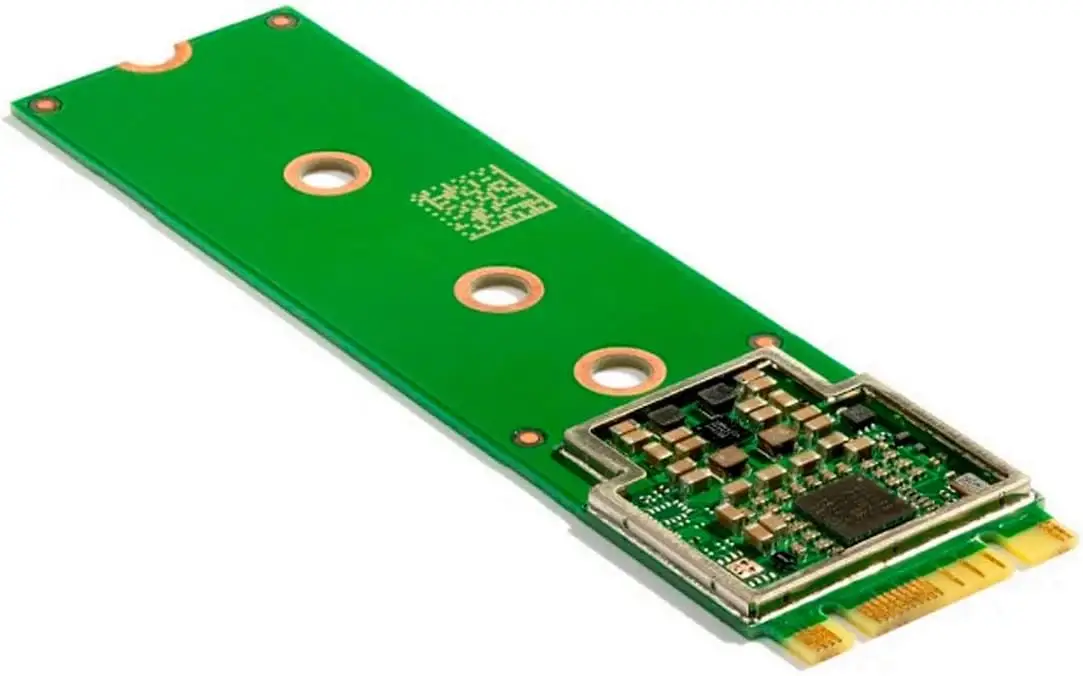
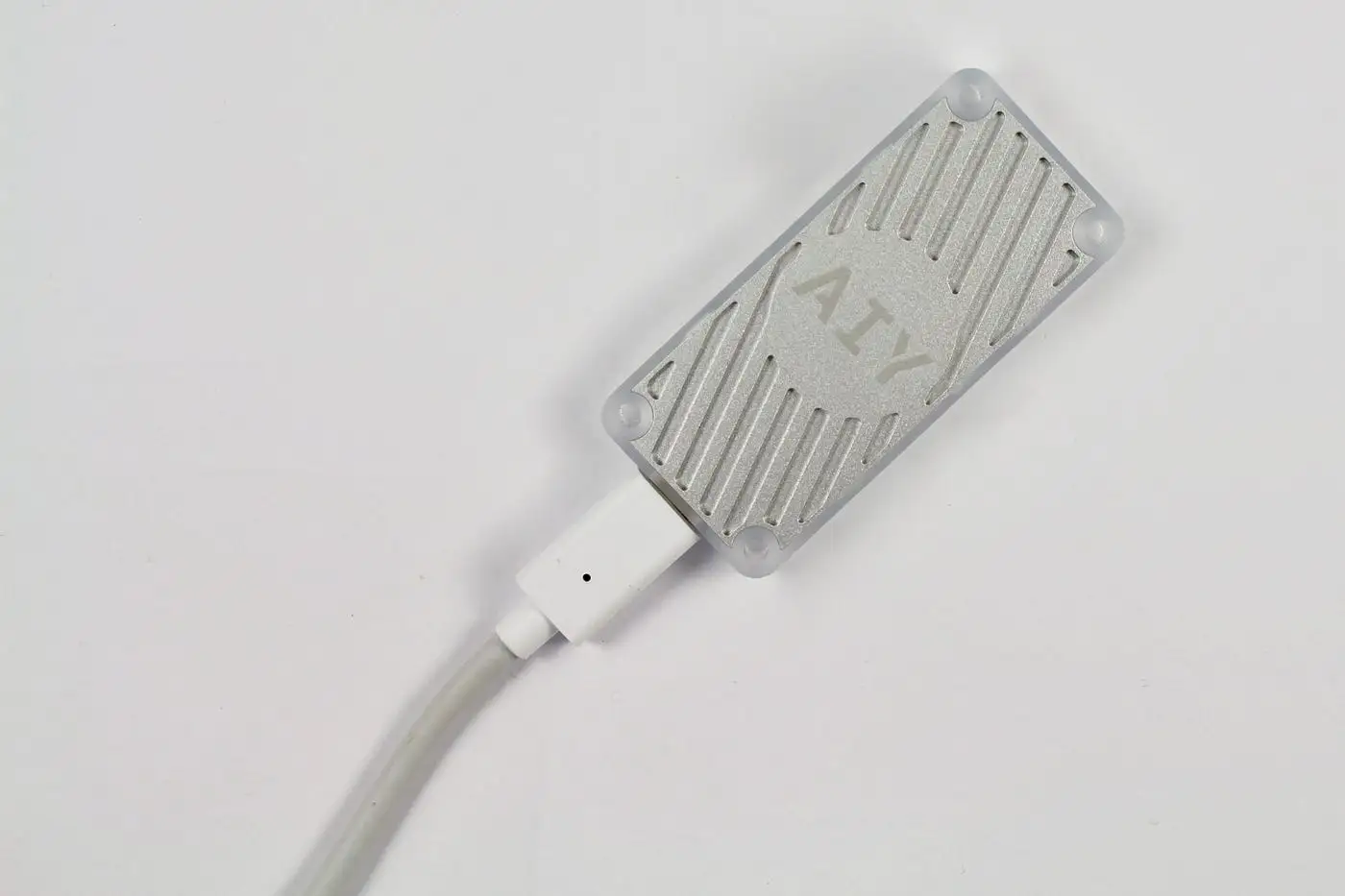
Google Coral USB Accelerator Review: Power & Pitfalls
A Reddit user summed up the experience with the Google Coral USB Accelerator in blunt terms: “From 80 ms down to 10 ms is a huge improvement.” Across multiple platforms, that performance jump was the most consistent praise—but it came with repeated warnings about Google’s stagnant hardware support and fluctuating availability. Our deep dive into user experiences puts its score at 7/10: powerful where it works, but far from universally future-proof.
Quick Verdict: Conditional buy for targeted ML workloads
| Pros | Cons |
|---|---|
| Dramatic inference speed boost (~10 ms vs 80 ms CPU) | Stock shortages and scalper pricing |
| Low power use (~0.5 W per TOPS) | Overheating on USB model unless throttled |
| Compact, easy USB installation | Limited model support, struggles with larger networks |
| Works on Linux, Mac, and Windows | Ecosystem largely stagnant since 2019 |
| Noticeably reduces CPU load in NVR setups | Better, cheaper accelerators now available |
| Compatible with Raspberry Pi and small ARM boards | Requires TensorFlow Lite, limits broader ML flexibility |
Claims vs Reality
The official spec promises “4 TOPS” of Int8 inferencing at just 2 TOPS per watt, with MobilenetV2 running “almost 400 FPS.” Digging deeper into user reports shows the speed claim holds true for supported models—Reddit users running Frigate NVR consistently report going from ~80 ms CPU inference to ~10 ms USB Coral, or even 6–7 ms on PCIe variants. A verified GitHub discussion noted: “My a-key dual Coral… is 5 ms,” illustrating the benefit for multi-object scenarios.
Where the marketing stumbles is on “broad compatibility.” Several long-time owners found the hardware “basically abandoned,” requiring older Python versions or Debian downgrades. Hacker News threads chronicled Google’s lack of updates, leading one commenter to abandon Coral entirely for Hailo hardware: “Much more powerful. Compatible with far more models.”
Another claim—“works with Raspberry Pi and other Linux systems”—also had caveats. While technically true, some Pi 4 setups ran only at USB 2.0 speeds, and Pi 5 tests faltered under multiple camera loads due to missing encode acceleration. As one Reddit user warned, “A Pi 5 will struggle with more than a few cameras, even with the 26 TOPS Hailo.”
Cross-Platform Consensus
Universally Praised
The clearest win is for home surveillance and NVR setups. For Frigate users, Coral’s speed transforms detection pipelines. Reddit user u/NickM*** calculated that a CPU at ~100 ms could only process 10 inferences per second; a Coral at ~10 ms handles far more, avoiding skipped frames: “Another benefit is just the faster response time as there’s less processing delay.” This directly benefits users dealing with multi-camera systems, spider webs triggering false positives, or motion “demolishing any CPU.”
Low power draw is another point of praise. One Frigate operator contrasted Coral’s 0.5 W draw with a GeForce 1080 they used before, while another reported running 10 cameras at under 30% total CPU in a passthrough container setup. The USB format also makes it universally pluggable—HN users noted it’s great for demos on “practically any machine.”
Common Complaints
Stock issues dominate negative sentiment. Multiple buyers endured year-long waits from Mouser, delivery slips from RS Components, or paid scalpers $165-$450 during shortages. In Australia, some never saw it in stock. When available, the USB model’s thermal performance drew criticism: “It overheats unless you put them in high efficiency (low performance) mode which defeats the purpose.”
The broader ecosystem stagnation hurt adoption. “Not very fast for today’s standards,” one Trustpilot critic said, noting the list of supported operators aged quickly. Attempts to port YOLO models failed without deep TensorFlow workarounds, and several users moved to Hailo devices offering triple the compute for similar or lower cost. Lack of modern model support relegated Coral to a narrow set of use cases—mainly object detection in Frigate.
Divisive Features
Some saw Coral as essential even for small NVR setups; others felt modern CPUs or integrated GPUs with OpenVINO sufficed. A Reddit trial reported a <$200 Intel mini PC handled five cameras comfortably without an accelerator. One user highlighted the ease of use—“installation was easy peasy”—while another dismissed it as “only supports small neural networks” and “more than dead.” The divide often came down to workload size and model variety; for narrow TensorFlow Lite pipelines, Coral stayed relevant, but for broader ML experimentation, it lagged.
Trust & Reliability
Trust concerns center on Google’s hardware longevity. Hacker News users described a pattern: “I expected they’d abandon the board within 2 years tops, which is exactly what happened.” The project’s ties to Google’s shifting priorities made long-term viability uncertain. Still, durability in day-to-day use seemed solid—owners ran units for over two years in Frigate setups without failure, provided cooling precautions were taken. Reliability faltered more in ecosystem support than in physical breakdown.
Alternatives
Community comparisons favor Hailo and Nvidia Jetson devices. The Hailo‑8 L Pi hat at ~$80 delivers 13 TOPS, over 3× Coral’s compute, while the larger Hailo‑8 hat for ~$135 exceeds 6×. Jetson Orin Nano units at $250 achieve 67 TOPS and run a wider range of models, though at higher cost and complexity. For lower-budget, multi-camera NVR, integrated Intel GPUs with OpenVINO also rival Coral’s speed under 5 W consumption. The Movidius NCS2 appeared as an option but was judged “far inferior… in my benchmarks.”
Price & Value
Market prices swing wildly. The official tag sits around $59.99–$74.99, yet eBay listings show $149.95 plus shipping, and past scalper sales reached $450. Gigabyte by gigabyte, M.2 and mini PCIe variants often undercut USB, running cooler and more reliably. Savvy buyers advised pre-ordering with major distributors when stock is replenished and avoiding scalper markups unless critical to a project.
FAQ
Q: Is the Coral USB Accelerator worth it for only two cameras?
A: Yes, if your current inference speeds exceed ~80 ms. Communities show Coral drops latency to ~10 ms, improving detection accuracy and reducing skipped frames even in small setups.
Q: Does it work with Raspberry Pi 5?
A: Technically yes, but Pi 5 lacks hardware encode acceleration, limiting multi-camera performance. Many recommend Pi 4 or moving to alternative boards with AI hats.
Q: How bad is the overheating issue?
A: On USB units, sustained high loads can trigger thermal throttling unless cooled or run in low-power mode. PCIe/M.2 variants generally avoid this.
Q: Can I run YOLO models on it?
A: Only with specific TensorFlow Lite conversions and architecture tweaks. Out-of-the-box support is limited to certain model sets.
Q: Is the stock shortage over?
A: Availability remains inconsistent; recent batches sell out quickly. Pre-ordering from official distributors is still advised.
Final Verdict: Buy if you’re a Frigate or NVR user seeking low-latency, low-power object detection and can source it near retail price. Avoid if you need broad ML model flexibility or can’t tolerate Google’s uncertain long-term support. Pro tip from community: consider the M.2 variant for cooler, more reliable performance, and keep an eye on Hailo hats for triple the compute at similar cost.