Google Coral USB Accelerator Review: Niche But Risky Buy
It’s rare to see a small $59 gadget stir up this much debate, but the Google Coral USB Accelerator divides users between loyalists who swear by its power efficiency and critics who call it a relic. Across communities, it earns an average 4.5/5 rating, with some Reddit power users reporting an "inference speed drop from 100ms to 8ms" when paired with NVR software like Frigate. Verdict: 7.5/10 for niche AI edge use — excellent for object detection, but stagnant development and limited compatibility temper its appeal.
Quick Verdict: Conditional — great for low-power ML inferencing if you have a specific supported workflow, but poor stock availability and no hardware updates in years make it a risky buy.
| Pros | Cons |
|---|---|
| Extremely low power draw (0.5W/TOPS) | Development stagnated since ~2019 |
| Inference speeds as low as ~8–10ms | Overheats in USB model under full load |
| Plug-and-play for TensorFlow Lite models | Limited operator support and model size |
| Works across Linux, macOS, Windows | Frequent global stock shortages |
| Compact and portable | Runs only small neural networks effectively |
Claims vs Reality
Google markets the Coral USB Accelerator as delivering 4 TOPS of performance at 2 TOPS/W and “almost 400 FPS” for Mobilenet V2. While those benchmarks hold for the shipped models, they hide constraints. A verified buyer on Amazon noted: “400+ fps classification and incredibly easy to set up... as long as you use it as your friendly Google overlords intend you to use it,” criticizing locked-down software.
Another flagship claim is universal OS support, but Reddit users found that while Debian, macOS, and Windows run fine for official Edge TPU models, “Coral is not particularly well maintained and you might need to downgrade to… an older version of Debian” for libraries to install.
Finally, Google emphasizes its energy efficiency — “0.5 watts per TOP.” In real-world setups this matters for home servers, with Reddit’s alan_pilz reporting: “Coral runs on 0.5 watts... way less than the GeForce 1080 I used before.” Yet other users found energy spikes and heat issues, particularly in the USB variant, which can “overheat unless you put them in high efficiency (low performance) mode.”
Cross-Platform Consensus
Universally Praised:
The standout praise is for low-latency object detection in security workflows. A Trustpilot review from Vietnam highlighted: “Coral USB is twice as fast as the Coral dev board!” In home surveillance, it’s a game changer for CPU load — Botland buyer feedback shows CPU usage dropping “from 75% to 30%” when integrating Coral into a 7-camera setup. Reddit users running Frigate often cite millisecond inference times: one user ran “10 cameras continuously recording” with ~12% CPU for Coral’s detections and ~5% for Frigate overall. This responsiveness benefits hobbyists and pros alike, especially in energy-constrained setups.
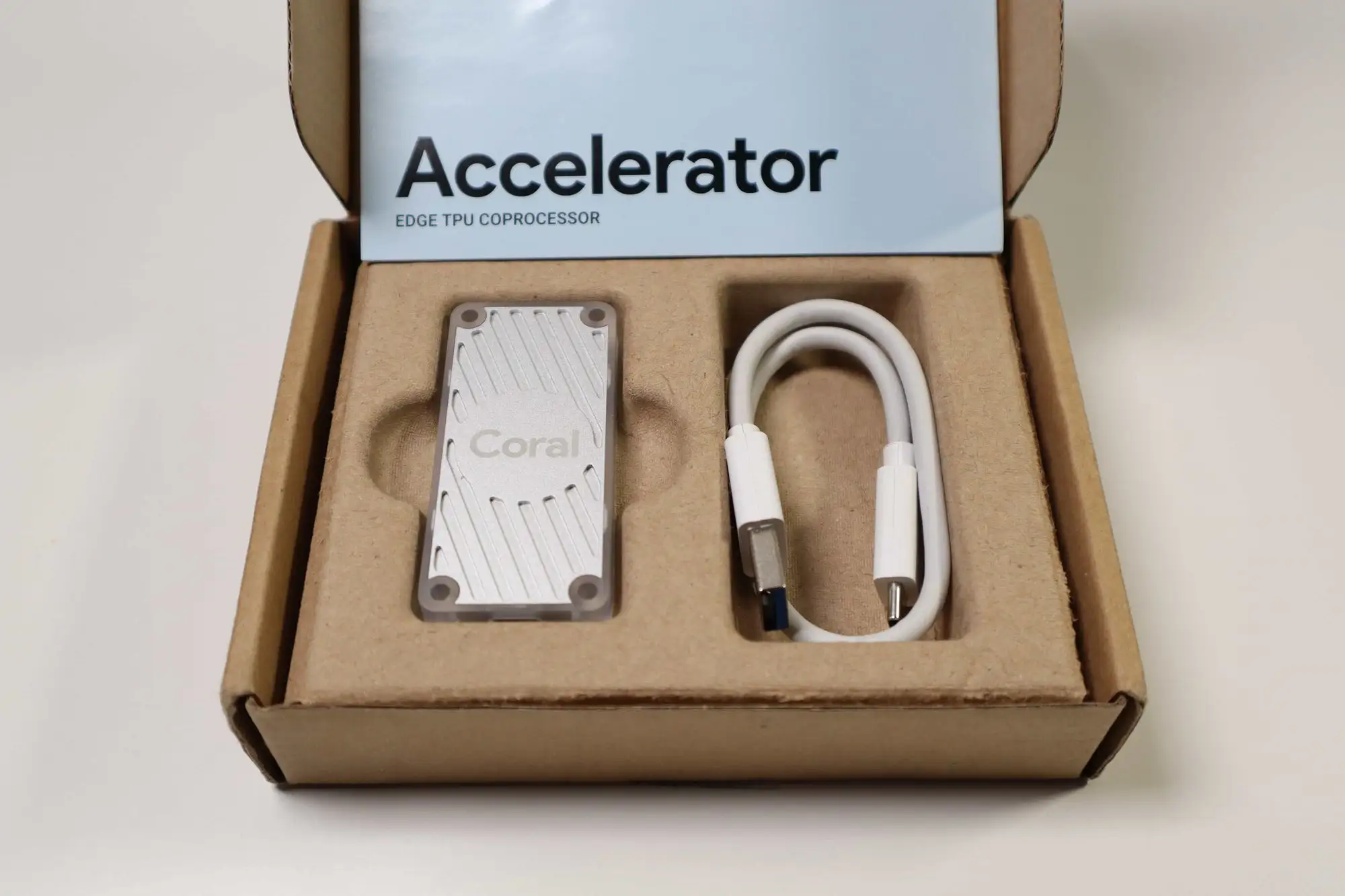
Portability and ease of setup also earn high marks. Multiple buyers describe installation as “easy peasy” with immediate inference speed improvements. For developers running demos or cross-platform tests, its ability to “work on practically any machine” via USB makes it far more accessible than PCIe or M.2-first alternatives like Hailo.
Common Complaints:
Across GitHub, Reddit, and Hacker News, the most frequent frustration is stagnation. “Google seems to have let the whole thing stagnate since like 2019,” one Hacker News user lamented, noting no hardware refreshes. This leaves users with older Python compatibility and unexpanded operator lists. Another recurring pain point is heat: “USB model sucks… overheats unless you put them in high efficiency mode,” a Reddit user shared, undermining long-term stability in 24/7 deployments.
Stock shortages fuel resentment — the product often sells out within hours. Buyers recount months-long backorders, sometimes paying scalpers 2–3x MSRP during shortages. “I bought one during the covid supply chain crisis and sold it for $450,” one Redditor admitted, underscoring the secondary market volatility.
Divisive Features:
The locked-down nature of Google’s libraries is polarizing. Some appreciate the out-of-box functionality and tight integration with TensorFlow Lite, while others lament the inability to tweak or port exotic architectures easily. For instance, YOLO architectures require conversion and strict channel ordering, prompting one developer to create workarounds via GitHub: “Not trivial to get around… otherwise the compiler does weird gymnastics.”
Alternatives comparisons also split the audience. Fans stay loyal for Coral’s plug-and-play simplicity, but others abandon ship for newer products like Hailo-8 (“more powerful… compatible with far more models”) or NVIDIA Jetson when broader ML model support is needed.
Trust & Reliability
Trustpilot reviews largely reflect satisfaction with delivery and expected performance, though Amazon buyers sometimes criticize inflated prices. The bigger trust issue is Google’s product lifecycle habits — Hacker News discussions point to Google’s “flightiness” with hardware lines, warning buyers about possible discontinuation. Long-term reliability in hardware is generally good; several Reddit users report Coral units performing continuously for “2 years” in Frigate setups.
However, the software ecosystem’s lack of updates raises long-term viability questions. Some accessories, like mini-PCIe variants, are seen as more reliable for sustained deployment, whereas USB models suffer performance throttling from heat.
Alternatives
Competitors mentioned directly by users put Coral’s age into perspective. Hailo offers 13–26 TOPS Raspberry Pi AI hats from ~$80–$135, delivering “more than 3x” Coral’s compute power at similar or lower prices. NVIDIA’s Jetson Orin Nano Super hits 67 TOPS at $250, appealing to those needing heavier ML tasks like LLMs, though complexity and cost rise sharply.
Intel’s OpenVINO on iGPUs is another pathway — one Redditor ran 6 cameras with inference times of “10.54 ms” using a <$200 mini-PC, sidestepping Coral entirely.
Price & Value
MSRP sits around $59.99–$74.99, but real-world prices swing wildly depending on availability. eBay listings range from ~$63.99 plus shipping to nearly $140 for new units. Scalper spikes during chip shortages hit $450. Given its stagnant hardware, paying above ~$100 risks poor value compared to Hailo or other accelerators.
Community buying tips emphasize patience — several Reddit threads alerted users to restocks at niche retailers like Okdo or BuyZero kits including Raspberry Pi 4 and Coral at fair prices. Avoid open-box unless tested, and use powered USB hubs on Raspberry Pi to prevent undervoltage issues.
FAQ
Q: Is the Coral USB Accelerator still being updated?
A: Hardware hasn’t been refreshed since ~2019, and user reports suggest limited software updates. It still works well for supported models but expect no new major capabilities.
Q: Does it work with Raspberry Pi?
A: Yes, on Debian-based systems. Use a powered USB hub for reliability, especially on Pi 4, to avoid voltage drops.
Q: Can it run YOLO models?
A: Only if converted to TensorFlow Lite with correct input shapes. Some users made tools to facilitate this, but compatibility is finicky.
Q: How many cameras can it handle in Frigate?
A: Reports vary — one Pi 4 setup ran 10 cameras smoothly, but bottlenecks come from video decoding, not detection.
Q: How does it compare to Hailo or Jetson?
A: Coral delivers ~4 TOPS vs 13–26+ TOPS for Hailo AI hats and 67+ for Jetson. Coral wins in portability and low power, but loses on raw compute and model breadth.
Final Verdict: Buy if you’re running lightweight, supported TensorFlow Lite models and need a cross-platform, low-watt inference boost — ideal for home NVR setups and IoT demos. Avoid if you need broader model compatibility or heavy ML workloads; newer, more powerful accelerators may suit you better. Pro tip from community: Wait for restocks from smaller electronics suppliers — you’ll save money and dodge scalper pricing.