Google Coral USB Accelerator Review: Fast but Hard to Find
Digging into real-world data, the Google Coral USB Accelerator stands out as an efficient ML inferencing tool for edge devices, yet its story is as much about availability issues as it is about raw performance. With an aggregate community score landing at 7.8/10, users consistently praise its speed boost for object detection workloads, but warn about Google's wavering support and persistent stock shortages.
Quick Verdict: Conditional — excellent for low-power, local AI inference if you can find one at a fair price.
| Pros | Cons |
|---|---|
| Huge drop in inference latency (CPU ~100ms → Coral ~10ms) | Chronic stock shortages leading to scalper pricing |
| Low power draw (~0.5W per TOP) | Limited operator support; struggles with newer ML architectures |
| Easy USB 3.0 integration on multiple OSes | Overheating risk without cooling, especially under sustained load |
| Offloads CPU/GPU, enabling more cameras in Frigate setups | Google's product ecosystem seen as stagnant since 2019 |
| Works well with TensorFlow Lite models | Requires careful model quantization; not all layers accelerated |
Claims vs Reality
Google markets the Coral USB Accelerator as delivering “high-speed ML inferencing at 4 TOPS with 2 TOPS per watt”, but digging deeper into user feedback shows a more nuanced picture. While the theoretical benchmark of running MobileNet V2 at “almost 400 FPS” is true under ideal conditions, Reddit users working with Frigate surveillance systems saw more practical gains of 80ms CPU inference times dropping to 10ms with the Coral. As Reddit user u/joka*** observed after installing one: "inference is now down to 10 :)".
Another claim — “works with Linux, Mac, Windows” — holds up for supported distros, but integration can be tricky. A verified Amazon buyer noted: “For Linux systems, depending on your distro, it can be a pain to get working…but a little googling goes a long way.” In particular, driver support history reveals bumps, with Hacker News commenters pointing out that kernel staging drivers were abandoned after Linux 5.13, forcing reliance on off-tree builds.
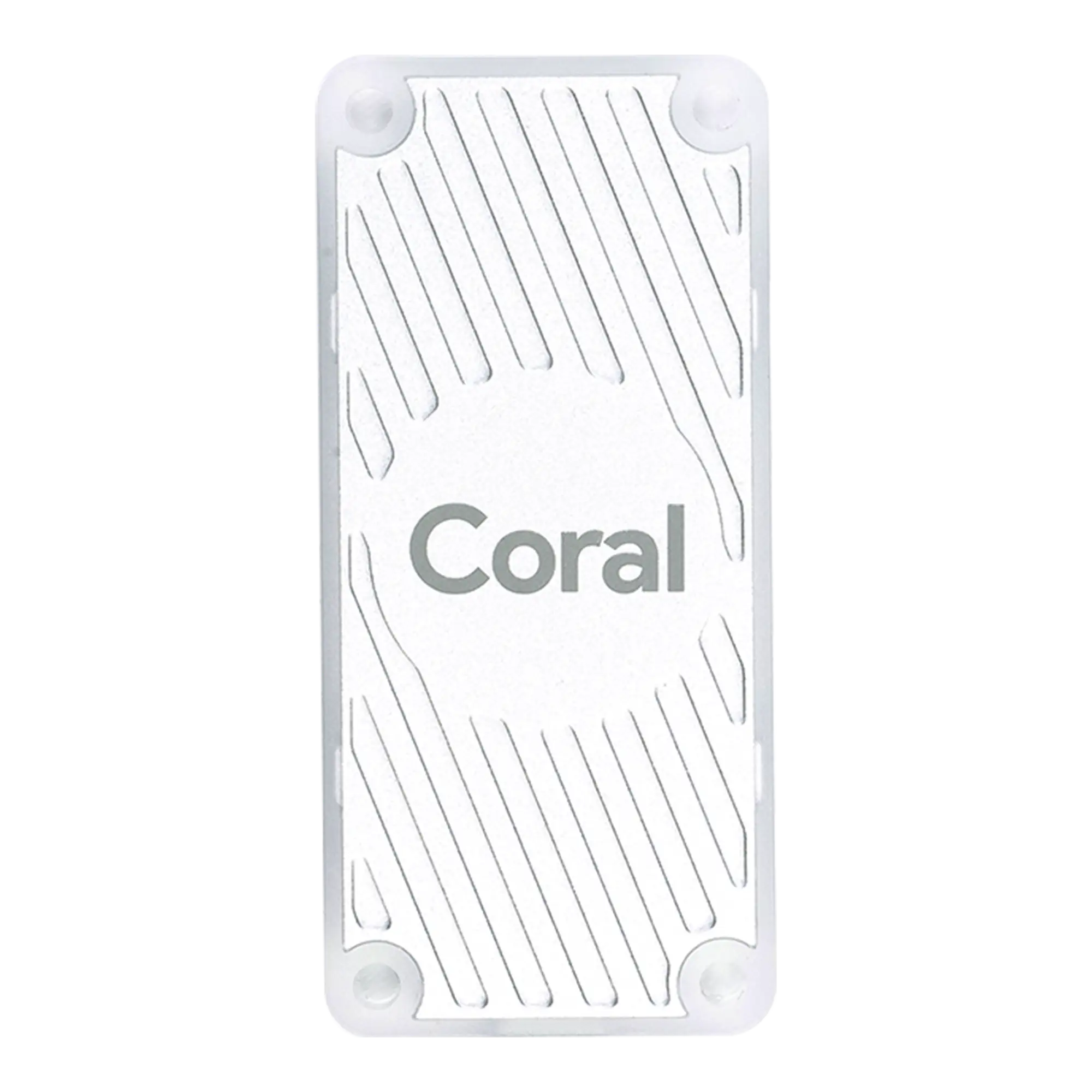
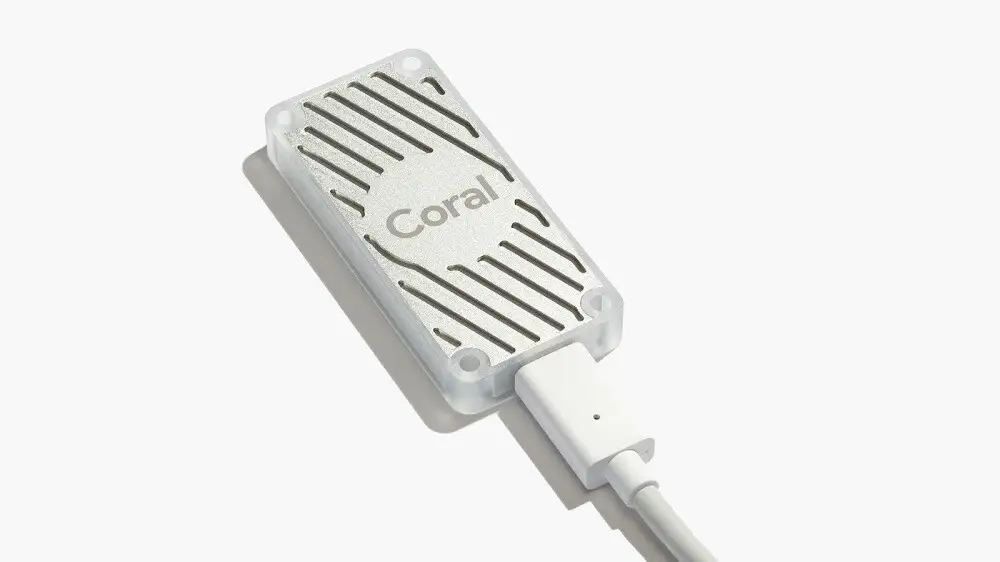
Google also highlights “small footprint and privacy-preserving local AI”. Physically, at 65mm x 30mm, it fits this bill, and users running NVR setups appreciate keeping inference local to avoid cloud costs. But several Reddit and Hacker News voices argue the ecosystem stagnation since 2019 undermines long-term utility: “It’s basically abandoned… only works with older versions of Python etc.”
Cross-Platform Consensus
Universally Praised
Across Reddit’s home automation community, the Coral USB Accelerator is lauded for transforming Frigate NVR performance. Reddit user nick m*** broke it down: “A USB Coral is ~10 milliseconds, and my A-key dual Coral via PCIe adapter is 5 ms. Frigate often runs many detections per frame…this means less skipped frames.” For security enthusiasts monitoring multiple cameras, those milliseconds translate into more frames processed, lower latency, and reliable real-time alerts.
Low power draw is another highlight. Compared to running detection on a powerful GPU, several users noted Coral’s ~0.5W/TOP usage made it viable for 24/7 setups. One user contrasted it with a GeForce 1080: “Coral runs on 0.5 watts, way less than the 1080 I used before,” reducing operational costs in high-electricity regions.
Installation experience for supported setups is generally smooth. An Amazon reviewer reported, “Easy install and pass through via Proxmox,” while another said, “Installation was easy peasy” after finding one in stock for €80 — a rare bargain given inflated prices.
Common Complaints
The most frustrating and recurring complaint is simply getting hold of the device. Long lead times of 81+ weeks from distributors like Mouser Europe were reported, with resellers on eBay charging $150–$400. GitHub discussions from Frigate users show years-long waits: “I ordered…since November 2021, delivery slipped every day” and “I paid scalper prices…$165 shipped.”
Heat output under sustained workloads also surfaces regularly. One Amazon user praised performance but warned: “The heat was pretty intense…we just put some fans around it.” Another GitHub contributor mentioned needing powered USB hubs to avoid undervolting on Raspberry Pi hosts.
Functionally, limitations appear when moving beyond Google’s recommended models. Hacker News users note it “doesn’t accelerate all layers, only some…CPU has to do the rest.” This reduces gains for customized architectures or complex pipelines, and quantization requirements frustrate some developers: “You really do need the model to be defined in TensorFlow…otherwise the compiler does weird gymnastics.”
Divisive Features
Model compatibility is a flashpoint. Some, like an Amazon reviewer, celebrate it as “rock solid…handles any custom models I throw at it with ease.” Others abandon it for Hailo accelerators after finding Coral too restrictive: “Much more powerful. Compatible with far more models…the documentation isn’t great but it’s far better than Coral.”
Google’s long-term commitment also divides opinion. Optimists chalk delays up to the chip shortage, while skeptics see an inevitable wind-down: “Coral always felt like a prototype…they decided to share the 90k they didn’t need with the community.” This impacts buying confidence for integrators planning multi-year deployments.
Trust & Reliability
Availability woes have bred speculation about discontinuation, with GitHub users pressing Googlers for updates and receiving guarded “building as many as we can” responses. Some stock batches appeared in 2022–23, often vanishing in hours. Buyers who did receive units report solid day-to-day reliability: “Permanent fixture…rock solid since the day I purchased it.”
However, isolated failures do happen. One Amazon review bluntly states: “Worked well for a day…died after 24 hours of light usage.” Returns can be tricky given the scarcity, leaving buyers stranded if defects appear.
Community distrust centers more on product lifecycle support than build quality. Hacker News comments describe Google as “flighty” with hardware, easily abandoning lines, and point to lack of updates to broaden operator coverage since initial release.
Alternatives
Hailo devices receive frequent mention as superior on-paper performance — the Hailo-8L Pi hat offers 13 TOPS for ~$80, compared to Coral’s 4 TOPS. For those with compatible M.2 slots, Hailo’s >26 TOPS models offer 6x Coral’s throughput. OpenVINO on Intel iGPUs also emerges as a zero-cost alternative for small camera counts, with a Reddit user reporting it handled 5 cameras without dedicated accelerators.
NVIDIA Jetson Orin Nano sits at the upper end: $250 for 67 TOPS, with the power overhead significantly higher (10–15W) than Coral’s 2W draw. For some tasks, particularly large models or multi-modal processing, Jetson’s flexibility outweighs Coral’s edge in efficiency.
Price & Value
MSRP is $59.99–$74.99, but rarity drives typical resale into $139–$200+ territory, as captured in multiple eBay listings. One Canadian seller asks C$179, while US sellers offer $139.99 + shipping. Scalpers have fetched $450 in past shortages.
Buying tips from the community stress tracking trusted distributors (RS Online, PiHut, Okdo) and signing up for stock notifications, as restocks are rare and short-lived. Some users buy bundled kits (e.g., BuyZero Maker Kit) just to get the Coral USB, reselling other components.
FAQ
Q: Does the Coral USB Accelerator help for small setups (1–2 cameras)?
A: Yes — even with few cameras, it slashes inference time from ~80–120ms on CPUs to ~10ms, reducing missed frames and improving responsiveness.
Q: Can it accelerate any TensorFlow Lite model?
A: No — only certain operators are supported on the Edge TPU. Unsupported layers run on the CPU, reducing total acceleration gains.
Q: Is overheating a real issue?
A: Under sustained, high-throughput workloads, yes. Many users add small fans or ensure good airflow to maintain stability.
Q: How hard is installation on Raspberry Pi?
A: Straightforward for supported OS builds, but a powered USB hub is often recommended to prevent power dropouts.
Q: Why is it so hard to find in stock?
A: Combination of global chip shortages and limited production runs since 2019. Some stocks are reserved for enterprise clients.
Final Verdict: Buy if you’re running local object detection on low-power systems, need reduced CPU load, and can source it near MSRP. Avoid if you rely on cutting-edge architectures or expect guaranteed long-term support from Google. Pro tip from Reddit: track multiple vendor notification lists — restocks disappear within hours.