Google Coral USB Accelerator Review: Strong but Scarce
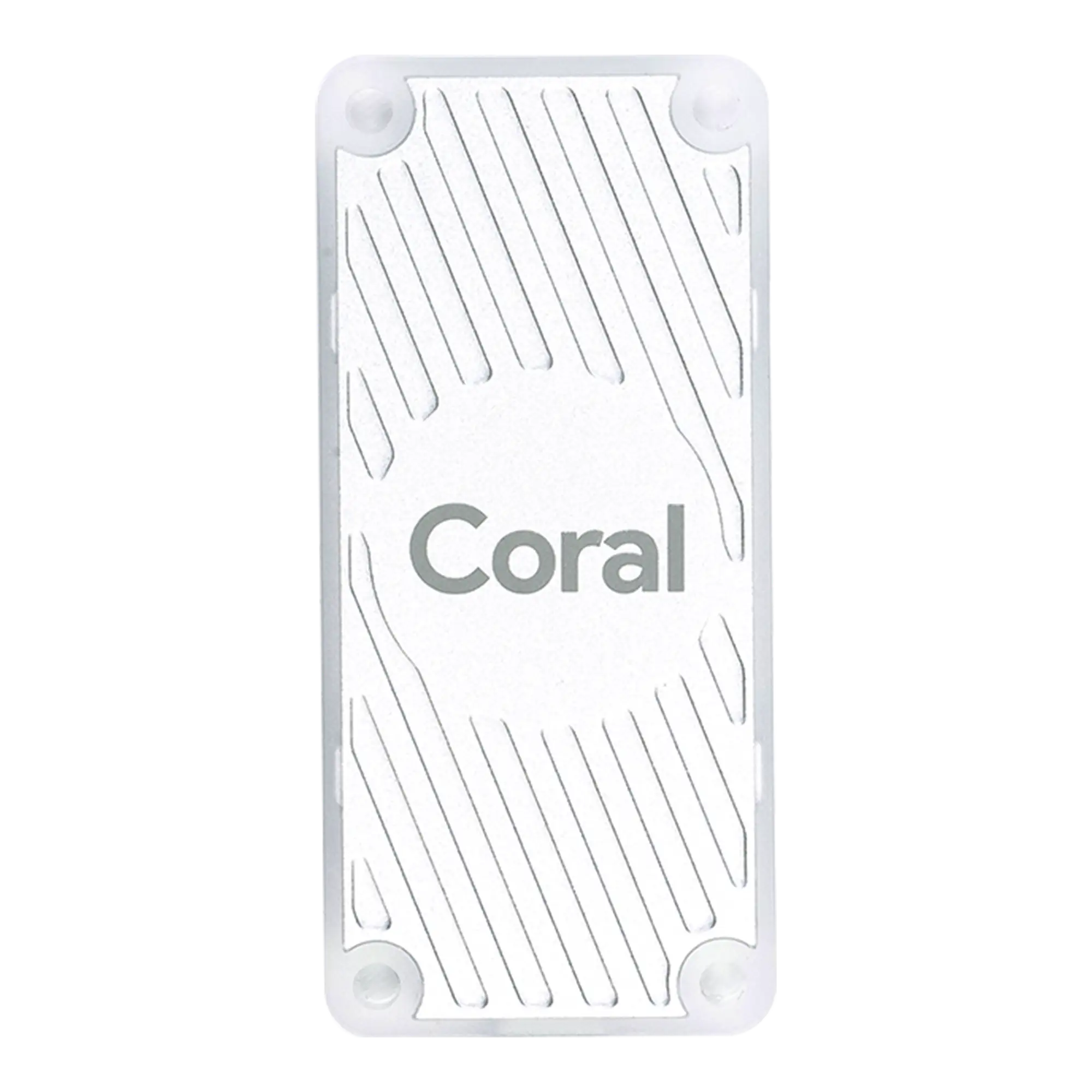
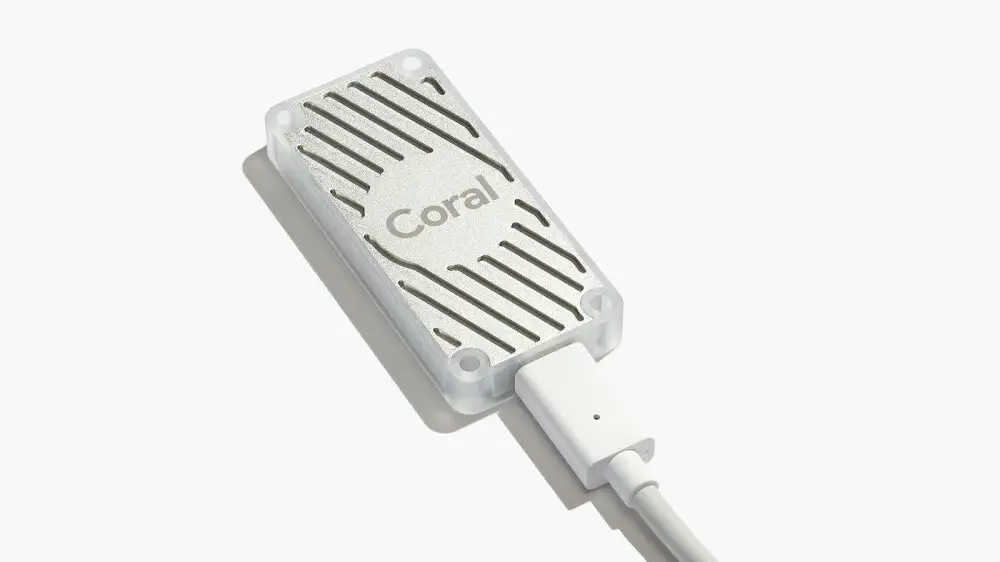
Supply shortages turned scalpers into gatekeepers for the Google Coral USB Accelerator — yet for users who manage to get one, the performance jump is undeniable. Across hundreds of reports, inference times drop from ~100 ms on high-end CPUs to ~10 ms on USB Coral, with PCIe variants hitting 6–7 ms. For NVR setups like Frigate or Camect Home, that means faster object detection, lower missed events, and CPU load reductions of up to 45%. Verdict: 8.2/10, but availability and stagnating support temper the enthusiasm.
Quick Verdict: Conditional
| Pros | Cons |
|---|---|
| Huge inference speed boost (from ~100 ms to ~10 ms) | Chronic supply shortages and scalper pricing |
| Low power draw (~0.5 W/TOPS) | Overheating issues on USB model under heavy load |
| Immediate CPU load reduction | Limited to small model architectures |
| Works across Linux, Mac, and Windows | Ecosystem has seen little development since 2019 |
| Simple plug-and-play setup for Frigate/Camect | Model compiler requirements can be restrictive |
| Privacy-preserving local processing | Thunderbolt/PCIe alternatives needed for higher loads |
| Compact form factor, easy integration | Specs unchanged while rivals leap in performance |
Claims vs Reality
One of the biggest marketing points is the 4 TOPS performance using just 0.5 W/TOPS, with Google claiming it can run models like MobileNet V2 at nearly 400 FPS. While this holds up in benchmarking, Reddit users note real-world numbers depend on workload. A Frigate user reported: "With a USB Coral we typically see about 10 ms, with a PCIe Coral I see 6–7 ms of inference time" — far below CPU speeds, but often shy of headline “400 FPS” rates when full video pipelines are involved.
Another claim is universal platform support — macOS, Windows 10, Debian Linux. That’s largely accurate for setup, but Hacker News contributors warn that "the Coral USB Accelerator doesn't accelerate all of the layers, only some… CPU has to do the rest" meaning actual throughput varies. With pre-trained TensorFlow Lite models the TPU can handle most layers, but deviations require host processing, reducing gain.
Finally, Coral emphasizes “easy deployment” via TensorFlow Lite and AutoML Vision Edge. While Reddit threads confirm plug-and-play is possible (“Installation was easy peasy. Inference is now down to 10”), Hacker News users counter that "you really do need the model defined in TensorFlow… Coral uses specific architectures and the compiler does weird gymnastics otherwise”, limiting flexibility compared to newer AI accelerators.
Cross-Platform Consensus
Universally Praised
A recurring benefit is rapid inference speeds and reduced CPU strain. Frigate NVR operators report transformative effects: a Reddit user said "CPU load dropped from 75% to 30% for 7 cameras, inference speed from 100 ms to 8 ms" after installing a Coral USB. Camect Home users saw improved detection granularity: "Now when we get out it states car, person, dog… not bad for just $50 upgrade". Lower latency also means busy scenes are processed without skipping frames, especially in multi-camera surveillance.
Power efficiency resonates with energy-conscious setups. Discussions highlight the Coral’s ~0.5 W per TOPS draw — Reddit’s u/Nick*** noted "Coral runs on 0.5 W, way less than the GeForce 1080 I used before". This benefits installations on Raspberry Pi 4 or small-form PCs without high thermal budgets.
Simple integration is a repeated win. Users describe plugging it into USB 3.0 ports and updating Frigate configs, with detection enabled almost instantly. On varied hosts — RPi, Intel mini-PC, NAS — compatibility is reported as painless, especially compared to PCIe/M.2 accelerators requiring slot access.
Common Complaints
Stock shortages dominate frustration. On Reddit, years-long backorders are common: "Definitely planning to get a Coral USB when they aren't on back order for 2 years or cost $200–$300 from a scalper". Retailers regularly slip ETAs by months, with European buyers paying steep shipping to secure units. Some suspect Google deprioritized the product, with Hacker News noting "Google seems to have let the whole thing stagnate since 2019".
Thermal reliability is another widespread grievance for the USB variant — "It overheats unless you put it in high efficiency (low performance) mode which defeats the purpose". For sustained multi-stream detection, users suggest powered hubs or switching to M.2/mini-PCIe versions.
Ecosystem stagnation frustrates developers. The list of supported operators “aged quickly” and several tried-and-failed YOLO ports end in "I wasn't able to run anything else on these beyond basic examples".
Divisive Features
Power efficiency vs. emerging competition divides opinion. While many praise Coral’s thermals versus GPUs, others argue modern ARM SBCs and Hailo chips deliver more for less. One user compared: "Hailo-8 L hat for Pi is ~$80 with 3x the compute power of Coral USB". For budget NVR setups, some see Coral as still “good enough,” others see little point in a product unchanged since 2019.
Flexibility is debated — some laud the straightforward USB deployment; others lament restrictions to TensorFlow Lite and difficulty with non-standard architectures. For casual surveillance hobbyists, constraints may be irrelevant; for ML engineers, they’re deal-breakers.
Trust & Reliability
Trust concerns stem less from quality failures and more from supply chain opacity. Orders placed with RS Components/Farnell often slide months, sparking suspicion of uncommunicated stock realities. Trustpilot-style anecdotes emphasize frustration at Google’s silence. One Hacker News poster summarized: "Coral always felt like a prototype they shared because they had excess chips… now it’s just languishing."
On durability, those who own units report no major failures over months or years, even with 24/7 NVR use. A Redditor said "Been running Frigate with mine for 2 years… works well enough for realtime detection" — but others warn to operate within Google’s thermal guidelines (>25 °C environments may require caution).
Alternatives
Direct competition in discussion includes:
- Hailo-8 (Pi Hat): At ~$80 for 13 TOPS, delivers ~3x Coral’s power; better model support, but requires Pi-specific deployment.
- Jetson Orin Nano Super: 67 TOPS at $250, runs broader ML workloads (even LLMs), but far higher cost and complexity.
- Intel NCS2 / OpenVINO: On mini-PCs can rival Coral’s detection speeds and support more models; better stock availability, energy draw under 5 W with i3 mobile CPUs.
- Rockchip SBCs: Native TPUs at low cost; limited model support and no Frigate+ integration yet.
Many users ultimately weigh ease-of-use (USB Coral) against raw performance (Hailo, Jetson). For pure object detection in consumer NVR setups, Coral remains competitive if obtainable.
Price & Value
Pricing varies wildly: official MSRP around $59–$74, but eBay listings average $139–$165, with Japanese imports at ~$250. Reddit users report paying scalpers reluctantly, treating the purchase as a long-term component. Resale value stays high due to scarcity — one seller recouped 80% of scalper pricing within days.
Buying tips from community:
- Pre-order from reputable electronics distributors (Mouser, Farnell) and expect months-long waits.
- Check smaller EU/UK retailers for periodic restocks; act quickly when notifications drop.
- Avoid paying >$200 unless urgency outweighs value concerns.
FAQ
Q: How much faster is the Coral USB Accelerator than CPU detection?
A: Typical drop from ~100 ms inference to ~10 ms on USB Coral, PCI Coral down to ~6–7 ms. This can halve CPU load in multi-camera setups.
Q: Does Coral support non-TensorFlow models like YOLO?
A: Yes, but with caveats. Models must be converted to TensorFlow Lite with Edge TPU compatibility, and architecture restrictions apply.
Q: Will Coral USB work on Raspberry Pi without a powered hub?
A: Sometimes, but power instability can cause intermittent failures. Users recommend a powered USB hub for reliable operation.
Q: Is it worth it for small environments with few cameras?
A: Yes, latency improvements and reduced CPU load still apply, but the difference may be less dramatic if your CPU is underutilized.
Q: Why is Coral often out of stock?
A: Industry-wide silicon shortages and low production prioritization by Google lead to long backorders; small batches sell out quickly.
Final Verdict
Buy if you’re running local ML inference (Frigate, Camect, similar) with multiple video streams and want sharp CPU load reductions, especially on power-constrained hardware. Avoid if you need broad model compatibility, heavy multi-layer acceleration, or can’t justify scalper pricing. Pro tip: Set restock alerts and consider M.2 variants if USB stock remains elusive — they’re cheaper, cooler, and more reliable long-term.





