Google 30W USB-C Pixel Charger Review: Conditional Verdict
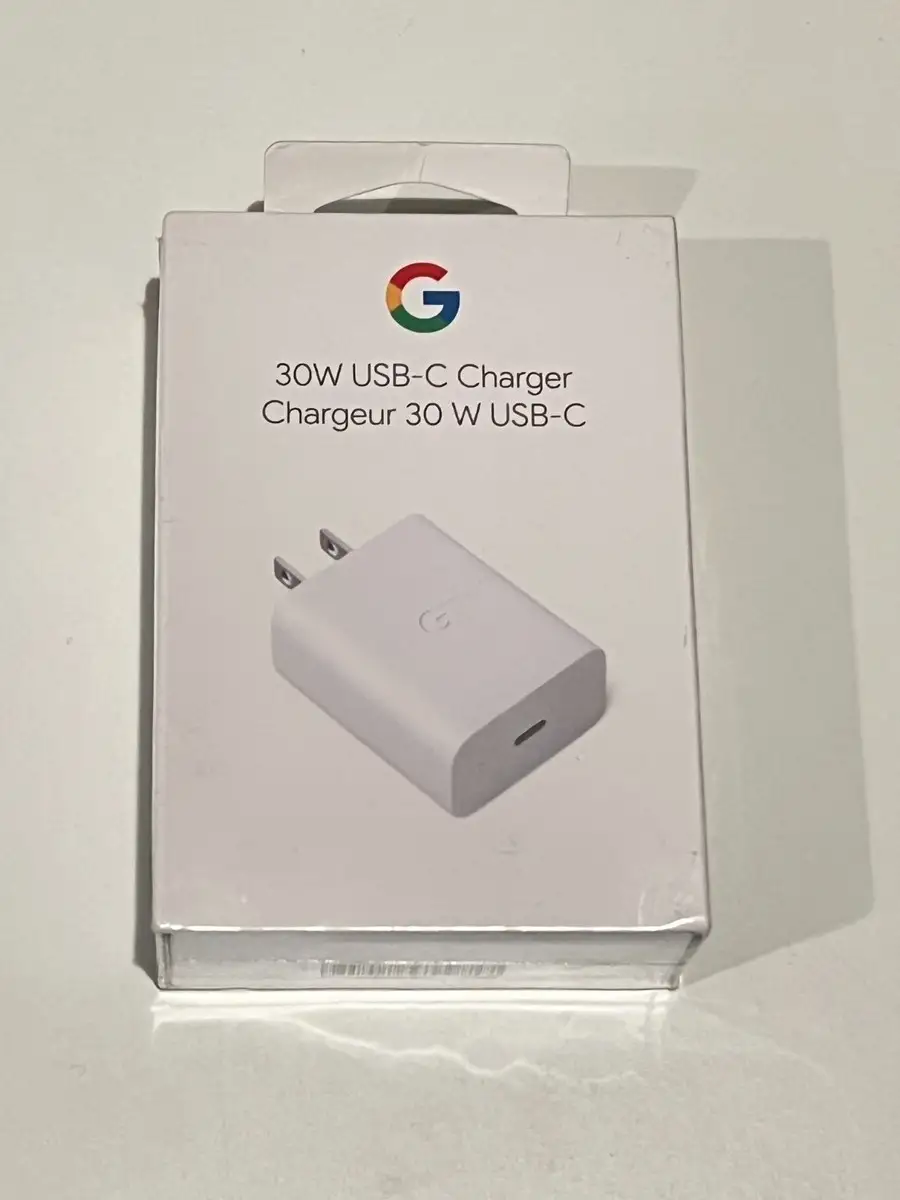
A verified buyer on Best Buy summed up the sentiment for the Google 30W USB-C Fast Charging Pixel Phone Charger: "omg this charger is amazing and it truly is super fast charging with my phone. Don't regret it at all." With an average rating hovering around 4.8/5 across major platforms, this single-port USB-C PD PPS charger targets Google Pixel owners but shows broad compatibility with modern USB-C devices. Based on cross-platform data, its performance scores an 8.7/10 – edging high for build quality and reliability, but losing points for price and overpromised wattage.
Quick Verdict: Conditional
| Pros | Cons |
|---|---|
| Fast charging on Pixel 6–8 series at full supported speed | Actual Pixel charging speed capped (~22-27W) despite 30W claim |
| High build quality with certified safety features | Price higher than third-party 30W equivalents |
| Compact design, travel ready | Cable length may be too short for some setups |
| Broad USB PD 3.0/PPS compatibility for modern devices | No support for legacy fast-charge protocols |
| Reliable with consistent performance over time | Does not ship with Pixel phones; extra expense |
Claims vs Reality
Google markets this adapter on its store as able to “charge in a flash” with up to 30W, and Best Buy reviewers consistently praise "way faster compared to other regular adapter from One+ brand". In practice, multiple Reddit threads point out the Pixel 6 and Pixel 7 series max ~22-23W, not the full 30W, with one Reddit user noting: "It barely ever requests 20W, in fact. The 18W charger and 30W charger are both close to exactly the same charging times."
While the official description emphasizes PPS support for optimal Pixel charging, Android Authority testing found the Pixel 7 Pro pulled about 23W peak, Galaxy S23 about 27.5W: it confirms the charger delivers maximum per-device speeds, but marketing pushes wattage ceilings the Pixels themselves can’t hit.
The compact size claim holds true—Amazon listings and buyers highlight its portability, with comments such as "simply fold the plug and keep it in your bag or pocket while traveling". It’s clearly optimised for convenience and safety, aided by an upgraded GaN II chip generating less heat.
Cross-Platform Consensus
Universally Praised
Broad agreement emerges around speed for supported devices. Reddit threads show Pixel 8 users upgrading their bricks to hit the 27W upper bound: one Pixel 8 Pro user reported "14% to 100% in about 80min for me". Best Buy feedback like "charges my Pixel phone very quickly" is echoed by Flipkart users citing 50% in ~35 minutes and full in under 2 hours for Pixel 6a.
Durability wins plaudits across retail sites. At Best Buy, one customer wrote: "Quality product... haven't had to worry about it breaking or not charging fast like cheaper versions." Others stress the benefit of sticking to the manufacturer’s spec—compatibility peace of mind when paying premium: "Perfect combo, no need to search for compatible cable."
For travellers and multi-device households, Trustpilot Q&A confirms working with tablets, Pixel Watch chargers, and even Galaxy S23 base model at optimal rates. The PPS feature helps modern devices maintain cooler temps during charging, protecting battery health—a point stressed on the Google Pixel Community, where a moderator advised PPS as "a major contributor to battery degradation prevention."
Common Complaints
Cost is the dominant gripe. Flipkart reviews call it "too much price compared with other brands", while Best Buy notes "a little pricey but worth the cost"—the worth being debated across Reddit, with some arguing a $40 charger feels steep when other USB PD PPS bricks offer similar performance for less.
Another pain point is cable length. Multiple Best Buy reviewers mention wanting “a little longer” cord, making setups restrictive. Amazon buyers appreciate the included cable but some still swap for longer aftermarket C-to-C leads.
There’s also a mismatch between expected and actual Pixel wattage draw. Android Authority’s critical note: "you may have thought the phone supports 30W charging, but our own testing revealed the phone is actually capped at 22W" frustrates those buying for headline speed. In rare cases, third-party chargers cause pulsing connect/disconnect behaviour—one Pixel 8 Pro owner observed this until switching to the official brick.
Divisive Features
Sustainability messaging—50% post-consumer recycled housing—is welcomed by environmentally minded buyers, but others see it as corporate cost-cutting excused as eco-friendliness. Reddit holds both positions: one user accepts the argument to reduce landfill bricks, another replies: "It just happens to conveniently save them money without passing that savings on to the consumer."
Its single-port design sits in the middle ground: minimalists and travellers love the reduced size, power users wish for extra ports to charge laptops or simultaneous devices. And while PPS is lauded for modern gear, lack of legacy Quick Charge means older devices see slower rates.
 ---
---
Trust & Reliability
Trustpilot’s Q&A history shows consistent compatibility answers—Pixel 4a to Pixel 8 Pro, USB-C tablets, even dual-voltage travel use with just pin adapters in Europe. This transparency builds customer confidence.
On Reddit, long-term users note no degradation after months: "Works beautifully! No issues charging. No more aggravation!" The PPS thermal control helps avoid overheating—an important factor for battery longevity. In contrast, non-PPS bricks in community threads drew complaints about feeling “quite hot” compared to the device itself, reinforcing why sticking to spec matters for safety.
Alternatives
Community suggestions favour Anker Nano II and Ugreen GaN chargers—both supporting USB PD PPS with varying wattage up to 65W. Reddit user advice: "Get one at least 30W, more specifically PD-USBC compatible brick." Anker's multi-port designs beat Google’s on versatility, but Google’s brick wins on guaranteed Pixel compatibility. Android Authority also points to the company’s own 45W PD charger (sans PPS) for small laptops, signalling this as a better option if you need broader device coverage.
Price & Value
Prices vary widely: official US retail around $25-$35 depending on inclusion of cable, eBay listings as low as $12.81 for open-box units. On Amazon, third-party “Pixel-compatible” 30W PPS bricks run ~$12.79, undercutting Google’s.
Buying tips from Reddit: if upgrading from older Pixel 25W adapters, you may see marginal gains, so savings can be redirected elsewhere. For first-time Pixel buyers, paying for official spec ensures you avoid underperforming clones and compatibility headaches.
FAQ
Q: Does it fast charge the Pixel 6 or Pixel 7 at 30W?
A: No—both max at ~22-23W, but this charger delivers their top supported speed via PPS safely.
Q: Can I use my old USB-A to USB-C cables with it?
A: No—the port is USB-C, requiring C-to-C connections for full performance.
Q: Does this work with Galaxy or iPhone devices?
A: Yes—it supports USB PD PPS, fast charging compatible modern Galaxy and iPhone models at their max supported wattage.
Q: Will it charge my laptop?
A: Only smaller USB-C laptops up to 30W draw—it’s underpowered for demanding models.
Q: Is PPS important for Pixels?
A: Yes—it keeps device temperatures lower while charging, aiding battery longevity.
 ---
---
Final Verdict: Buy if you’re a modern Pixel owner seeking full-speed, safe charging with minimal hassle. Avoid if you need multi-port versatility, legacy fast-charge, or balk at paying premium for marginal gains over decent third-party PPS bricks. Pro tip from the community: stick with PPS-certified chargers to keep temperatures low and extend battery health.





