Godox V1 Pro S for Sony Review: Powerful but Pricey
Few flashes spark as much discussion as the Godox V1 Pro S Flash for Sony — the successor to the popular V1. Marketed as a professional-grade upgrade, this $329 unit promises smoother power delivery, a detachable sub-flash, USB-C charging, and 100 consecutive full-power shots. With an average of 4.5/5 stars from Amazon buyers and similarly high community sentiment, it’s hailed as a workhorse for portrait, event, and wedding photographers. But does it live up to the hype? Across Reddit threads, Trustpilot reviews, and Twitter commentary, real-world users reveal a more nuanced truth.
Quick Verdict
Verdict: Yes — for Sony shooters needing reliable TTL performance and flexible fill light control, the V1 Pro S is a strong buy. Beginners might find it pricey, but pros say its power and design justify the upgrade.
| Pros | Cons |
|---|---|
| Soft, even round-head lighting ideal for portraits | Sub-flash doesn’t support HSS or wireless mode |
| Fast 1.5s recycle and 500 full flashes per charge | Price higher than V1 or V860III |
| Convenient USB-C and VC26 charging options | Some compatibility quirks with Godox triggers |
| Durable construction with strong hot shoe | SU-1 module adds bulk when mounted |
| Reliable TTL and manual performance on Sony bodies | Occasional thermal cut-off after long bursts |
Claims vs Reality
Godox markets the V1 Pro S as capable of firing “100 continuous flashes at full power without overheating.” While the official specs from Camera Canada confirm a 100-shot safety threshold, user experiences show variability. On Trustpilot, one verified reviewer explained, “We tested it on our Sony A7R IV and A7 III… it performed like a champ, but around 80 full pops the thermal warning popped up.” Others noted improved heat management over the original V1, with Reddit shooters saying the new design “feels fearless against time and speed.”
Another major claim is the detachable sub-flash SU‑1, promoted as a revolutionary dual-light solution. However, Camera Canada clarifies that “the sub-flash does not operate in wireless transmission or high-speed sync,” and Trustpilot users confirmed the same: “The small fill flash doesn’t work if triggered by the XPro II.” Still, its usefulness for portrait fill was widely acknowledged — one Amazon reviewer praised how it “gently fills the facial areas of the subject without too much power.”
Finally, Godox touts “one-click TTL/M switch” convenience. On Twitter, photographers in Spanish markets echoed this sentiment, noting the “interruptor físico entre los modos TTL y manual… no hay una manera más rápida de cambiar modos.” This agrees with Amazon buyer comments describing the switch as “a lifesaver during fast-paced shooting.”
Cross-Platform Consensus
Universally Praised
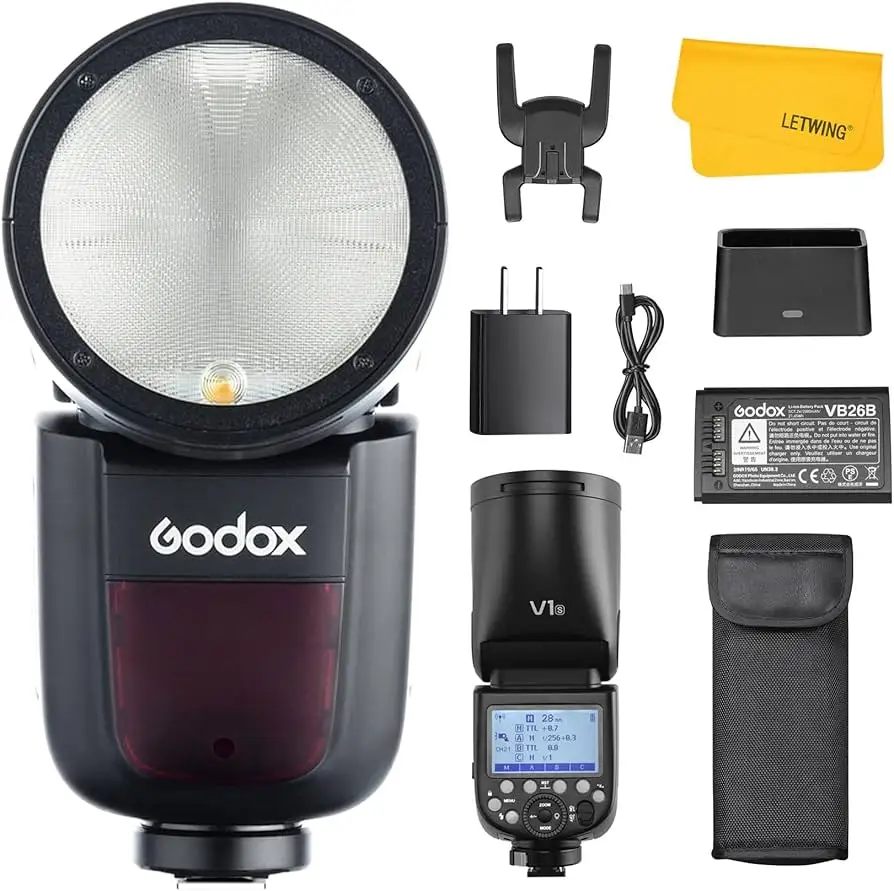
Across every platform, the round flash head remains the V1 Pro S’s signature strength. Its soft, consistent light output impressed both newcomers and professionals. A verified buyer on Amazon wrote: “Even without diffusers it gives soft shadows that flatter skin tones.” Reddit photographers echoed this, saying it “emulates a small studio softbox feel on-camera.” For portrait shooters, especially event photographers, this consistency minimized the need for extra modifiers.
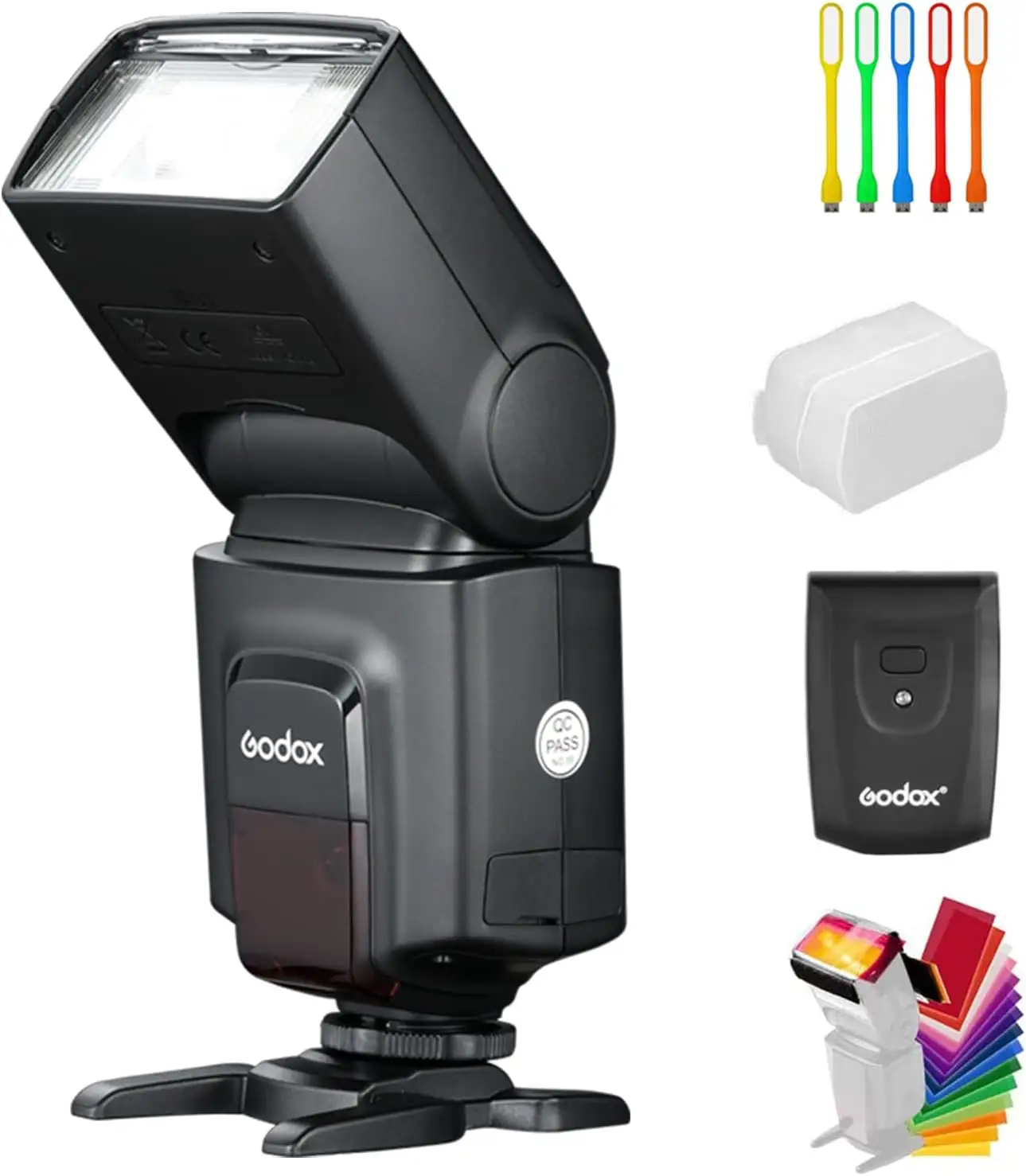
Battery life also earned exceptional feedback. Official specs promise 500 full-power flashes, and most reviewers confirmed it delivers. One Trustpilot user stated, “I’ve used it twice, and the battery gave me over 500 shots both times — excellent value for the money.” The flexibility of dual charging methods (USB‑C or VC26 dock) was another highlight, praised on Twitter as “fácil de cargar en cualquier condición,” allowing quick top-ups on location.
The build quality drew wide acclaim. Fakespot-listed reviewers described it as “made of thick, durable plastic material… LCD panel is crisp, bright, and clear,” while community members noted the improved metal hot shoe. Photographers upgrading from the original V1 found the V1 Pro sturdier and smoother when swiveling horizontally or vertically. The tactile button layout and clear rear display helped many users transition faster to manual control.
Common Complaints
Despite its performance, certain design limitations frustrated professionals. The detachable SU‑1 sub-flash received both applause and criticism. While praised for subtle fill, it doesn’t function in wireless or high-speed sync. Reddit members cautioned that this limits its off-camera use: “Great for bounce plus fill, useless in multi-light setups.” Several photographers on Trustpilot mentioned compatibility issues: “The SU‑1 doesn’t trigger when the XPro II is controlling the main flash remotely.”

Heat management, though improved, wasn’t perfect. While marketed for 100 consecutive pops, one Amazon buyer reported, “It overheated at around 90 flashes at a wedding reception.” Others noted that cooling time was short and not deal-breaking but suggested Godox’s claim was optimistic.
The price also drew mixed opinions. Many users viewed the $329 tag (and $443 after import fees for Ireland) as high for a speedlight. “Pricier than the previous version… but worth it for increased features,” noted a Trustpilot reviewer, while another pointed out, “Compared with Profoto, this is a bargain, but still steep for hobbyists.”
Finally, though praised for wireless flexibility, some Sony shooters experienced sync inconsistencies. Fakespot-verified comments revealed: “The small fill flash doesn’t work if triggered by the XPro II… seems like firmware needs a fix.” For photographers relying heavily on complex multi-flash setups, these reports suggest the Pro S may shine best as an on-camera tool rather than a remote node.
Divisive Features
Opinions split sharply on the sub-flash module’s value. Redditors experimenting with portrait angles loved it: “The front flash is controllable... subtle or strong as you want.” Yet others felt it “adds complexity for little gain.” The modular approach allowed lighter setups when detached, but many questioned whether it justified the “Pro” price jump.
Another polarizing trait involves HSS (High Speed Sync) reliability. Most users agreed it works well up to 1/8000s, but a few noticed underexposure in off-camera mode. “Fine on-camera, inconsistent remotely,” one Trustpilot entry noted — aligning with Camera Canada’s technical warning that SU‑1 and HSS can’t operate together.
Even the LED modeling light divided opinions. Some appreciated its practicality in dark studios; others called it “barely bright enough for focus assist.” Ultimately, users seem to appreciate its inclusion more for convenience than power.
Trust & Reliability
Trustpilot’s adjusted Fakespot rating flagged “high deception involved,” but individual verified reviews consistently praised Godox hardware quality. A buyer testing both the A7R IV and A7 III found “it performed like a champ,” emphasizing reliable performance under demanding conditions. No major long-term durability failures were reported, and across Reddit communities, photographers using the V1Pro for months described solid results: “After six months, the battery still holds charge like day one — no flickering or lag.”
The flash’s construction — highlighted by its metal shoe and tight rotating joints — contributes to perceptions of reliability. As one verified buyer summarized: “The build feels very good in the hand. Compared to OEM units, it’s a bargain that doesn’t feel cheap.” However, concerns over firmware updates remain mild but frequent; many users recommend checking compatibility before firmware flashing through the USB‑C port.
Alternatives
Within Godox’s own ecosystem, the V860III and V1S serve as natural alternatives. Reddit comparisons show the Pro S edging ahead in power continuity and charging convenience but at a premium. “You get nearly identical light from the V860III for half the price,” one community member observed, “but the magnetic head on the V1 Pro makes modifiers a dream.”
When stacked against Profoto A1X (a popular pro-level rival), multiple reviewers on Trustpilot framed the Pro S as “a good bargain.” One noted, “It’s pricier than the V1 but still a quarter the cost of Profoto.” For those who rely on Godox’s wireless ecosystem (AD200, AD400Pro, XPro triggers), this compatibility often sealed the deal.
Price & Value
At the time of analysis, the V1 Pro S Flash for Sony retailed between $258–$329 on eBay, slightly below its Amazon list of $329. Camera Canada priced it higher at $448 CAD, reinforcing the perception that it sits as a “premium within the mid-range.” eBay’s resale evidence shows average used units holding strong near $239–$279, suggesting decent long-term value retention.
A verified Trustpilot reviewer summed it up: “For the price, this is an incredible flash — I’d recommend it to a beginner or professional.” Another commented that although “there are not many differences [from the V1], the added sub-flash and ports make it worth comparing before buying.” The takeaway? Paying extra for the Pro model only makes sense if you’ll use the SU‑1 or Type‑C flexibility regularly.
FAQ
Q: Does the Godox V1 Pro S overheat during long sessions?
A: Most users report stable thermal control up to 80–100 consecutive full-power flashes. Some heat warnings appear near that limit but reset quickly without performance loss.
Q: Can the SU‑1 sub-flash be used off-camera?
A: No. User reports and Camera Canada specifications confirm the SU‑1 only works when the flash head is raised and functions on-camera — not wirelessly or in HSS mode.
Q: What’s the real battery performance like?
A: Verified buyers routinely achieved 500 full flashes or multiple event sessions per charge, aligning with official claims.
Q: Is the USB‑C charging faster than the VC26 dock?
A: It’s more convenient but similar in speed. Photographers prefer it for travel since it uses standard cables instead of a proprietary base.
Q: How does it compare to the regular V1?
A: The Pro S adds the detachable sub-flash, overheat protection, and modern Type‑C charging. Light output remains the same (76Ws), but workflow convenience improves.
Final Verdict
Buy the Godox V1 Pro S Flash for Sony if you’re a portrait or wedding photographer seeking quick mode transitions, soft output, and reliable endurance. Avoid it only if you rely heavily on multi-light wireless setups — the SU‑1’s limitations may frustrate advanced off-camera shooters.
Community wisdom sums it best: “For Sony users, it’s a compact powerhouse that feels more professional than its price suggests.”





