GHome Smart Power Strip Review: Conditional Buy Verdict
A verified buyer on Amazon summed up their experience bluntly: “These smart outlets have been fantastic so far… easy to install and add to Google Home.” Scoring 7.8/10, the GHome Smart Power Strip with 3 USB Ports & 3 Smart Outlets earns points for versatility, ease of integration with Alexa/Google Home, and useful scheduling, but loses ground on occasional reliability hiccups, middling build safety concerns, and some design constraints.
Quick Verdict: Conditional Buy
| Pros | Cons |
|---|---|
| Works with Alexa & Google Home for hands-free control | USB ports only controlled as a group, not individually |
| Individual control for 3 AC outlets | Occasional connection drops requiring reset |
| Scheduling & timer functions help reduce electricity bills | Outlet spacing can be too tight for bulky chargers |
| Compact flat plug design ideal for tight spaces & travel | 2.4 GHz Wi-Fi only – no 5 GHz support |
| Surge protection & overload shielding included | Possible overheating when all USB ports used for high-draw devices |
| Affordable price point for smart home integration | Limited durability concerns around 10A capacity and suspected 18-gauge wiring |
Claims vs Reality
The marketing heavily pushes “hands-free voice control” via Alexa/Google and “individual outlet management.” In practice, users do confirm this integration. Reddit user Jon*** noted, “I got one before, it works great,” while others on Trustpilot praised that they could automate aquarium lights and coffee makers just by saying “Alexa, turn on…”
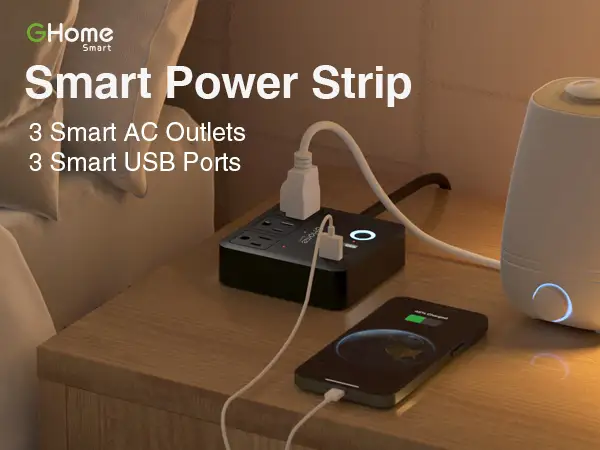
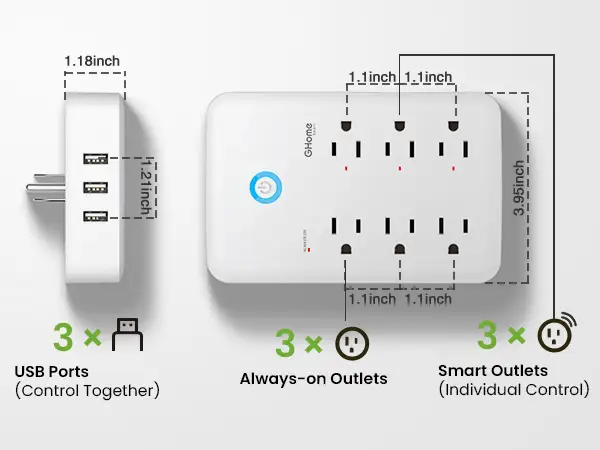
However, the claim of “individual control” comes with nuance. Multiple reports clarify that while each of the 3 AC outlets can be toggled separately, the USB ports operate only together. As one Reddit user wrote: “The USB ports can’t be controlled individually… they all turn on/off together,” which for some setups limits flexibility.
Another marketing promise is robust surge protection. While this feature exists and has prevented damages in some cases, skepticism emerged about core build quality. Reddit user Jon*** raised concerns: “10A is pretty low… likely using 18 gauge wire,” contrasting with the impression of a heavy-duty cord. Despite no widespread failure reports, this mismatch between user expectations and actual spec draws caution.
Cross-Platform Consensus
Universally Praised
For smart home newcomers and automation enthusiasts, this strip is an easy win. A verified buyer on Amazon explained how it “reconnects to the Wi-Fi itself if it goes out… not too difficult to set up.” This seamless recovery stands out compared to cheaper, glitch-prone strips.
The convenience stories flow consistently. A Trustpilot review detailed scheduling aquarium lights and grow lamps, leading to tangible savings: “Goodbye unnecessary electricity bills!” For travelers, portability shines — one Amazon buyer took it on vacation and “had enough spaces for everything to plug in,” benefiting from the compact flat plug that doesn’t block neighboring sockets.
Users also highlight peace of mind when away from home. A Reddit contributor noted, “No more panicked calls to neighbors to check if I left the straightener on!” — showing value beyond simple energy savings.
Common Complaints
The most disruptive recurring issue is connection instability. Reports mention occasional drops from the app, forcing users to unplug and reset — especially frustrating when relying on scheduled routines. Twitter reactions mirror this inconvenience, citing missed coffee maker starts or unlit holiday lights.
Design limitations also appear in multiple accounts. Tight outlet spacing is a headache for anyone using large adapters. One Twitter user lamented, “My chunky laptop charger blocks adjacent ports completely.” Lack of wall-mounting draws further criticism, leading to strips being accidentally unplugged when cables are adjusted.
The safety discussions are notable. While overheating is rare, one Amazon review warned: “After about an hour… the area around the USB ports became very hot to the touch.” This scenario involved powering multiple neon signs and made the user unplug “for safety,” showing the importance of matching the device to lower-draw loads.
Divisive Features
The absence of USB-C ports is polarizing. Some users point out compatibility solutions like USB-A to USB-C cables, but others argue modern devices demand direct USB-C for efficiency. As one Reddit comment bluntly put: “Not very smart if it still uses USB-A with no USB-C port.” Meanwhile, others defend the design, claiming USB-C would add cost and quickly become outdated.
Another split opinion comes from the energy monitoring absent in the standard WP9 model but present in upgraded versions. Those who’ve used models with monitoring call it transformative for cutting costs, but others felt the basic scheduling/timing covered their needs.
Trust & Reliability
TrustPilot and Reddit threads show a pattern — initial satisfaction with setup and integration, with occasional mid-term frustrations tied to network dependence. One Amazon buyer using the Gosund app replacement found the setup “easy,” but noted smaller annoyances like limited naming options within the app.
Durability perceptions range widely. Some have units running cleanly for over a year, automating reptile heat lamps or bar equipment. Others voice concerns: the 10A limit may not suit heavy appliances, and speculation on cord gauge raises doubts about long-term safety under max load.
Where actual safety incidents occurred, like the USB overheating report, users reacted decisively by discontinuing high-demand usage. The takeaway: for sustained reliability, this strip is best suited for small electronics, lighting, and chargers — not continuous high-draw appliances.
Alternatives
Two direct competitors mentioned are the Gosund smart strip and BN-Link models. Users who transitioned from Gosund described identical app experiences but slight differences in naming restrictions. BN-Link offers higher amperage (15A) and more USB ports, appealing to those who need extra capacity, though often at a higher price.
From Reddit discussions, the WP12 variant of GHome Smart adds a USB-C port and energy monitoring for those willing to pay more. For those skeptical of build safety, opting for a UL-listed model from a more established brand is a potential pathway.
Price & Value
Current Amazon retail sits around $19.99, with sale events dropping as low as $13.50 reported on Slickdeals. eBay resale shows units going for under $8 in good condition, suggesting modest resale viability. Community advice leans toward buying during promotions, and steering clear if your needs focus on high-load or USB-C-specific charging.
FAQ
Q: Can I control each USB port separately?
A: No. All three USB ports operate as one group and cannot be toggled individually via the app or voice assistants.
Q: Does it work on a 5 GHz Wi-Fi?
A: No, it only supports 2.4 GHz during setup and operation. Dual-band routers require connecting through the 2.4 GHz band.
Q: Is it safe for high-draw devices like heaters?
A: With a 10A max and 1200W limit, it’s better suited to moderate-load electronics and lighting. Prolonged high loads may risk overheating.
Q: Can it be wall-mounted?
A: No official mounting options exist, a frustration for users needing stable placement.
Q: What happens if Wi-Fi drops?
A: It generally reconnects automatically once the network is restored, but occasional manual reset may be required.
Final Verdict
Buy if you’re a smart home enthusiast looking for affordable Alexa/Google Home control over small devices, or a traveler needing versatile power in a compact strip. Avoid if you require high-load continuous use or independent USB control.
Pro tip from community: Keep it close to your router during setup for smooth pairing — and use for lighting, fans, and chargers rather than heavy appliances for safer long-term operation.





