Garmin vívofit jr. 3 Black Cosmic Review: 7.6/10
The loudest “gotcha” isn’t the step count—it’s the screen. Multiple buyers across retailers keep circling back to visibility (“dim,” “dark,” “not backlit”), even while Garmin vívofit jr. 3 Kids Fitness Tracker, Black Cosmic is marketed around an “always-on” color display and kid-friendly ease. Verdict: Conditional buy — 7.6/10.
Quick Verdict
Yes—if your kid wants a simple, durable step tracker with long battery life and you’re comfortable managing most things from the parent app. Conditional—if you expect an engaging on-device “game” experience or your child is sensitive to comfort/brightness.
| What surfaced most | Evidence from users | Who it affects |
|---|---|---|
| Motivation can be real (or fade fast) | Reddit shows both “wears it all of the time” and “stopped wearing it within a week or two.” | Families hoping for lasting habit change |
| Battery life largely matches the pitch | Reddit: battery died “after 10 months”; parents praise “a year later…battery is still going strong.” | Parents who hate charging |
| Screen visibility is a repeat complaint | Best Buy: “wish it was less dim”; Walmart: “screen is so dark…even with the light on.” | Kids checking stats indoors/evening |
| Comfort/fit isn’t universal | Best Buy: “not comfortable to wear for a long time.” | Sensitive kids, small wrists |
| App dependence can frustrate | Android Central: chores can’t be completed on the tracker; sync can be “sporadic.” | Kids without phones; parents wanting independence |
Claims vs Reality
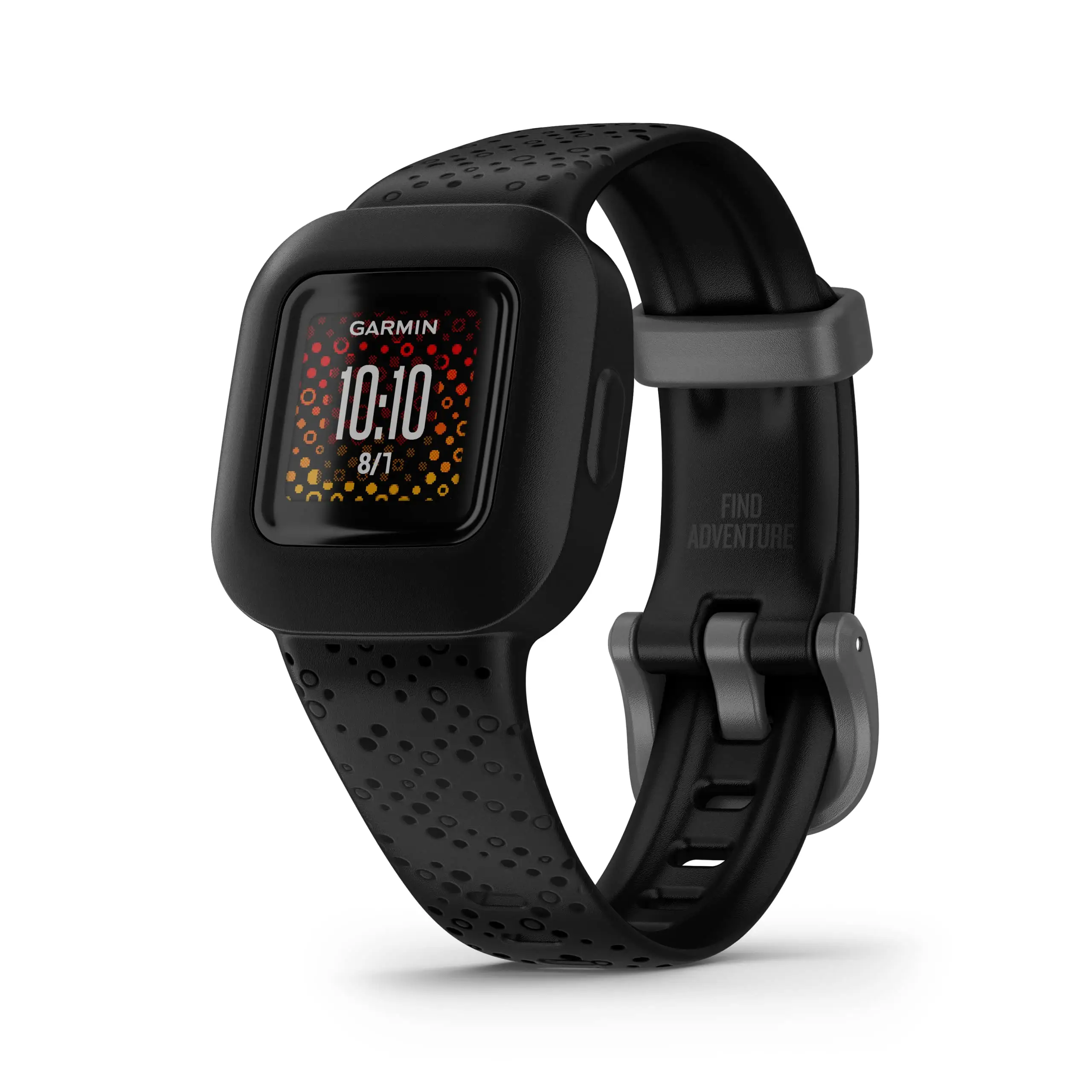
Garmin’s pitch is basically: swim-friendly, kid-tough, and “up to 1 year” battery—plus an app that turns movement into adventures. Digging deeper into user reports, the battery promise is one of the claims that most frequently survives contact with reality. On Reddit, one parent said the first battery ran out “after 10 months,” adding their child was “very sad the first time the battery was empty” but reassured once it could be replaced. That story tracks closely with the official “up to 1 year” claim, and it’s echoed in retailer reviews where a Best Buy reviewer celebrated: “very convenient not to have to charge the watch, a year later and the battery is still going strong.”
The “color display” story is more complicated. While marketing emphasizes a colorful, customizable display, a recurring pattern emerged in buyer commentary: visibility complaints. A reviewer on Best Buy wrote, “i sure wish it was less dim (even when lit up),” and Walmart feedback bluntly called out that “it is not backlit which makes it really hard to see” and “the screen is so dark, even with the light on is remain dark.” For kids who want to tap and glance like a smartwatch, these reports suggest the experience can feel more like “functional in good light” than “fun anywhere.”
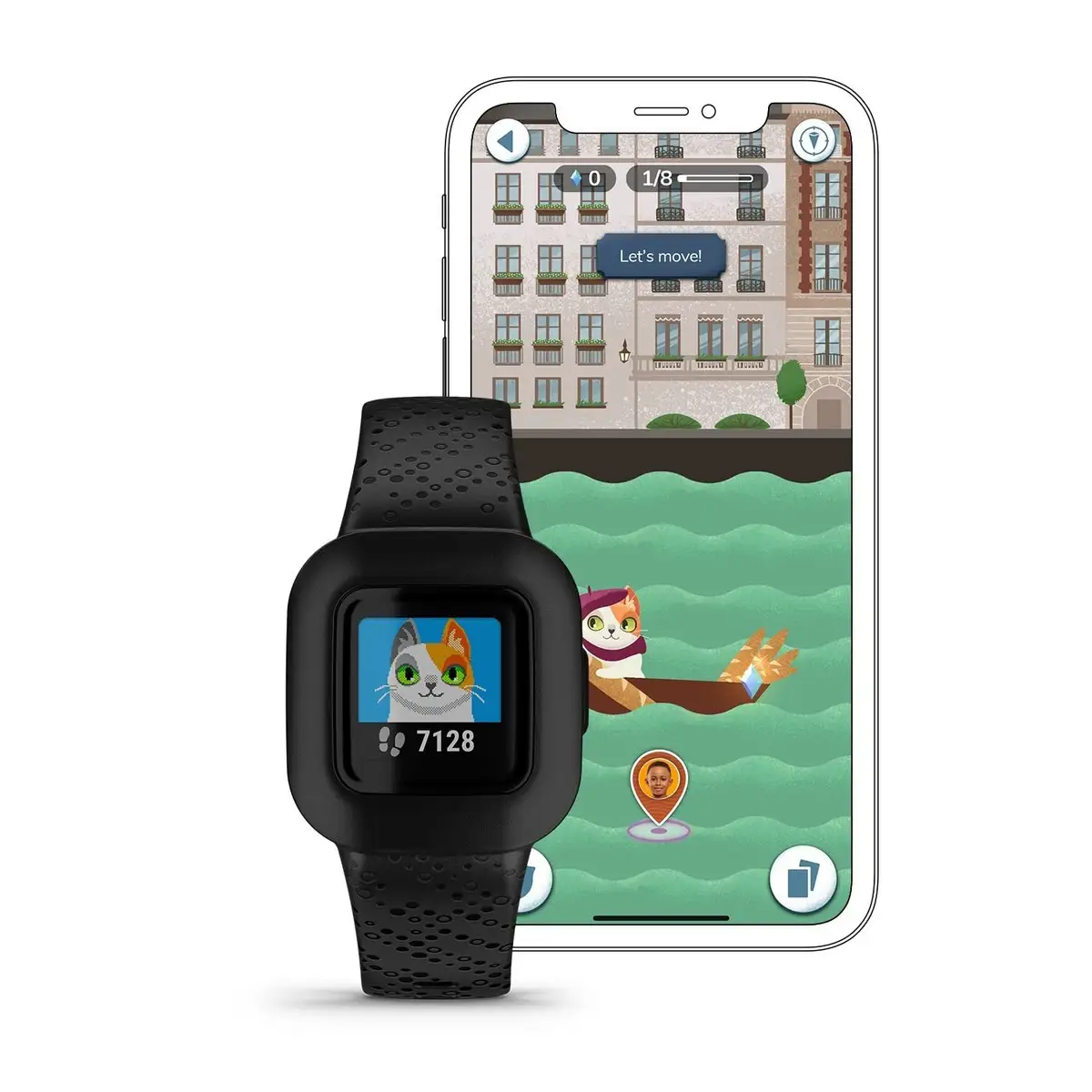
The biggest expectation gap shows up around the “adventures/games” angle. The product narrative suggests activity unlocks adventures, but real families describe wildly different outcomes. On Reddit, one parent of a 9-year-old said it “has been very motivating,” and their child “likes the coins, games and rewards in the app,” even “asking us to go on walks to hit the step and activity goals.” Yet another Reddit parent reported their 5-year-old was “very into getting his step count up…at first but lost interest and stopped wearing it within a week or two.” In other words: while the ecosystem can motivate, it’s not guaranteed to hold attention—especially for younger kids or those who expect the “game” to live on the wrist rather than in a parent-controlled phone app.
Cross-Platform Consensus
A clear throughline across community posts and retailer reviews is that Garmin vívofit jr. 3 Kids Fitness Tracker, Black Cosmic works best when the “watch” part is the main attraction and the “app adventure” is a bonus, not the whole point. Reddit user feedback paints a picture of kids treating it like a real watch: one parent said their son (8, almost 9) “wears it all of the time” and uses “the clock,” “timers,” “alarms,” and the “step counter.” That same user added an unexpectedly practical payoff: “our son is definitely almost never late,” framing it as a time-learning tool as much as a fitness tracker.
Across retailers, parents often frame it as a habit builder rather than a gadget. A Best Buy reviewer wrote their child loved “the ability…to track his steps and sleep,” saying it helped him become “more aware of his activity and excited to get good sleep at night.” That story aligns with the broader “healthy habits” narrative: the win isn’t elite accuracy—it’s turning steps and sleep into something kids notice and talk about.
Battery life is the “parent relief” feature that keeps coming up because it removes a daily failure point. Reddit user reports put real numbers to the marketing line: “battery was empty…after 10 months.” On the retailer side, a Best Buy reviewer called out the same value proposition from a lived routine perspective: “very convenient not to have to charge the watch,” and “a year later…battery is still going strong.” For families tired of charging cables and dead devices at breakfast, those stories suggest the coin-cell approach is a genuine differentiator.
After the praise, the complaints show a striking consistency: screen readability and the friction of interaction. On Best Buy, a reviewer said they “wish it was less dim,” and Walmart users repeatedly called it “dark” and “hard to see,” with one noting it’s “not backlit,” making it “really hard to see.” Android Central’s review goes deeper into why the experience can feel fiddly for kids, describing how activating the backlight can be “tricky,” and holding the button too long can push it into “manual sync mode,” which is “confusing and frustrating.”
Comfort is another issue that can derail adoption fast. One Best Buy reviewer gave a short, decisive reason their 7-year-old quit: “disinterested by day 3…stopped wearing it because it was not comfortable to wear for a long time.” This theme also appears indirectly in “easy lost from band” and “fell out of the band” complaints on Walmart, where one user warned, “not suitable for kids who play! …the tracker/watch can fall out of the band when playing,” and another said it was their son’s “3rd vivofit” and the device “fell out of the band and was lost.” For active kids, that’s a particularly painful failure mode: the more they move, the more likely it is to be tested.
The divisive part is engagement: some kids love the app loop; others ignore it. Reddit user feedback captures both extremes. One parent said their 9-year-old found it “very motivating,” liked “coins, games and rewards,” and even initiated walks to hit goals. Another parent described the opposite arc: their 5-year-old chased steps for the “star wars game” on an iPad, then “lost interest” and stopped wearing it within “a week or two.” The device may be best understood as a behavior tool that depends heavily on the kid’s personality—and the family’s willingness to run the companion app consistently.
- Most consistent wins: long battery life, simple watch functions, step/sleep awareness.
- Most repeated pain points: dim/dark screen complaints, comfort/fit, band security.
- Most divisive element: app-based adventures motivating some kids, ignored by others.
Trust & Reliability
A recurring reliability worry in user feedback isn’t spyware or billing—it’s the device becoming “useless” due to ecosystem or packaging issues. On Walmart, one buyer described a particularly sharp experience: “attempted to purchase…3 separate times…each time the unlock code was not included in the box so i could not register any of them, rendering them useless.” That’s the kind of story that triggers scam anxiety even when the product itself is legitimate, because the buyer can’t access core functionality.
Long-term durability stories split into two narratives: “Garmin quality” versus “kid-proof edge cases.” One Walmart reviewer praised it as “very durable for the little ones,” while another warned, “don’t buy…not suitable for kids who play” because the tracker can “fall out of the band.” Reddit adds a more reassuring long-haul angle on power reliability: the child who was “very sad” at the first battery death had used it for “10 months,” and the fix—battery replacement—kept the relationship with the device intact. The trust question, based on these reports, looks less like “will it break?” and more like “will it stay attached, stay readable, and stay easy enough for a kid to use without frustration?”
Alternatives
Only a few competitors were explicitly named in the provided data, and the most direct one is Fitbit Ace 2. Android Central frames Fitbit Ace 2 as the closest rival, highlighting that it offers swim-proof durability and a backlit display with touch navigation, but requires charging (battery “maxes out at 5 days”). In contrast, Garmin vívofit jr. 3 Kids Fitness Tracker, Black Cosmic wins on “no recharging needed,” which matters to parents who want a set-and-forget routine.
The other alternatives mentioned in commentary were LeapFrog LeapBand and Coolpad Dyno. The LeapBand was described as leaning harder into interactive games and customization, while the Coolpad Dyno was positioned as a more advanced connected smartwatch with LTE/Wi‑Fi, calls, and GPS-style safety features, but with tradeoffs like “monthly fee” and “daily charging.” For families explicitly avoiding an “always connected” device, Walmart feedback reflects that mindset: one parent called the vívofit jr. 3 “perfect” for a kid “too young for an ‘always connected’ device,” suggesting the Garmin’s relative simplicity is a feature, not a missing spec.
Price & Value
The pricing picture across sources shows a product that’s often discounted but still seen as “not cheap for a kid.” Amazon lists it at $69.99 (down from $89.99), while Best Buy shows $89.99. That difference matters because multiple parents talk about the risk of short-lived interest. On Reddit, one parent worried it’s “definitely too expensive for a week of interest only to be dumped,” after another shared their child stopped wearing it in “a week or two.”
Resale listings on eBay show both new and used markets: one new listing around $80.99 and a used “watch shown only, no strap” at $24.99 plus shipping. That spread matches the real-world risk profile in the feedback: if the band gets lost or the device falls out, resale value can drop sharply—especially if accessories are missing. Buying tips embedded in community tone are less about bargaining and more about matching expectations: if your child is likely to love timekeeping, alarms, and competing on steps, the value story looks strong; if they’re expecting on-wrist games and bright screens, the “deal” may still disappoint.
FAQ
Q: How long does the battery actually last in real use?
A: Many owners report close to the advertised year. A Reddit commenter said the first battery died “after 10 months,” and a Best Buy reviewer wrote it was “very convenient not to have to charge the watch” because “a year later… the battery is still going strong.”
Q: Do kids actually stay interested in it?
A: It depends heavily on the child. Reddit includes a 9-year-old who found it “very motivating” and “asking us to go on walks,” but also a 5-year-old who “lost interest and stopped wearing it within a week or two.”
Q: Is the screen easy for kids to see?
A: Visibility complaints are common. Best Buy feedback includes “wish it was less dim,” and Walmart reviewers repeatedly mention a “dark screen,” with one saying it’s “not backlit” and “really hard to see.”
Q: Can kids manage chores independently from the device?
A: Reports suggest chores are largely app-driven. Android Central’s review notes “can’t complete chores on the device,” meaning parents often need to manage or confirm tasks in the companion app—especially when the child doesn’t have their own phone.
Q: Is it comfortable and secure for active kids?
A: Comfort and security vary. One Best Buy reviewer said their child quit because it was “not comfortable to wear for a long time.” Walmart reviews warn the tracker can “fall out of the band when playing,” and another parent reported it “fell out of the band and was lost.”
Final Verdict
Buy if your child is 6–9, wants a simple watch with step goals, and your household will actually use the Garmin Jr. app for rewards and reminders. Avoid if your kid is sensitive to dim screens, hates fiddly button interactions, or you’re worried about the device falling out during rough play. Pro tip from the community: Reddit user feedback suggests kids may use “the clock,” “timers,” and “alarms” far more than the in-app games—so pitch it as a real watch first, and let the adventures be a bonus.