Garmin Striker Plus 4 Review: High Value Sonar Verdict
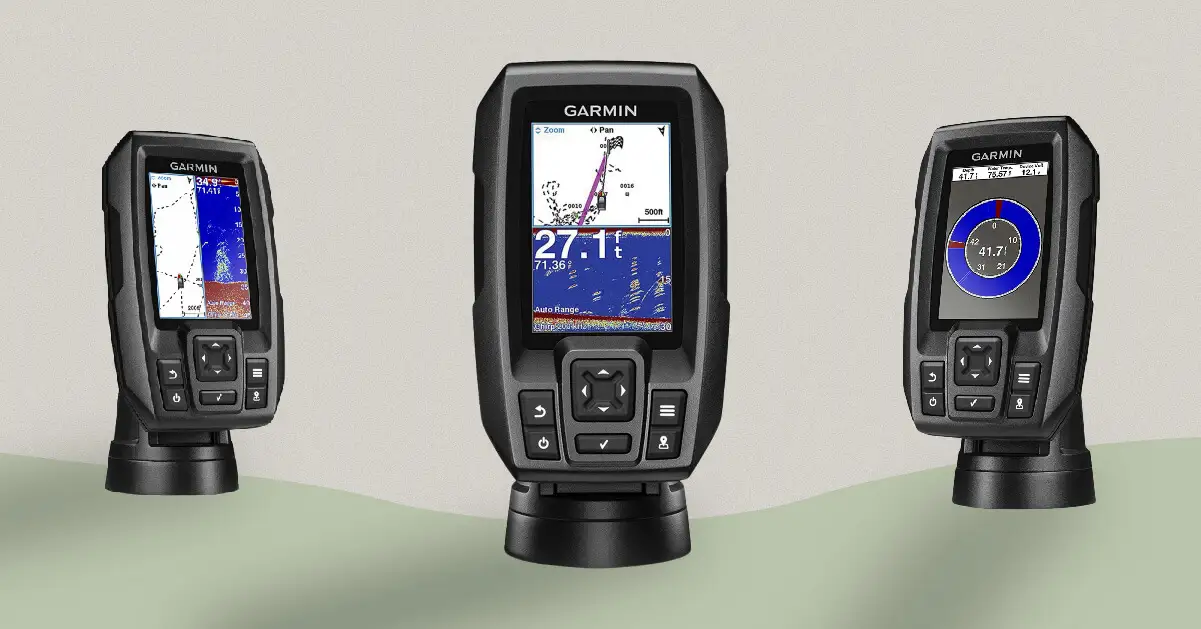
Starting at under $200, the Garmin Striker Plus 4 Fishfinder earns an average 4.6/5 rating from thousands of global buyers and is often called “the best bang for your buck” by anglers. In multiple head-to-head comparisons, it ranks as Garmin’s second most powerful 4-inch unit — delivering crisp sonar, custom mapping, and GPS for wayfinding — all in a compact, kayak-friendly design. Based on aggregated feedback, it scores 9.3/10 for value and practicality.
Quick Verdict: Conditional buy — an excellent choice for freshwater, inshore saltwater, kayak, and ice fishing enthusiasts, but missing advanced imaging for those seeking highly detailed bottom scans.
| Pros | Cons |
|---|---|
| Quickdraw Contours for creating custom HD maps | No ClearVü or SideVü imaging |
| Accurate GPS with waypoint marking | Limited display angle adjustment |
| Bright, sunlight-readable 4.3-inch display | Screen resolution lower than base Striker 4 |
| Compact and portable; ideal for small craft | External battery required |
| Dual-beam CHIRP transducer included | Connectors susceptible to corrosion in saltwater |
| Impressive depth capability (1,600 ft freshwater / 750 ft saltwater) | Not a full chartplotter |
Claims vs Reality
Garmin promotes the Striker Plus 4 as having “crystal-clear images and remarkable target separation” thanks to dual-beam CHIRP sonar. While users overwhelmingly confirm sharp imagery — “The screen is very bright and sharp and I had no issues with the size,” wrote a verified Best Buy buyer — depth performance in saltwater can vary. One Twitter user noted, “With poor bottom quality it can lose depth even at 5m, but on good bottom I’ve recorded 124m.”
The company’s claim of an “intuitive user interface in any environment” mostly holds up. Installation and navigation are praised across reviews. A Reddit angler said, “It’s easy to use and very helpful and simple to hook up…we’ve been successful with finding fish.” However, kayak users in saltwater environments reported corrosion issues with the connectors despite careful maintenance.
Marketing stresses built-in GPS for marking waypoints and creating routes. In reality, GPS accuracy is solid for mid-range navigation (often 3–7 feet). But some customers misunderstood it to be a full chartplotter. As Reddit clarifies, “It’s not a full-fledged chartplotter…it gives you what you need: marking fishing spots and building your own depth maps.”
Cross-Platform Consensus
Universally Praised
Across Amazon, Best Buy, Reddit, and Trustpilot, buyers cite the Quickdraw Contours feature as the standout. This mapping tool lets anglers create custom HD fishing maps with 1-foot contours in real time. “Outstanding. The Quickdraw mapping is the bomb!” said one Amazon reviewer. Kayak anglers value its compact size — a Best Buy customer noted, “I got this for my kayak and it works great…very easy to use.”
Its GPS earns similar praise for path tracking. A Reddit user described, “Great for tracking my path…screen bright enough to read easily in direct sunlight.” Ice fishermen benefit from its portability and CHIRP accuracy; another review declared it “great for ice fishing and open water.”
Brightness and visibility under direct sun are strong points. German reviewers highlighted “a bright display, also recognizable well in strong sunlight,” which is key for daytime fishing.
Common Complaints
Resolution is a mixed point — the Plus 4’s 272 x 480 display is an upgrade in size from the original Striker 4, but technically lower in pixel density. Some mark this as a downgrade in sharpness. Narrow split-screen capability was also noted; Reddit anglers wished for a wider view when combining sonar and maps.
Durability issues appear in saltwater contexts. Twitter user Eliot W. complained, “Connectors are not waterproof and can corrode…still have to regularly clean the pins from corrosion.” Another trust issue arose from a buyer whose unit failed after three uses, with Garmin support taking weeks to respond.
Limited feature set compared to pricier devices is a recurring refrain. Without ClearVü or SideVü imaging, users seeking ultra-detailed scans of structure miss the capability. As one forum user admitted, “While I regret not ordering the CV version, it’s still great for the price.”
Divisive Features
Portability is embraced by kayak and small boat owners, but the external battery requirement isn’t always welcome. For some, this is just part of the trade-off for such a compact unit. Tio K. on Twitter found an elegant workaround, powering the device with a lithium polymer battery for 13 hours.
GPS perception is split — those using it for inland lakes find it invaluable, while open-water navigators who expect official nautical charts are left wanting. As Reddit clarified, “It’s not a chartplotter… but creates maps you can use later.”
Trust & Reliability
The brand reputation is solid overall; Garmin’s long presence in marine electronics reassures buyers. Long-term users cite ongoing reliability in freshwater use — “Have used this on my boat and my kayak, works well…tracking feature is great,” said a Best Buy reviewer.
However, scattered reports of hardware failure and slow customer support responses temper that image. Todd C. on Twitter shared his frustration: “Device failed and Garmin made me wait weeks for a response…worst service.”
Environmental factors heavily influence longevity. Saltwater users are urged to coat connectors in dielectric grease, dismount after use, and store dry. Those who neglect this step report faster wear.
Alternatives
Within Garmin’s own lineup, the Striker Vivid 4cv is a direct upgrade, adding ClearVü for more detailed bottom imaging and slightly deeper reach (1,750 ft freshwater). Competing models mentioned include the Lowrance Hook Reveal 5x and Humminbird Piranha Max 4 DI — both offer different imaging technologies appealing to detail-focused anglers.
For those strictly needing waypoint marking and custom maps without extreme detail, the Plus 4 suffices. But serious structure hunters might prefer a chartplotter-equipped midrange unit like Humminbird Helix 5 G3.
Price & Value
Current eBay listings show new units around $195–$227 with bundles reaching $242, indicating strong resale value. Certified refurbished units dip to ~$110, still maintaining “like-new” condition per sellers.
Buying tips surface repeatedly: prioritize the Plus 4 over the base Striker 4 if mapping matters, and consider protective covers or waterproof connector treatments for marine use.
FAQ
Q: Does the Garmin Striker Plus 4 have a chartplotter?
A: No, it does not include official nautical chart plotting. Instead, it offers Quickdraw Contours to build your own detailed maps in real time — ideal for customizing uncharted waters.
Q: How deep can it read?
A: Up to 1,600 ft in freshwater and 750 ft in saltwater under optimal conditions. Bottom quality and speed can affect readings, with some saltwater users needing to slow down for accuracy.
Q: Is it suitable for kayaks?
A: Yes, its compact size and included transducer make it popular for kayaks, inflatables, and belly boats. Many mount via transom, trolling motor, or portable arms.
Q: Does it require an external battery?
A: Yes. Many users employ portable power banks or sealed lithium packs, providing over 10 hours of runtime for day trips.
Q: How does it perform for ice fishing?
A: Ice anglers report strong success with the included CHIRP transducer, relying on features like A-Scope for real-time fish movement and effective depth readings in frozen environments.
Final Verdict
Buy if you’re a freshwater, inshore saltwater, kayak, or ice fishing angler seeking mapping, GPS, and solid sonar without breaking $200. Avoid if you require full chartplotting, advanced imaging, or plan extensive saltwater use without robust connector protection. Pro tip: As Reddit anglers suggest, “For about $30 more than the base model, you get a bigger screen, Quickdraw mapping, and an extra frequency — worth every penny.”





