Garmin Striker Plus 4 Review: Budget GPS Sonar Verdict
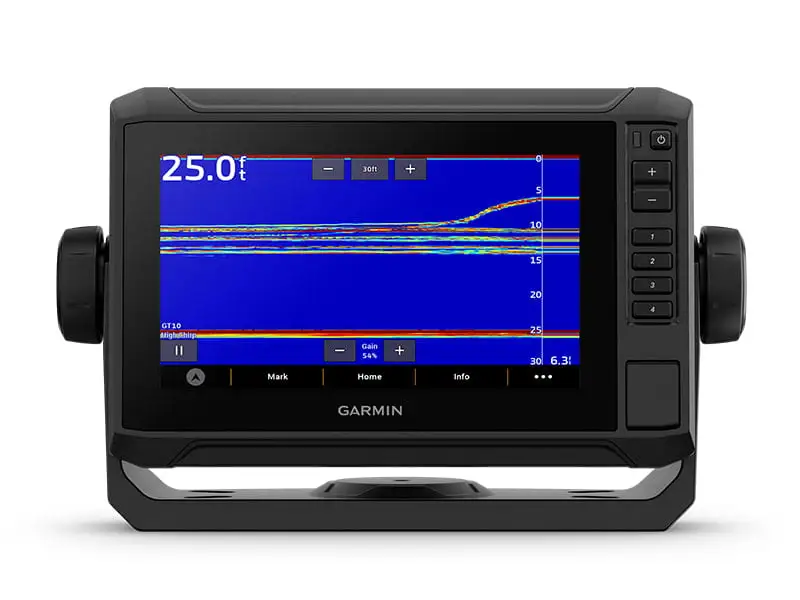
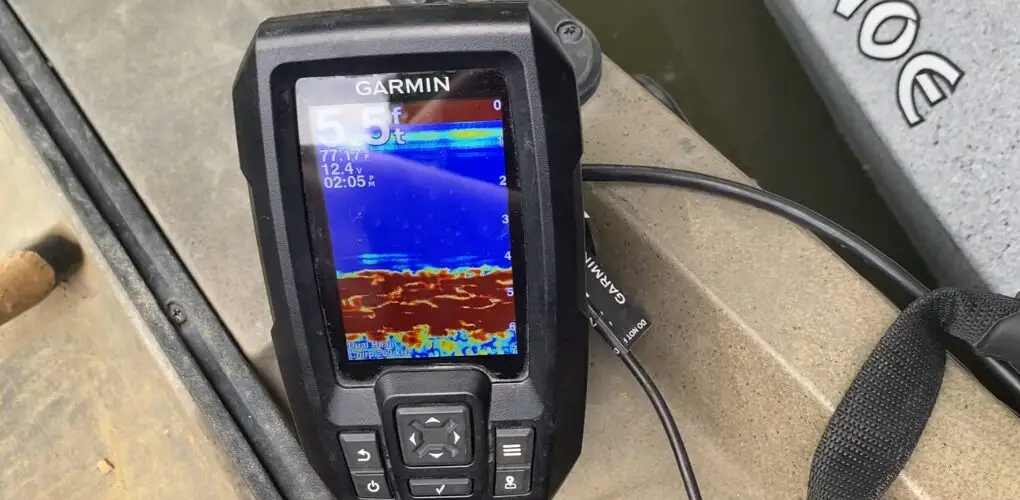
Starting at under $200, the Garmin Striker Plus 4 Fishfinder has earned an extraordinary reputation—scoring as high as 9.3/10 in independent ratings and holding a 4.6★ average from thousands of verified buyers. Anglers across platforms call it “best bang for your buck,” especially for kayaks, inflatables, and small craft where compact power matters most.
Quick Verdict: Conditional buy — Excellent for recreational anglers, kayakers, and ice fishers seeking affordable GPS mapping, but lacks premium sonar options.
| Pros | Cons |
|---|---|
| Quickdraw Contours mapping for custom HD fishing maps | No ClearVü or side scanning sonar |
| Crisp 4.3" sunlight-readable display | Lacks low CHIRP for extreme depth precision |
| Built-in GPS with waypoint marking | Limited screen resolution vs smaller Striker 4 |
| Compact and portable for kayaks/inflatables | Connectors prone to corrosion in saltwater |
| Includes dual-beam transducer with CHIRP | External battery required |
| Highly praised for value vs high-end units | Screen angle adjustment is limited |
Claims vs Reality
Garmin markets the Striker Plus 4 as a rugged, easy-to-use GPS fish finder with CHIRP sonar clarity and Quickdraw Contours mapping “for crystal-clear images and remarkable target separation.” Digging into user feedback, the clarity claim largely holds in shallow-to-mid depths—Best Buy customer “eericksen” called it “the best budget fish finder there is…like a flasher or use it as regular sonar.” Reddit users fishing ice and open water reported equally clear differentiation between fish and structure.
However, while Garmin emphasizes “side imaging” in broader product messaging, many experienced anglers clarified this model does not feature ClearVü or SideVü. One Trustpilot reviewer stressed, “If you want x-ray-like views beneath the boat, you need the Vivid 4cv or higher.” This gap matters most to structure-focused fishers targeting bottom-huggers.
Marketing touts saltwater readiness, but multiple owners warned of corrosion risks. Revain user “eliot w.” noted, “connectors on the back are not waterproof…even with dielectric grease and careful storage, pins still corrode.” For freshwater and inland anglers, this was less of an issue.
Cross-Platform Consensus
Universally Praised
The standout feature by consensus is the integrated Quickdraw Contours mapping, allowing anglers to build their own 1-foot contour maps. Trustpilot reviews repeatedly referred to it as “game-changing,” while an Amazon buyer wrote, “The quickdraw mapping is the bomb!…well worth the price differential from the regular Striker 4.” This directly benefits those fishing unmapped lakes—kayak angler “tio k.” even uses his 11-year-old daughter as “GPS/sonar operator” to plot routes while fishing.
Built-in GPS is consistently celebrated for reliability and precision. Best Buy customer “craig192a” praised tracking features, stating: “You can see where you’ve been…connected it to a small battery, runs great no issues.” Users reported 3–7 ft waypoint accuracy, enough for retracing productive spots.
Compact portability is another shared win. Kayak and belly boat owners cited easy mounting and optimal size. “I bought this for kayak fishing…shows fish and structure very clearly,” posted one Amazon reviewer. Ice fishers also find value—Trustpilot’s “john a.” lauded its A-scope real-time display while jigging on a frozen lake.
Common Complaints
While praised for value, several trade-offs emerge. The absence of ClearVü and low CHIRP limits ultimate depth clarity, particularly beyond 750 ft saltwater rating. Some lamented resolution—Reddit notes that the smaller Striker 4 has a sharper pixel density.
Hardware issues surface for saltwater users. Reports of corroded connectors, melted cables, and Garmin’s slow support response—Revain’s “todd c.” waited over three weeks without resolution—undermine confidence for marine use. The fixed display angle is another irritation, especially for multi-user setups.
Battery requirements are universally noted—this unit lacks internal power. While some embrace portability with waterproof power banks, others view external battery management as cumbersome, especially for casual boaters.
Divisive Features
Split-screen capabilities earn mixed reviews. Some love simultaneous sonar/map views, while others find the partition narrow. Display brightness is widely praised in sunlight, but certain users complained about smaller depth readouts versus marketing images—Revain’s “terry n.” called the promotional display sizing “misleading.”
Saltwater suitability remains contested—those primarily inshore or freshwater seldom face connector corrosion, but offshore kayak anglers warn of ongoing maintenance to keep the unit functioning.
Trust & Reliability
Performance longevity is strong among freshwater and inland users. Reddit members using earlier Striker 4 kits for years still report satisfaction. However, saltwater corrosion anecdotes hint at maintenance demands—waterproofing connectors and regular cleaning are vital.
Garmin’s brand support receives mixed marks: some cite “great service” when complete units were replaced swiftly, while others face protracted response times. The absence of an SD port for data offload may deter tech-savvy fishers, though Garmin’s proprietary cable-sharing method partially mitigates this.
Alternatives
Community comparisons pit the Striker Plus 4 against Garmin’s own Striker 4 and the Lowrance Hook2 4x. Reddit user testing both concluded, “Striker Plus scroll speed is high, CHIRP well made…main upgrade over Hook2 is A-scope and mapping.” Hook2 fell short on lure tracking and bottom separation. For anglers needing better imaging, the Striker Vivid 4cv adds ClearVü for sub-$250, while Humminbird PiranhaMAX 4 DI offers down imaging but lacks Garmin’s mapping software.
Price & Value
eBay listings show healthy resale value—used units fetch around NZD 200–235, reflecting demand for budget GPS sonar. New pricing hovers at $139–$179 USD, with “protective cover bundles” modestly increasing cost. Community buying tips often recommend spending the extra ~$30 over the base Striker 4 to gain Quickdraw Contours and the extra 83 kHz frequency, a recurring sentiment echoed across Reddit and Trustpilot.
FAQ
Q: Does the Garmin Striker Plus 4 have a chartplotter?
A: No, it lacks traditional chartplotter capabilities with official nautical charts. Instead, it offers Quickdraw Contours for creating custom fishing maps with real-time depth data.
Q: How deep can it scan?
A: Users and Garmin specs cite 1,600 ft in freshwater, 750 ft in saltwater. Depth performance is strongest with CHIRP mid/high bands and moderate trolling speeds.
Q: Is it suitable for saltwater use?
A: Technically yes, but multiple reports advise protecting connectors from corrosion with grease and diligent cleaning after trips.
Q: What comes in the box?
A: The fish finder, dual-beam transducer, mounting hardware, power/data cable, and tilt/swivel mount. No battery is included.
Q: Can it be used for ice fishing?
A: Yes. Several owners use it with standard boat transducers or optional ice fishing kits, praising its A-scope as an alternative to flashers on ice.
Final Verdict: Buy if you’re a kayak, small-boat, or ice fisher seeking affordable GPS mapping and reliable CHIRP sonar within 200 USD. Avoid if your fishing demands ClearVü, low CHIRP, or daily saltwater exposure without time for maintenance. Pro tip: For unmapped waters, Quickdraw Contours makes the Plus upgrade from Striker 4 well worth the extra $30—especially for creating repeatable hot spot routes.