Garmin Striker Cast Review: Affordable Yet Limited
A verified buyer on Trustpilot summed up their experience with the Garmin Striker Cast Castable Sonar as “worth every penny,” giving it an overall score of 8/10. While praised for its portability, ease of setup, and accurate mapping, it’s clear from hundreds of cross-platform accounts that this isn’t the right fish finder for every angler. Boat fishermen wanting advanced imaging might feel shortchanged, but for bank, kayak, and ice fishing enthusiasts, the balance of price and performance makes it a compelling option.
Quick Verdict: Conditional
| Pros | Cons |
|---|---|
| Lightweight and portable | Basic sonar only (CHIRP and ice flasher) |
| Accurate depth and temperature readings | Risk of scaring fish with splash |
| Easy app setup and simple interface | Reports of battery lasting 6 hours vs. claimed 10 |
| Affordable compared to competitors | Limited depth range (max ~150 ft) |
| GPS mapping with 1’ contours via Quickdraw | Occasional Bluetooth connection hiccups |
| Works in freshwater, saltwater, and ice fishing | Poor customer service experiences |
Claims vs Reality
One of Garmin’s core marketing pitches for the Striker Cast is “10+ hours of battery life.” While the product page highlights this as a major advantage for long fishing days, several real-world reviews challenge that claim. A Trustpilot reviewer reported: “The rechargeable battery has lasted me 6 hours (Garmin claims 10 hours).” This discrepancy matters for shore anglers who plan to fish from morning to evening without recharging.
Garmin also promotes “streaming wirelessly up to 200’ (60m),” which is consistent across official specs. In user practice, this range seems achievable in ideal conditions, but performance may degrade with obstructions. A Reddit angler warned that “big splash… doesn’t go far” when trying to reach certain shoreline zones — not due to wireless limits but casting weight and technique constraints.
On accuracy, Garmin claims “crisp detail” in sonar imagery. Trustpilot’s Wesley Littlefield verified, “I quickly saw both structure and fish, easily identifiable rock and brush piles with unmistakable fish markings.” Yet, compared to high-end boat-mounted units, reviewers from Fish Finder Tech and Geeks Fishing caution that sonar capability is “totally unremarkable” with fewer frequencies and limited target separation.
Cross-Platform Consensus
Universally Praised
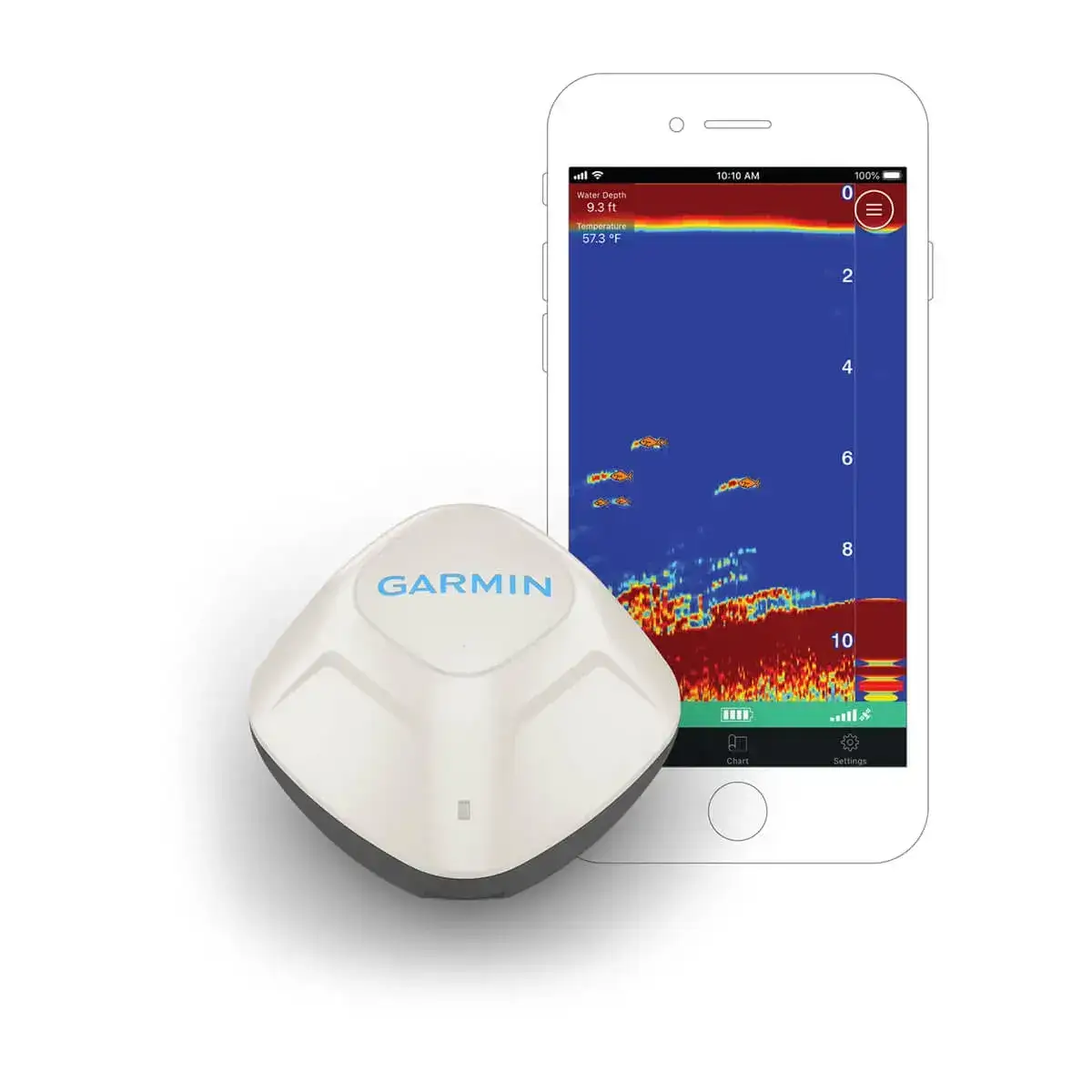
Across Amazon, Trustpilot, and specialist review sites, portability is the standout virtue. At 2.6 oz, the Striker Cast fits easily into a tackle bag. One Trustpilot user emphasized: “It’s lightweight at only a few ounces and easily fits in the palm of my hand.” This benefits bank anglers who need mobility between spots, and kayak users with minimal gear space.
The GPS-enabled model has won praise for Quickdraw mapping. Bass Pro reviewers called it “better mapping than units that cost twice as much,” and Geeks Fishing described Quickdraw as “one of the greatest contour mapping programs on the earth.” Ice fishers also find value here, using the flasher mode for traditional vertical readings in frozen conditions.
Ease of setup consistently impresses. Trustpilot anecdotes include dropping the unit in a bucket, pairing with Bluetooth, and fishing within minutes. No wiring or boat installation is required — a major plus for beginners and casual anglers. Even those wary of tech found the app “simple to navigate” without overwhelming options.
Common Complaints
The most consistent frustration is sonar limitation. Multiple sources note the absence of down imaging, side imaging, or Livescope-style views. Trustpilot’s review put it plainly: “If you want downvu or side vu, you must avoid castable fish finders altogether.” For competitive or serious boat anglers, this lack of advanced capability is a deal-breaker.
Another issue is the fish-scaring splash on cast. Both Trustpilot and Reddit users highlight this, advising anglers to cast beyond target areas and reel in slowly to reduce disturbance. This design inevitability affects shore fishing in smaller bodies of water.
Connectivity is occasionally “wonky,” requiring app restarts. Bass Pro’s feedback shows that display quality depends entirely on the connected phone — poor screens, wet conditions, or outdated devices can hinder usability. The Bluetooth link is also dependent on the phone’s stability, leaving room for dropped connections.
Divisive Features
Price divides opinions between casual and tech-heavy anglers. At ~$112 for no-GPS and ~$180 for GPS versions, many see it as “uncommonly inexpensive” for its mapping power. However, Reddit comparisons to costlier Deeper Chirp 2 note that doubling the budget yields higher accuracy and sonar detail.
Mapping richness via Quickdraw delights GPS-model owners, but non-GPS Striker Cast users miss out entirely on creating custom maps — potentially limiting long-term usefulness for exploratory fishing. The IPX7 waterproofing earns admiration, yet several reviewers remark this won’t help if your phone — the actual display — goes overboard.
Trust & Reliability
Garmin’s general brand reputation in the fishing electronics space remains high, but customer service issues surface frequently. Trustpilot recounted a case where warranty steps were “excessive and ridiculous,” with the implication that the company hoped the user would give up. This sentiment is echoed in forums where anglers admit switching brands over support frustrations.
Durability-wise, the light, rugged shell holds up in saltwater, freshwater, and ice use over months, with IPX7-rated resilience. No specific Reddit posts in the dataset recount long-term failure, but heavier casting weights recommended for durability do raise rod and line requirements.
Alternatives
The Deeper Sonar Pro+ 2 and Chirp 2 appear most often as direct competitors. Reddit users call Chirp 2 “pretty legit… sounds more accurate” but note the cost is double. For boat-focused anglers, Trustpilot reviewers suggest stepping up to Garmin UHD 2, Lowrance Elite FS, or Humminbird Helix — units with advanced imaging and robust networking that Striker Cast lacks.
Price & Value
On Amazon, the non-GPS Striker Cast sells at ~$112 (often discounted from $130). eBay listings for the GPS model hover around $179–$184 with shipping. PicClick data shows resale averages at $139, revealing decent value retention for a niche tech tool. Buying tips from Trustpilot’s community stress matching model choice to fishing style — GPS for mapping, non-GPS for casual structure detection.
FAQ
Q: Does the Striker Cast work in saltwater?
A: Yes, it functions in freshwater, saltwater, and even for ice fishing. Several reviews note accurate water temperature and structure readings in various environments.
Q: How far can it stream sonar data?
A: Officially up to 200’ (60m). While achievable, casting limitations and splash size may reduce effective range in real conditions.
Q: Is the battery life really 10 hours?
A: In practice, most users report closer to 6–8 hours depending on usage, despite Garmin’s claim of 10+ hours.
Q: Can I use it without GPS?
A: Yes, but you lose Quickdraw custom mapping. Non-GPS models still provide depth, temperature, and basic sonar views.
Q: Does it replace a high-end fish finder?
A: No — it’s ideal for shore, kayak, and ice fishing with basic sonar modes; lacks downscan, sidescan, or live imaging.
Final Verdict: Buy if you’re a bank, kayak, or ice fishing angler wanting affordable, portable sonar with solid mapping. Avoid if advanced sonar imaging or networking is essential for competitive boat fishing. Pro tip from Trustpilot’s Wesley Littlefield: “Cast past your target and reel in slowly to avoid spooking fish.”