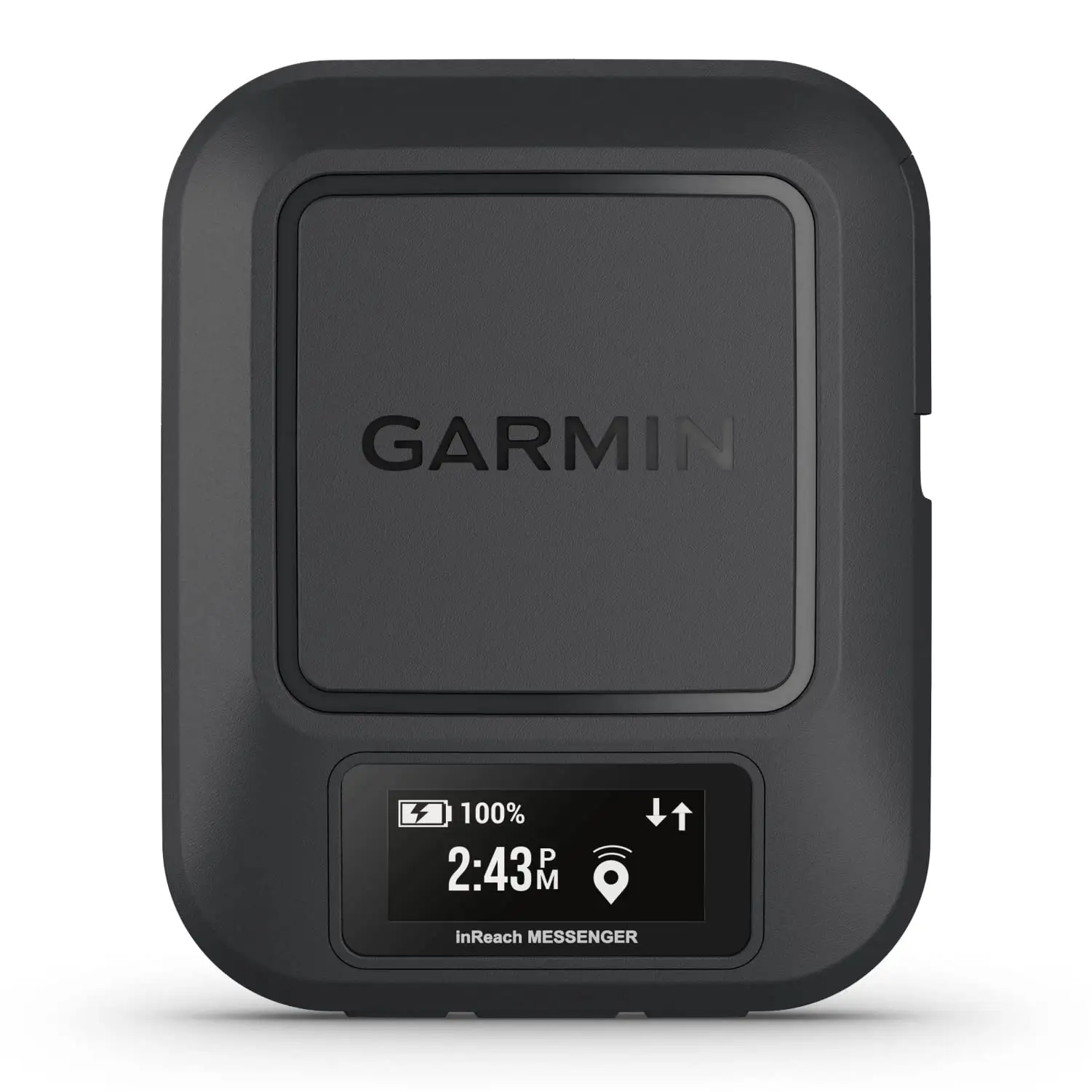
Garmin inReach Messenger Review: Conditional Buy (8.2/10)
A brand-new unit dying in “less than 16h life” is the kind of report that stops would-be buyers cold—and it shows up right alongside praise calling the device “one of the best purchases I have ever made.” Garmin inReach Messenger Handheld Satellite Communicator lands as a Conditional buy for many: confidence-boosting off-grid messaging when used as intended, but with real friction around subscriptions, indoor behavior, and reliance on a phone/app for the best experience. Score: 8.2/10
Quick Verdict
For solo hikers, hunters, and backcountry travelers, Garmin inReach Messenger Handheld Satellite Communicator is most often framed as “peace of mind” you clip into your kit and forget—until you need it. Reddit user (no username provided) described using an inReach (Mini) on a “first 9 day solo trek” and said: “I liked that it was small and unobtrusive, while giving me peace of mind. The app on my phone was also a great interface.” That theme repeats across platforms: small device, big reassurance, especially when you’re out of cell range.
Digging deeper into the praise, many positive stories aren’t about fancy features—they’re about reducing anxiety for family at home and ensuring you can still communicate when schedules and locations don’t line up. Reddit user (no username provided) said: “I carry mine all the time… it’s nice to not need to be totally isolated even though i’m alone.” On Best Buy, a reviewer summed up the emotional value bluntly: “peace of mind… gave my wife peace of mind when i was out of phone service hunting in the mountains.”
But the same sources also expose pressure points: subscription costs, setup fees, and edge cases where expectations and reality collide—especially battery behavior indoors and questions about whether a satellite messenger should be your only emergency plan. A Garmin Forums poster (no username provided) warned there’s “too much to go wrong with software, firmware, batteries and the overall ‘system’,” and questioned relying on it as the sole “last resort.”
| Verdict | Data-driven Pros | Data-driven Cons |
|---|---|---|
| Conditional Yes | “check-in messages going back and forth within second” (Best Buy) | “monthly charge… plus a set up fee” (Best Buy) |
| “small and unobtrusive… peace of mind” (Reddit) | “tiny messenger screen… tedious” (OutdoorGearLab) | |
| “works perfectly as described for messages, weather, and tracking” (Best Buy) | Battery drain reports indoors without connectivity (Garmin Forums) |
Claims vs Reality
Garmin’s official positioning centers on global two-way messaging, “seamless” switching between cellular and satellite, and “up to 28 days of battery life” in 10-minute tracking. The marketing story is clear: stay connected beyond cell networks, and stay out longer without charging. Yet the lived experience depends heavily on how—and where—you use it.
Claim 1: “Up to 28 days” battery life
Garmin lists: “up to 28 days of battery life in 10-minute tracking mode” (Amazon Specs). Many user reviews align with that when the device is used outdoors with reasonable habits. A verified buyer on Best Buy noted: “battery life as expected with the amount of use. we used tracking during the day and turned off the device at night to conserve battery.” That usage pattern—daytime tracking, nighttime off—reads like a community norm for longer trips.
Then there’s the jarring counterexample: a Garmin Forums post titled “Messenger AWFUL battery life” where the poster (kamil) said: “charged it to 100% and the battery drained fully in 10 h,” even with “backlight off… tracking off… bluetooth off” while sitting “indoors.” In replies, another forum member argued it’s “not likely to be hardware” and explained the device “does an active ‘message / mail check’ once an hour” and may “(re) tries very, very hard to complete it… until the battery dies” when it can’t reach Iridium indoors. The poster later added that with a phone connection indoors, they “lost 3% over 10 h,” calling the standalone indoor behavior “a deathloop of checks.”
While officially rated for multi-week battery life in outdoor tracking scenarios, multiple users indicate indoor/no-sky-view conditions can trigger aggressive retry behavior that drains the battery quickly—unless the unit can route through a connected phone/app.
Claim 2: Easy, reliable off-grid messaging
Garmin emphasizes global two-way messaging, check-ins, and SOS. Across community discussion, messaging is frequently the “why” for purchase—especially for solo or remote travel. Reddit user (no username provided) called it “one of the best purchases i have ever made” and wrote: “having the ability to message people quickly when you do not have cell service is the best.” Best Buy reviewers echoed practical success: one wrote that check-ins were “going back and forth within second,” and another said: “works perfectly as described for messages, weather, and tracking.”
Still, reliability concerns appear—less as “it never works” and more as “too much can go wrong.” A Garmin Forums poster (no username provided) said they’d read “unexplained problems with sending and receiving messages” and asked: “How can i be sure my sos messages would get through?” Another reply tried to separate features, arguing “sos messages bypass most of that… more or less direct from the iridium network to geos.”
A recurring pattern emerged: users tend to trust the concept (Iridium coverage, SOS routing) but want simpler, more predictable behavior—especially when they’re treating it as emergency equipment, not a “social” messaging platform.
Claim 3: Works well with (or without) a phone
Marketing highlights pairing with the Garmin Messenger app and smart switching, while also noting on-device confirmation and basic message interaction. Some users like app-based typing; Reddit user (no username provided) said the phone app was “a great interface.” OutdoorGearLab reinforced the idea that the device screen can work as a fallback: “you can type and view text messages on the tiny messenger screen. it is tedious, but it is better than nothing, should your app fail.”
But dependence cuts both ways. In the battery-drain forum thread, the practical fix for indoor drain was keeping it connected so checks route via phone data rather than Iridium retries. That nudges certain users into a workflow they didn’t expect—especially those trying to treat it as “emergency satellite only.” One forum respondent said: “personally, i treat ir devices as emergency satellite communication devices. i stay as far away from the messenger app… as possible.”
Cross-Platform Consensus
Universally Praised
“Peace of mind is priceless” is not just a throwaway line—it’s a repeated justification across Reddit and Best Buy. Reddit user (no username provided) wrote: “peace of mind is priceless,” and described it as having “saved my ass on a long distance hike when i got severely injured and needed to connect with someone to pick me up.” For solo backpackers, that’s the core value proposition: not navigation bells and whistles, but the ability to reach someone when plans go sideways.
For partners and families at home, the device’s check-ins and messaging reduce stress. Reddit user (no username provided) said of an older inReach: “it gives me and my husband peace of mind… he does appreciate the messaging capability.” Best Buy’s hunting use case points the same direction: “gave my wife peace of mind when i was out of phone service hunting in the mountains.” The benefit isn’t abstract—it’s social and emotional reassurance tied to real absence of cell service.
Compactness and portability also show up as practical wins for people who don’t want to carry more tech than necessary. Best Buy reviewers repeatedly emphasize “very compact,” “light weight, compact and easy to carry,” and “a simple little device that makes it easy to check in.” OutdoorGearLab frames it similarly: “small… comprehensive… reliable… excellent battery life,” and argues it fits how many people use satellite messengers now: navigate on a phone, communicate via satellite when needed.
- Frequent praise themes: “peace of mind” (Reddit, Best Buy), compact carry (Best Buy, OutdoorGearLab), messaging success in the field (Best Buy, Reddit).
Common Complaints
A recurring pattern emerged around cost-of-ownership: people accept the device price but get frustrated when the subscription reality hits. On Reddit, a user (no username provided) claimed: “the cheapest plan is $10 a month and you can cancel at any time.” On Best Buy, another reviewer took a more annoyed tone: “keep in mind garmin demanded a monthly charge for using it, plus a set up fee.” Even when the subscription is “clear in the product description,” it still lands as a psychological downside—especially for occasional users.
Battery behavior is the other headline complaint, but it’s nuanced. The harshest example comes from Garmin Forums where kamil reported sub-16-hour drain while the unit sat indoors with everything off. Replies argued that indoors testing is misleading because the device retries satellite checks aggressively when it can’t connect. The same poster later said that with a phone connection they lost only “3% over 10 h,” implying the “AWFUL battery life” may be an environmental/behavioral pitfall rather than constant real-world performance. Even so, the frustration is directed at design: kamil asked Garmin to implement “exponential back offs,” complaining it “should not check in a loop, like a maniac.”
Finally, usability limits show up in multiple places: the device can be used standalone, but it’s not enjoyable for long texts. OutdoorGearLab called the on-device experience “tedious” with a “tiny screen” and “button use,” and Reddit discussions around other models note that typing “isn't as easy as modern cells.”
- Main complaints: subscription fees/activation costs (Best Buy, Reddit), indoor battery drain due to retries (Garmin Forums), tiny screen/button texting (OutdoorGearLab).
Divisive Features
Reliance on a phone/app divides the audience. For smartphone-first hikers, pairing is a feature: Reddit user (no username provided) praised the “great interface” of using the app. OutdoorGearLab also treats device-only texting as backup rather than primary, implying app use is the normal path.
For “emergency device purists,” app integration can feel like unwanted complexity. A Garmin Forums commenter said they avoid “the messenger app (and all the other garmin apps) as possible,” arguing: “if i have a data connection, why not just use my phone. why drag the inreach device into it at all.” That split is less about right vs wrong and more about user type: convenience-driven communicators versus minimalist emergency planners.
Another divisive point is whether to treat inReach as your sole safety line. One Garmin Forums poster said they “just couldn't rely on it as the last resort,” preferring a PLB/EPIRB for certain scenarios. Others replied that it’s about what devices you trust and that SOS routing is more direct than the “social” messaging features.
Trust & Reliability
On the “will this save me?” question, the strongest emotional confidence comes from real incident stories. Reddit user (no username provided) said it “saved my ass… when i got severely injured and needed to connect with someone to pick me up,” even while noting they’d “never had to use the sos feature.” Best Buy reviews also carry cautious optimism: “have not had to use the sos function (knock on wood).” These aren’t lab tests; they’re the kind of lived narratives that drive purchases.
Digging deeper into skepticism, the Garmin Forums “safety device” discussion highlights fear of system complexity: “software, firmware, batteries and the overall ‘system’,” plus dissatisfaction with “garmin product support.” Another forum member responded by reframing: “sos messages bypass most of that… more or less direct from the iridium network to geos.” The trust debate isn’t just about satellites—it’s about whether buyers feel the ecosystem (device + app + subscription + backend services) is dependable when stakes are high.
Long-term durability stories in the provided Reddit data skew positive but are mostly general inReach ownership rather than Messenger-specific. Reddit user (no username provided) said: “i have had the mini for a few years… it gives me and my husband peace of mind,” and another said: “i’ve never had any issues with mine, it comes with me everywhere.” Those comments suggest long-term carry-and-forget reliability for some owners, but they’re not explicitly “6 months later” Messenger reports.
Alternatives
The competing devices mentioned in user discussion are Garmin’s own models: inReach Mini / Mini 2, Explorer+ / SE+. For people who want more standalone capability (less phone dependency), the Explorer+ is explicitly praised for “the freedom of not needing to pair,” even if “typing on it isn't as easy as modern cells.” That trade-off suits users who expect to operate without a smartphone.
Mini 2 comes up as a frequent alternative recommendation. Reddit user (no username provided) advised: “get the mini 2… the battery life is just fine for a week trip if you change your way point setting,” and emphasized phone syncing for easier typing. OutdoorGearLab draws a similar dividing line: the Messenger has “a much bigger battery” and “larger antenna,” while Mini 2 is “better with navigational matters.” Another Garmin Forums poster echoed that split, saying the Messenger battery lasts “about 50% longer than that of a mini 2,” but they prefer Mini 2 for “more functionality… navigation… bigger display.”
For users who want the simplest messaging appliance with strong battery and are already navigating on their phone, Messenger is often positioned as the better fit. For users who want navigation features on-device and less reliance on an app, Mini 2 (or Explorer+) is repeatedly defended.
Price & Value
Official pricing in the provided Amazon specs is $299.99, while the Amazon listing snapshot shows a deal price around $249.00. Best Buy also lists $299.99, with mention of a $249 sale in the article-like source. The price story, then, is less about sticker shock and more about the recurring costs and flexibility of plans. Reddit user (no username provided) claimed: “the cheapest plan is $10 a month and you can cancel at any time,” while Best Buy reviewers emphasize ongoing charges and “a set up fee.”
Resale signals from eBay in the provided data are messy because many listings shown are for the Mini/Mini 2, not the Messenger. A Messenger eBay listing is shown at $299.99 new, suggesting resale may not dramatically undercut retail—at least for “new” listings. For bargain hunters, community advice points to rentals: Reddit user (no username provided) said: “outdoor stores will often have rentals available if you just want to check it out for your first trip.”
- Buying tips pulled from users: test setup “at home” before relying on it (Reddit), consider rentals first (Reddit), switch to a lower/maintenance plan in the off-season (Reddit).
FAQ
Q: How long does the Garmin inReach Messenger battery really last?
A: Official specs cite “up to 28 days” in 10-minute tracking (Amazon Specs), and one Best Buy reviewer said “battery life as expected” when tracking by day and turning it off at night. But a Garmin Forums user reported indoor drain “less than 16h life” due to repeated connection checks when satellite access fails indoors.
Q: Do you need the phone app to use it?
A: Not strictly. OutdoorGearLab notes you can type and view messages on the device, though it’s “tedious” on the “tiny messenger screen.” Many users prefer the phone interface; a Reddit commenter said “the app on my phone was also a great interface.” The app can also affect indoor battery behavior per Garmin Forums discussion.
Q: Is the subscription worth it?
A: Many buyers treat it as the real cost of ownership. A Best Buy reviewer warned Garmin “demanded a monthly charge… plus a set up fee.” On Reddit, one user pointed to a cheaper option, saying “the cheapest plan is $10 a month and you can cancel at any time.” Value depends on how often you’re outside cell service.
Q: Can you rely on it as your only emergency device?
A: Some users are uneasy about that. A Garmin Forums poster said they “just couldn't rely on it as the last resort,” citing concerns about “software, firmware, batteries.” Another forum reply argued SOS messages are more direct and “bypass most” social features. The debate is about risk tolerance and redundancy.
Q: Messenger or Mini 2—what do users pick?
A: It splits by priorities. OutdoorGearLab says Messenger has a bigger battery and antenna but fewer navigation features, while Mini 2 is “better with navigational matters.” A Reddit user recommended Mini 2 for a week trip, saying the “battery life is just fine” with settings adjustments, while forum discussion credits Messenger with longer battery but more phone dependence for full functionality.
Final Verdict
Buy if you’re a solo hiker, hunter, or backcountry traveler who primarily wants off-grid two-way messaging, check-ins, and SOS backup—especially if your workflow already assumes a smartphone for typing and navigation. Best Buy reviewers describe it as “essential wilderness device,” and Reddit users frame it as “peace of mind… priceless.”
Avoid if you expect flawless behavior indoors/under roofs without thinking about connectivity, or if you want a device you’ll comfortably operate without a phone. Garmin Forums user kamil’s complaint that the device can get stuck in a “deathloop of checks” indoors captures that risk.
Pro tip from the community: Reddit user (no username provided) advised: “set it up and test it in a place, like home, where you feel safe,” and to “switch to the maintenance plan when you are done / in the off-season.”