Garmin GPSMAP 67i Review: Powerful but Complex (8/10)
“Every step of the way so far has been cumbersome and confusing,” one Garmin forum buyer sighed after spending $600 on the Garmin GPSMAP 67i Rugged GPS Handheld with inReach Satellite, and that mix of admiration and frustration sets the tone across platforms. The device earns strong marks for battery stamina, GPS accuracy, and real off‑grid safety, but plenty of owners say it asks a lot of patience—and more money—before it feels fully mastered. Verdict: a powerful backcountry tool with real tradeoffs. Score: 8/10.
Quick Verdict
For serious hikers, overlanders, and geocachers who want a stand‑alone navigator plus Iridium messaging, the Garmin GPSMAP 67i lands as a conditional yes: worth it if you’ll actually use the mapping and inReach features, less so if you want a simple satellite checker. Multiple users call it a meaningful upgrade over older GPSMAP models and far more capable than inReach Mini units, but the learning curve, memory limits, and subscriptions are recurring pain points.
| Pros (from users) | Cons (from users) |
|---|---|
| Excellent battery life for multi‑day trips | Steep learning curve / obtuse controls |
| Fast, accurate multi‑band GNSS lock | Internal memory feels tight for maps |
| Useful as a true stand‑alone GPS | Subscriptions and maps add cost |
| Better UI and maps than Mini 2 or older GPSMAPs | Some software / Mac BaseCamp issues |
| Rugged, sunlight‑readable screen | Sealed battery and QC complaints |
Claims vs Reality
Garmin markets the Garmin GPSMAP 67i as a long‑lasting, premium handheld that “travel[s] longer with up to 165 hours of battery life in tracking mode” and offers “multi‑band GNSS support” for tough environments. Owners largely confirm the core promise. A verified buyer on Amazon highlighted that the unit “boots fast and almost instantly locks on to the location,” and praised seeing GPS, GLONASS, Galileo, and BeiDou simultaneously. Another Amazon reviewer summarized the overall impact as “faster, clearer, more accurate, and an improved battery life.” For people upgrading from older handhelds, this translates into fewer mid‑trip power worries and more confidence under canopy.
But battery reality comes with context. While Garmin quotes 165 hours, a Russian‑language reviewer on 4Garmin said their average in real mixed use was “about 140 hours,” and noted that settings like Bluetooth, multi‑GNSS, and frequent tracking materially change endurance. The same reviewer still framed it as “a lot of resource for tracking your adventures,” reinforcing that the headline number is achievable only in specific modes. The gap here isn’t that Garmin’s claim is false, but that users have to learn the modes to get there.
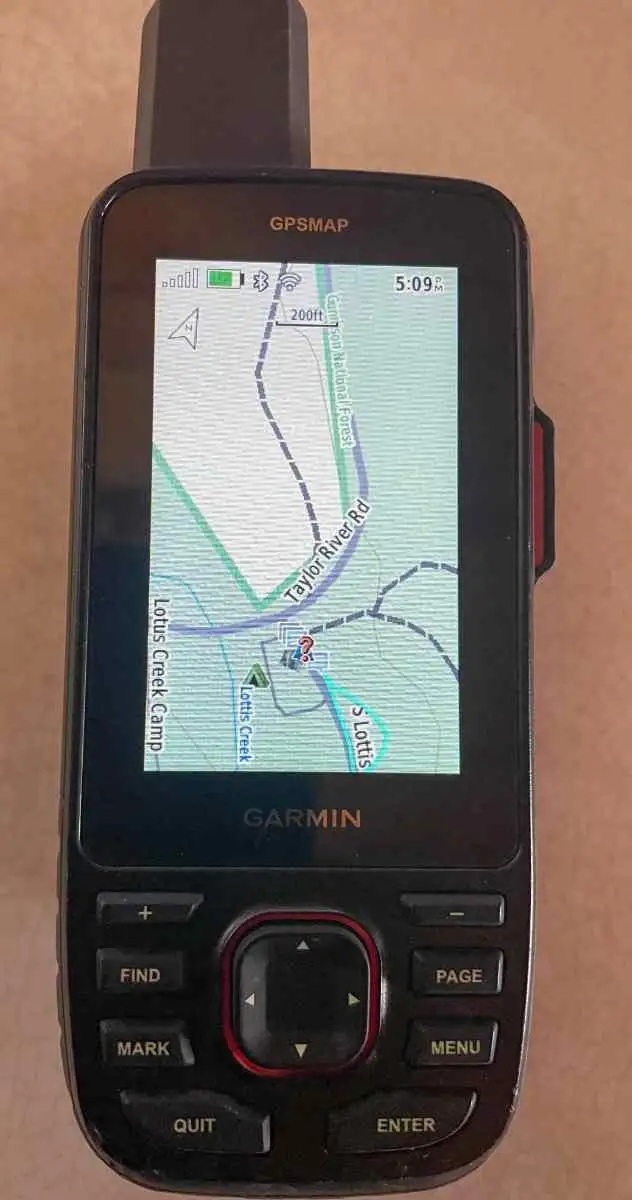
Garmin also positions the device as packed with preloaded mapping and expandable storage. That claim collides with a very common forum surprise. One Garmin forum buyer asked, “Is this normal that after doing nothing but the initial software updates, the unit doesn't have space to add a single map?” after finding the device “94% full.” Replies from other forum members didn’t dispute the storage squeeze: one explained that with only 16 GB internal memory, “94% used memory seems to be much… luckily you can add an sd card,” while another called the “lack of internal memory on recent garmin handhelds… a sore point.” Officially, a microSD is optional; in practice, multiple owners say it’s functionally required if you buy extra maps.
Finally, Garmin sells the 67i as an easy safety and navigation companion. Users agree on capability but challenge the ease. Android Central’s reviewer wrote that mastering controls is “incredibly obtuse,” and described pairing with “four separate mobile apps” as “frustrating.” That lines up with owners on Amazon who returned it as “too complicated,” and another who said it was “crazy hard to figure out” and that subscriptions were “impenetrable.” The claim of an all‑in‑one adventure solution holds, but only after a learning and setup tax.
Cross-Platform Consensus
Universally Praised
The strongest through‑line is confidence in tracking and positioning. People who care about precision—backcountry hikers, off‑road navigators, and experienced Garmin owners—describe noticeably better lock and stability than older models or Mini devices. Reddit user mybkexperience said, “I would highly recommend the 67i for any navigational or inreach use over the mini 2… the interface on the 67i is far superior and the maps are far better than what my older 64st came with too.” Another forum participant reinforced that “both m1 and m2… are going to be worse than the 67i when it comes to acquiring and holding a fix,” pointing to the multi‑band chipset as a real advantage in challenging terrain. For users driving forest roads or hiking canyons, that means less wandering tracklines and faster “where am I?” answers.
Battery life is the other near‑universal win, especially for multi‑day adventurers. A verified buyer on Amazon called the improvement over the 66i “life changing,” and another said “battery life is a huge improvement over the 66i.” The 4Garmin reviewer similarly framed 140–200+ hours as enough to stop worrying about power banks on long outings. For expedition hikers or hunters, the implication is obvious: fewer recharge stops and a device that can stay on for a week of tracking plus messaging.
Users also praise the device as a true stand‑alone handheld—meaning it still works well even if a phone dies. Reddit user mybkexperience described the 67i as “actually usable stand‑alone,” contrasting it with the Mini 2 where “you are going to use a paired phone to compose messages.” The Android Central review echoed that advantage by warning that phone‑dependent solutions are “more likely to die on you in the wilderness.” For solo trekkers or people leaving phones off for battery conservation, that self‑contained capability is a major reason they pay the premium.
Common positives, summarized:
- Fast multi‑band GPS acquisition and strong accuracy under trees/canyons.
- Big step up in battery life from prior GPSMAP/inReach generations.
- Better mapping and UI than inReach Mini series; workable without a phone.
Common Complaints
The most repeated complaint is the learning curve and menu complexity. Android Central’s reviewer warned of “a learning curve as steep as the mountains you’ll climb with it,” calling the controls “incredibly obtuse.” That frustration shows up in owner reviews too: a verified Amazon buyer said they returned it because it was “too complecated,” and another wrote, “It has just been so difficult to understand how the thing works.” The pain point is highest for new GPS handheld owners or casual hikers who aren’t already inside Garmin’s ecosystem.
A related thread is the ecosystem sprawl and hidden costs. Android Central said pairing required “four separate mobile apps,” and noted that “a lot of these services will cost you extra.” One Amazon reviewer felt you “have to buy bucketloads of subscriptions to get full use of it.” The Garmin forum buyer who hit the storage limit also vented that Garmin apps and sites are “complex and opaque,” and said “confusion reigns” in Garmin’s SSO and app lineup. For users who want a plug‑and‑play emergency messenger, this overhead can feel like a barrier.
Storage and mapping management are another recurring sore spot. The forum buyer’s “94% full” device sparked agreement that 16 GB “is not much these days,” and owners commonly advise getting an SD card. Android Central similarly found that “the handheld didn’t have enough space” for detailed Outdoor Maps+, making a microSD “not… optional” if you buy map packs. While Garmin says microSD up to 32 GB is supported, the user reality is that the included topo maps can leave little headroom.
Common negatives, summarized:
- Steep learning curve, non‑intuitive button UI for newcomers.
- Garmin app/subscription ecosystem feels confusing and expensive.
- Internal storage often too tight without a microSD card.
Divisive Features
The sealed internal battery splits opinion. One Amazon geocacher liked overall performance but knocked a star because “I don't like that the battery is sealed… I'd prefer garmin sell additional batteries.” Others, especially those upgrading from AA‑powered units, accept the trade for endurance. The tension is between long‑term repairability and short‑term convenience: frequent users worry about replacement years down the line, while expedition users focus on the runtime now.
The screen and build get both praise and caution. An Amazon reviewer called the display “brighter and easier to read” than the 66, but another warned to “make sure to get a screen protector” after cracking theirs. The Android Central review similarly admired sunlight readability but worried the glass “could still meet a swift end if it falls on a rock.” So durability in the field is respected, yet the screen still feels like the fragile point.
Trust & Reliability
Digging into forum feedback, there’s no broad scam pattern, but there is a steady drumbeat of “what did I buy?” confusion around memory and Garmin’s web/app system. The Garmin forum thread on full internal storage reads like a reliability concern at purchase: the buyer feared future updates might “brick the device,” and others acknowledged memory undersizing as a known weak point. The trust issue is less about fraud and more about Garmin’s opaque setup and product segmentation.
Long‑term durability stories are mostly indirect. Reddit user mybkexperience, comparing multiple Garmin devices, treated the 67i as a dependable upgrade and didn’t report failures. Android Central emphasized MIL‑STD‑810 and IPX7 ruggedness as a reason to trust it in rough conditions. Still, anecdotal QC flags appear: one Amazon buyer said their new unit arrived with “scratches on the plastic… and white paint towards the top of one of the buttons,” planning an exchange. That suggests occasional out‑of‑box quality variability even if field ruggedness is widely believed.
Alternatives
Only a few direct competitors show up in user discussions, and they’re mostly other Garmin products. The clearest alternative is the inReach Mini 2. Reddit user mybkexperience framed the choice bluntly: the Mini 2 is “basically just a light weight satellite communication tool,” while the Garmin GPSMAP 67i has “real maps” and a “far superior” interface. Another forum user added that Mini 1/2 units are “worse… when it comes to acquiring and holding a fix,” and that the Mini UI means you’ll rely on a phone for custom messages. For ultralight backpackers who already trust their phone maps and want the smallest SOS messenger, Mini 2 stays attractive; for anyone wanting full navigation without a phone, users push toward the 67i.
The Garmin GPSMAP 67 (non‑inReach) is another alternative mentioned in the Android Central review as the cheaper option for those who don’t need satellite messaging. Users don’t debate it much, but the implied trade is clear: you save money upfront, but lose Iridium two‑way messaging and SOS. For hikers who stay in patchy cell zones but not true no‑service wilderness, that cheaper model may fit better.
Price & Value
Pricing across sources clusters around $599–$611 new. Amazon lists the Garmin GPSMAP 67i at $599.99, and eBay new listings sit around $611. Users repeatedly say the sticker price is only the beginning. Android Central called the device and “inReach subscription, and maps… expensive,” spelling out that satellite plans range from basic monthly fees to high unlimited tiers. Amazon buyers echo that pressure: one returned the unit partly because they weren’t interested in “paying for a service that will not be used all the time.”
Resale value looks steady, with eBay showing used units still near $500 and new at full MSRP. Community buying tips converge on budgeting for extras: microSD storage and possibly map subscriptions. As one forum member advised, “The conventional wisdom is to install an sd card… this allows you to stop worrying about space,” and another forum reply noted 32 GB cards are cheap enough to treat as standard kit. For value‑minded buyers, the practical total cost is device + SD card + at least a minimal inReach plan for the trips that matter.
FAQ
Q: Does the Garmin GPSMAP 67i really need an SD card?
A: Many owners say yes if you plan to add detailed maps. A Garmin forum buyer found their unit “94% full” after updates and couldn’t load a $99 map, and other forum users confirmed 16 GB leaves little headroom. MicroSD expansion is a common workaround.
Q: Is the GPSMAP 67i better than the inReach Mini 2 for navigation?
A: Users consistently say yes for stand‑alone navigation. Reddit user mybkexperience said the Mini 2 “does not have real maps,” while the 67i has a “far superior” interface and maps. Forum replies also note the 67i holds GPS fixes better due to multi‑band GNSS.
Q: How hard is it to learn the GPSMAP 67i?
A: Expect a steep learning curve, especially for beginners. Android Central called the controls “incredibly obtuse,” and Amazon buyers described it as “too complicated” and “crazy hard to figure out.” Experienced Garmin users report fewer issues once they adapt.
Q: How good is the battery life in real use?
A: Most users are impressed, but real‑world hours vary by settings. Amazon reviewers call the improvement “life changing,” while a 4Garmin reviewer averaged “about 140 hours” with multi‑GNSS and tracking, and over 200 hours in GPS‑only mode.
Q: Are there software compatibility issues?
A: Some users report problems with Garmin BaseCamp on Mac. A verified Amazon buyer said the 67 “won’t work w/ basecamp” properly on an M2 MacBook Air, though it worked on Windows. Others don’t mention issues, so it seems system‑dependent.
Final Verdict
Buy the Garmin GPSMAP 67i if you’re a serious backcountry hiker, overlander, or geocacher who wants a stand‑alone GPS with multi‑band accuracy and Iridium messaging—and you’re willing to learn Garmin’s button UI and app ecosystem. Avoid it if you want a simple satellite checker or hate managing subscriptions and storage. Pro tip from the community: plan on a microSD card from day one, and move preloaded topo maps there to free space.