Garmin Forerunner 955 Review: Verdict 8.6/10 (GPS + Maps)
A watch that some owners say “works amazing now” still has others warning they “can’t love a watch that costs 600 euros if its gps doesn’t work properly.” That tension defines the Garmin Forerunner 955 GPS Running Smartwatch, Black: a highly capable training tool with a passionate fanbase—and a smaller but loud group frustrated by software quirks. Verdict: 8.6/10.
Quick Verdict
Conditional — Yes, if you want deep training metrics, maps, and a lightweight MIP tri/running watch; Conditional/No, if you’re sensitive to firmware bugs or want a “smartwatch-first” app ecosystem.
| What buyers focus on | What feedback suggests | Source evidence |
|---|---|---|
| Battery life | Often “over a week,” but can drop fast with maps | Best Buy: “battery stays charged for over a week!”; Garmin Forums: “consumes 5/6% per hour… with map” |
| GPS accuracy | Frequently praised; some report update-related GPS issues | Best Buy: “great accuracy”; Garmin Forums: “after the last update… really poor gps track” |
| Comfort/weight | Strong consensus it’s light and easy to sleep in | Reddit user: “I love the light-weight. i sleep with it no problems.” |
| Mapping/navigation | Seen as a standout for trail/race pacing | Walmart: “The maps are great.”; Best Buy: “great watch for navigating the trail” |
| Software stability | Improves over time for some; still “immature” to others | Garmin Forums: “works amazing now”; also: “other bugs that really make it an immature watch” |
| Screen durability | Conflicting: “doesnt scratch easily” vs “rather easy to scratch” | Best Buy both claims appear in separate reviews |
Claims vs Reality
Garmin’s marketing positions the 955 as a “premium gps running and triathlon smartwatch” with “full-color, built-in maps,” “multi-band gps,” and up to “15 days of battery life in smartwatch mode” (Garmin regional listings). Digging deeper into user reports, the broad functionality is rarely disputed—but the real debate is how consistent the experience stays across updates and long-term use.
Claim: Long battery life for a “full picture of your health.” Officially, the non-solar Forerunner 955 is rated “up to 15 days” in smartwatch mode and “up to 42 hours” GPS-only without music (Garmin Malaysia/Singapore/HK pages). Many owners echo a “long battery life” reality in normal use. A verified buyer on Best Buy wrote: “battery stays charged for over a week!” Another Best Buy reviewer described near set-it-and-forget-it charging: “I’ve only had to charge it once and I wear it almost non-stop.”
But heavy navigation changes the math. On Garmin Forums, a long-term owner of the solar version explained that “during activities with map and scrolling pages, it also consumes 5/6% per hour,” implying a practical ceiling below 20 hours for long recorded activities. For ultrarunners and bikepackers, that gap matters: battery expectations set by spec sheets can feel very different once maps, widgets, and page scrolling enter the picture.
Claim: “Superior positioning accuracy” with multi-band GPS. On paper, Garmin emphasizes multi-frequency GNSS and “superior accuracy… even in challenging environments” (Amazon listing copy). Many users agree—strongly. A verified buyer on Best Buy said: “the gps connects in under a minute and has great accuracy,” and another called it an “awesome gps.” Reddit user comments also celebrate precision: “i love the dual-band gps accuracy.”
Yet the same community forums include warnings that firmware can undermine that strength. In the Garmin Forums appreciation thread, one commenter insisted: “you can’t love a watch that costs 600 euros if its gps doesn’t work properly,” adding that “after the last update… [there is] a really poor gps track.” The contradiction isn’t that GPS is inherently bad—it’s that some owners believe software updates can temporarily degrade what’s otherwise a headline feature.
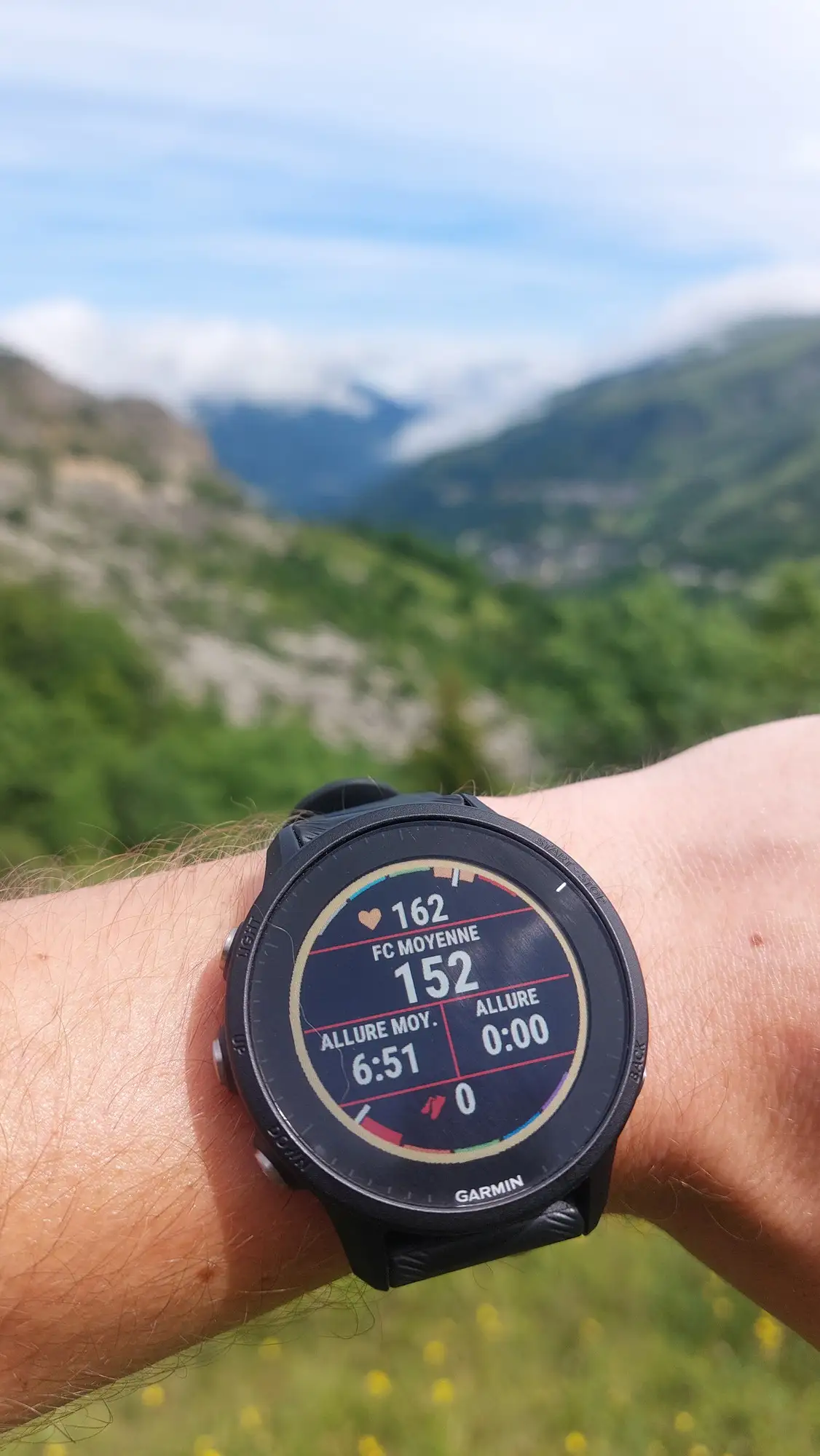
Claim: “Tailored to the dedicated” with a highly readable display. Garmin highlights the MIP display as “sunlight-visible” and easy to read (Garmin specs; Amazon manufacturer copy for the solar model also emphasizes readability in sunlight). A recurring pattern emerged among MIP-preferring users: screen readability is a key reason to choose the 955 over other lines. On Garmin Forums, a new owner wrote: “The screen is even better than i expected. crisp and lots of contrast. i never need the backlight during the day, not even late at night in low-light conditions.” For runners who hate fiddling with brightness mid-run—or who train indoors and want less reliance on backlight—this reads like a direct payoff.
Cross-Platform Consensus
Universally Praised
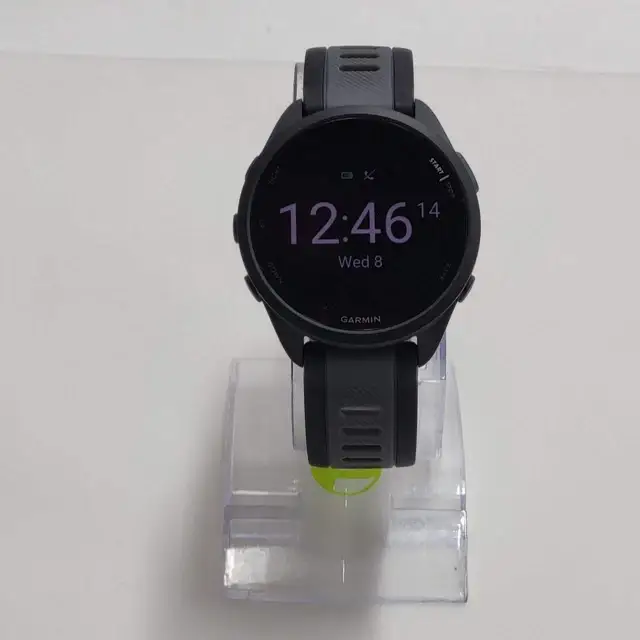
The most consistent applause is for the Garmin Forerunner 955 GPS Running Smartwatch, Black as a serious training partner—especially for runners, trail runners, and triathletes who want data depth without a bulky feel. The “light on the wrist” theme repeats across platforms. Reddit user u/ (username not provided in the dataset beyond thread context) described a checklist of satisfaction: “i love the light-weight. i sleep with it no problems.” That’s not just comfort—it’s compliance. For athletes who track HRV, sleep, and recovery, a watch that’s tolerable overnight is the difference between “nice feature” and actually usable readiness insights.
Mapping and navigation is another anchor point, especially for trail users and race pacing. A verified buyer on Walmart wrote plainly: “The maps are great.” Another Walmart reviewer went further into the “why,” explaining that “the built in maps are amazing for course directions and the up ahead feature makes pacing a race a lot easier.” That story speaks directly to race-day execution: not getting lost and having “up ahead” awareness to manage effort and turns when fatigue is high. Best Buy reviews echo the same outdoors utility; one reviewer called it “a great watch for navigating the trail as well as everyday use.”
GPS accuracy—when it’s behaving—shows up as a decisive upgrade from other devices. A Best Buy reviewer switching ecosystems wrote that their Fitbit “did a poor job with gps accuracy,” while the 955 “has great accuracy.” In the Garmin Forums appreciation thread, another user framed it as a clear generational step: “gps accuracy has been excellent, way better than the 945.” For runners who care about pace consistency, lap splits, and distance correctness, this is the kind of praise that directly affects training trust.
Finally, the ecosystem and analytics are repeatedly treated as a selling point rather than an afterthought. That same Best Buy reviewer who left Fitbit cited the “incredible amount of data and charts after every activity,” and described Garmin’s recommendations as aligning with perceived readiness: “pretty accurate in terms of what it recommends versus how i feel.” For structured-training users, that’s the core promise: training load and recovery insights that feel grounded, not random.
Summary bullets (after the stories):
- Lightweight comfort is repeatedly praised (“sleep with it no problems”).
- Built-in maps and “up ahead” improve navigation and race pacing.
- GPS accuracy is often described as fast to lock and highly accurate.
- Post-workout analytics and charts are a major draw versus subscription-driven platforms.
Common Complaints
Digging deeper into user reports, the sharpest complaints cluster around software reliability and feature friction—the stuff that doesn’t show up on a spec sheet. On Garmin Forums, one user criticized the overall maturity: “other bugs that really make it an immature watch,” and another said bluntly: “not okay is the software.” That same commenter added frustration about Garmin’s responsiveness: “really bad (!!!) is the communication on the bugs and other issues… not even a simple ‘we are working on the bugs a, b, c’.” For buyers who value predictability and clear support communication, these aren’t minor gripes—they’re trust issues.
Battery life is usually a strength, but complaints appear when expectations collide with heavy usage or degradation. A Walmart reviewer described a steep decline after a year: “battery life tanked, maybe lasted two days at a time,” alongside broader reliability issues: “pace, route, cadence, were hit or miss and very inconsistent.” Another 1-star Walmart review reported a functional lockout related to Wi‑Fi/music syncing: “battery to low to connect to wifi’ even when fully charged so i cant refresh any playlists,” and claimed “other users have said the same issue without any resolution.” For runners relying on offline playlists, that kind of failure turns “nice bonus” into daily annoyance.
Usability and settings complexity also comes up. A Best Buy reviewer noted: “sometimes it’s not clear how to adjust settings.” That matters most for users who want a watch that fades into the background; the 955’s depth can become its own learning curve.
Summary bullets (after the stories):
- Firmware and bug concerns surface repeatedly in Garmin Forums threads.
- Some long-term owners report battery or sensor reliability drops.
- Music/Wi‑Fi syncing complaints appear (playlist refresh blocked).
- Settings can feel non-obvious for some users.
Divisive Features
Solar charging (where applicable) is one of the most polarizing topics in the dataset, and it spills into perceptions of the broader 955 line. Best Buy includes both enthusiasm and skepticism: one reviewer said, “Love the solar feature… battery stays charged for over a week!” while another admitted, “solar charging is kind of cool, even though i’m not totally convinced it works as good as it should.” On Walmart, a buyer who generally loved the watch still wished the solar ring did more: “one thing i dislike is how little the solar ring helps the watch… under the right conditions it can be a game changer,” then described a canoe trip where it “only lost about 12 percent battery in that one day.” For outdoor athletes, solar is either a meaningful safety net in sun-heavy adventures—or an underwhelming add-on for everyday life.
Screen durability is similarly split. One Best Buy reviewer reassured: “screen doesnt scratch easily,” while another warned: “screen is rather easy to scratch,” advising caution “with routine yard work.” This contradiction suggests either different usage patterns, different expectations, or differing luck with impacts—important for buyers who don’t baby their gear.
Trust & Reliability
A recurring trust concern isn’t about scams in the classic sense, but about support and bug transparency. In Garmin Forums discussions, frustration often targets communication rather than hardware. One commenter complained Garmin won’t even acknowledge known issues: “not even a simple ‘we are working on the bugs a, b, c’.” That kind of sentiment can erode confidence for buyers who expect enterprise-like change logs and predictable hotfix timelines.
Long-term reliability stories vary sharply. On the optimistic side, a Best Buy reviewer in 2025 called it a “solid sport watch even in 2025,” praising Garmin for keeping it “up-to-date with the latest features.” But the darker long-term account on Walmart is stark: “this watch was amazing until a few months ago,” followed by repeated update prompts, HR monitor failure, and “activity tracking progressively got worse.” The investigative takeaway: some owners see the 955 aging gracefully through updates; others describe updates as the start of decline.
Alternatives
Only a few competitors and adjacent models are mentioned directly in the data, but they reveal how buyers shop this category. The most frequent comparison is Garmin Fenix 7. In the Reddit thread, a prospective buyer described the Fenix 7 as “heavy, bulky, not my aesthetic,” while replies argued the 955 can be a better fit—especially because “one advantage of 955 over base fenix 7 is that 955 has multi-frequency gps.” Another Reddit user framed the choice emotionally: “fenix just seems too bulky for me,” while the 955 felt “neutral enough… to wear it with everything.”
The Garmin Forerunner 965 appears mostly as a screen preference pivot rather than a feature gap. A Best Buy reviewer chose the 955 specifically because “I preferred the solar option to the amoled screen.” For buyers who want AMOLED visuals, the 965 becomes the natural alternative; for those committed to MIP readability and/or solar, the 955 is the intentional pick.
Outside Garmin, one Best Buy reviewer referenced leaving Fitbit Charge 5, criticizing both GPS accuracy and the subscription model: “requiring a premium subscription to show me my own data really put me off.” Another Garmin Forums participant contrasted the 955’s bug discourse with Polar Vantage, saying it “certainly wasn’t / isn’t the bug-fest i’m reading about.” These mentions aren’t full comparisons, but they show where the 955 wins (data depth, GPS) and where it may lose mindshare (perceived software stability).
Price & Value
The price story is unusually favorable for a “premium” watch—at least depending on where and how you buy. Amazon lists the solar model around $551 with “855 reviews” and a 4.7/5 rating (Amazon listing excerpt). Best Buy showed $399.99 for the 955 Solar (sold out at the time of the captured page) with a 4.8/5 average from 18 reviews, and users mention secondhand deals too. In the Reddit thread, one user said: “happy with my 955 solar. got it off swappa in like new condition for 400.”
Resale and market pricing also show meaningful spread on eBay, with listings around the mid-hundreds depending on condition and edition (eBay search excerpts show many results and varied prices). For value-driven athletes, that spread creates a playbook: buy used if you can accept warranty uncertainty, or buy new during retailer discounts if you want cleaner support.
Buying tips also show up indirectly in community behavior. In the Reddit thread, a common refrain is simply endorsement without remorse: “no regrets on my purchase at all.” But the investigative angle is that the best “deal” may be psychological: buyers want confidence they’re not stepping into a firmware headache. If you’re risk-averse, waiting until your preferred firmware has settled (based on forum chatter) may be worth more than a small discount.
FAQ
Q: Is the Garmin Forerunner 955 actually lightweight enough to sleep with?
A: Yes, many owners say comfort is a standout. Reddit user (in r/GarminWatches thread) said: “i love the light-weight. i sleep with it no problems.” That matters most for athletes relying on HRV, sleep score, and training readiness—data that only works well if you wear the watch overnight consistently.
Q: How good are the maps and navigation for trails or races?
A: Strong, based on buyer stories. A verified buyer on Walmart wrote: “The maps are great,” and another said the “built in maps are amazing for course directions” and that “the up ahead feature makes pacing a race a lot easier.” Trail runners and ultrarunners benefit most from that on-wrist routing and pacing context.
Q: Does GPS accuracy live up to the multi-band marketing?
A: Often yes, but not universally. A verified buyer on Best Buy said GPS “has great accuracy,” and Garmin Forums users called it “excellent, way better than the 945.” However, one Garmin Forums commenter warned that “after the last update” they saw “a really poor gps track,” suggesting firmware can affect performance for some owners.
Q: Is the battery life as advertised?
A: It depends on how you use it. Many reviews praise multi-day endurance; a Best Buy reviewer said they “only had to charge it once” in early ownership, and another said it stayed charged “over a week.” But Garmin Forums users report higher drain “with map and scrolling pages,” estimating “5/6% per hour” in those conditions.
Q: Can you use Nike Run Club on it?
A: Not as a native watch app, according to one Best Buy reviewer. They wrote: “my only negative was i wish it could run the nike run club app like wear os watches can.” They added you can sync activities into Nike’s ecosystem, but “you can’t do the guided training like you can with the apps.”
Final Verdict
Buy the Garmin Forerunner 955 GPS Running Smartwatch, Black if you’re a runner/triathlete who wants a lightweight MIP watch with strong mapping, deep post-workout analytics, and generally excellent GPS—especially if you value training readiness-style guidance. Avoid it if you’re highly sensitive to software bugs, depend on flawless music/Wi‑Fi syncing, or want a smartwatch-first app experience.
Pro tip from the community: Reddit users repeatedly highlight the comfort and accuracy combo—“i love the dual-band gps accuracy” and “i sleep with it no problems”—as the reason the 955 “checks the most boxes.”